Artwork
The Holy Family
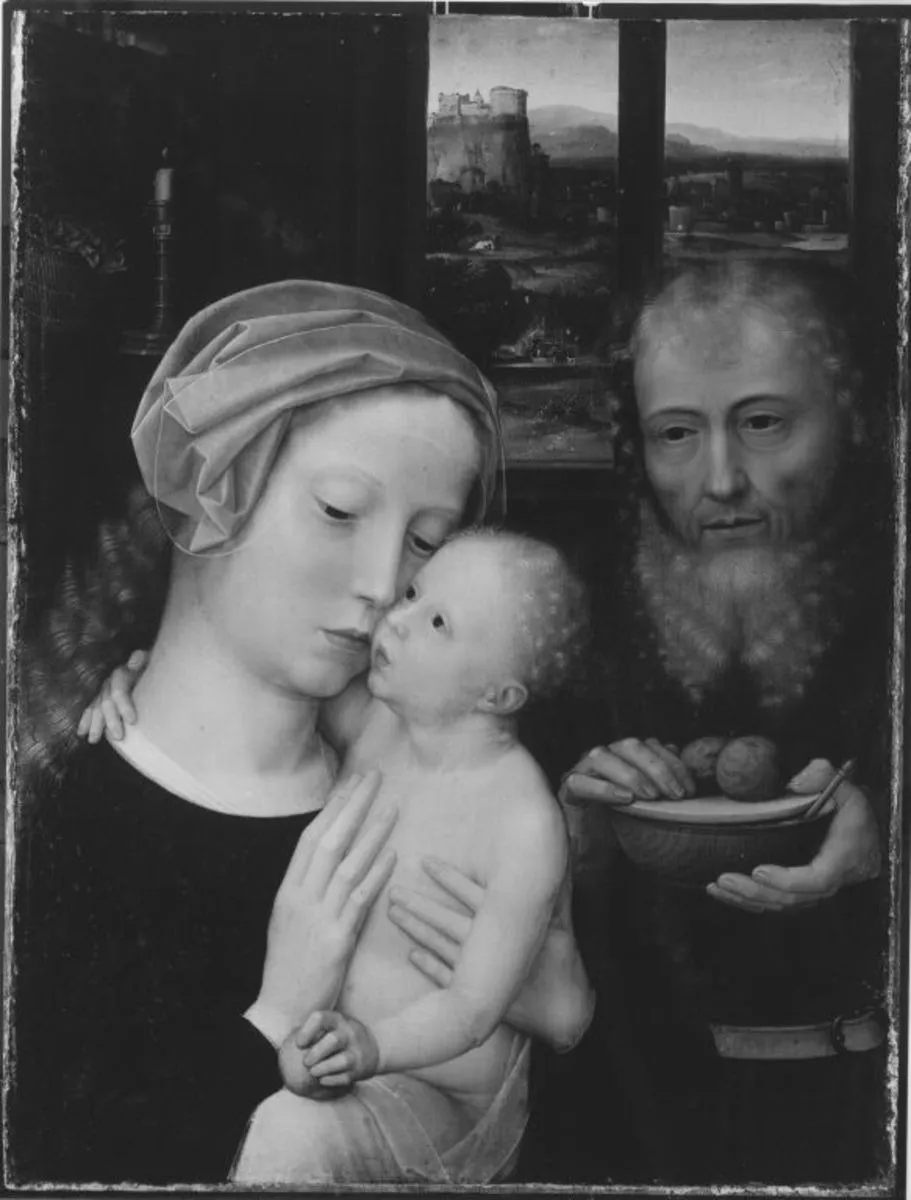
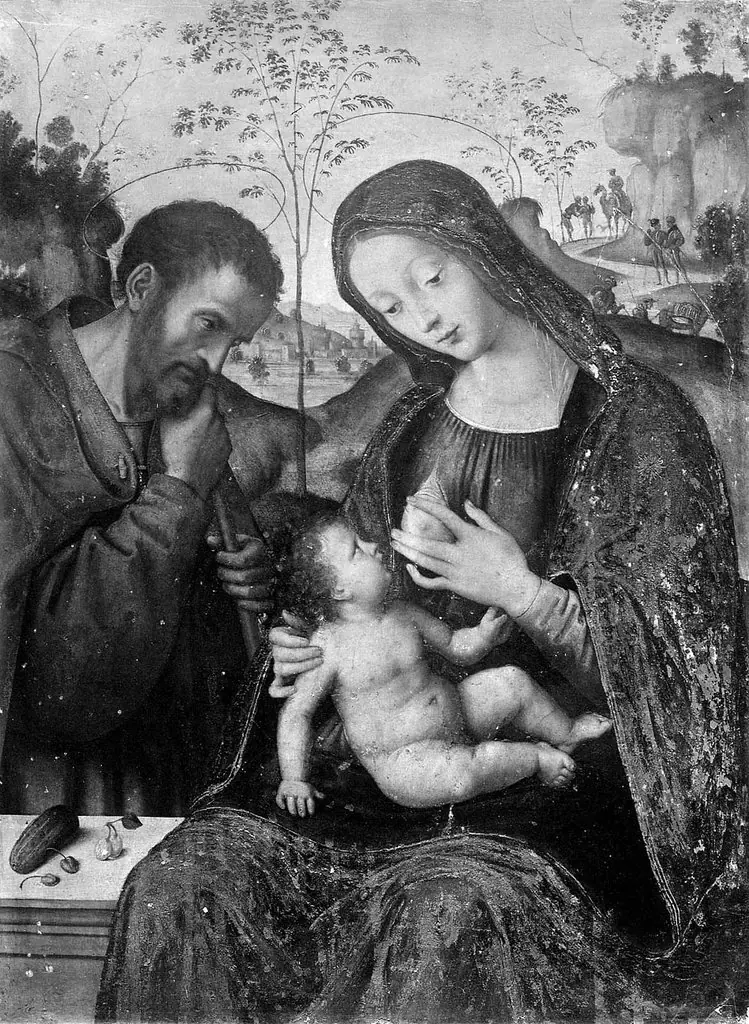
The Holy Family is an oil painting. It dates from 1509 and is held in the collection of the Bavarian State Painting Collections.
About this work
Technique & Style
The painting is executed in oil on oak panel, a support commonly used in early sixteenth-century Netherlandish practice.
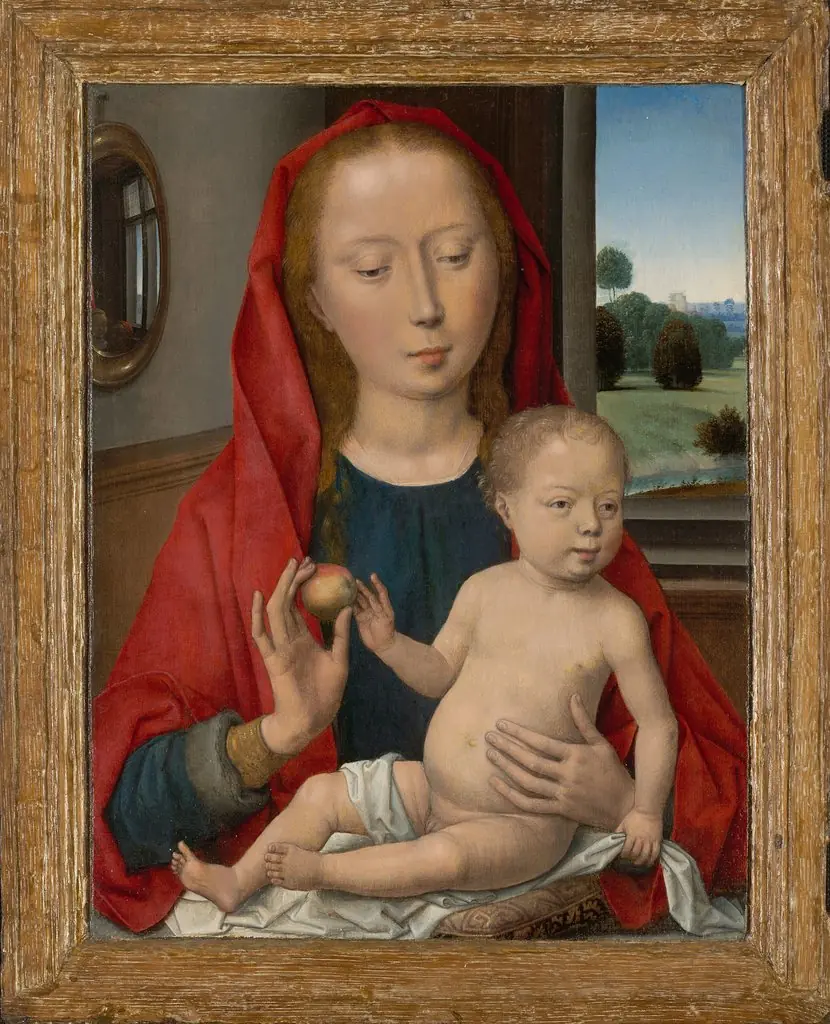
The painting is executed in oil on oak panel, a support commonly used in early sixteenth-century Netherlandish practice. Handling aligns with the refined Northern European manner of the period: meticulous brushwork renders textures from the crisp folds of drapery to the delicate modeling of flesh, while translucent glazes articulate luminous highlights on Mary’s mantle and the Christ Child’s haloed head. Stylistically, the composition follows a devotional idiom, with the figures grouped in quiet intimacy around the Christ Child, who sits on a draped cushion and blesses with his right hand while holding a goldfinch, a symbol of his future Passion.
The scene’s restrained palette and balanced arrangement reflect the influence of Gerard David’s compositions, though the execution appears adapted to local Bavarian taste.
History & Provenance
The Holy Family is dated to 1509, aligning with the inception year recorded in both internal documentation and Wikidata records.
The work entered the Bavarian State Painting Collections, where it remains housed at the Alte Pinakothek. The painting is catalogued as part of the collection’s holdings, identified as a religious panel executed in oil on oak. Its dimensions are recorded as 55.6 cm in height and 42.2 cm in width.
The Holy Family is held by the Bavarian State Painting Collections and is located at the Alte Pinakothek in Munich. The work is cataloged as a painting on oak panel created in 1509. It is identified as a work after Gerard David depicting the Virgin Mary, the Christ Child, and Joseph.
No specific inventory or accession number is provided in the available records. The sources do not contain information regarding a history of exhibitions for this specific artwork.
Legacy
The Holy Family painting held by the Bavarian State Painting Collections in Munich was executed in 1509 and reflects a compositional lineage traceable to Gerard David, though it functions as an independent religious work within the Northern Renaissance tradition. Its formal qualities, particularly the intimate grouping of Mary, Christ Child, and Joseph rendered in oil on oak panel (55.6 cm × 42.2 cm), have informed scholarly assessments of devotional imagery in early 16th‑century Central Europe. The attribution to the workshop of the Master of the Playing Cards and subsequent reinterpretations by later artists underscore its role as a reference point for studies of familial representation in sacred art.
Overview
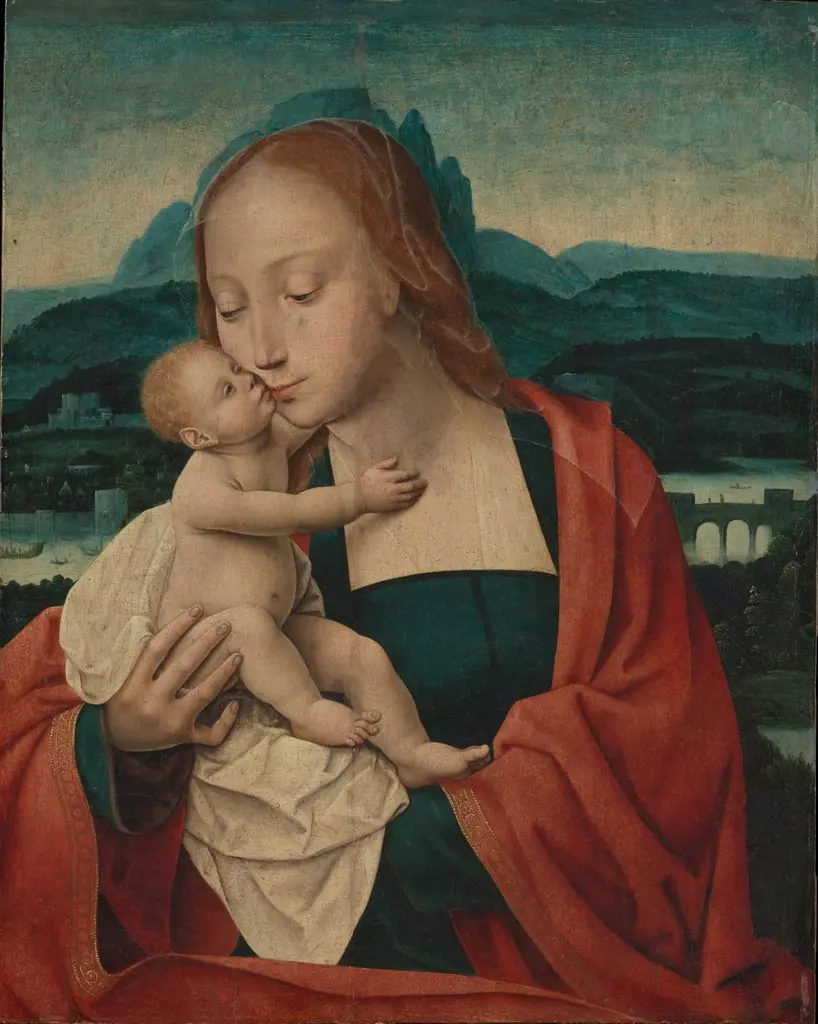
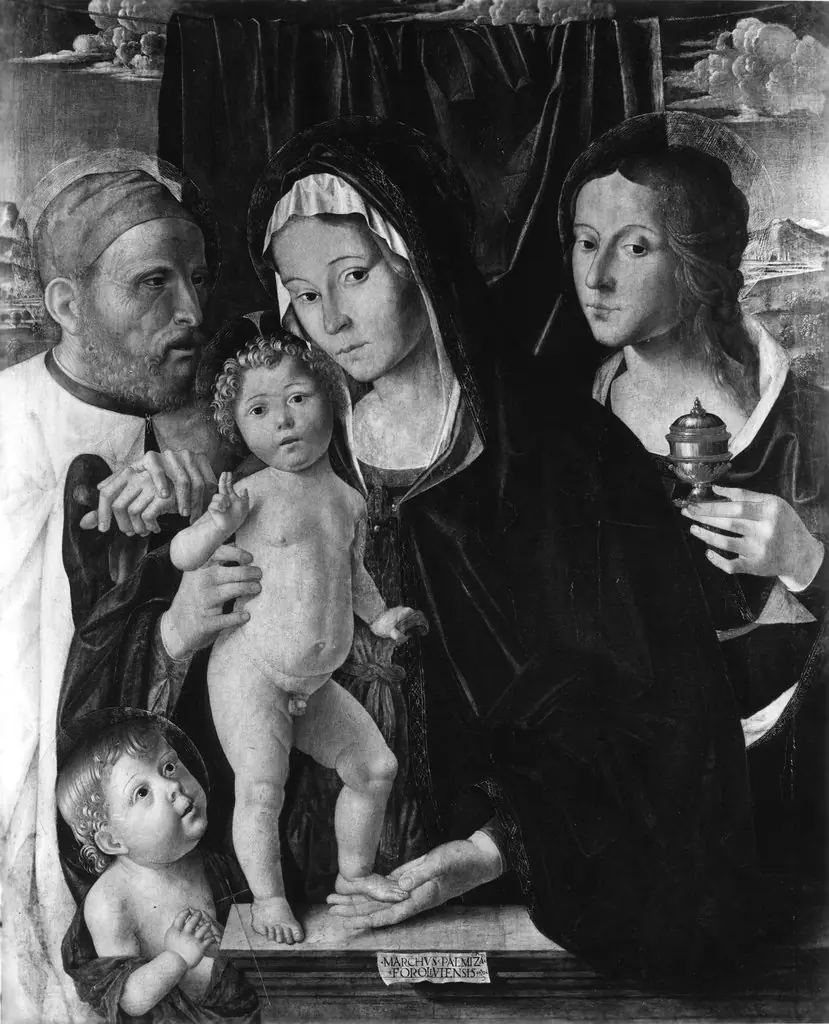
The work presents a quiet domestic tableau of the Holy Family, with the Virgin Mary gently holding the infant Jesus while Saint Joseph stands nearby, offering a bowl of fruit. Set against a subdued, dark backdrop, a glimpse of landscape is visible through a window, lending the scene a modest sense of space and intimacy.
Subject & Meaning
The composition emphasizes familial tenderness, highlighting the human aspects of the biblical figures. Mary's nurturing pose and Joseph's quiet presence suggest a protective, everyday life, while the fruit may allude to abundance and the promise of salvation, reinforcing the theological theme of divine incarnation within a humble household.
Context
Depictions of the Holy Family were a frequent subject in European religious art, serving both devotional and didactic purposes. By situating the sacred figures within a domestic interior, the artist aligns with a tradition that sought to make the divine relatable to contemporary viewers, reflecting the Counter‑Reformation emphasis on personal piety.
Artist & collection