Artwork
The Holy Ignatius of Antioch
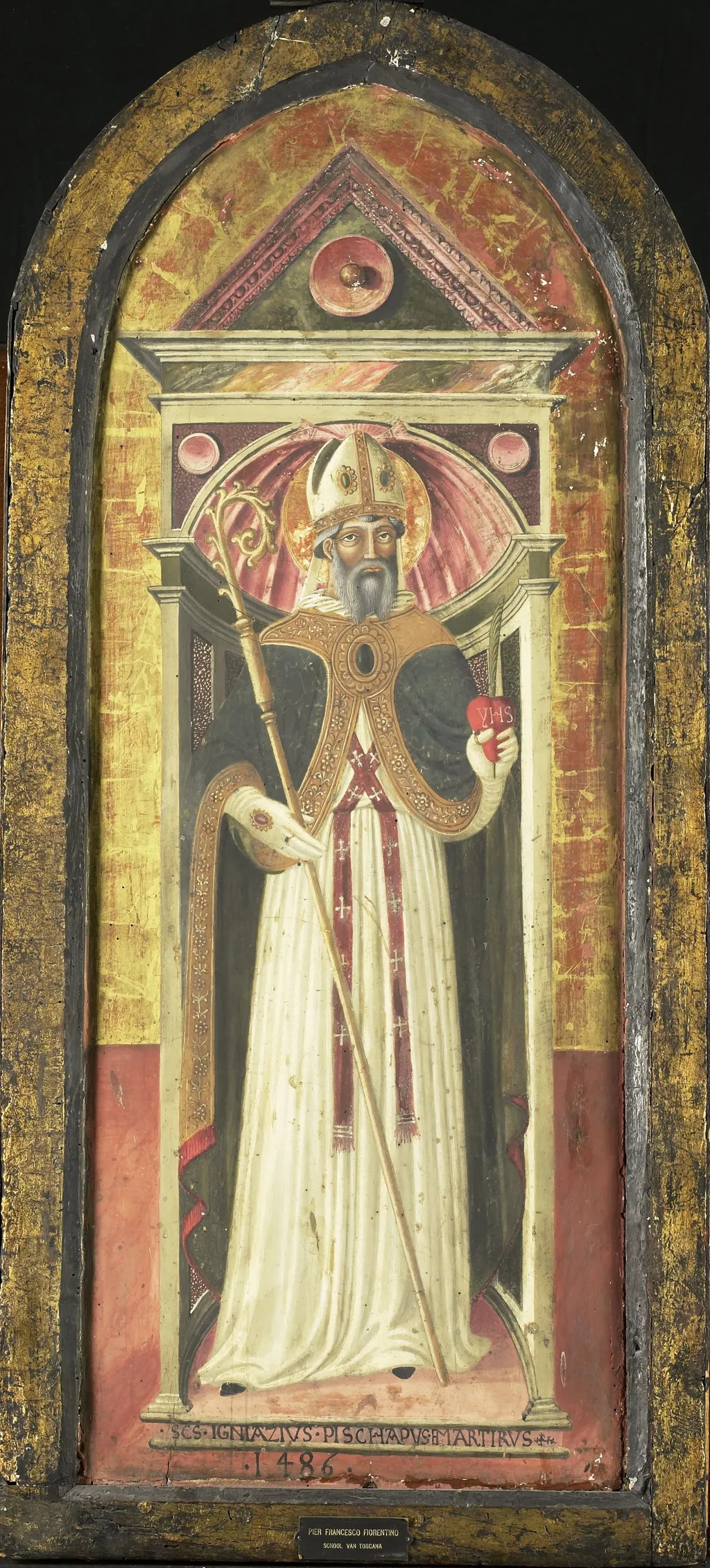
The Holy Ignatius of Antioch is an oil painting. It dates from 1494 and is held in the collection of the Rijksmuseum.
About this work
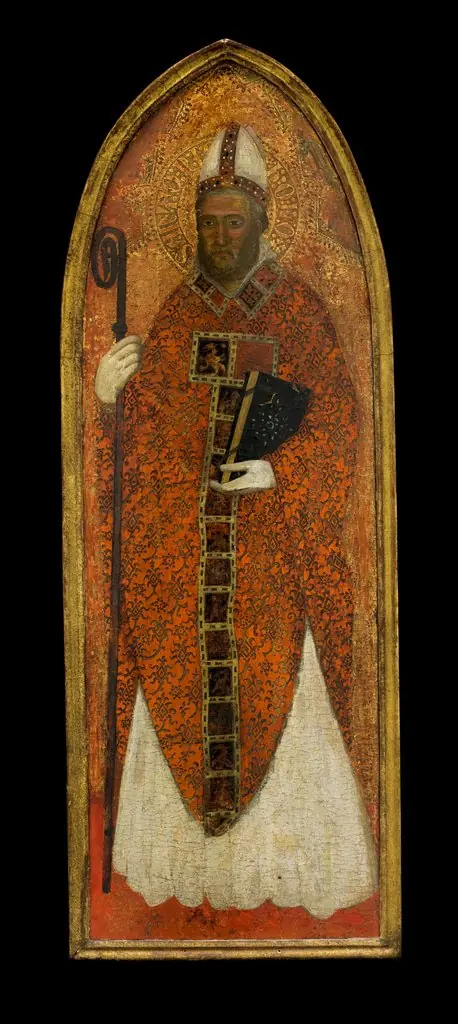
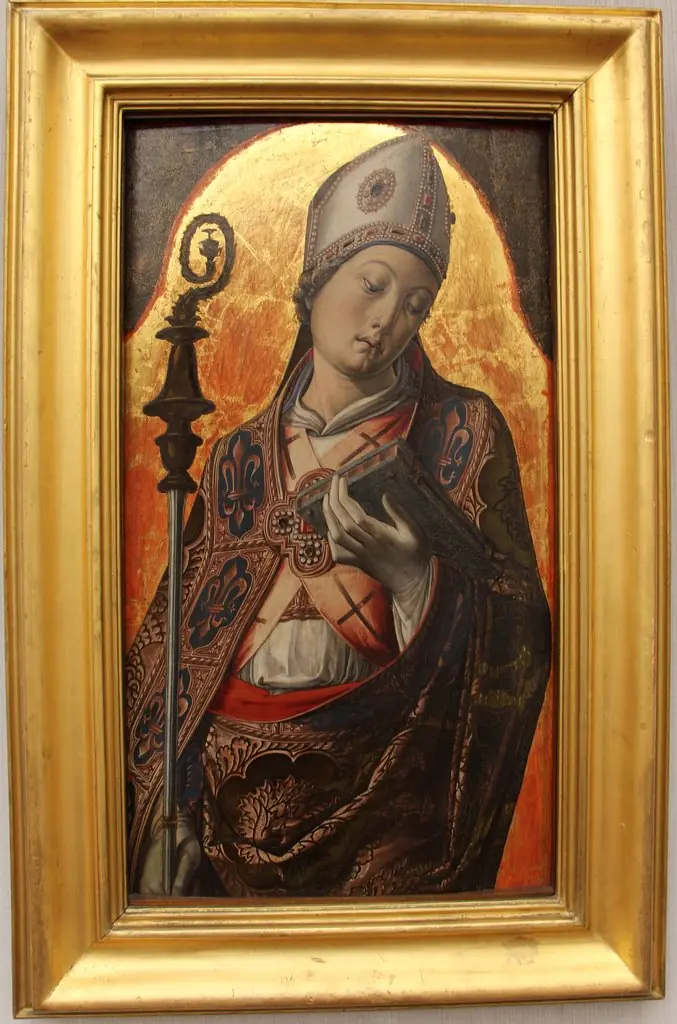
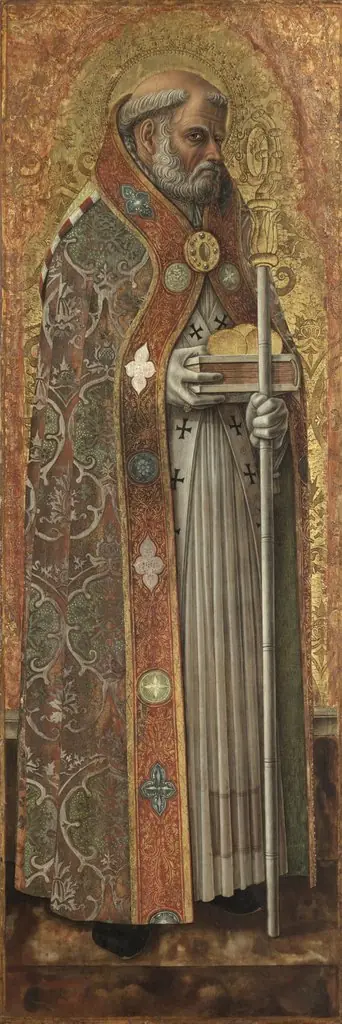
The painting depicts a man dressed in white robes with a red sash, holding a staff in his right hand and a red object in his left.
The painting depicts a man dressed in white robes with a red sash, holding a staff in his right hand and a red object in his left. He wears a tall, ornate hat and a large, circular necklace. The background features a red and yellow patterned wall with a triangular section above the man's head.
A small, circular object is visible at the top of the painting, and a sign at the bottom reads "S. IGNATIUS PISCHIADVS ANTIOCHVS" with the number "1486" below it.
Subject & Meaning
The painting portrays Ignatius of Antioch, a Christian bishop and martyr, as indicated by his identification in the subject matter. His episcopal status is conveyed through traditional iconographic attributes associated with early Christian leaders, though specific symbolic details are not elaborated in the sources. The work is classified as religious art and was created as an oil painting on panel in 1486, reflecting the devotional practices of the period. Its composition and form adhere to established conventions of sacred imagery, emphasizing spiritual authority and martyrdom.
Technique & Style
The Holy Ignatius of Antioch is executed in oil paint on panel, a support combination typical of late fifteenth-century devotional panel painting. According to the Wikidata record, the work measures 116 cm in height and 45 cm in width, giving it a markedly elongated vertical format suited to a standing full-length figure. Its classification as a religious painting and its subject, Ignatius of Antioch, place it within the devotional tradition of the period, while the narrow proportions suggest it may have functioned within an architectural or altarpiece setting.
History & Provenance
The painting The Holy Ignatius of Antioch is dated to 1486, a date recorded in both the internal documentation and the Rijksmuseum’s entry for the work.
It is attributed to an unknown artist and executed in oil on panel. The work entered the collection of the Rijksmuseum, where it remains located, as documented by the museum’s records.
The Holy Ignatius of Antioch is held in the collection of the Rijksmuseum in Amsterdam. The work is cataloged as an oil painting on panel depicting the religious figure Ignatius of Antioch. Created in 1486, the piece is attributed to an unknown artist within the museum's holdings.
No specific inventory or accession number is provided in the available records, nor is any exhibition history documented for this work.
Overview
The work titled The Holy Ignatius of Antioch is an oil painting that portrays a figure in white robes with a red sash, holding a staff in the right hand and a red object in the left. The composition includes a richly patterned red‑and‑yellow wall, a triangular space above the head, and a small circular motif at the top. An inscription at the base identifies the subject and includes the date 1486.
Context
Created during a period when devotional images of saints were commonly used for private prayer and liturgical instruction, the painting reflects the theological emphasis on martyrdom and saintly intercession prevalent in late medieval Christianity. Its decorative background aligns with contemporary trends in panel painting that favored ornamental interiors over naturalistic settings.
Artist & collection