Artwork
The lion, suspecting treachery on the part of the monkey, slays him and flees, from a Tuti-nama (Tales of a Parrot): Twenty-ninth Night
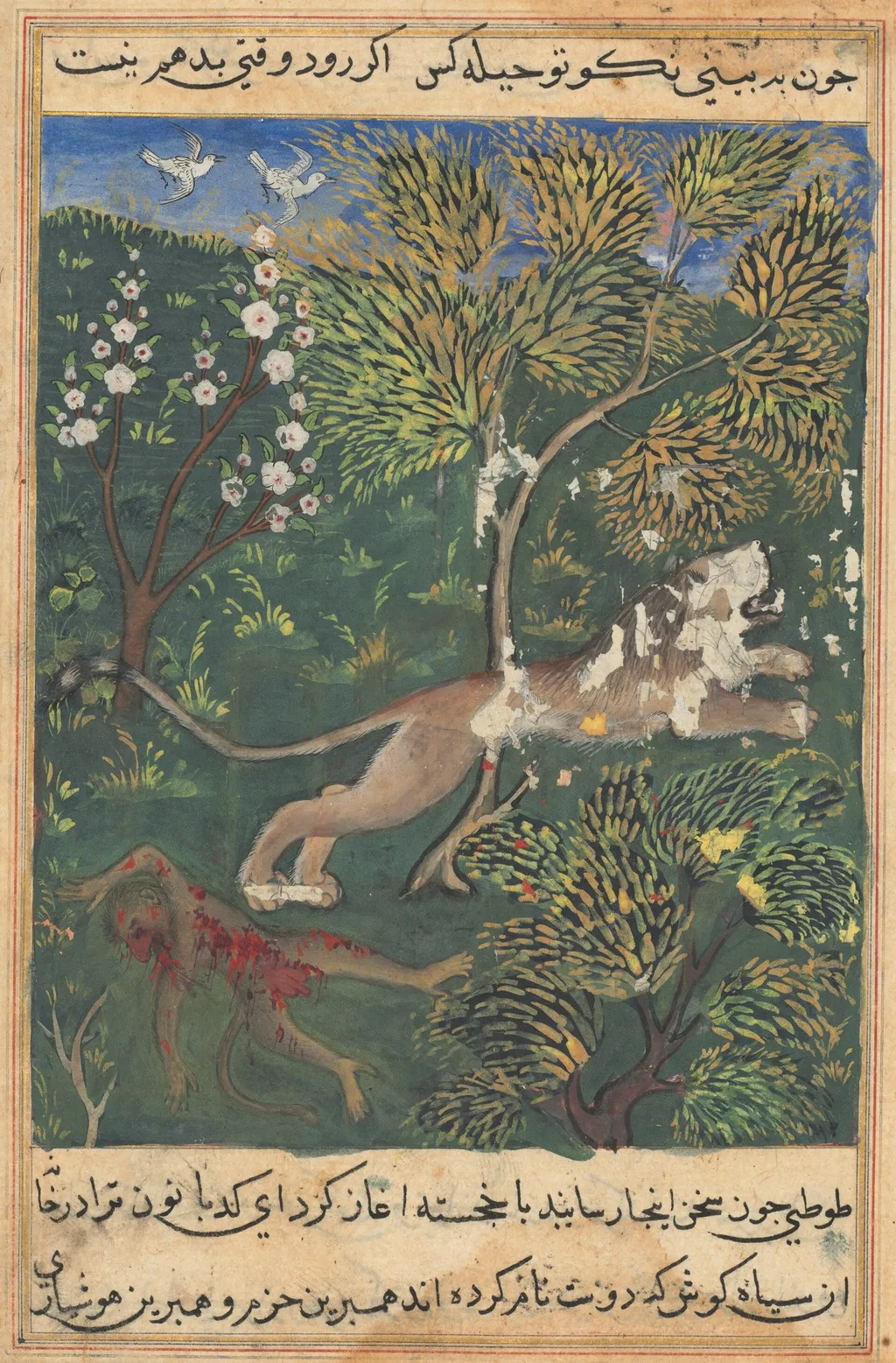
The lion, suspecting treachery on the part of the monkey, slays him and flees, from a Tuti-nama (Tales of a Parrot): Twenty-ninth Night is an unspecified painting. It dates from 1560 and is held in the collection of the Cleveland Museum of Art.
About this work
Subject & Meaning
The lion, representing royal power and vigilance, confronts the monkey, a symbol of deceit, illustrating the moral lesson that treachery is punished.
The painting portrays a lion in the act of killing a monkey, an episode from the Twenty‑ninth Night of the Tuti‑nama. The lion, representing royal power and vigilance, confronts the monkey, a symbol of deceit, illustrating the moral lesson that treachery is punished. This iconography draws on the Persian narrative tradition, where animal protagonists convey ethical warnings.
Executed circa 1560 in Mughal India, the work was later acquired by the Cleveland Museum of Art, where it remains. Its composition and narrative reflect the blend of Persian miniature style with Mughal patronage.
History & Provenance
The miniature depicting the lion's confrontation with the treacherous monkey illustrates the twenty‑ninth night of the Tuti‑nama (Tales of a Parrot), a Persian story cycle. Executed circa 1560 in Mughal India as part of an illustrated manuscript, the work is attributed to an unknown artist. It is held in the collection of the Cleveland Museum of Art, catalogued under the accession number 1962.279.197.a. No specific exhibition history for this piece is provided in the available sources.
Overview
This painting, titled "The lion, suspecting treachery on the part of the monkey, slays him and flees," illustrates a dramatic moment from the Tuti-nama, or "Tales of a Parrot." It depicts a lion in mid-attack, its jaws open over a bleeding monkey clinging to a tree branch. The artwork is part of a larger manuscript, specifically illustrating the twenty-ninth night of the narrative, which typically conveys moral lessons through animal fables.
Technique & Style
The artist employed a distinctive visual approach to render this narrative. The composition features a vibrant palette of flat, saturated colors, which define the forms of the animals and the surrounding landscape. Bold outlines delineate figures and objects, enhancing the clarity of the action.
Details like white blossoms on a tree and flying birds add to the setting, while green bushes and a blue sky complete the background, emphasizing the dramatic encounter.
Artist & collection

- The lion, suspecting treachery on the part of the monkey, slays him and flees, from a Tuti-nama (Tales of a Parrot): Twenty-ninth Night
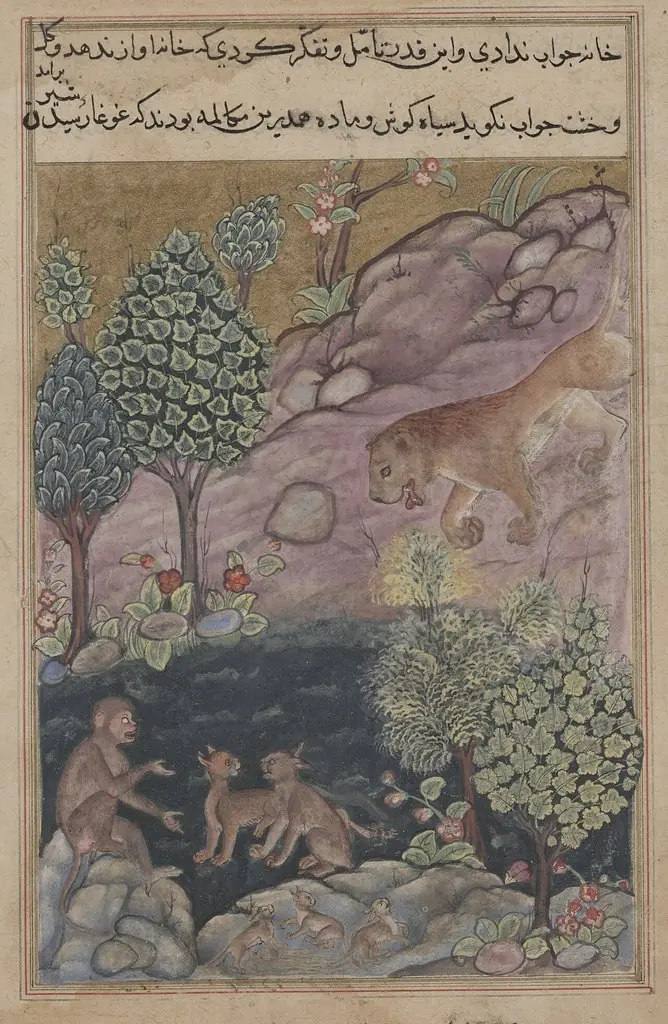 The lion returns to his territory and sees the monkey conversing with the lynx, from a Tuti-nama (Tales of a Parrot): Twenty-ninth Night
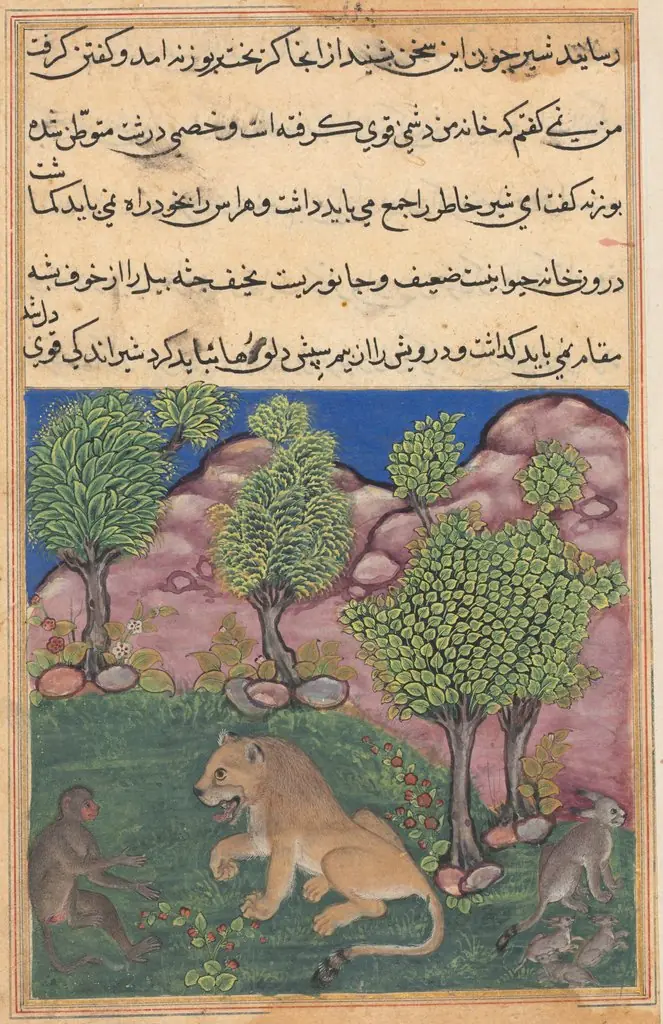 The monkey advises the suspicious lion to cast off fear and take possession of his territory, from a Tuti-nama (Tales of a Parrot): Twenty-ninth Night
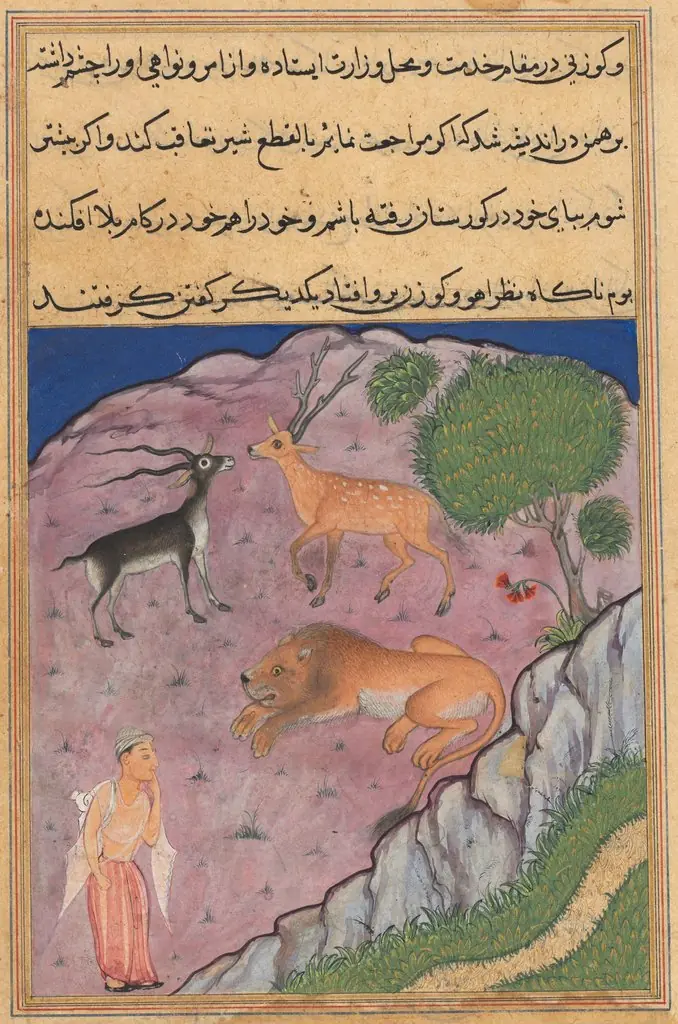 The Brahman comes upon a lion who has a deer and a gazelle as his viziers, from a Tuti-nama (Tales of a Parrot): Twenty-first Night
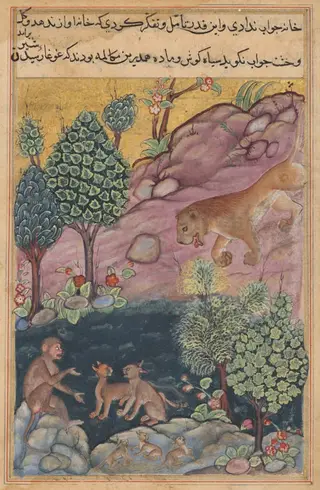 The lion returns to his territory and sees the monkey conversing with the lynx, from a Tuti-nama (Tales of a Parrot): Twenty-ninth Night
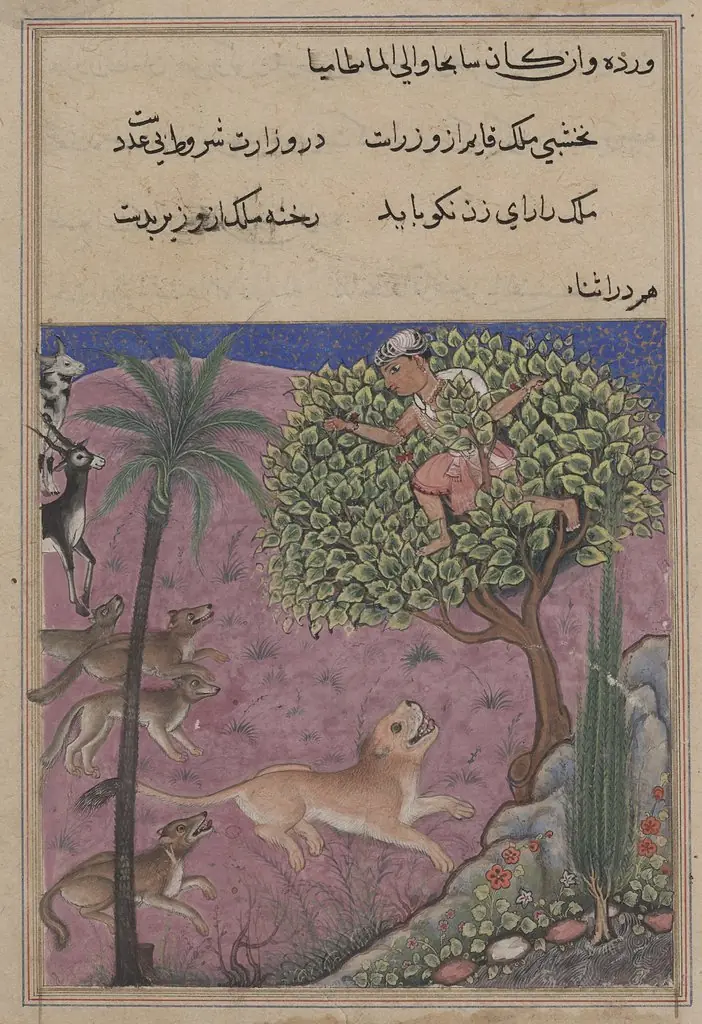 The wolf and the jackal, serving as viziers, instigate the lion who pursues the Brahman up a tree, from a Tuti-nama (Tales of a Parrot): Twenty-first Night
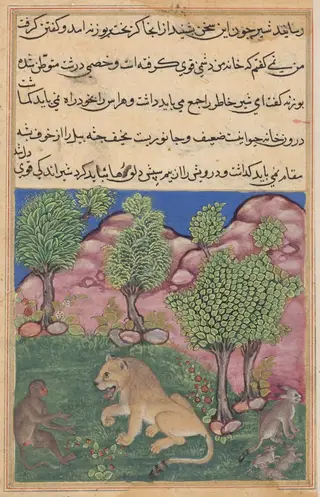 The monkey advises the suspicious lion to cast off fear and take possession of his territory, from a Tuti-nama (Tales of a Parrot): Twenty-ninth Night
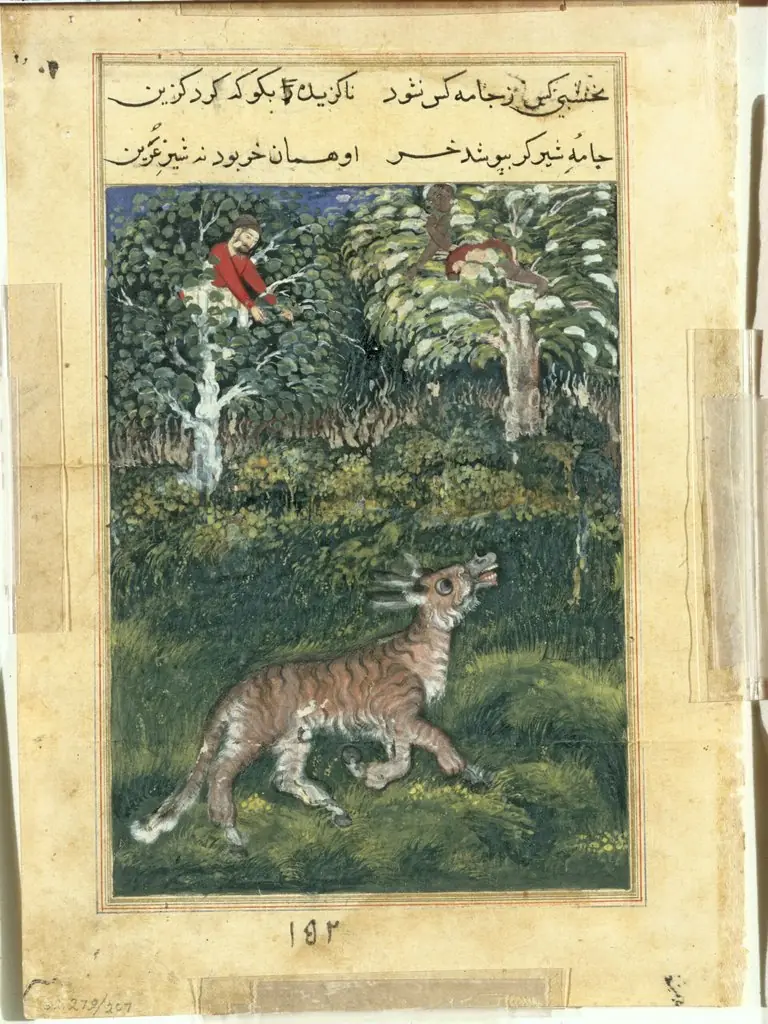 The donkey, in a tiger’s skin, reveals his identity by braying aloud, from a Tuti-nama (Tales of a Parrot): Thirty-first Night
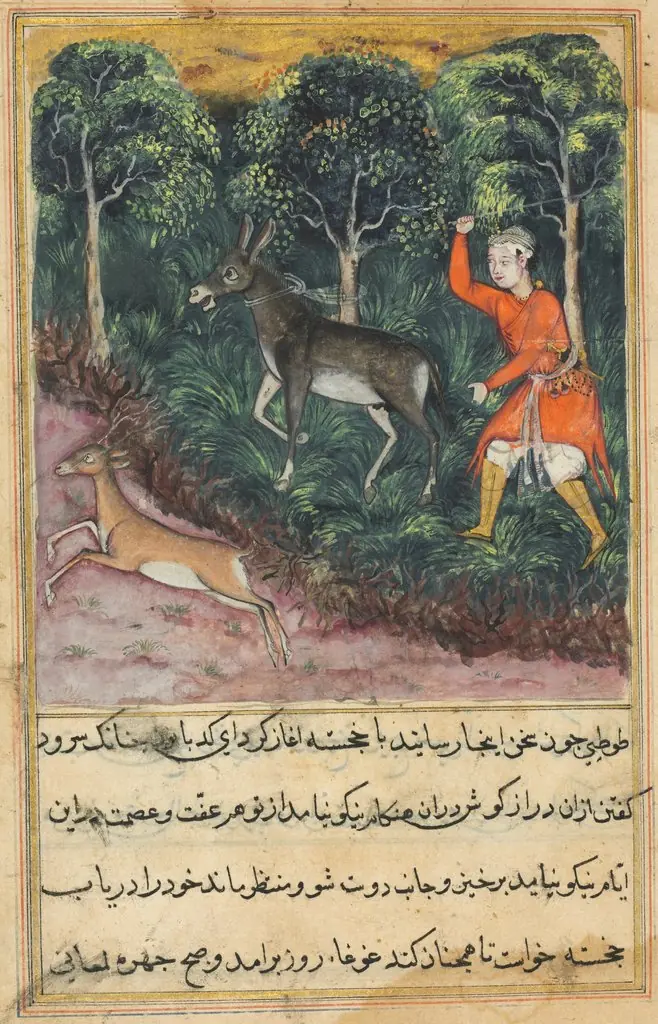 The gardener seizes and beats a donkey who insisted on braying, while the deer, its companion flees to safety, from a Tuti-nama (Tales of a Parrot): Forty-first Night
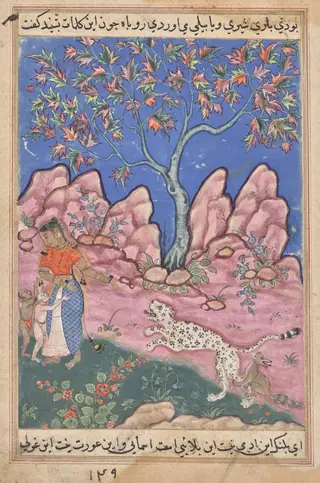 The woman conversing with her children, as the leopard returns, egged on by a fox who is tied to his leg, from a Tuti-nama (Tales of a Parrot): Thirtieth Night
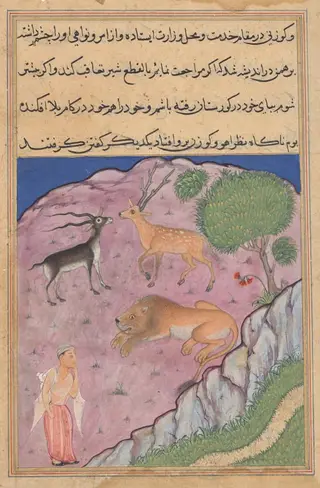 The Brahman comes upon a lion who has a deer and a gazelle as his viziers, from a Tuti-nama (Tales of a Parrot): Twenty-first Night
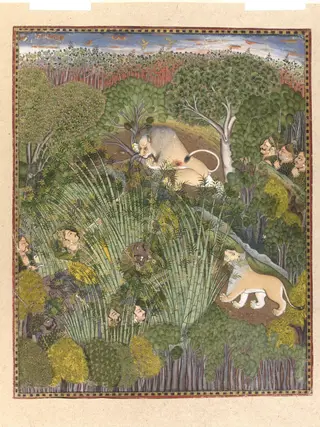 Raja Durjan Sal of Kota
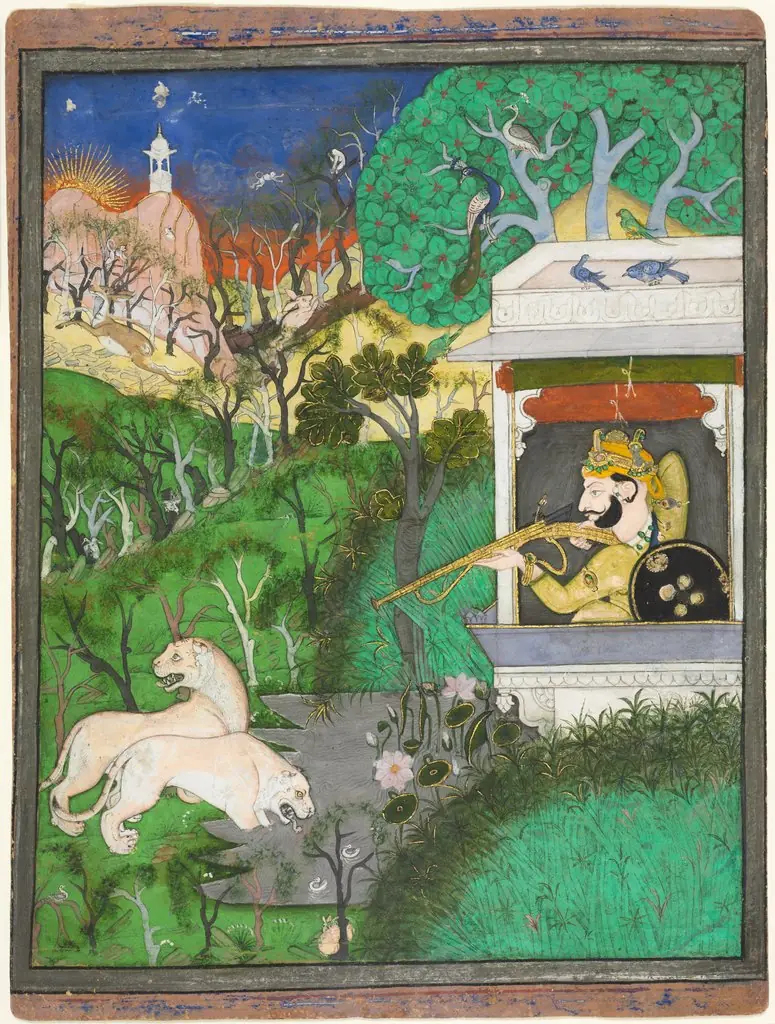 Maharaja Chattarsol of Kota Shooting Lions
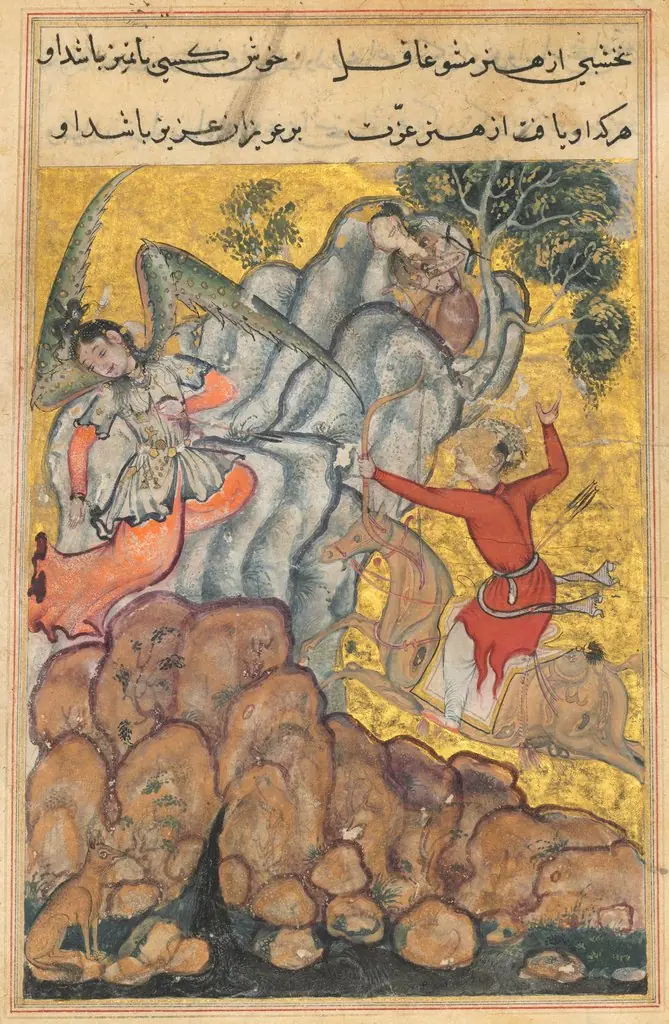 The third suitor, who is an archer, shoots the wicked fairy who has imprisoned Zuhra. He rides on a magic horse prepared by the second suitor and is led to the spot by the divining prowess of the first, from a Tuti-nama (Tales of a Parrot): Thirty-fo
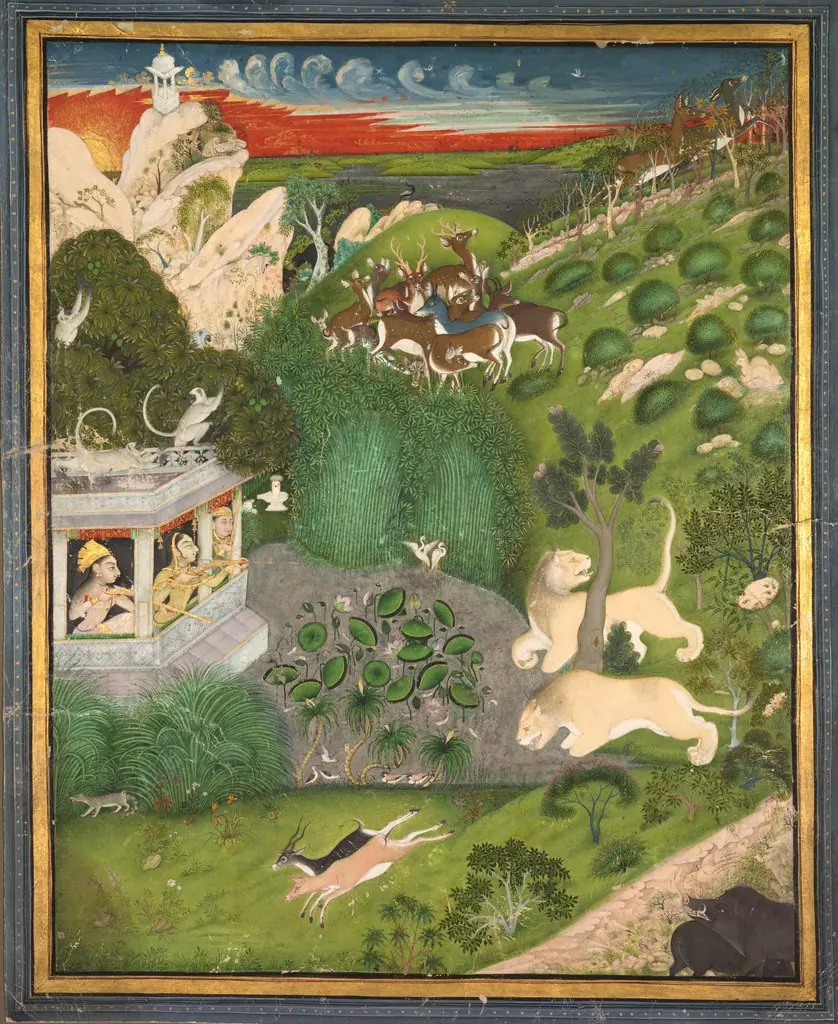 Royal women shooting from a pavilion
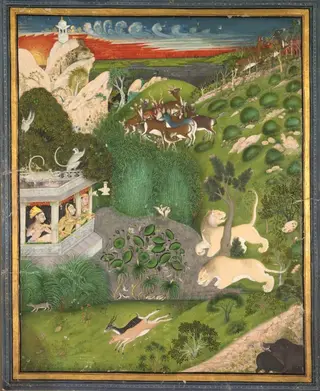 Royal women shooting from a pavilion
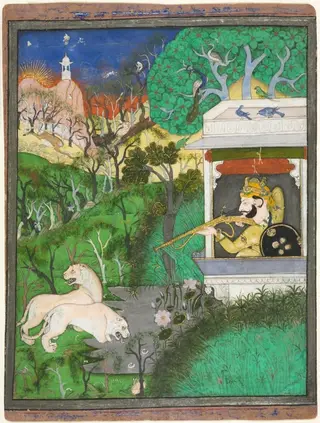 Maharaja Chattarsol of Kota Shooting Lions
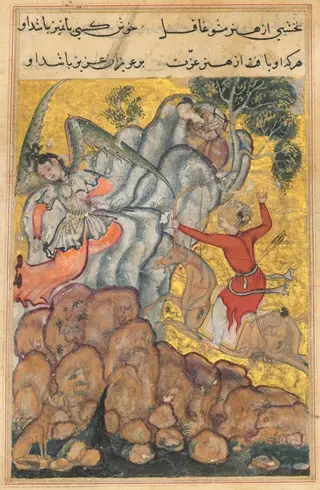 The third suitor, who is an archer, shoots the wicked fairy who has imprisoned Zuhra. He rides on a magic horse prepared by the second suitor and is led to the spot by the divining prowess of the first, from a Tuti-nama (Tales of a Parrot): Thirty-fourth Night