Artwork
The hunter throws away the baby parrots, who pretend to be dead, and captures the mother, from a Tuti-nama (Tales of a Parrot): Fifth Night
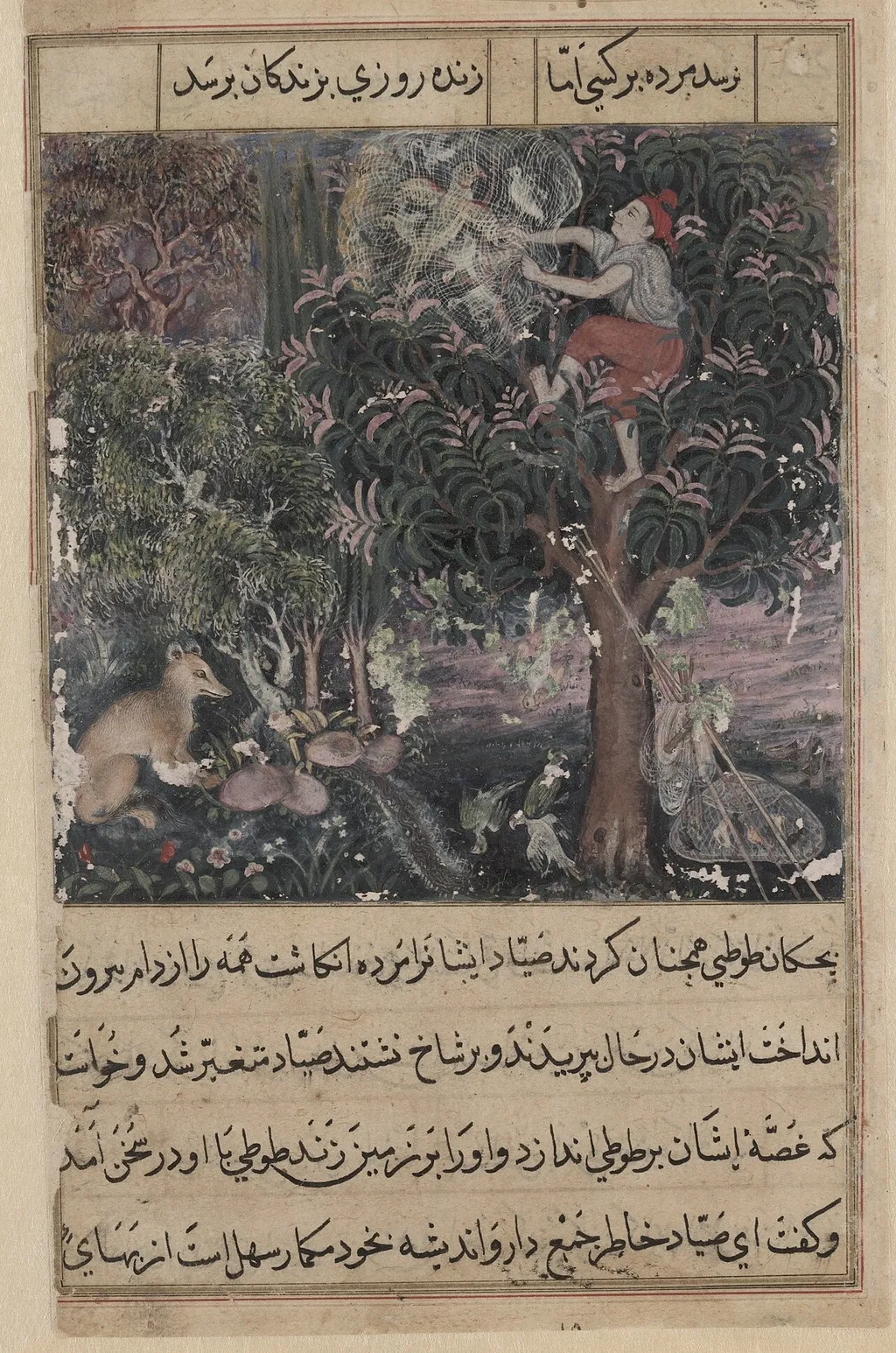
The hunter throws away the baby parrots, who pretend to be dead, and captures the mother, from a Tuti-nama (Tales of a Parrot): Fifth Night is an unspecified painting by the Mughal Painting artist Basawan. It dates from 1560 and is held in the collection of the Cleveland Museum of Art.
About this work
Subject & Meaning
The miniature depicts a hunter discarding infant parrots that feign death while he seizes their mother, an episode drawn from the fifth night of the Tuti-nama.
The miniature depicts a hunter discarding infant parrots that feign death while he seizes their mother, an episode drawn from the fifth night of the Tuti-nama. In Mughal manuscript painting iconography, the parrots symbolize innocent life and the hunter's ruse reflects cunning and moral ambiguity, while the scene also illustrates themes of deception and maternal protection within the narrative frame. The work thus conveys a moral lesson about the consequences of deceit and the instinctive defense of offspring, resonating with the didactic purpose of the Tuti-nama's embedded animal fables.
The hunter's act of abandoning the young birds before capturing the mother underscores a paradoxical blend of cruelty and calculated strategy, reinforcing the story's cautionary message about the perils of trickery.
Technique & Style
The artwork is a painting executed in the Mughal Empire around 1560. Created by the artist Basawan, the piece serves as an illustration for the Tuti-nama (Tales of a Parrot), specifically depicting the narrative of the Fifth Night. As a product of early Mughal manuscript illumination, the work reflects the stylistic developments of the period under the patronage of the imperial court. The painting is currently held in the collection of the Cleveland Museum of Art.
History & Provenance
Basawan painted The hunter throws away the baby parrots, who pretend to be dead, and captures the mother, from a Tuti-nama (Tales of a Parrot): Fifth Night, around 1560. The work is part of the Cleveland Museum of Art's collection, having entered the museum's holdings as a painting attributed to Basawan, an Indian artist active circa 1560–1600. It was created in the Mughal Empire and is catalogued under accession number 1962.279.35.a.
The work is held in the collection of the Cleveland Museum of Art in Cleveland, Ohio. Its accession number is 1962.279.35.a. The painting has been part of the museum’s exhibition schedule, including displays in the Indian Miniatures Gallery and in special exhibitions of Mughal art.
Overview
Created in 1560 by the Mughal painter Basawan, this work illustrates a narrative episode from the fifth night of the Tuti‑nama (Tales of a Parrot). The canvas is part of the Cleveland Museum of Art’s collection and depicts a forest clearing where a hunter interacts with a family of parrots.
Context
The Tuti‑nama was a popular illustrated manuscript that blended Persian literary tradition with Indian storytelling, often using animal protagonists to convey ethical teachings. Basawan’s illustration aligns with the manuscript’s visual program, where each night presents a new episode that explores themes of deceit, compassion, and the consequences of human actions.
Own this work as a print
Artist & collection
Artist
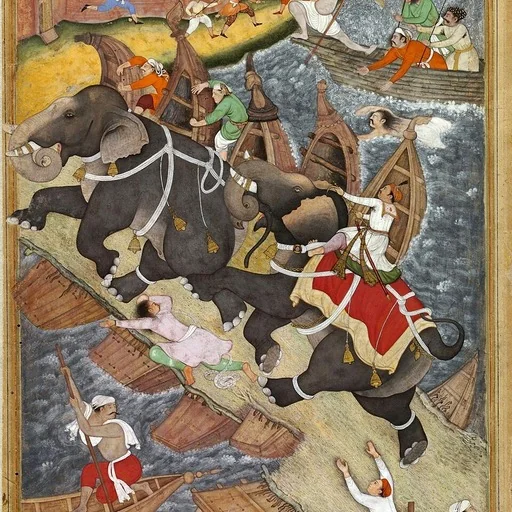
Basāwan, or Basāvan, was an Indian miniature painter in the Mughal style. He was known by his contemporaries as a skilled colorist and keen observer of human nature, and for his use of portraiture in the illustrations…

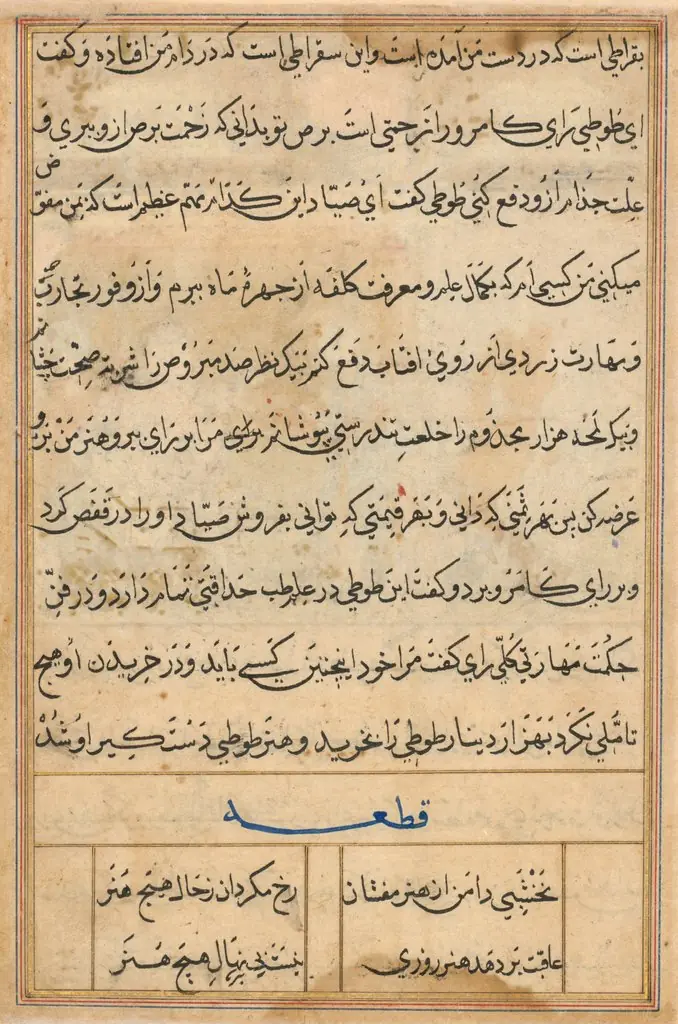 Page from Tales of a Parrot (Tuti-nama): text page
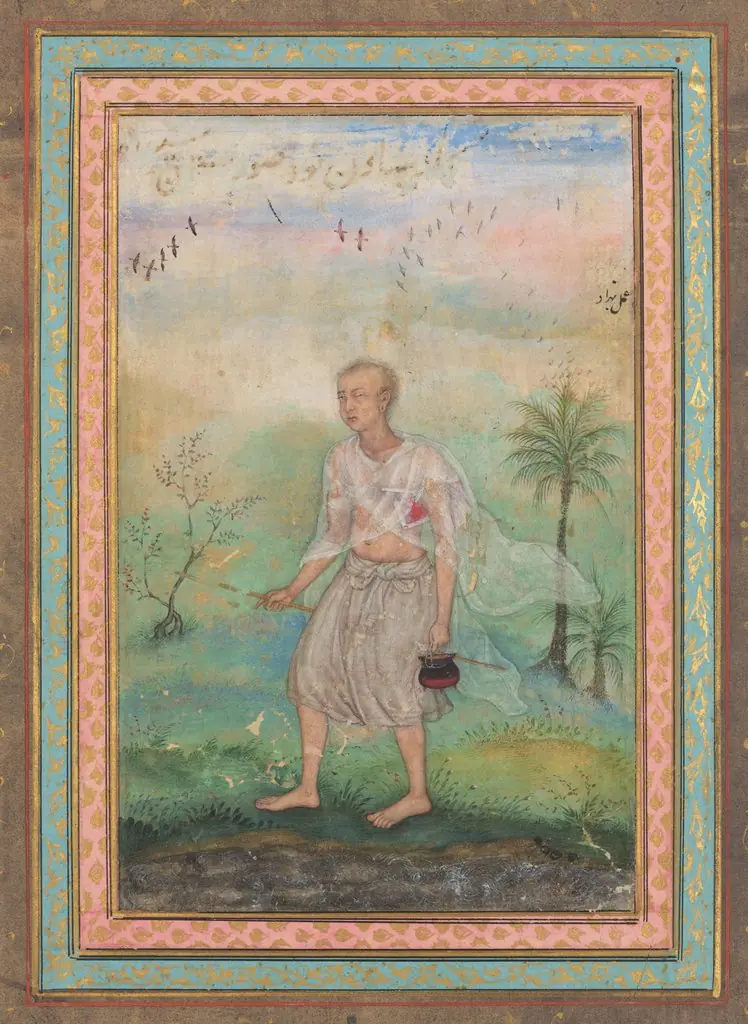 Jain Ascetic Walking Along a Riverbank
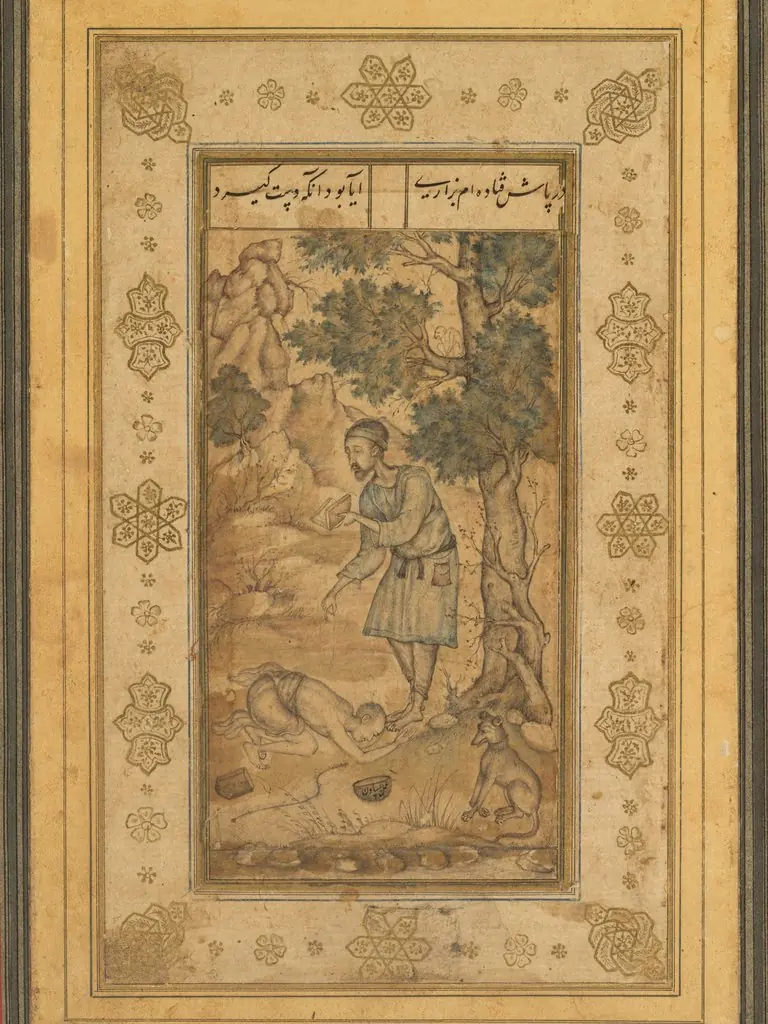 A mendicant bowing before a holy man, from the Prince Salim Album
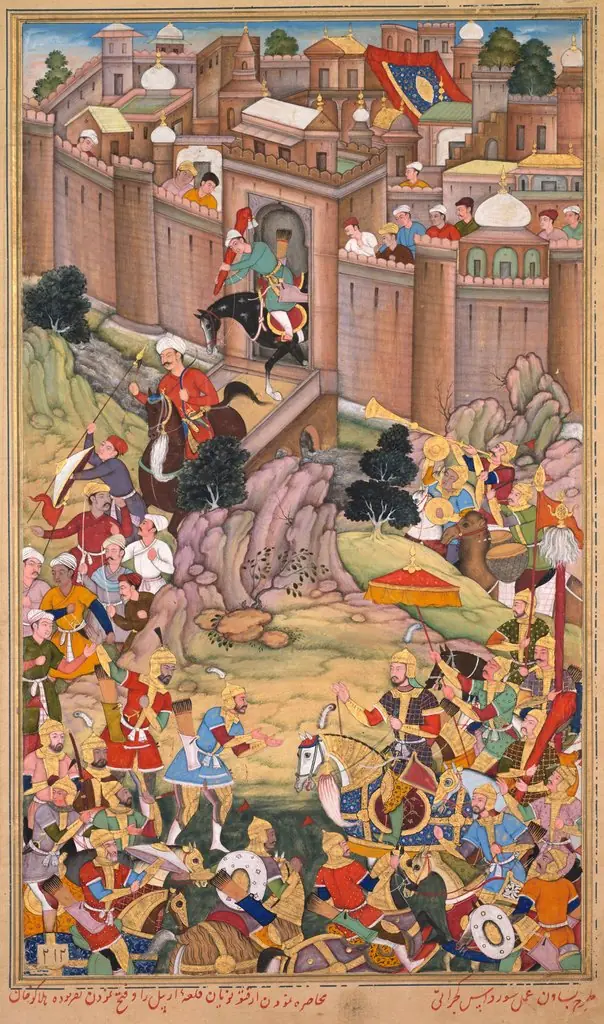 The siege of Arbela in the era of Hulagu Khan, from a Chingiz-nama (Book of Chingiz Khan) of the Jami al-tavarikh (Compendium of Chronicles) of Rashid al-Din (Persian, 1247–1318)
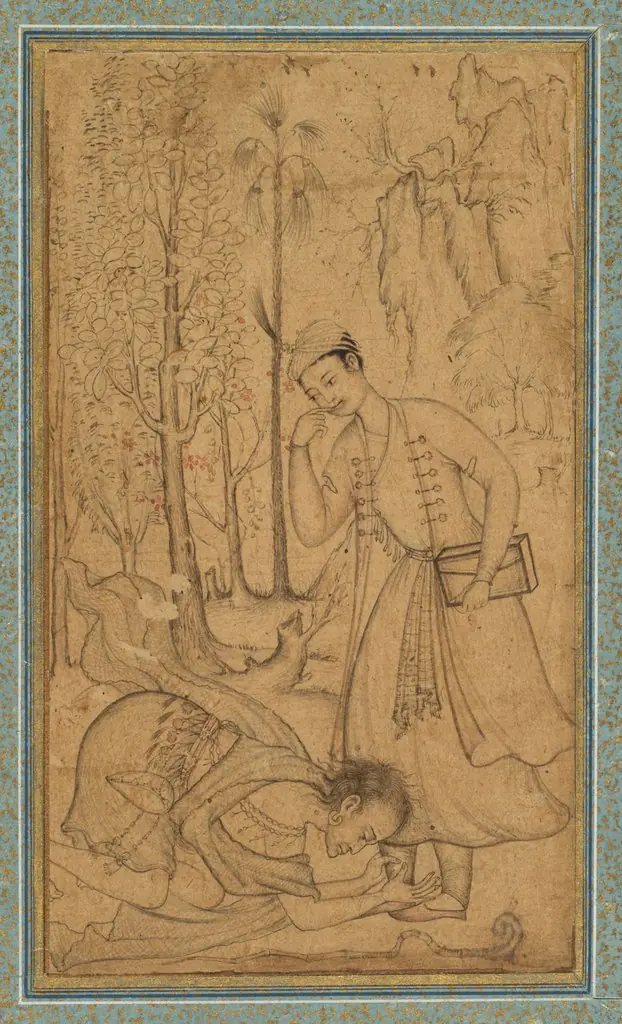 A holy man prostrating himself before a learned prince
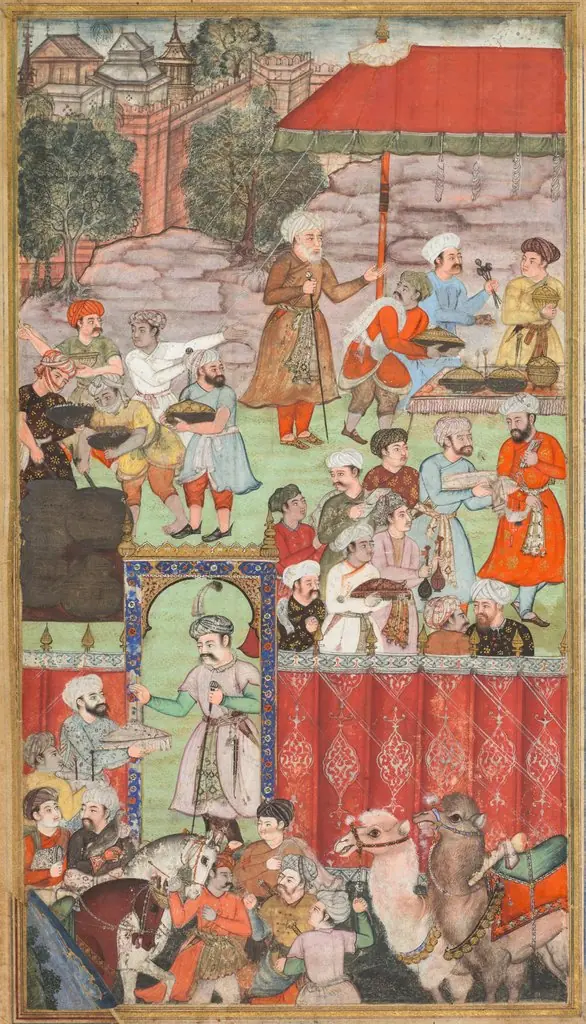 A feast for Babur hosted by his half-brother Jahangir Mirza in Ghazni in May 1505, from a Babur-nama (Memoirs of Babur)
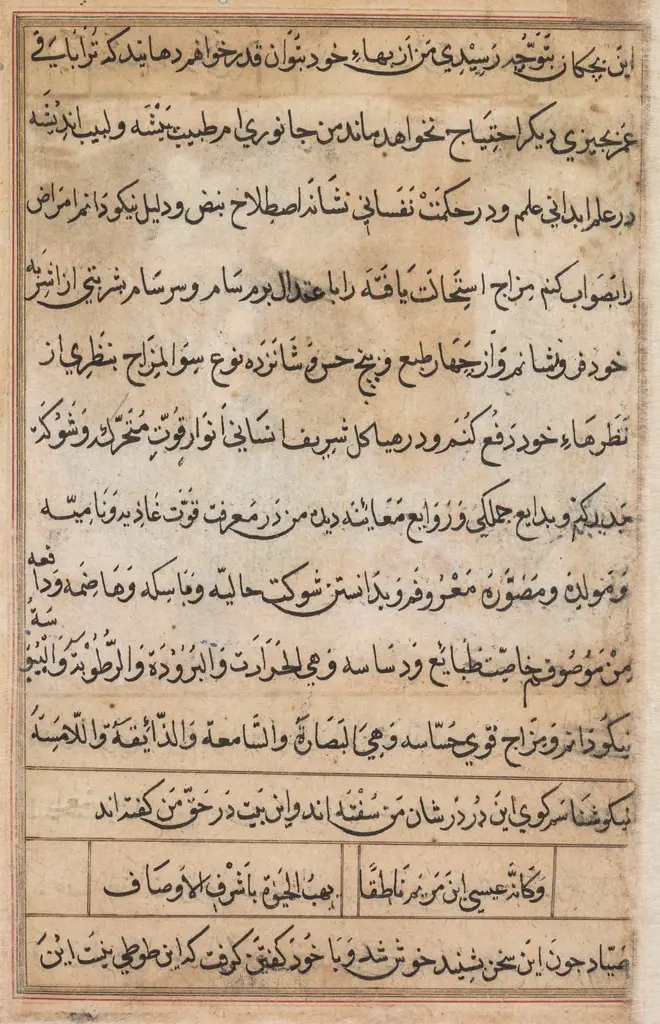 Page from Tales of a Parrot (Tuti-nama): text page
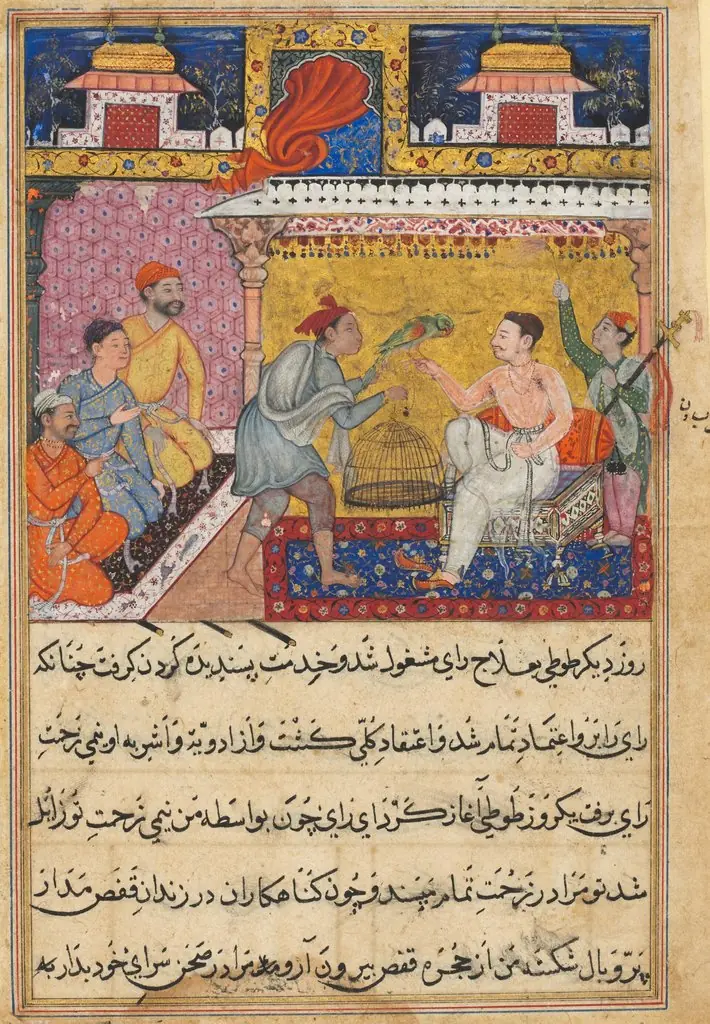 The hunter offers the mother parrot to the king of Kamarupa, from a Tuti-nama (Tales of a Parrot): Fifth Night
- The hunter throws away the baby parrots, who pretend to be dead, and captures the mother, from a Tuti-nama (Tales of a Parrot): Fifth Night
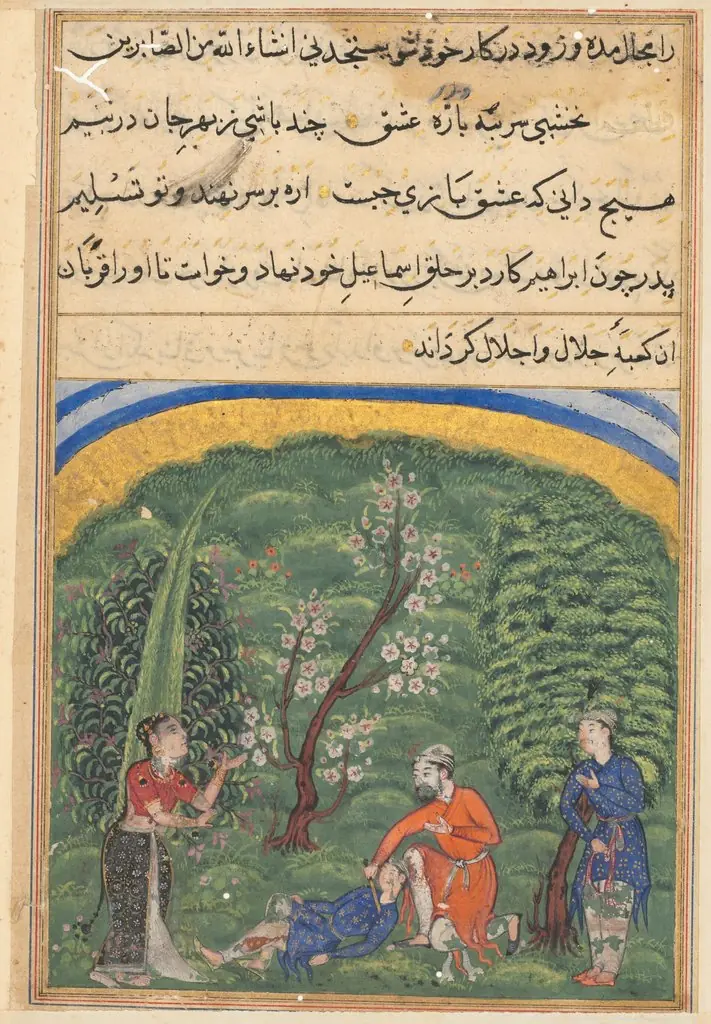 The sentinel in the employ of the Shah of Tabaristan prepares to sacrifice his son to the ghost of the Shah’s soul, from a Tuti-nama (Tales of a Parrot): Second Night
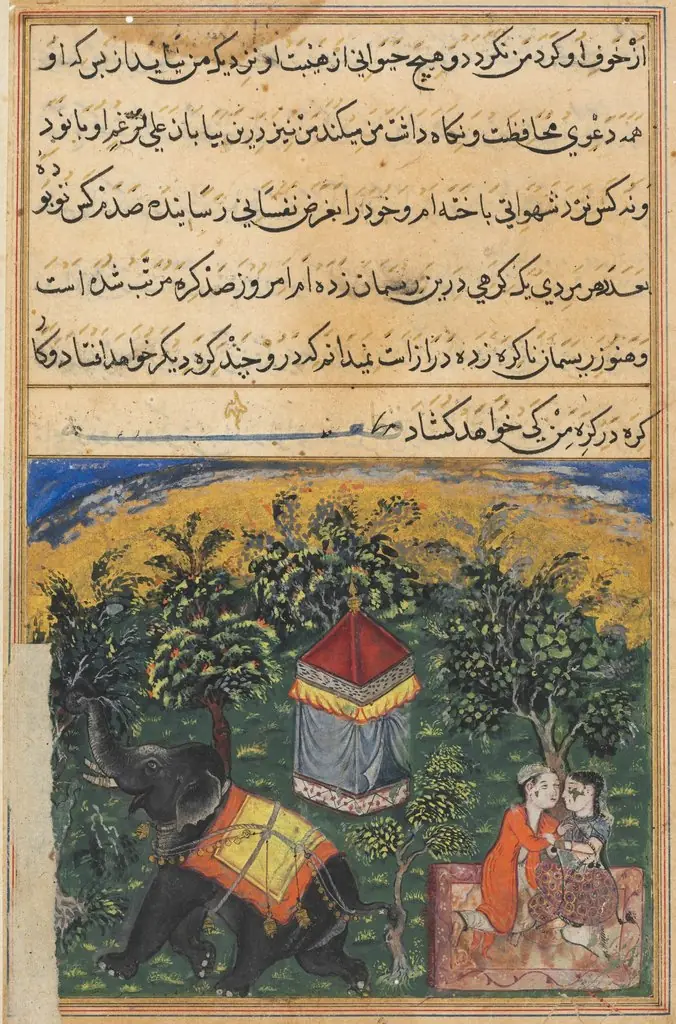 The mendicant’s wife deceives him with a soldier, from a Tuti-nama (Tales of a Parrot): Fourth Night
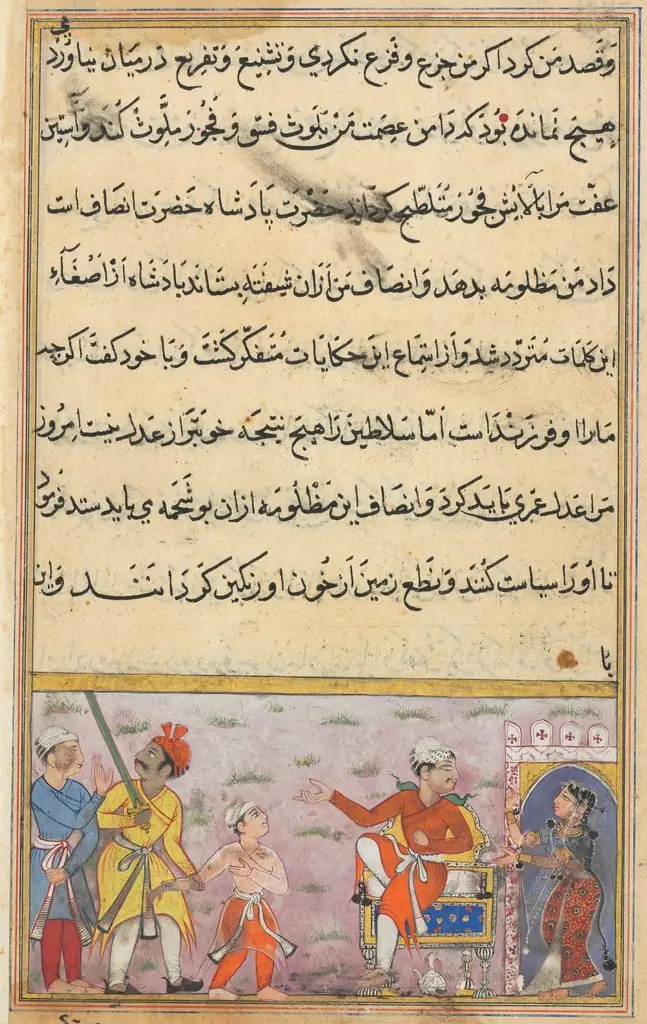 The prince being taken away for execution on the false complaint of the handmaiden, from a Tuti-nama (Tales of a Parrot): Eighth Night
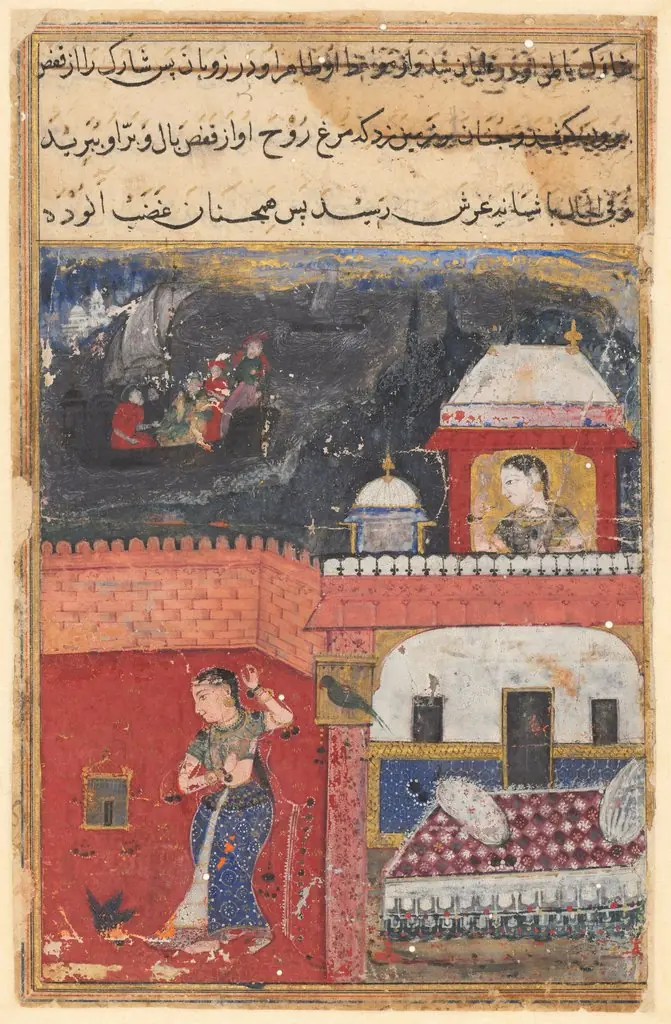 Khujasta kills the pet mynah who advises her not to be unfaithful to Maymun, her husband, from a Tuti-nama (Tales of the Parrot): First Night
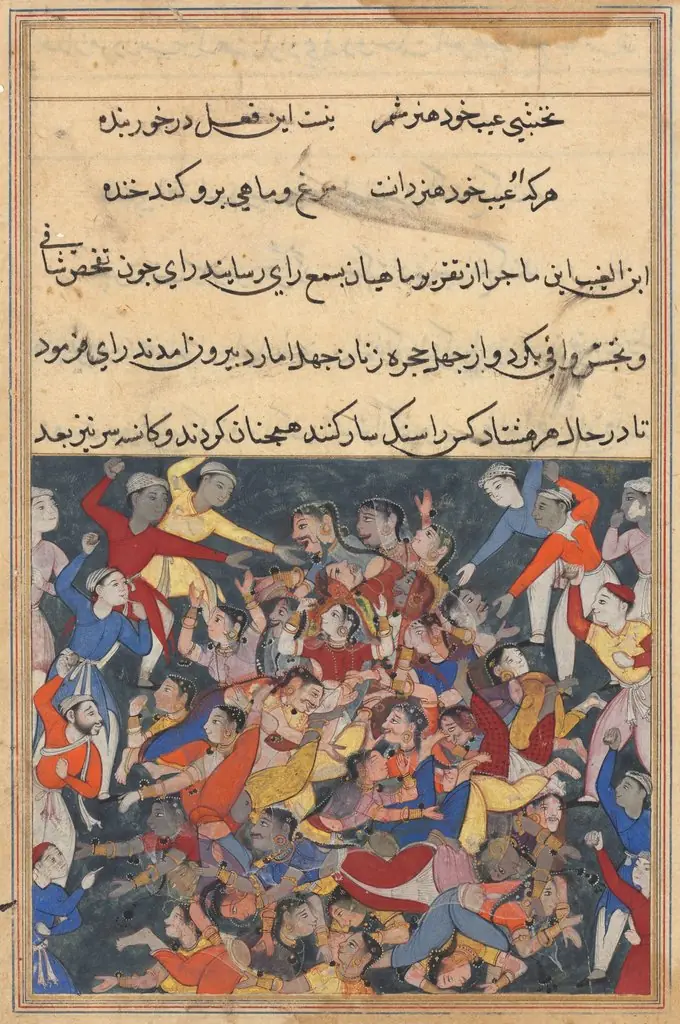 The forty wives and their secret paramours being punished by stoning to death, from a Tuti-nama (Tales of a Parrot): Twenty-third Night