Artwork
The wolf and the jackal, serving as viziers, instigate the lion who pursues the Brahman up a tree, from a Tuti-nama (Tales of a Parrot): Twenty-first Night
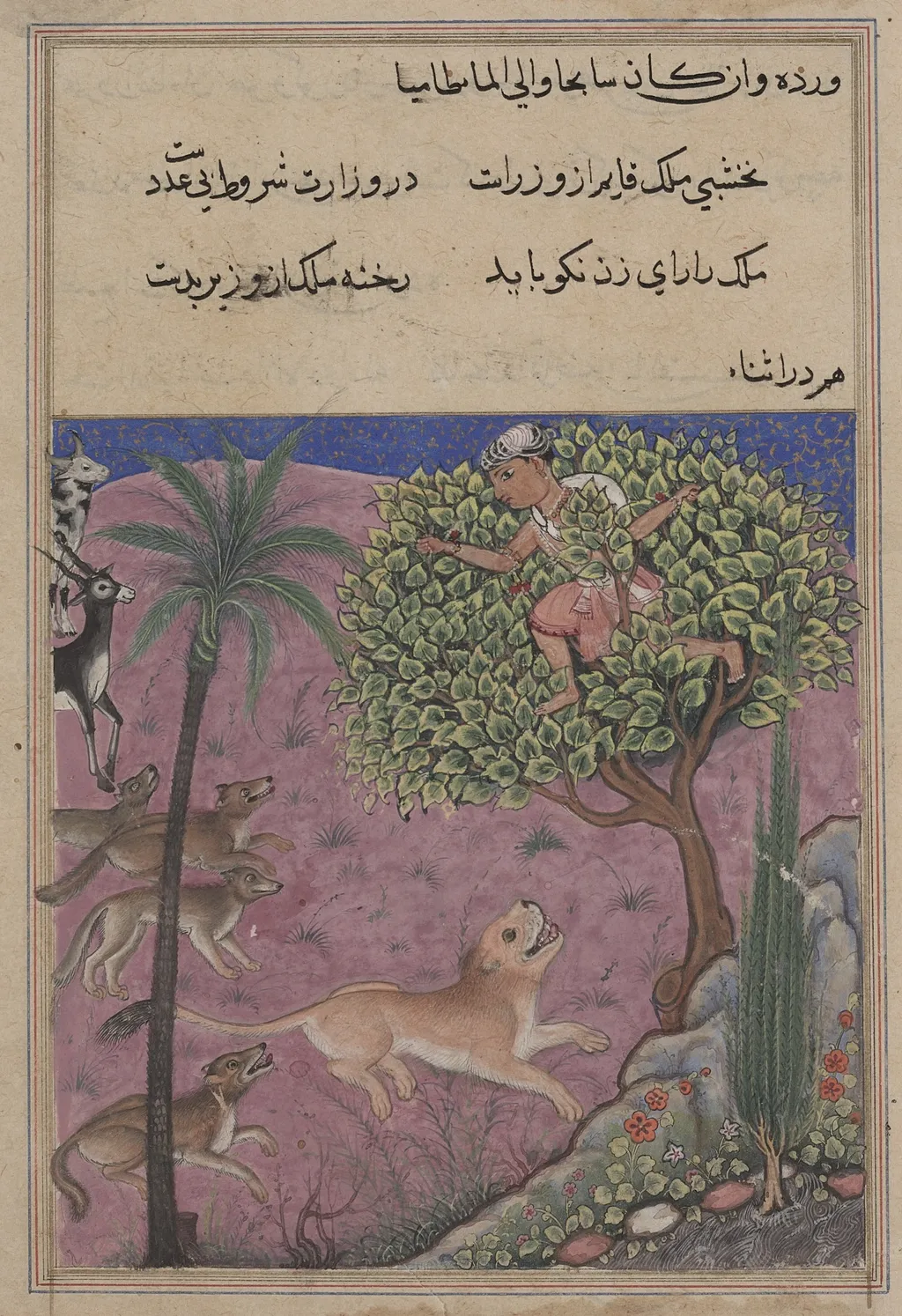
The wolf and the jackal, serving as viziers, instigate the lion who pursues the Brahman up a tree, from a Tuti-nama (Tales of a Parrot): Twenty-first Night is an unspecified painting. It dates from 1560 and is held in the collection of the Cleveland Museum of Art. The work depicts a dynamic chase scene rendered in vivid hues.
About this work
Subject & Meaning
The scene captures the narrative moment of deceitful counsel provoking violent action, reflecting the didactic purpose of the source text.
The painting illustrates a specific episode from the Tuti-nama (Tales of a Parrot), Twenty-first Night, in which the wolf and jackal, serving as the lion's viziers, incite the lion to pursue a Brahman who has taken refuge in a tree. Rendered as a Mughal miniature, the composition shows the two animal advisors gesturing toward the lion, which lunges upward, while the Brahman clings to the branches above. The scene captures the narrative moment of deceitful counsel provoking violent action, reflecting the didactic purpose of the source text.
History & Provenance
Created in 1560 within the Mughal Empire, this painting forms part of the illustrated manuscript known as the Tuti-nama (Tales of a Parrot). The work was produced by an artist whose specific identity remains unrecorded in available documentation. The folio entered the collection of the Cleveland Museum of Art, where it is catalogued under the accession number 1962.279.152.a, and has remained in the museum since its acquisition in 1962 as an example of mid-sixteenth-century Mughal painting.
Overview
The work depicts a dynamic chase scene rendered in vivid hues. A lion lunges upward toward a human figure clinging to a leafy branch, while a wolf and a jackal stand on the ground observing. Nearby, a deer and a goat are positioned as secondary figures. The backdrop features a pink‑tinged sky, a solitary palm, and scattered blossoms, creating a lively, narrative tableau.
Technique & Style
Executed in a miniature painting tradition, the piece employs bright mineral pigments and fine brushwork to delineate intricate details of foliage, fur, and textile patterns. The use of a flat, decorative background and stylized proportions reflects the aesthetic conventions of Persian manuscript illustration, while the lively color palette enhances the narrative’s theatrical quality.
Context
Originating from a manuscript of the Tuti‑nama, the painting belongs to a corpus of illustrated literary works that circulated in the Islamic world between the 14th and 16th centuries. Such manuscripts combined poetic storytelling with visual elaboration, serving both educational and entertainment purposes for elite audiences familiar with courtly literature.
Artist & collection

- The wolf and the jackal, serving as viziers, instigate the lion who pursues the Brahman up a tree, from a Tuti-nama (Tales of a Parrot): Twenty-first Night
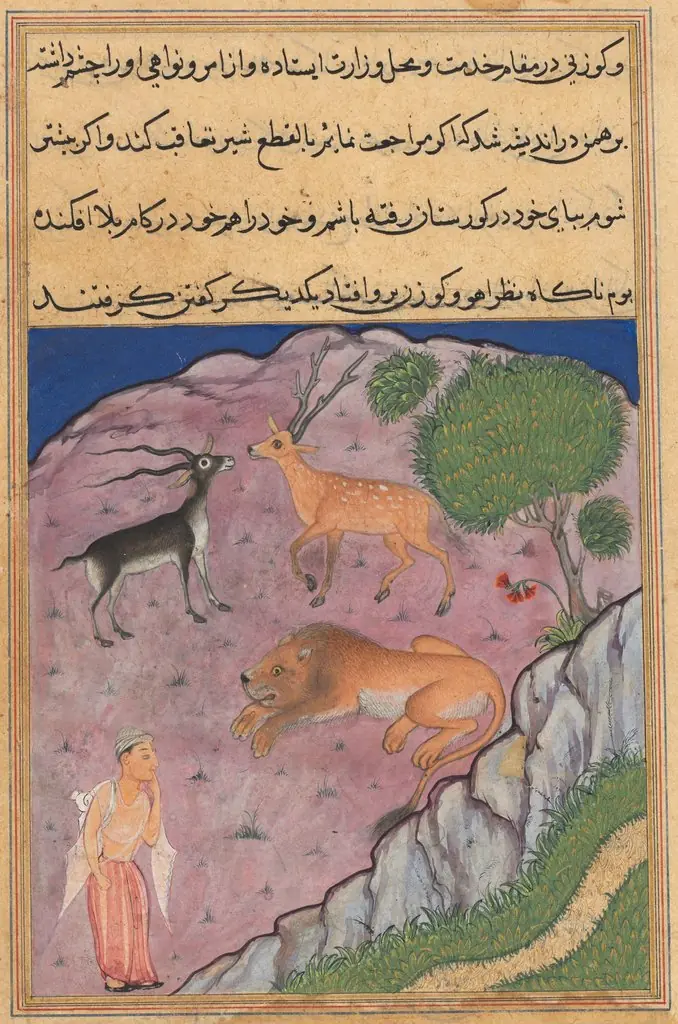 The Brahman comes upon a lion who has a deer and a gazelle as his viziers, from a Tuti-nama (Tales of a Parrot): Twenty-first Night
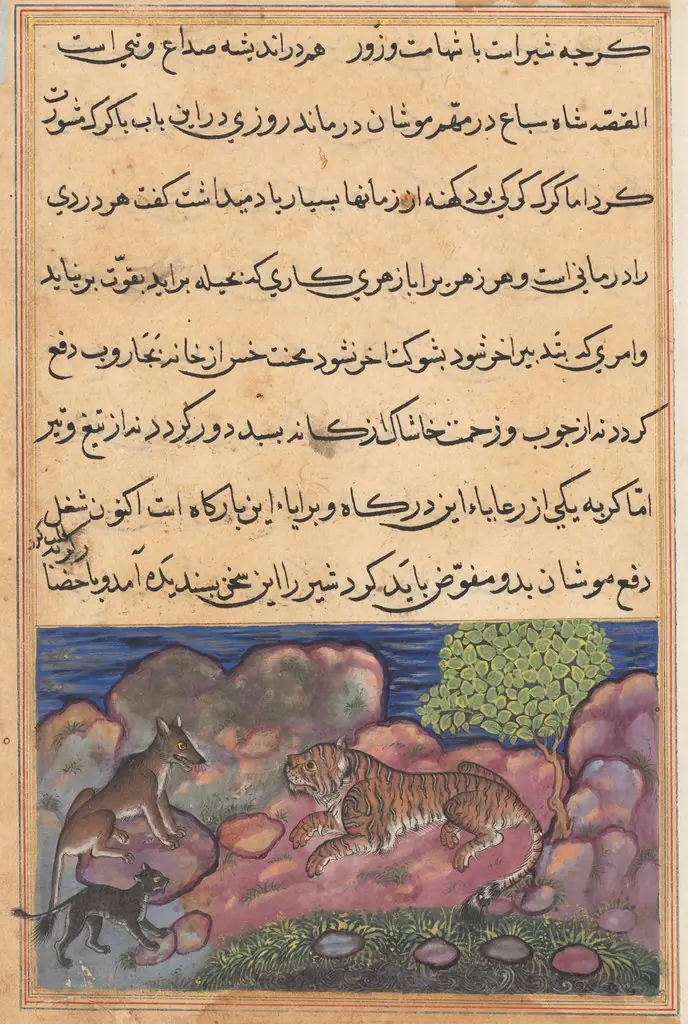 The wolf advises the lion to consult the cat, from a Tuti-nama (Tales of a Parrot): Fifteenth Night
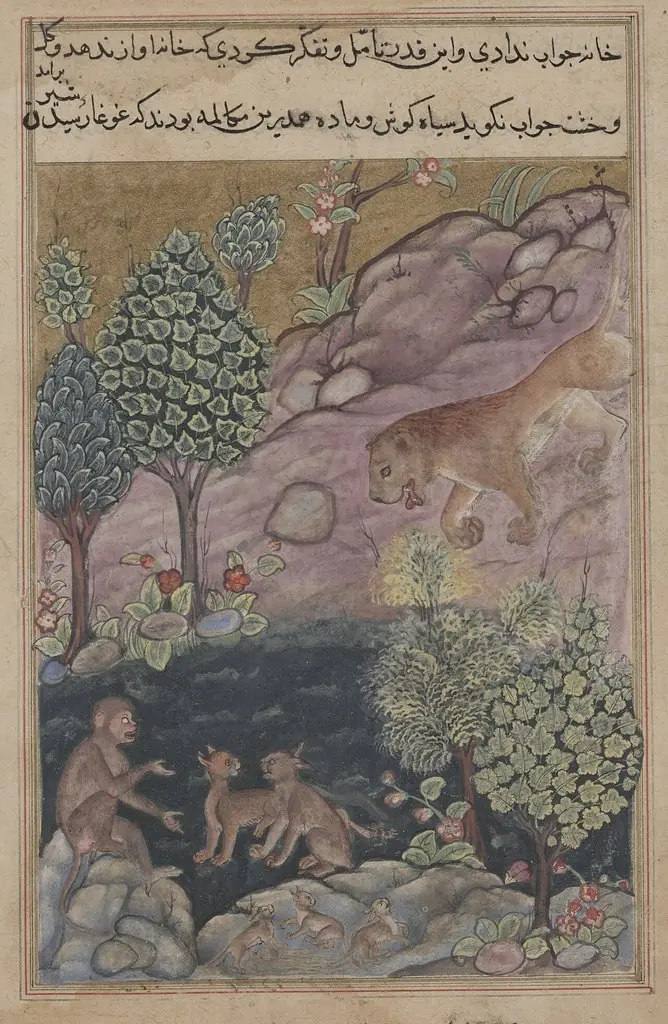 The lion returns to his territory and sees the monkey conversing with the lynx, from a Tuti-nama (Tales of a Parrot): Twenty-ninth Night
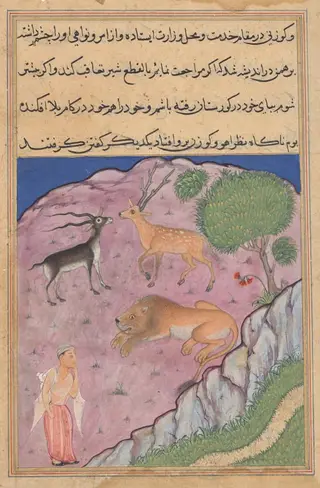 The Brahman comes upon a lion who has a deer and a gazelle as his viziers, from a Tuti-nama (Tales of a Parrot): Twenty-first Night
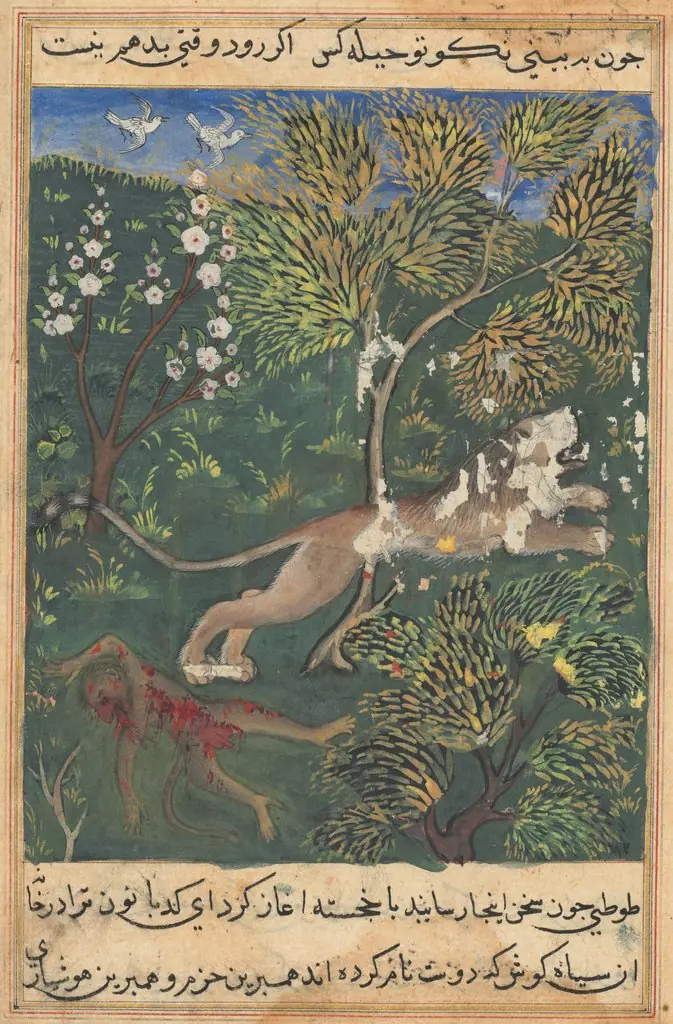 The lion, suspecting treachery on the part of the monkey, slays him and flees, from a Tuti-nama (Tales of a Parrot): Twenty-ninth Night
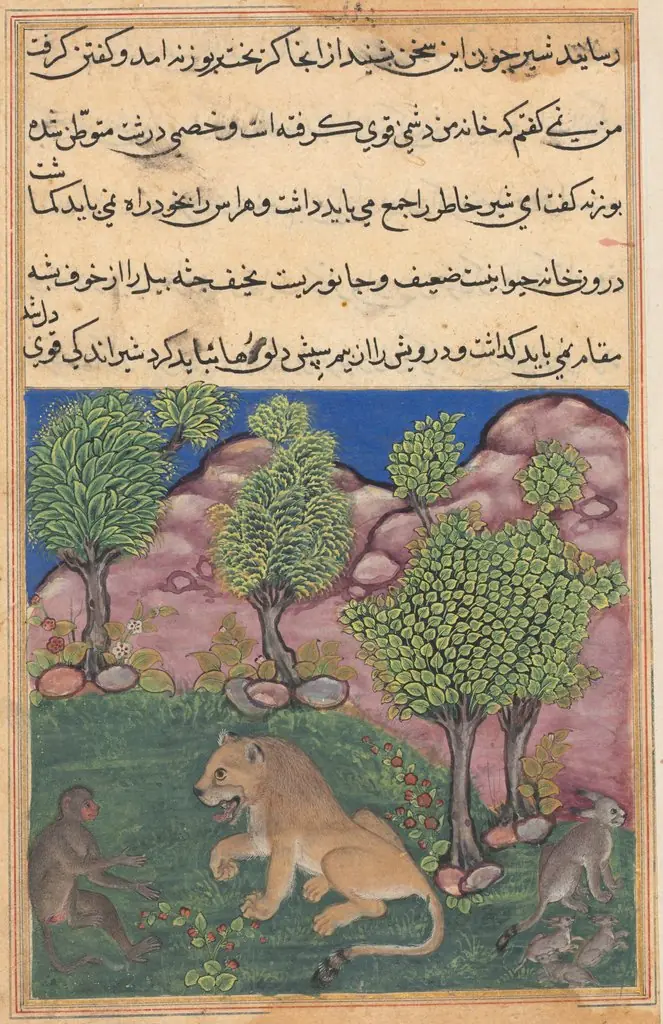 The monkey advises the suspicious lion to cast off fear and take possession of his territory, from a Tuti-nama (Tales of a Parrot): Twenty-ninth Night
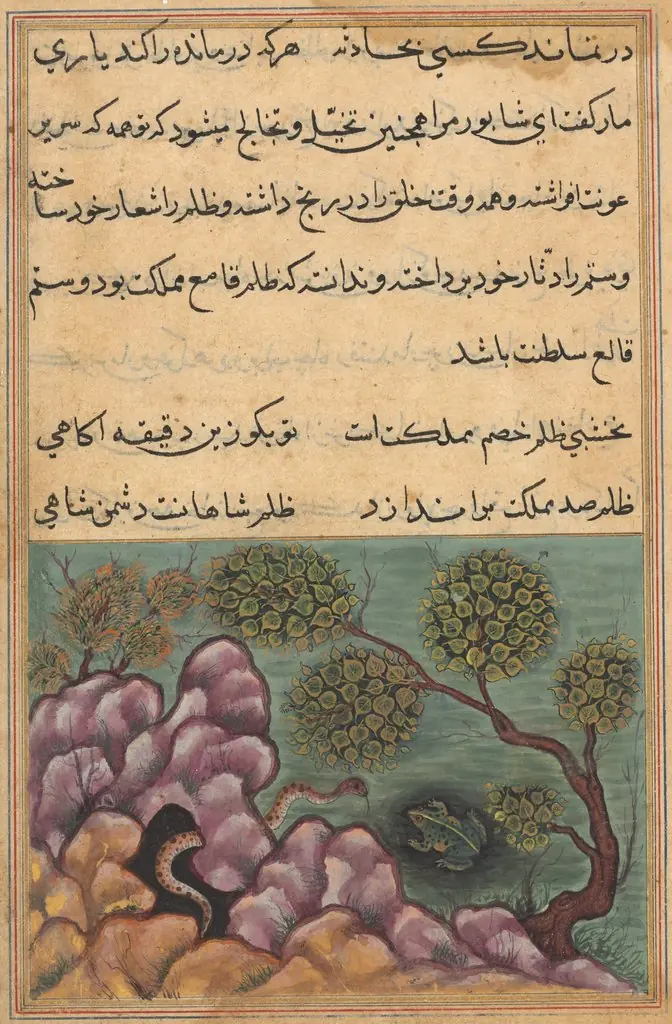 The dethroned frog Shapur seeks the help of the serpent, from a Tuti-nama (Tales of a Parrot): Twenth-sixth Night
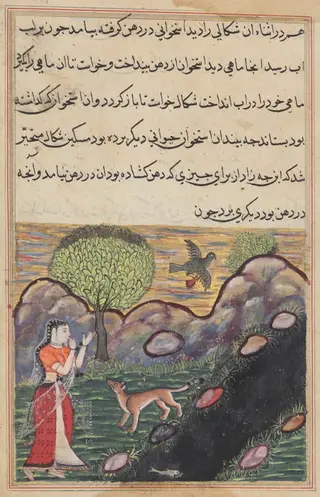 The daughter-in-law of the king of Banaras sees the jackal deprived of its food by a bird, as it unsuccessfully attempts to catch a fish, from a Tuti-nama (Tales of a Parrot): Sixteenth Night
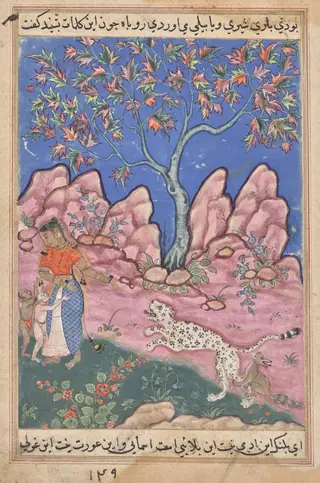 The woman conversing with her children, as the leopard returns, egged on by a fox who is tied to his leg, from a Tuti-nama (Tales of a Parrot): Thirtieth Night
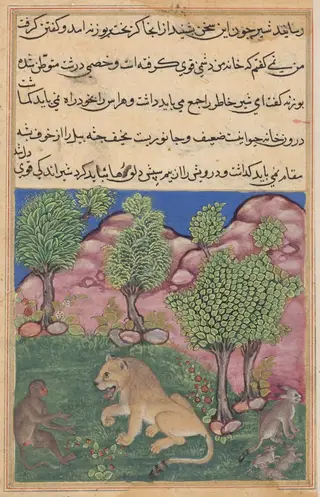 The monkey advises the suspicious lion to cast off fear and take possession of his territory, from a Tuti-nama (Tales of a Parrot): Twenty-ninth Night
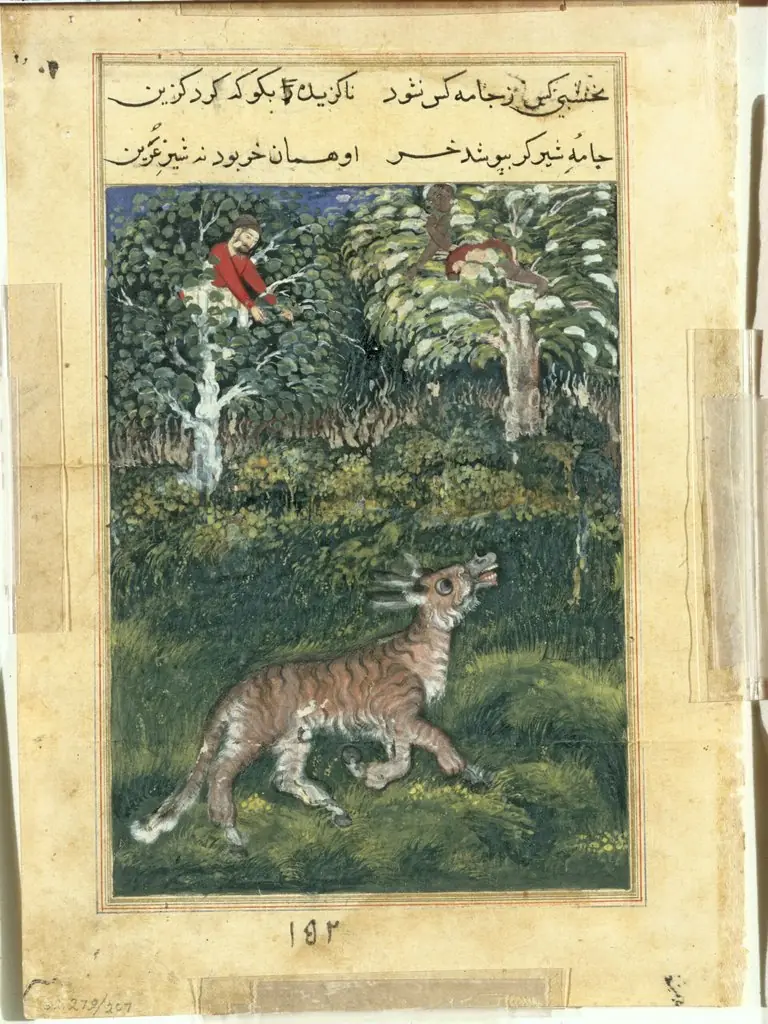 The donkey, in a tiger’s skin, reveals his identity by braying aloud, from a Tuti-nama (Tales of a Parrot): Thirty-first Night
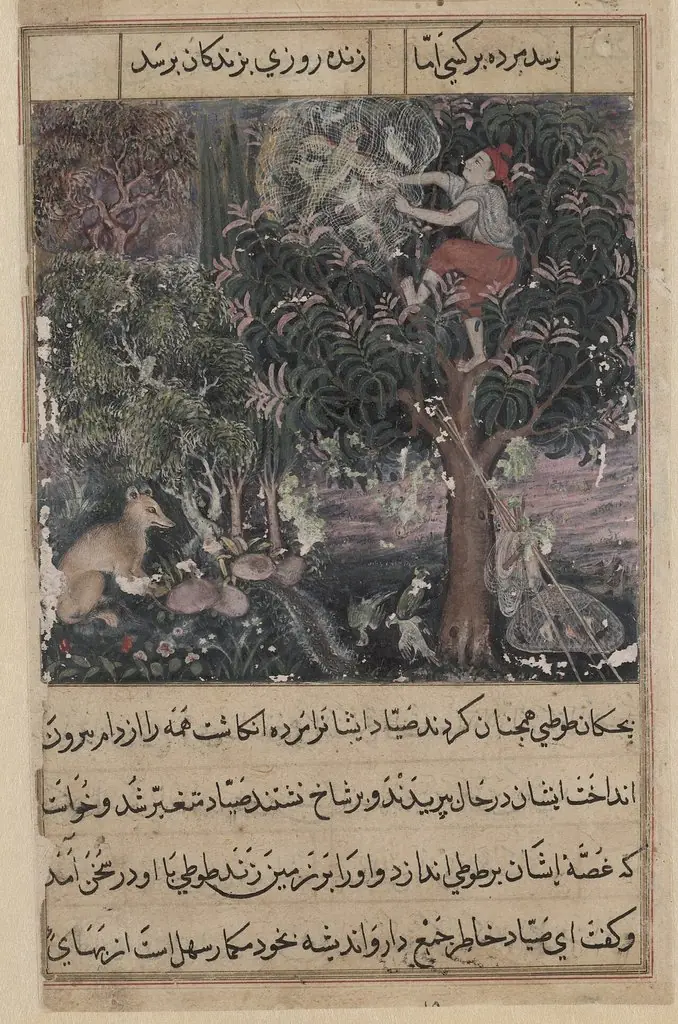 The hunter throws away the baby parrots, who pretend to be dead, and captures the mother, from a Tuti-nama (Tales of a Parrot): Fifth Night
 The hunter throws away the baby parrots, who pretend to be dead, and captures the mother, from a Tuti-nama (Tales of a Parrot): Fifth Night
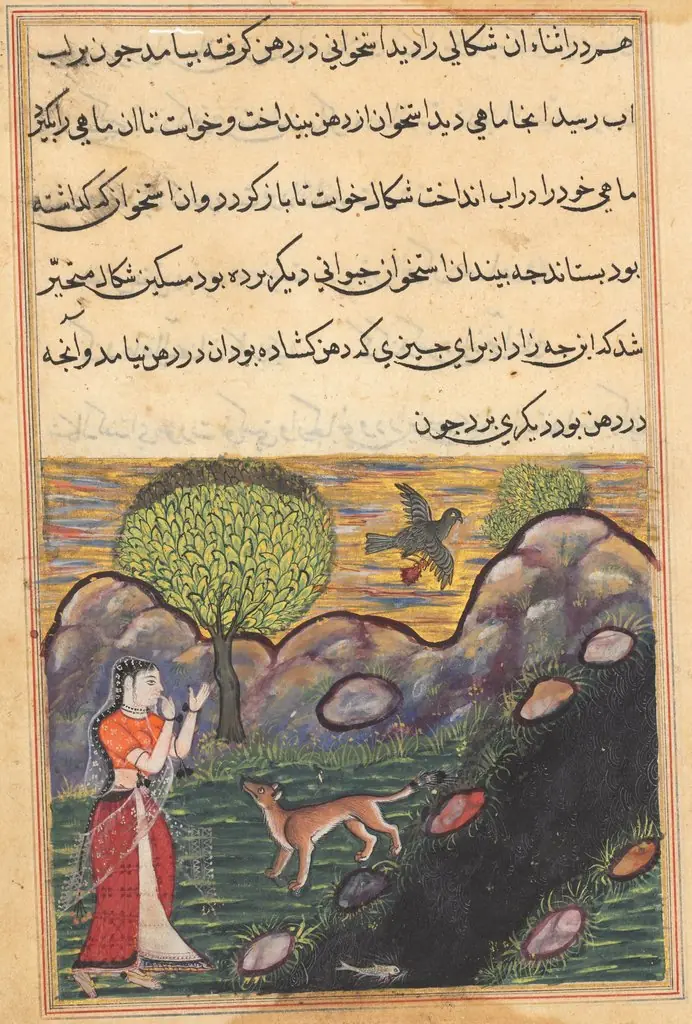 The daughter-in-law of the king of Banaras sees the jackal deprived of its food by a bird, as it unsuccessfully attempts to catch a fish, from a Tuti-nama (Tales of a Parrot): Sixteenth Night
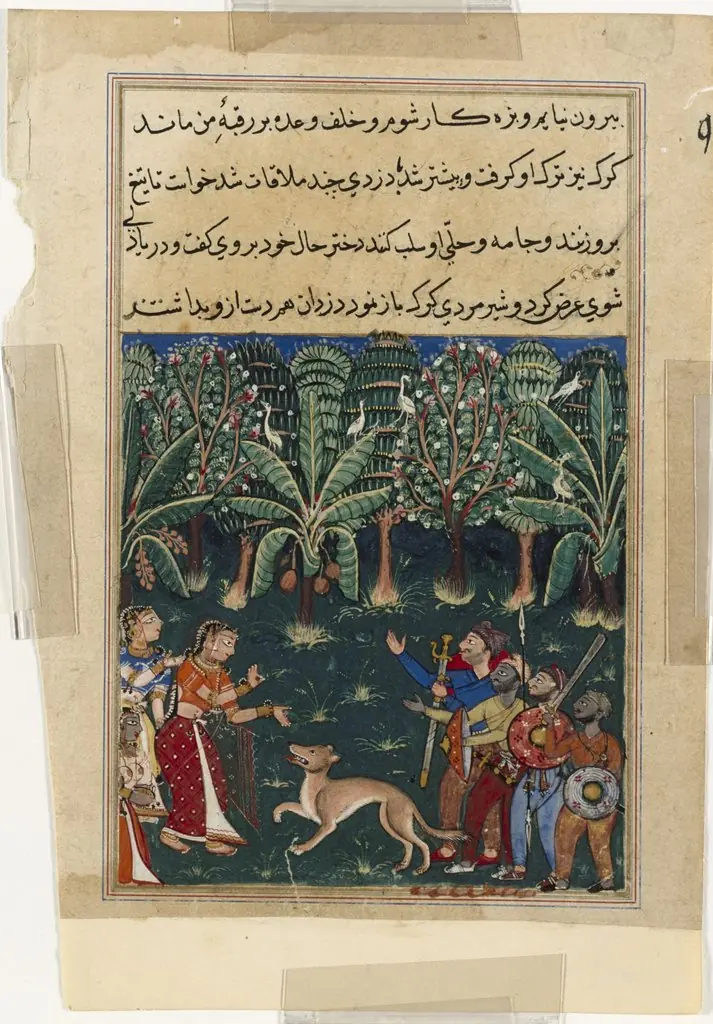 The merchant’s daughter encounters a wolf and bandits on her way to meet the gardener in order to keep her promise, from a Tuti-nama (Tales of a Parrot): Twelfth Night
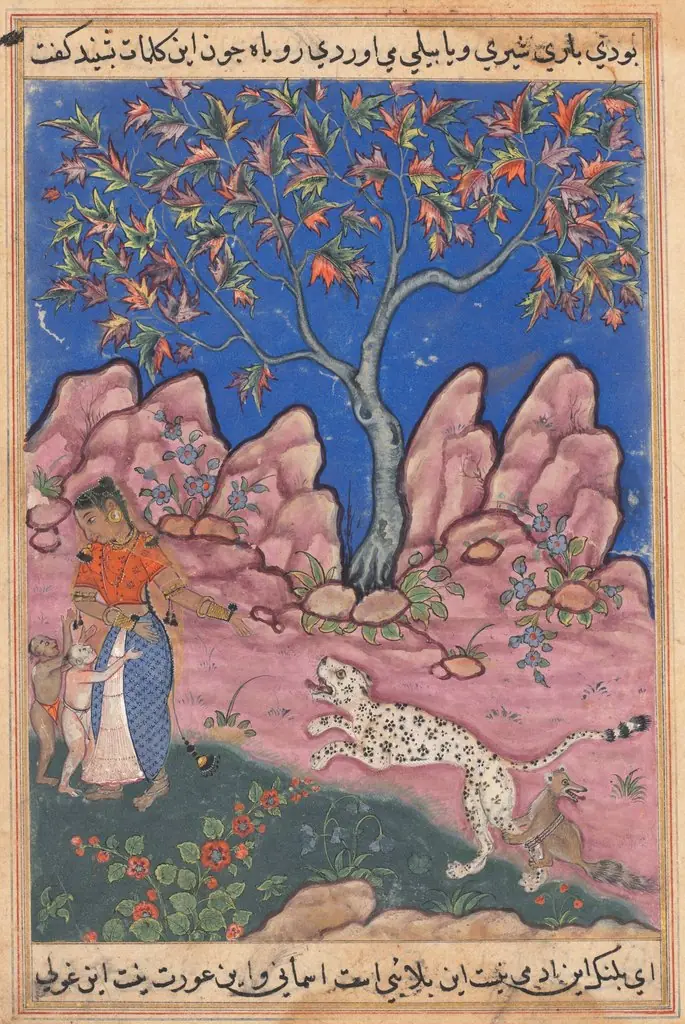 The woman conversing with her children, as the leopard returns, egged on by a fox who is tied to his leg, from a Tuti-nama (Tales of a Parrot): Thirtieth Night