Artwork
The parrot brings a fruit from the Tree of Life to the king of Syria, from a Tuti-nama (Tales of a Parrot): Ninth Night
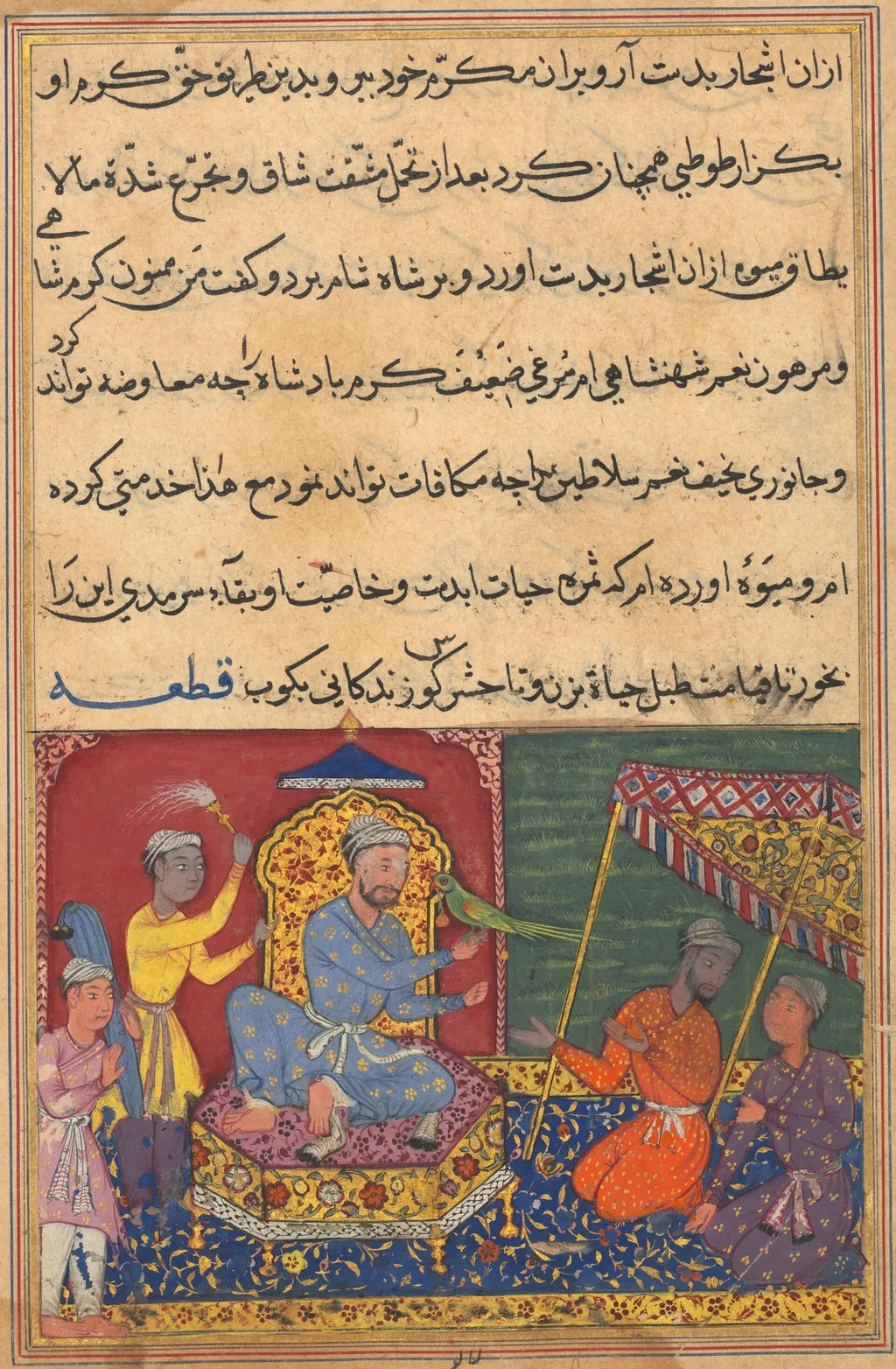
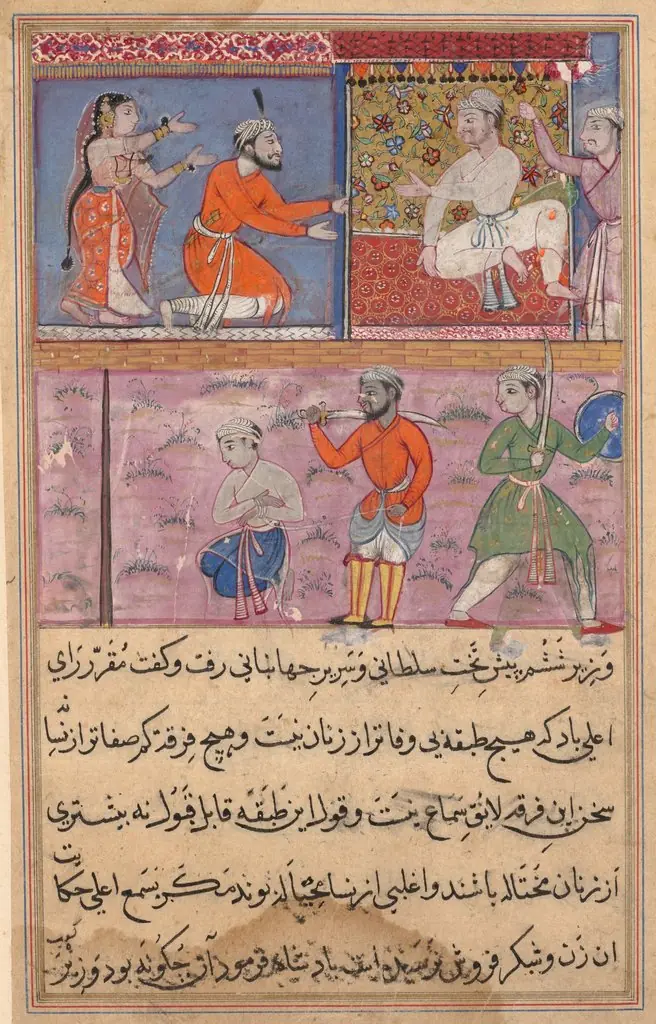
The parrot brings a fruit from the Tree of Life to the king of Syria, from a Tuti-nama (Tales of a Parrot): Ninth Night is an unspecified painting. It dates from 1560 and is held in the collection of the Cleveland Museum of Art. The work illustrates a scene from the ninth night of the Persian "Tuti-nama" (Tales of a Parrot).
About this work
Subject & Meaning
This narrative moment shows the parrot acting as a messenger delivering a magical gift, a motif that underscores the tale’s themes of wonder and royal favor.
The painting illustrates a scene from the Ninth Night of the Tuti-nama (Tales of a Parrot) in which a parrot carries a fruit from the Tree of Life to the king of Syria. This narrative moment shows the parrot acting as a messenger delivering a magical gift, a motif that underscores the tale’s themes of wonder and royal favor. Created in the Mughal Empire around 1560, the work reflects the court’s interest in illustrated literary manuscripts that combine exotic storytelling with vivid visual detail.
History & Provenance
The painting was created in 1560 within the Mughal Empire. It is classified as a painting and is held in the collection of the Cleveland Museum of Art, where it carries the accession number 1962.279.75.b. The work is attributed to an unknown artist.
Overview
The work illustrates a scene from the ninth night of the Persian "Tuti-nama" (Tales of a Parrot). A ruler seated beneath a red pavilion holds a green parrot on his wrist, while three attendants in vivid yellow, orange and blue garments stand or kneel nearby. The composition is divided by a bifurcated background: a red field adorned with gold motifs opposite a green area covered by a striped canopy. A flowing inscription crowns the scene, giving it the appearance of an illuminated manuscript page.
Technique & Style
Executed in miniature painting technique, the piece employs fine brushwork and a limited palette of saturated reds, greens, gold and bright secondary hues. Gold leaf highlights the ornamental patterns on the pavilion, and the delicate calligraphic script above the scene integrates text and image in a manner characteristic of Persian illustrated books of the early modern period.
Context
Within the broader tradition of Persian courtly illustration, the scene reflects the synthesis of literary storytelling and visual opulence that defined Safavid patronage. The use of a parrot as a narrative device echoes earlier Islamic manuscript motifs, while the vivid coloration and gold detailing illustrate the period’s emphasis on visual splendor in courtly gifts.
Artist & collection

- The parrot brings a fruit from the Tree of Life to the king of Syria, from a Tuti-nama (Tales of a Parrot): Ninth Night
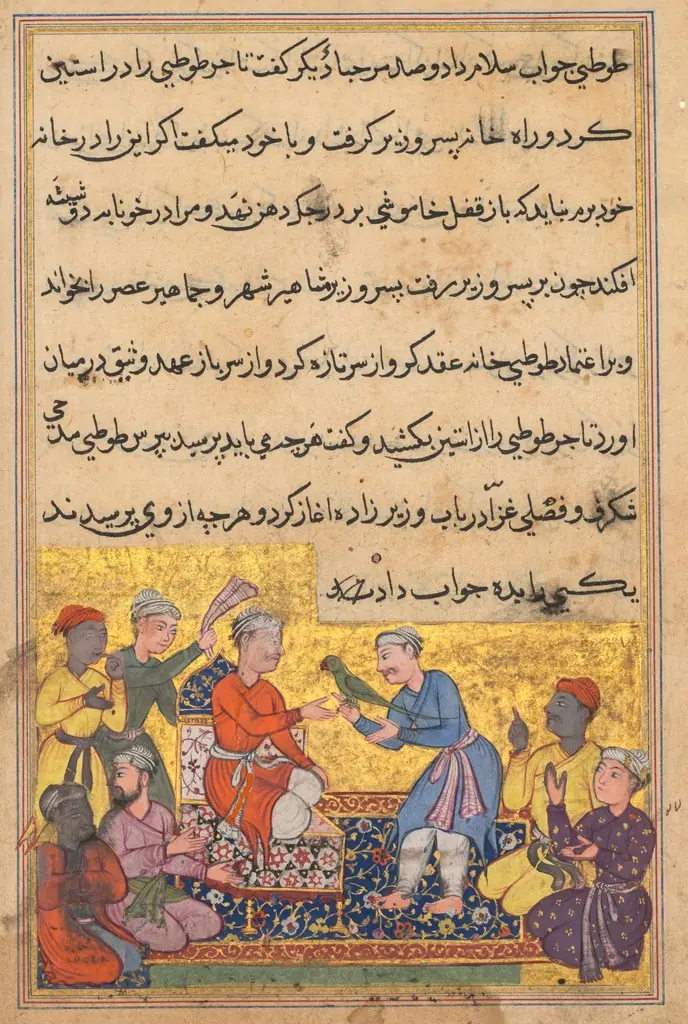 The magic parrot of the merchant talks to the vizier’s son, from a Tuti-nama (Tales of a Parrot): Tenth Night
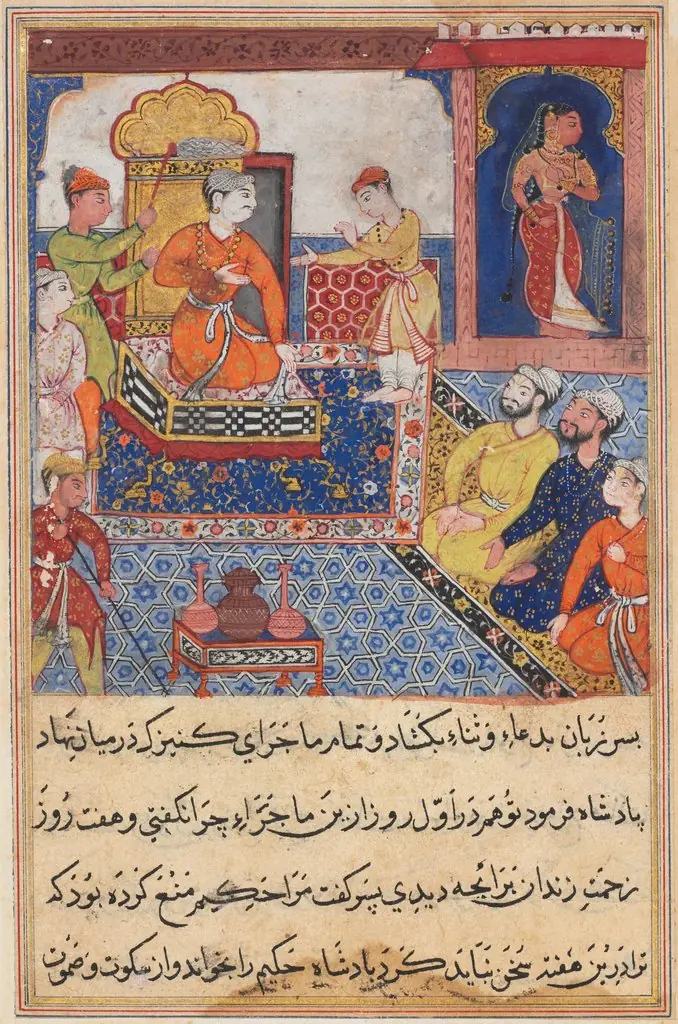 The young prince recounts his experiences to his father, the king, from a Tuti-nama (Tales of a Parrot): Eighth Night
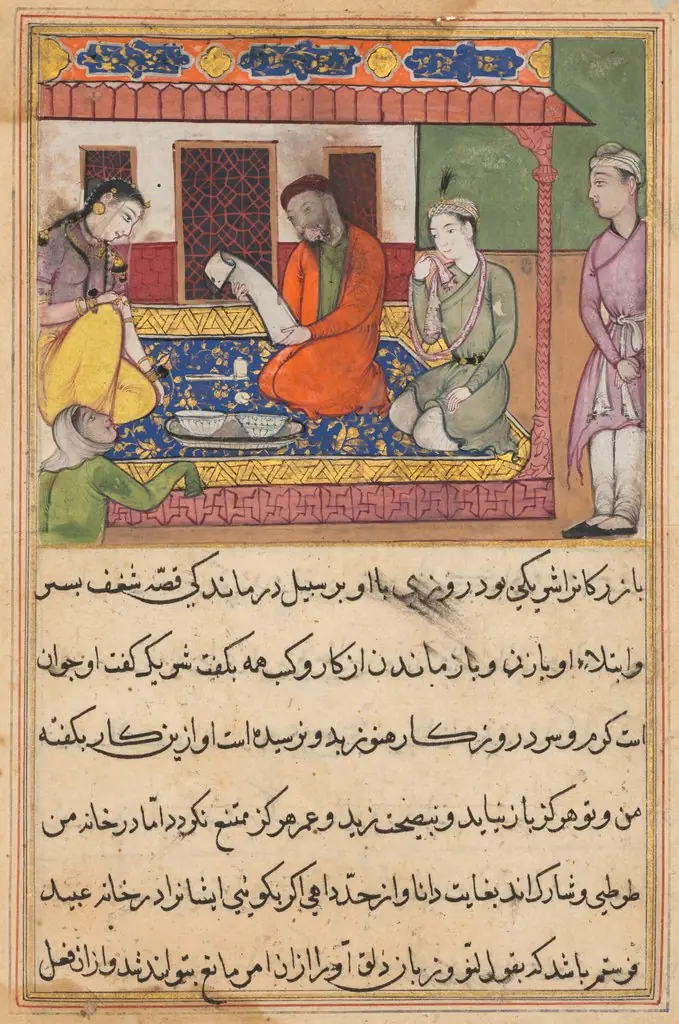 The marriage of ‘Ubaid, son of a merchant of Tirmiz, from a Tuti-nama (Tales of a Parrot): Forty-second Night
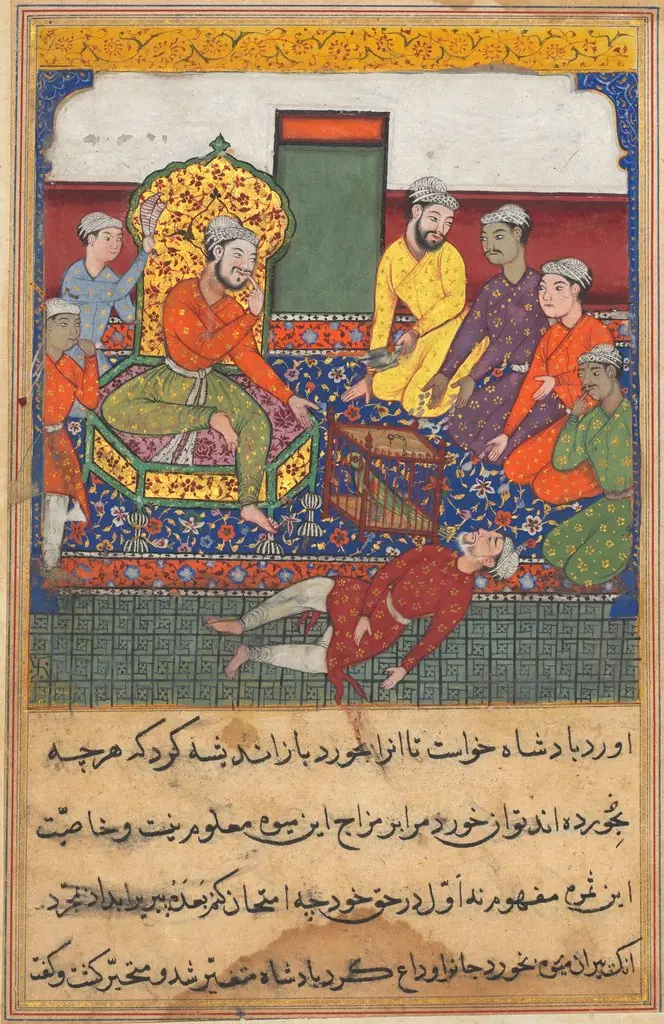 The old man eats of the fruit of the Tree of Life, but drops dead, from a Tuti-nama (Tales of a Parrot): Ninth Night
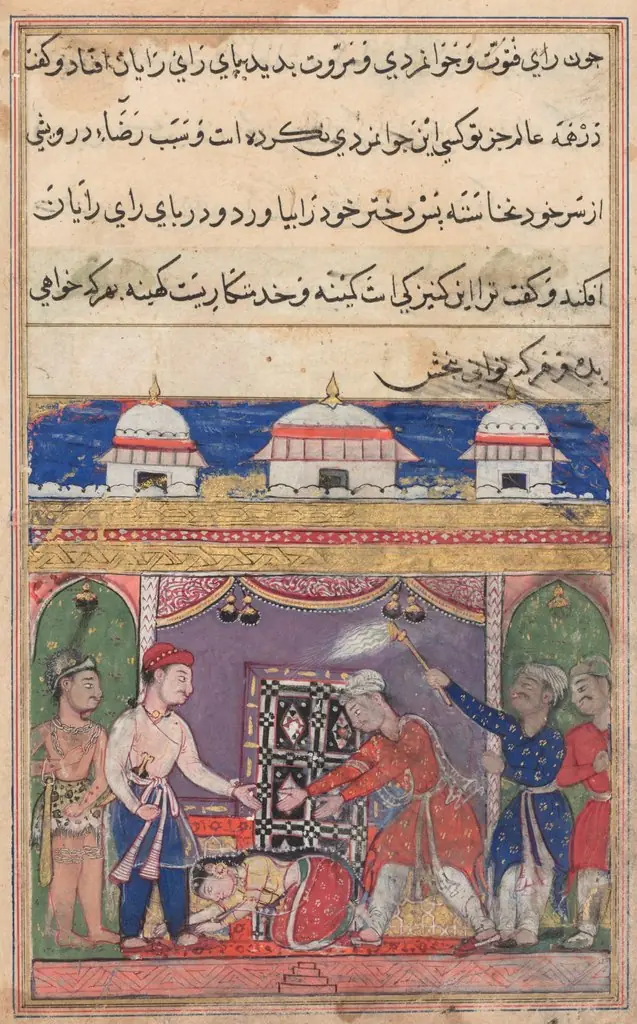 The king of Bahilistan offers his daughter to the King of Kings, from a Tuti-nama (Tales of a Parrot): Seventh Night
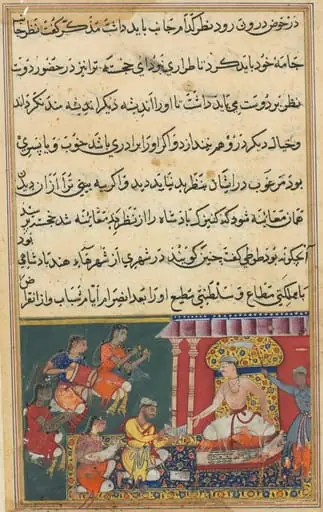 The astrologer predicts a calamity for the newly born prince in his thirteenth year, but one which he would be able to overcome, from a Tuti-nama (Tales of a Parrot): Eighth Night
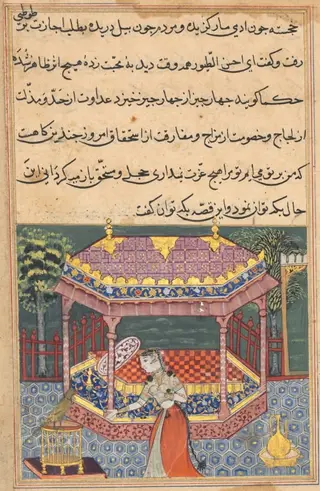 The parrot addresses Khujasta at the beginning of the thirty-seventh night, from a Tuti-nama (Tales of a Parrot)
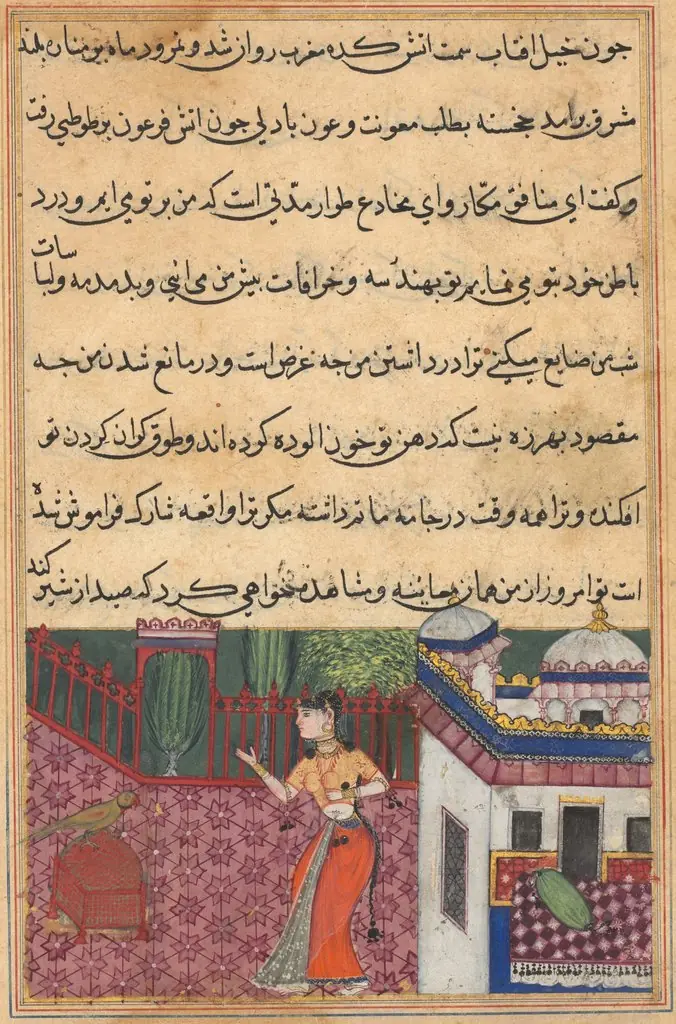 The parrot addresses Khujasta at the beginning of the thirty-third night, from a Tuti-nama (Tales of a Parrot)
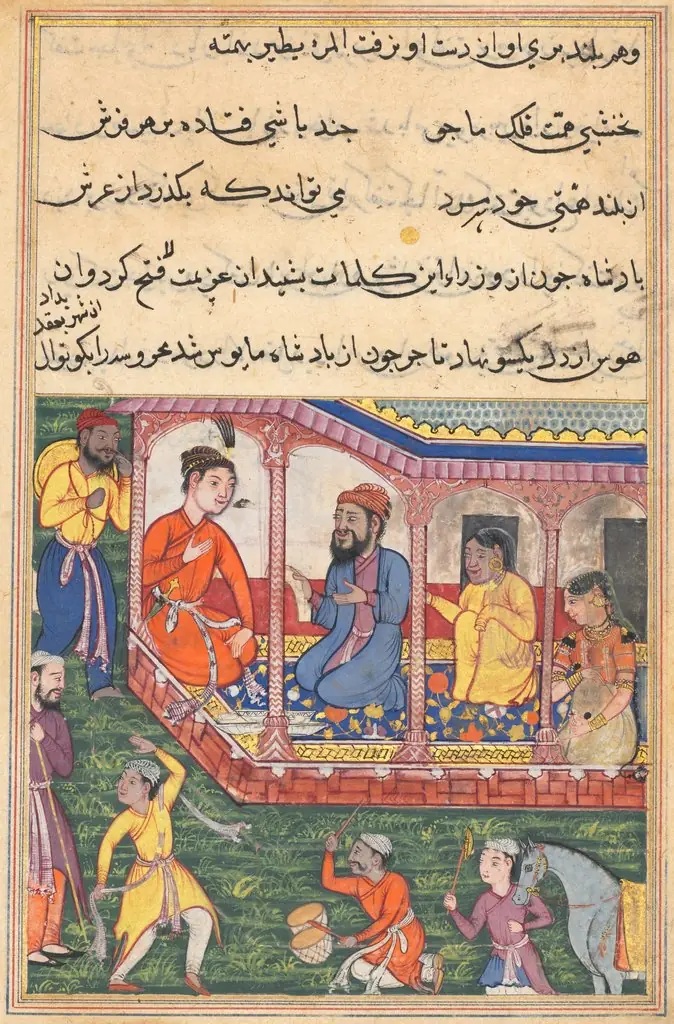 Mahrusa’s marriage to the prefect of the city, from a Tuti-nama (Tales of a Parrot): Thirty-sixth Night
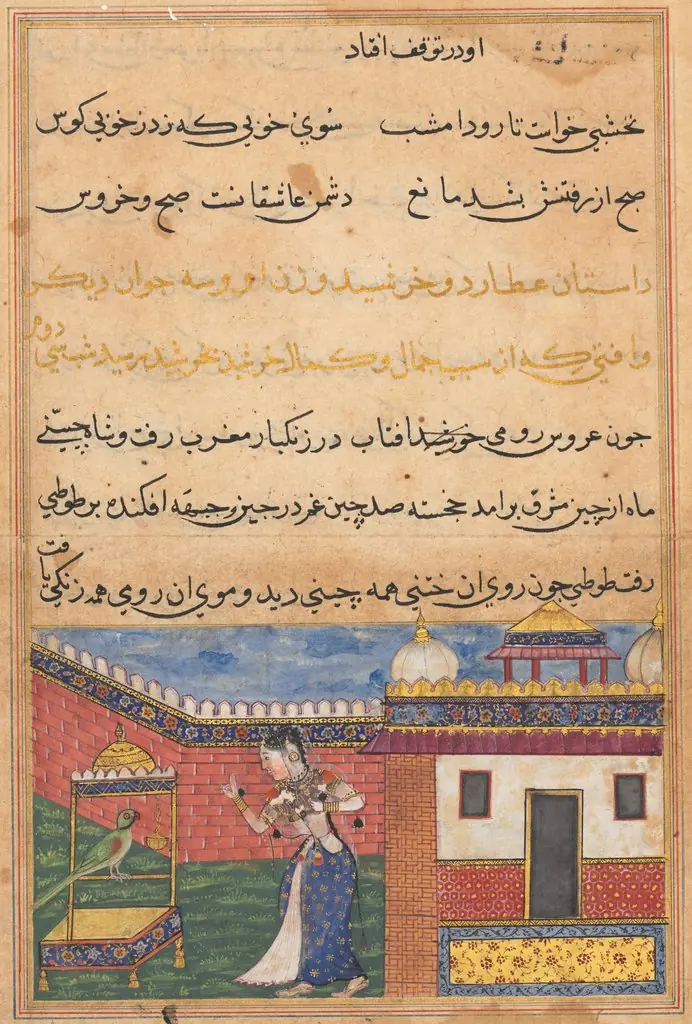 The parrot addresses Khujasta at the beginning of the thirty-second night, from a Tuti-nama (Tales of a Parrot)
 Page from Tales of a Parrot (Tuti-nama): text page