Artwork
The Raising of Lazarus
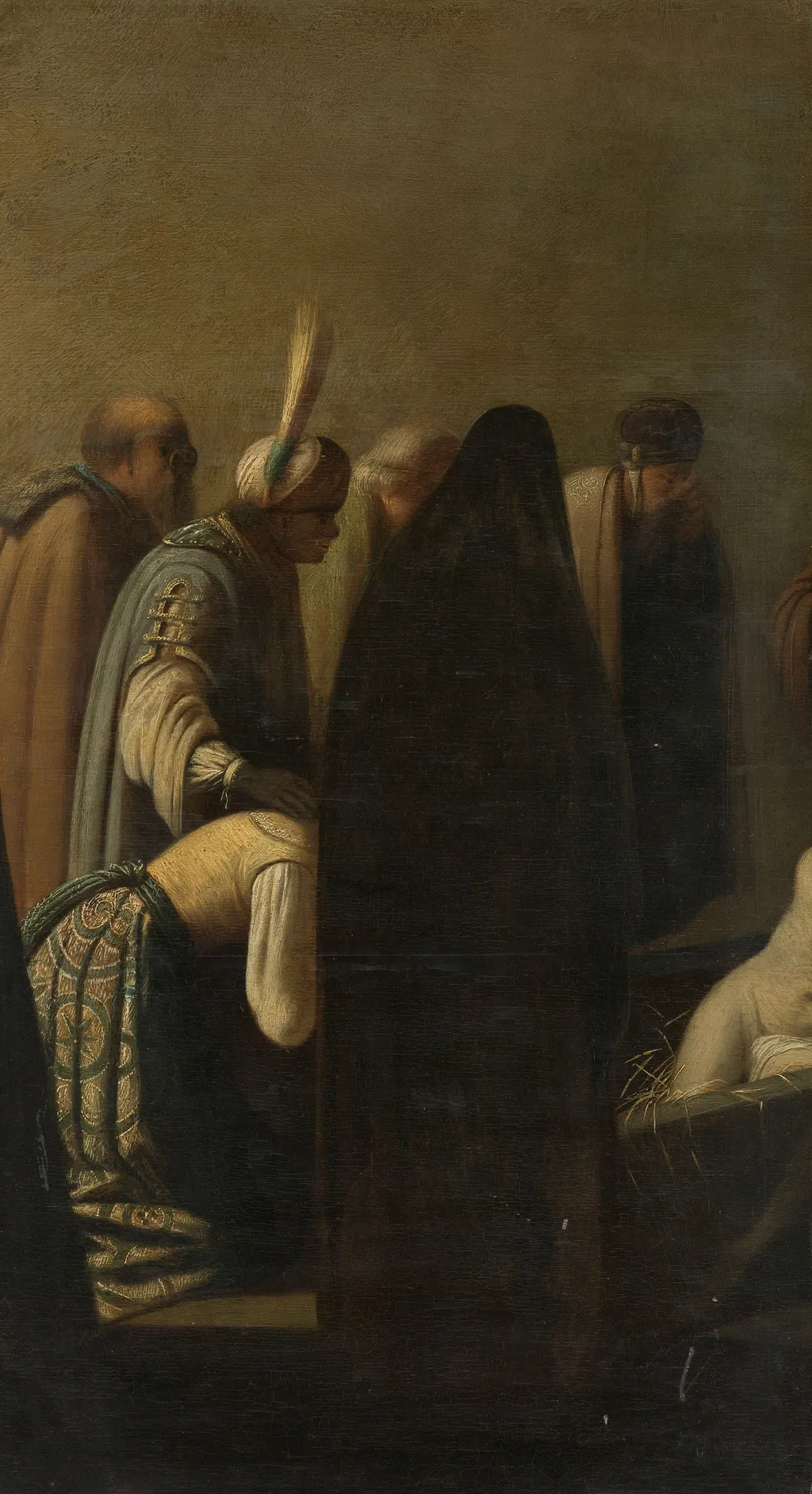
The Raising of Lazarus is an oil painting. It dates from 1630 and is held in the collection of the Rijksmuseum.
About this work
Subject & Meaning
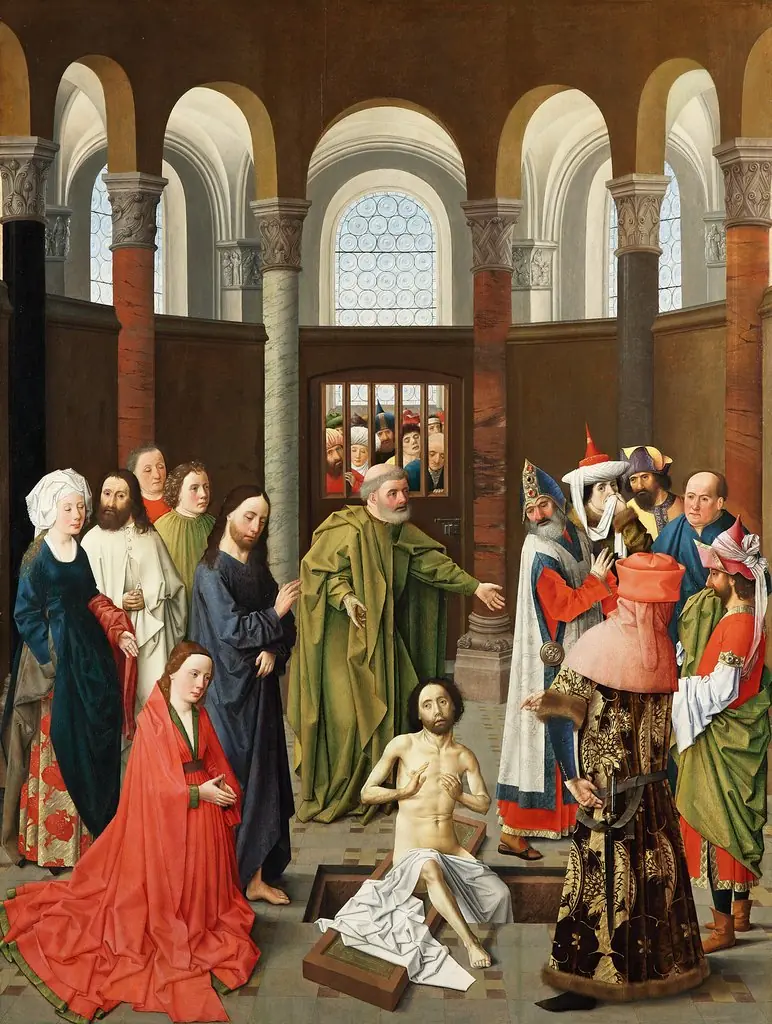
The painting depicts the Raising of Lazarus, a miracle from the New Testament in which Jesus restores Lazarus of Bethany to life after four days in the tomb.
The painting depicts the Raising of Lazarus, a miracle from the New Testament in which Jesus restores Lazarus of Bethany to life after four days in the tomb. The work is classified as religious art, and Lazarus's resurrection is identified as the main subject of the composition.
The scene was a popular subject in Counter-Reformation religious painting, used to illustrate themes of faith, divine power over death, and the promise of resurrection. By focusing on this biblical episode, the artist engages with a narrative that emphasizes spiritual renewal and the triumph of Christ over mortality.
Rendered in oil on a small panel measuring 62 by 35 centimeters, the intimate scale suits the devotional character of the subject, inviting close contemplation of the miracle's theological significance.
Technique & Style
Executed in 1630, this religious painting utilizes oil paint applied to a wooden panel support. The work measures 62 cm in height and 35 cm in width. As a piece by Rembrandt held in the Rijksmuseum collection, the composition depicts the biblical narrative of the Raising of Lazarus.
The combination of oil medium and panel was a standard approach for the artist during this period, allowing for the specific textural qualities associated with his early style.
History & Provenance
The painting was created in 1630 as an oil on panel work titled The Raising of Lazarus, commissioned as a religious artwork. It entered the collection of the Rijksmuseum in Amsterdam, where it remains held today under the stewardship of Stichting Nederlands Kunstbezit and the Dienst Verspreide Rijkscollecties.
The Raising of Lazarus is held in the Rijksmuseum, Amsterdam, where it is catalogued under the inventory number SK-A-1630. The work was created in 1630 and has been part of the museum’s collection since its acquisition, forming a central piece in exhibitions of Dutch Golden Age religious paintings.
Context
The Raising of Lazarus, painted by Rembrandt van Rijn in 1630, stands as a pivotal religious composition within his oeuvre and the broader Dutch Golden Age. Executed in oil on panel, the work exemplifies his mastery of chiaroscuro and psychological depth, particularly in the dramatic rendering of figures emerging from darkness. This painting reflects the enduring influence of Caravaggisti techniques adapted to Dutch sensibilities, situating it within the evolution of biblical narrative painting.
Its physical dimensions, measuring 62 cm in height and 35 cm in width, confirm its status as a relatively intimate yet intensely composed piece, currently housed in the Rijksmuseum, Amsterdam, where it remains a focal point for scholarly analysis of Rembrandt's late religious works and his engagement with Counter-Reformation themes.
Overview
The work, titled The Raising of Lazarus, is an oil painting that presents a dimly illuminated interior. Four figures occupy the composition: a man in a white turban and richly decorated robe kneels beside a bed, a cloaked figure stands nearby, and a third individual wearing a feathered hat observes from the side. The palette is dominated by deep browns and subdued golds, with a gentle light falling on the kneeling man’s face and hands.
Artist & collection

- The raising of Lazarus
 Una escena de la Inquisición
 Offering to the fatherland by the Widow of Jacob van Artevelde
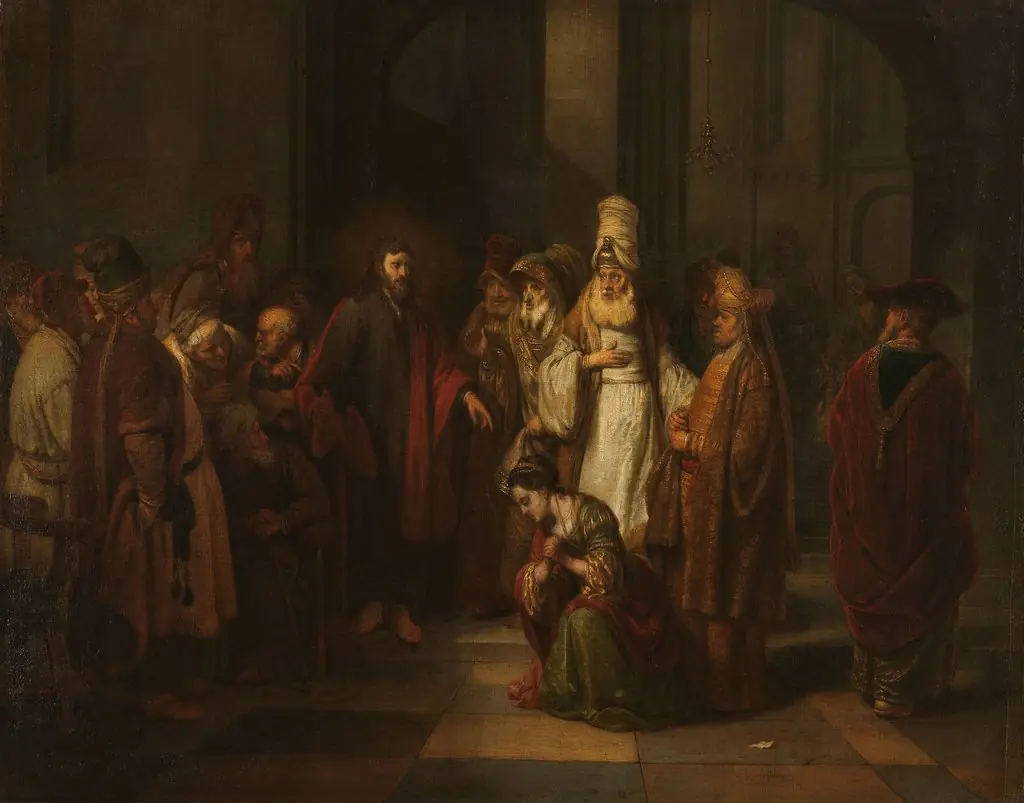 Christus and the woman in adultery
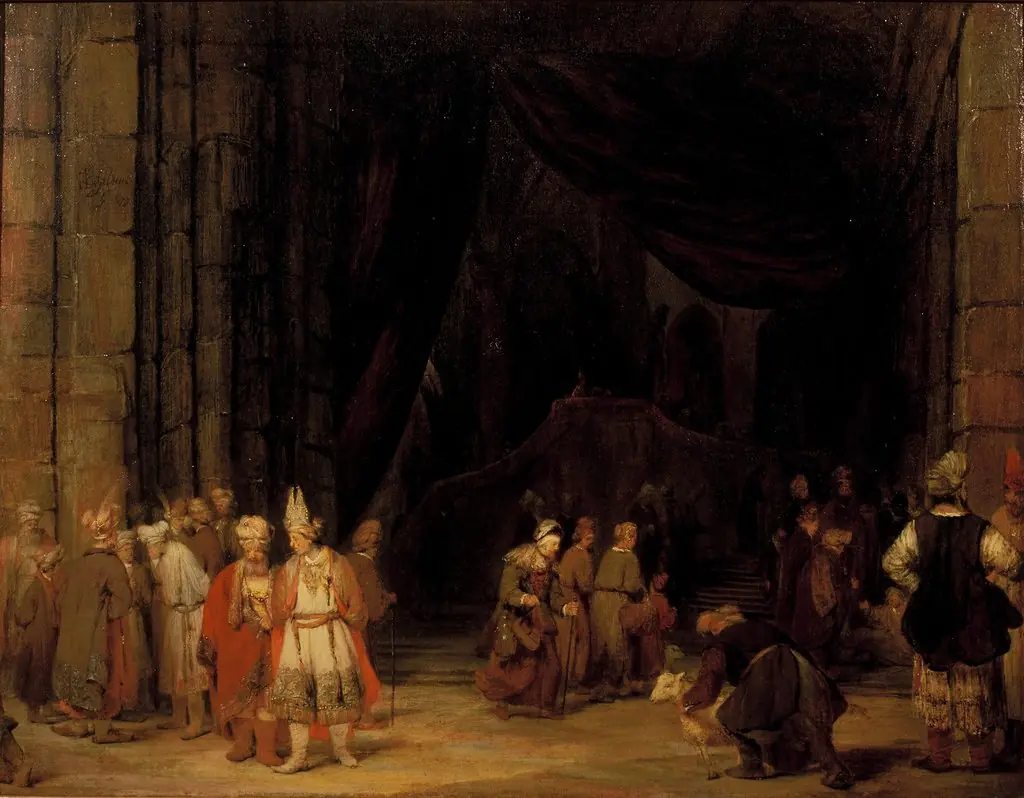 Courtyard of a temple
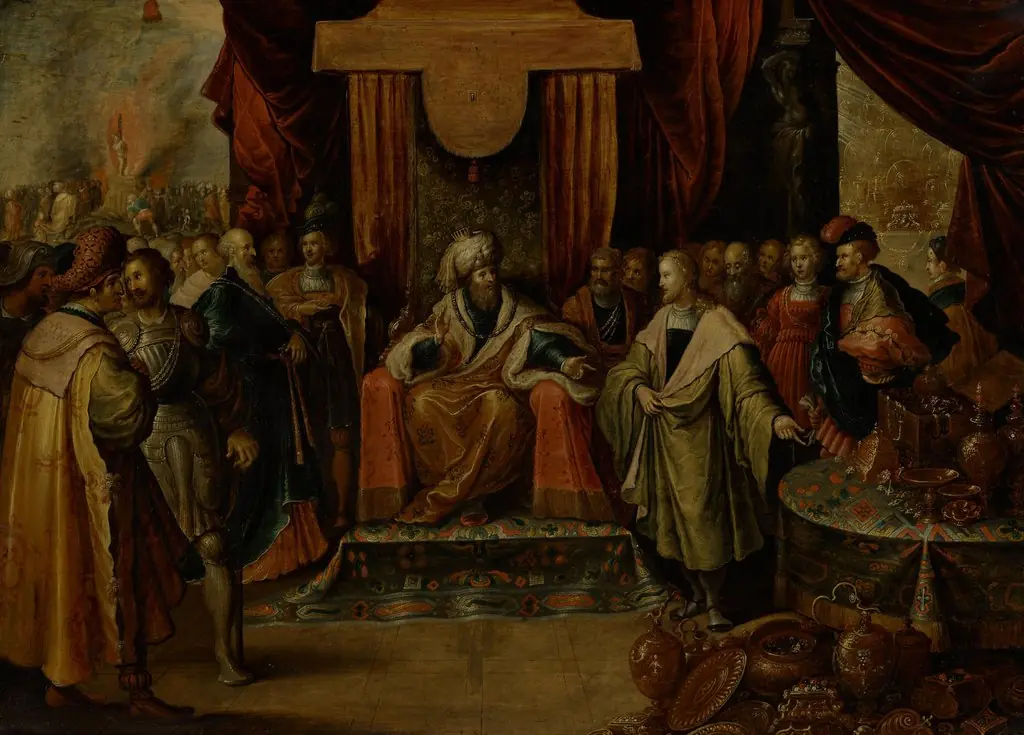 Solon und Krösus
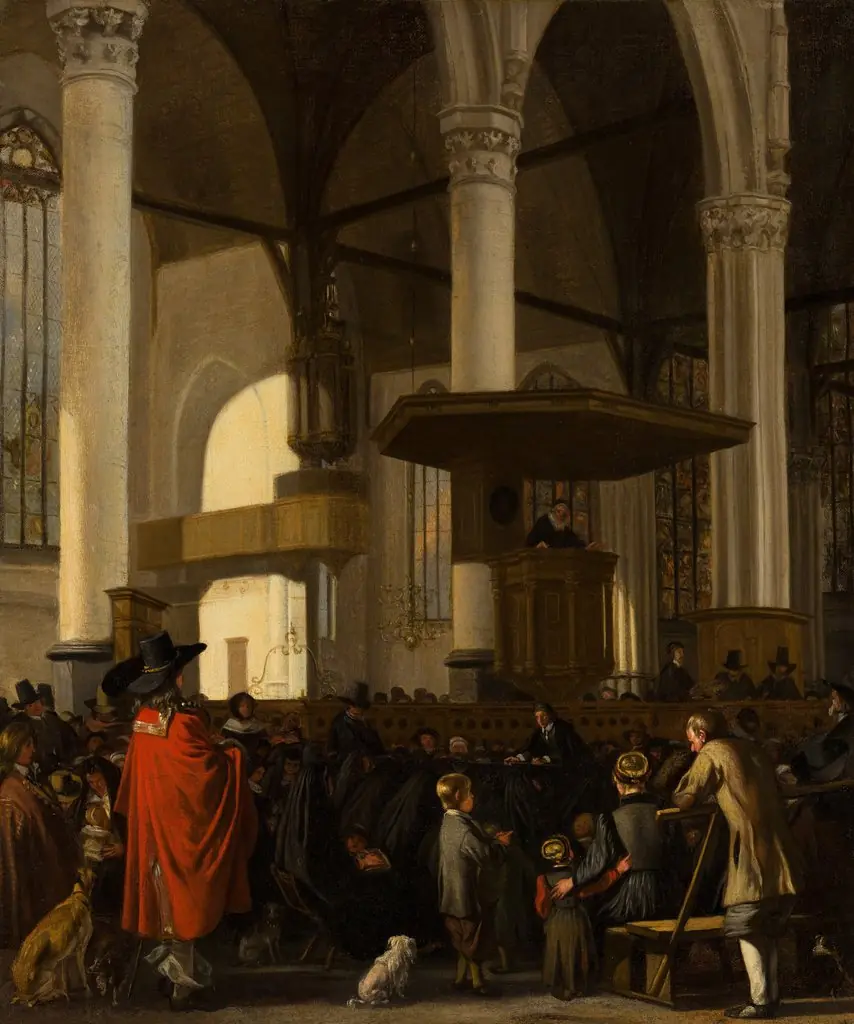 The Oude Kerk in Amsterdam during a Service
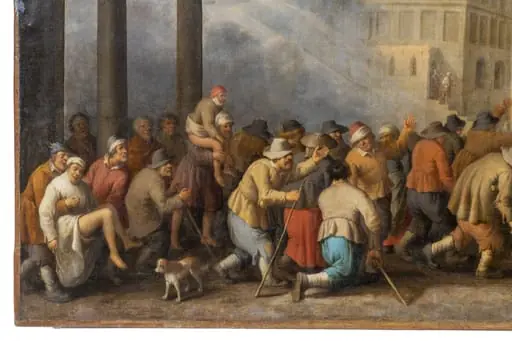 Apa Bethesdei
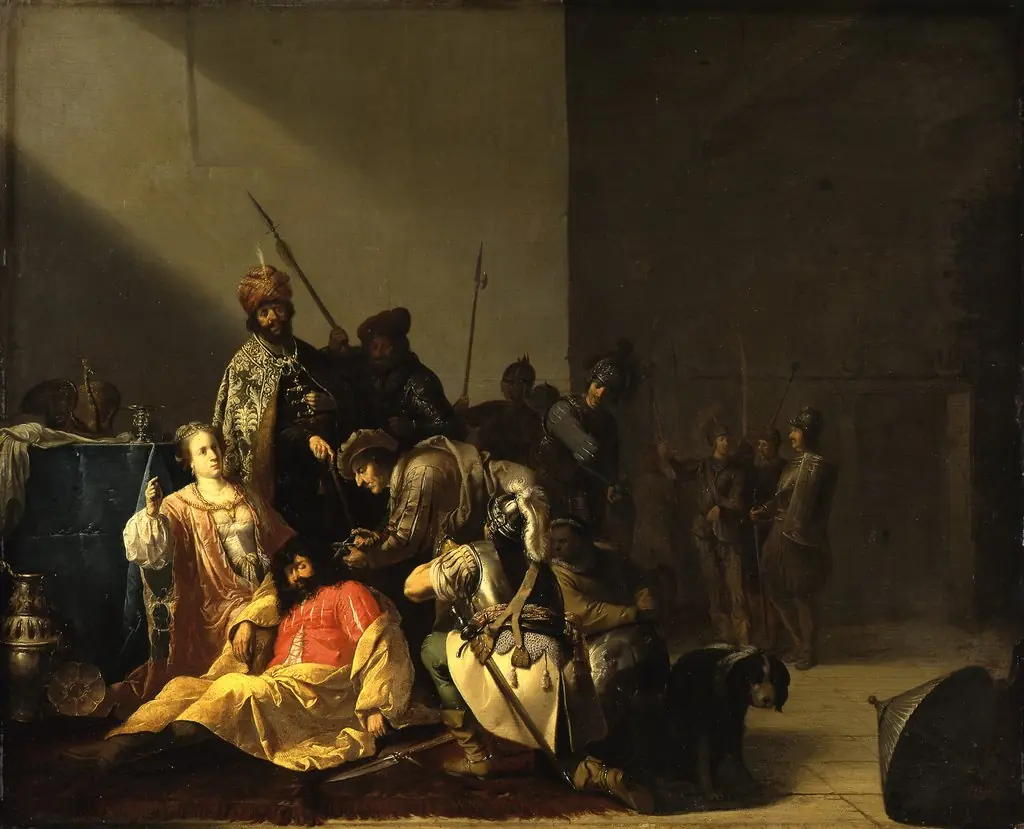 Samson and Delilah
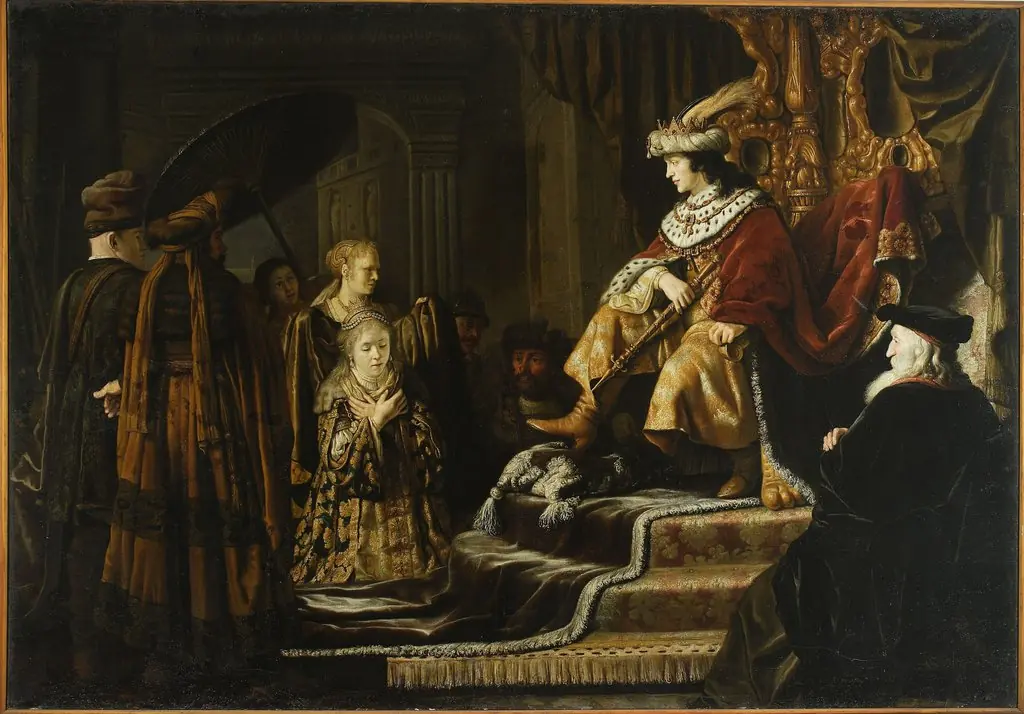 Esther before Ahasuerus (Esther 2:16)
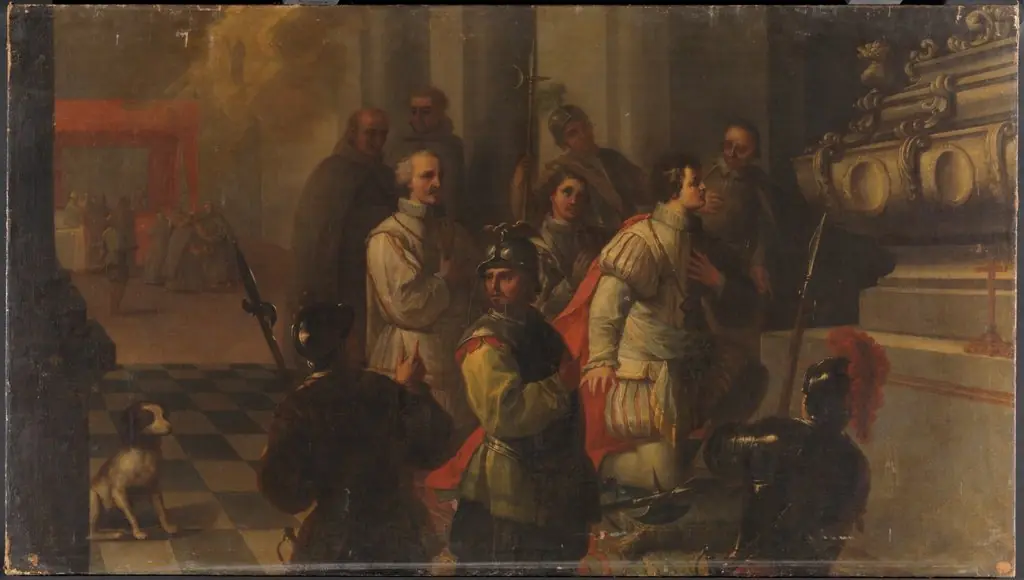 Curación y acción de gracias del príncipe don Carlos. Serie de la Vida de San Diego de Alcalá
 The Raising of Lazarus