Artwork
The merchant’s daughter encounters a wolf and bandits on her way to meet the gardener in order to keep her promise, from a Tuti-nama (Tales of a Parrot): Twelfth Night
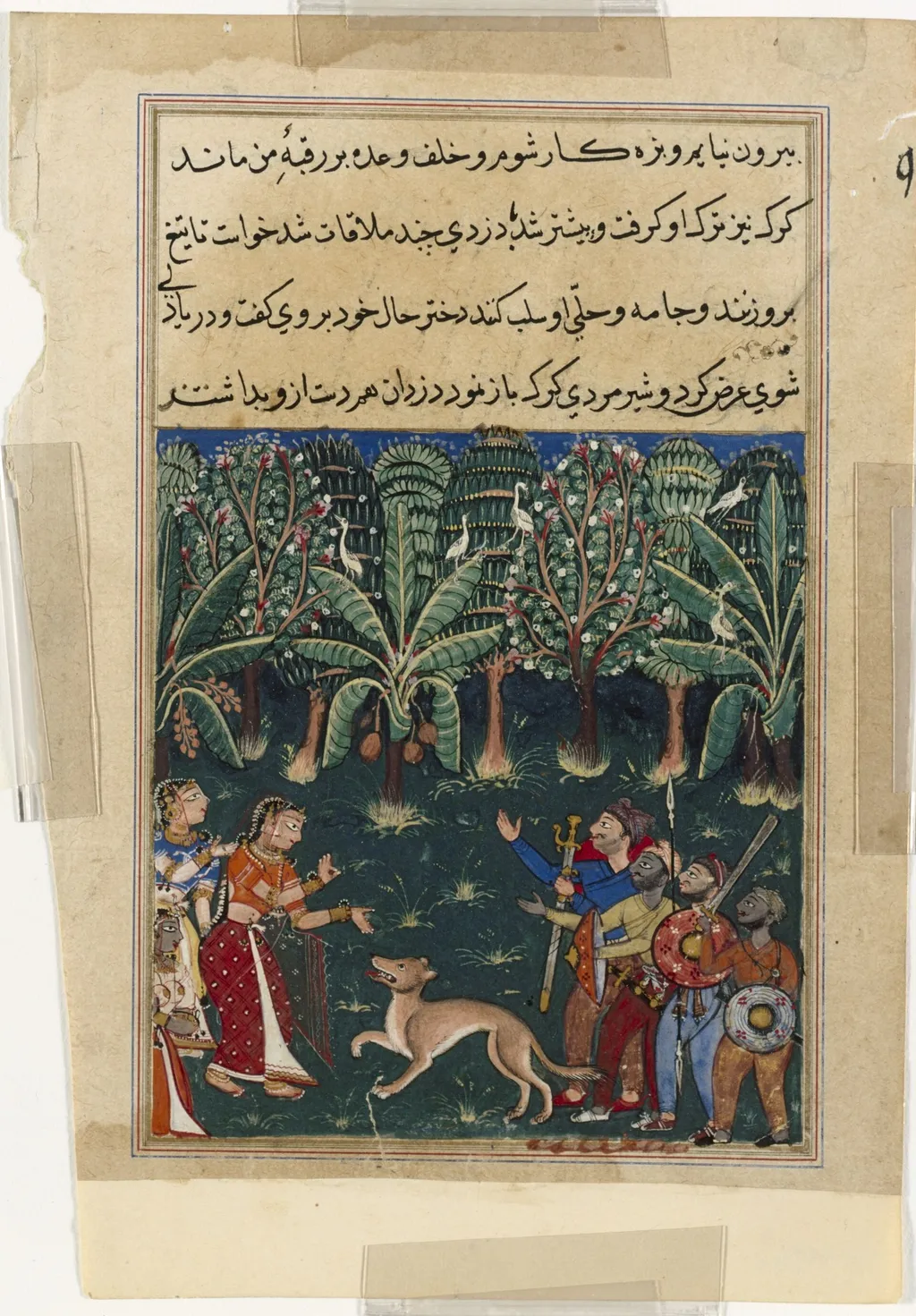
The merchant’s daughter encounters a wolf and bandits on her way to meet the gardener in order to keep her promise, from a Tuti-nama (Tales of a Parrot): Twelfth Night is an unspecified painting. It dates from 1560 and is held in the collection of the Cleveland Museum of Art.
About this work
History & Provenance
The painting is attributed to an unknown artist and was created in 1560 within the Mughal Empire. It entered the collection of the Cleveland Museum of Art, where it is catalogued under the inventory number 1962.279.99.b as part of the museum's holdings of South Asian manuscript folios. The work was acquired directly by the museum, and no exhibition history is documented in the available sources.
Context
Its presence in the Cleveland Museum of Art underscores scholarly interest in the transregional transmission of narrative painting.
The work belongs to the Mughal painting tradition of the mid-sixteenth century, a period when courtly narrative scenes from Persianate literature such as the Tuti-nama were rendered with delicate naturalism and intricate detail. The composition, depicting the merchant's daughter confronting a wolf and bandits on her journey to meet the gardener, reflects the blending of Persian manuscript culture with the emerging Mughal atelier, situating it within the broader development of Indo-Persian illustration. Its presence in the Cleveland Museum of Art underscores scholarly interest in the transregional transmission of narrative painting.
Overview
The work, titled The merchant’s daughter encounters a wolf and bandits on her way to meet the gardener in order to keep her promise, from a Tuti-nama (Tales of a Parrot): Twelfth Night, is a painted narrative scene. It depicts a young woman in a red garment standing beside a wolf within a garden, while four colorfully dressed men brandish weapons and gesture toward her. Tall foliage and flying birds frame the action, suggesting an outdoor setting.
Subject & Meaning
The composition presents a moment from the Persian literary collection Tuti‑nama, in which a merchant’s daughter, bound by a promise, confronts danger on her journey to a gardener. The presence of the wolf beside her implies a protective or symbolic role, while the armed men are interpreted as bandits threatening her progress. The juxtaposition of fear and resolve underscores themes of loyalty and peril in the tale.
Technique & Style
Executed in a painted medium, the image employs vivid coloration, most notably the woman’s red dress and the multicolored attire of the men, to differentiate figures and convey narrative tension. The foliage is rendered with broad, gestural brushwork, creating a sense of depth, while the birds are suggested with quick, linear strokes that convey movement.
Legacy
Works illustrating Tuti‑nama narratives contribute to the visual record of Persian storytelling traditions. By portraying a female protagonist confronting danger, the painting offers insight into gendered representations of virtue and bravery in the period’s narrative art.
Artist & collection

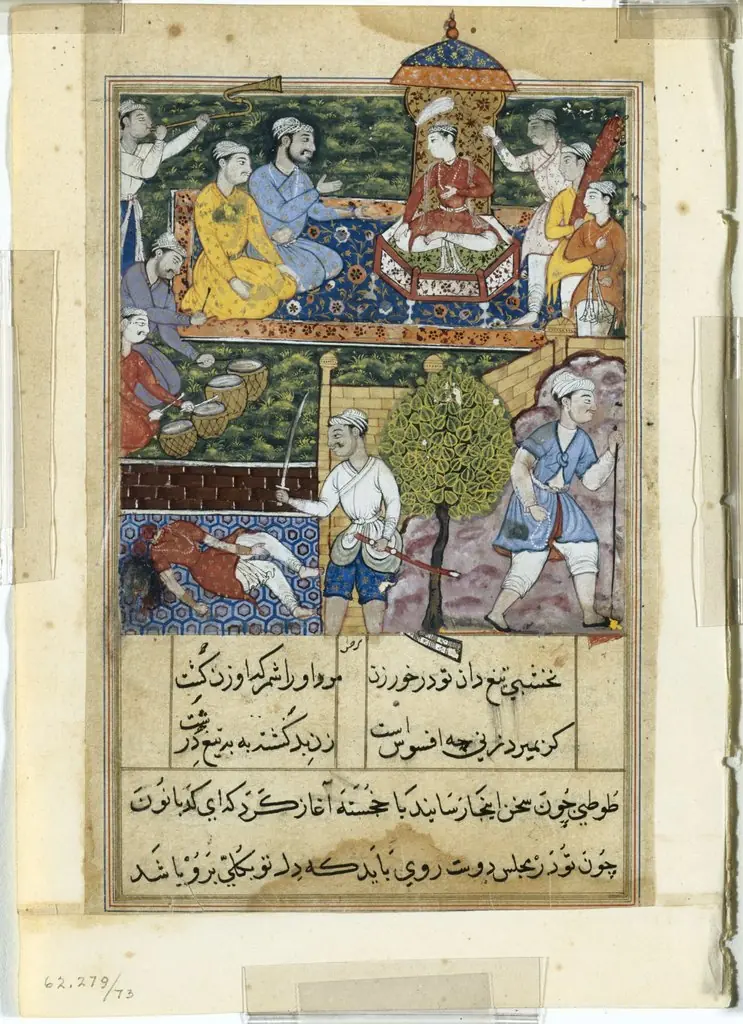 The young prince is crowned and the wicked handmaiden is executed, from a Tuti-nama (Tales of a Parrot): Eighth Night
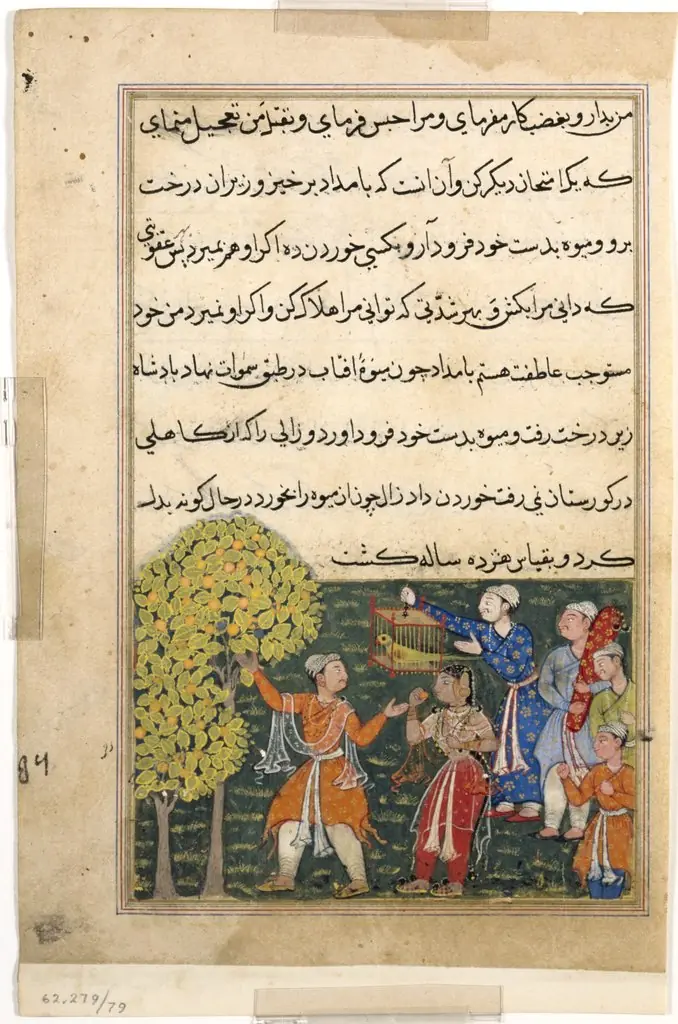 The king plucks fruit from the Tree of Life with his own hands and feeds it to a lady, from a Tuti-nama (Tales of a Parrot): Ninth Night
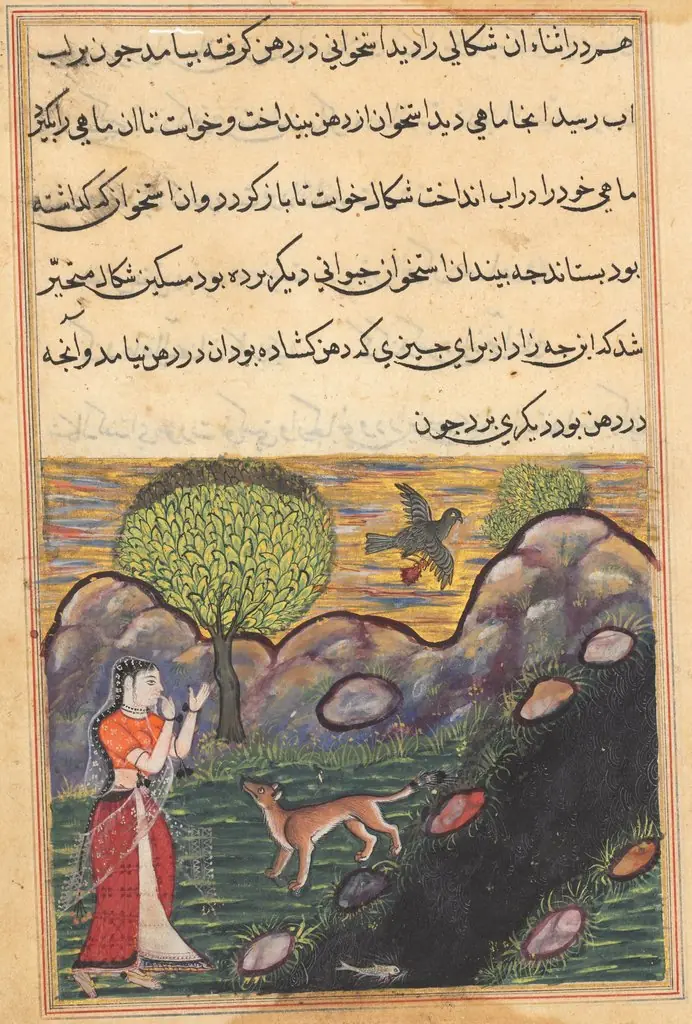 The daughter-in-law of the king of Banaras sees the jackal deprived of its food by a bird, as it unsuccessfully attempts to catch a fish, from a Tuti-nama (Tales of a Parrot): Sixteenth Night
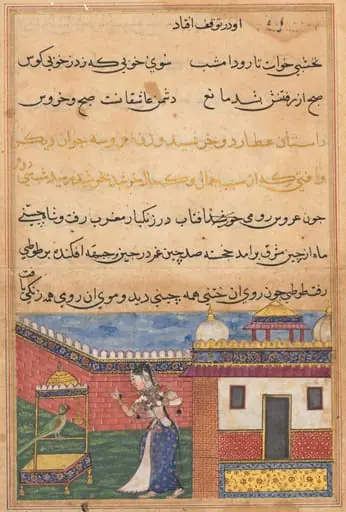 The parrot addresses Khujasta at the beginning of the thirty-second night, from a Tuti-nama (Tales of a Parrot)
 The daughter-in-law of the king of Banaras sees the jackal deprived of its food by a bird, as it unsuccessfully attempts to catch a fish, from a Tuti-nama (Tales of a Parrot): Sixteenth Night
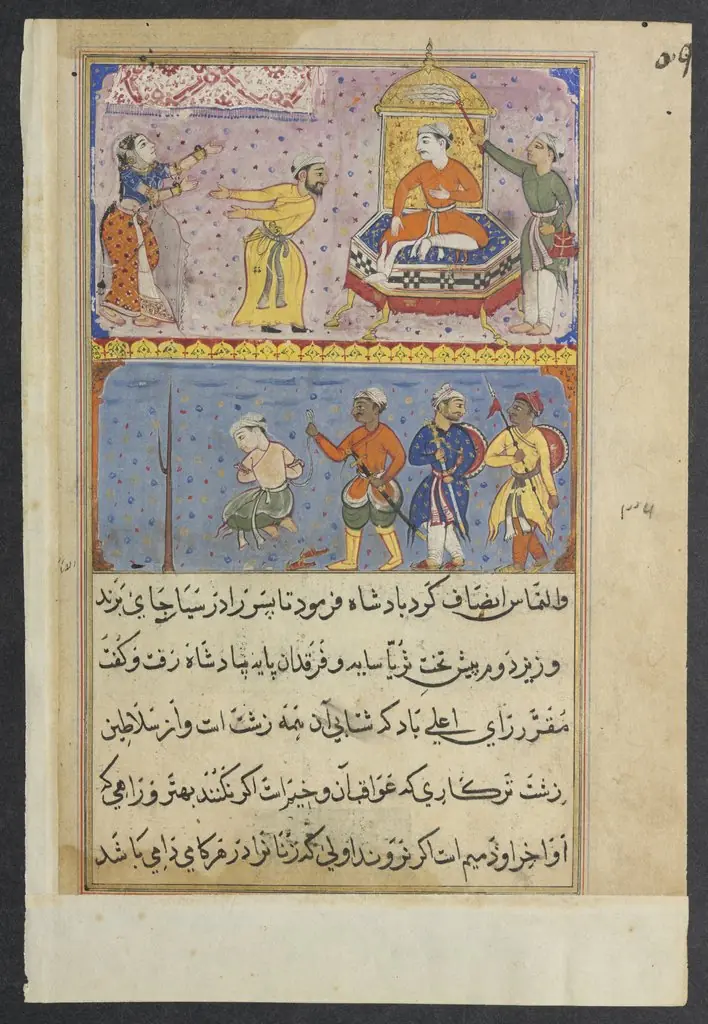 The prince, once reprieved, is returned to the palace of execution a second time on the plea of the king’s handmaiden, from a Tuti-nama (Tales of a Parrot): Eighth Night
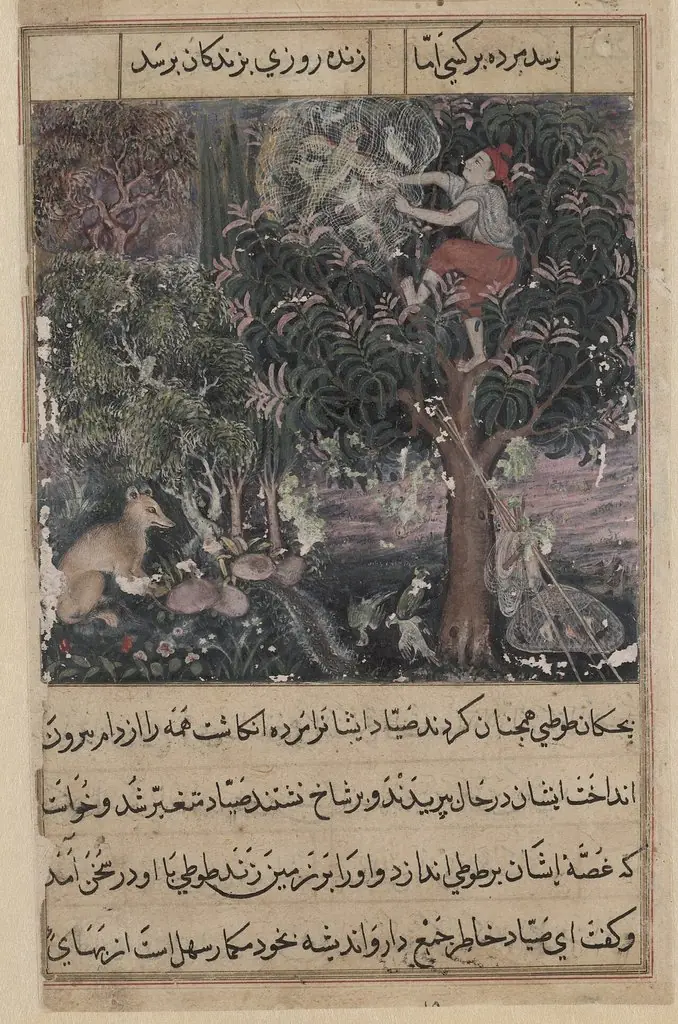 The hunter throws away the baby parrots, who pretend to be dead, and captures the mother, from a Tuti-nama (Tales of a Parrot): Fifth Night
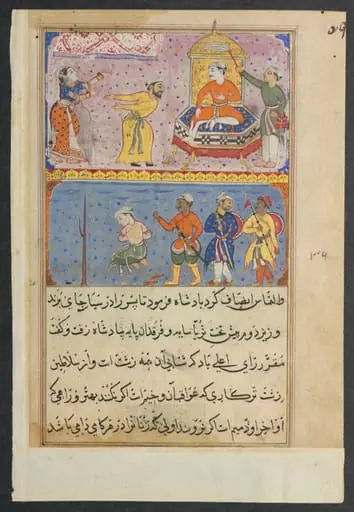 The prince, once reprieved, is returned to the palace of execution a second time on the plea of the king’s handmaiden, from a Tuti-nama (Tales of a Parrot): Eighth Night
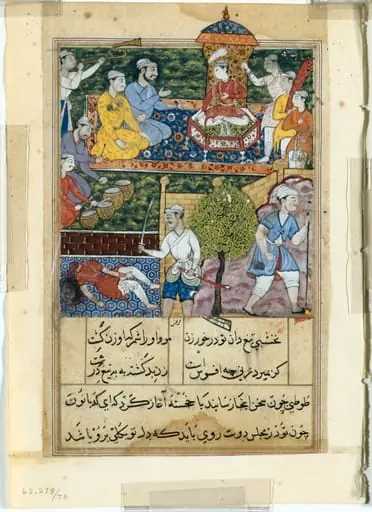 The young prince is crowned and the wicked handmaiden is executed, from a Tuti-nama (Tales of a Parrot): Eighth Night
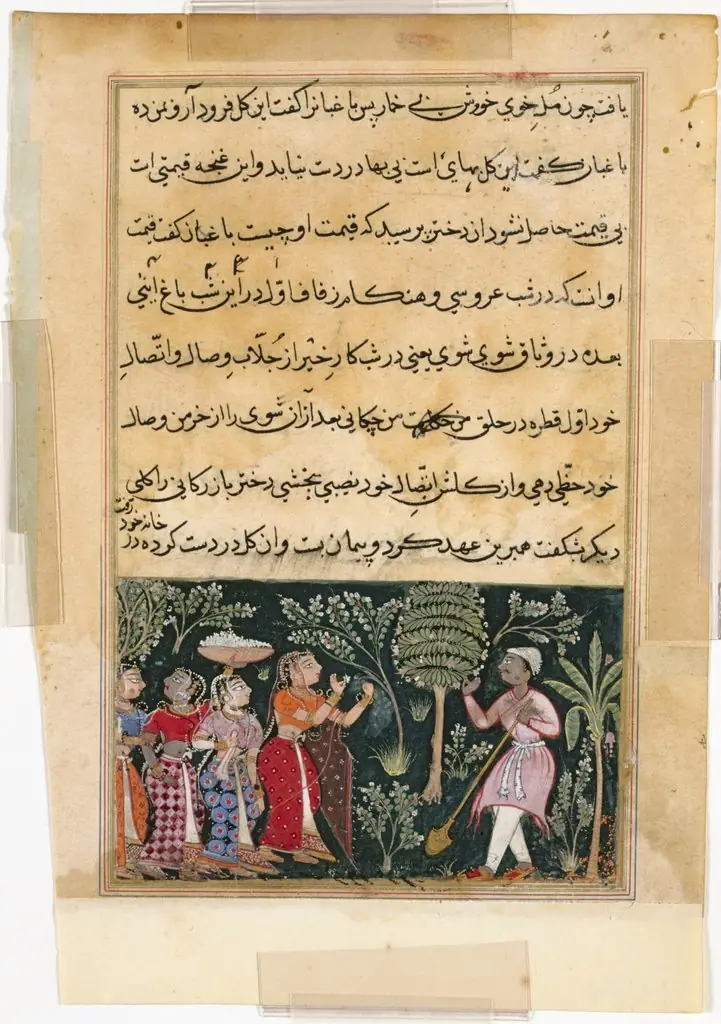
- The daughter of the merchant of Mazanderan asks the gardener for the rose, from a Tuti-nama (Tales of a Parrot): Twelfth Night
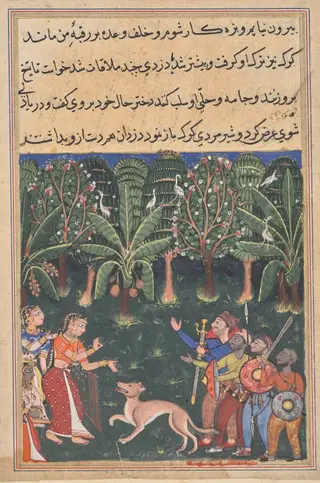 The merchant’s daughter encounters a wolf and bandits on her way to meet the gardener in order to keep her promise, from a Tuti-nama (Tales of a Parrot): Twelfth Night
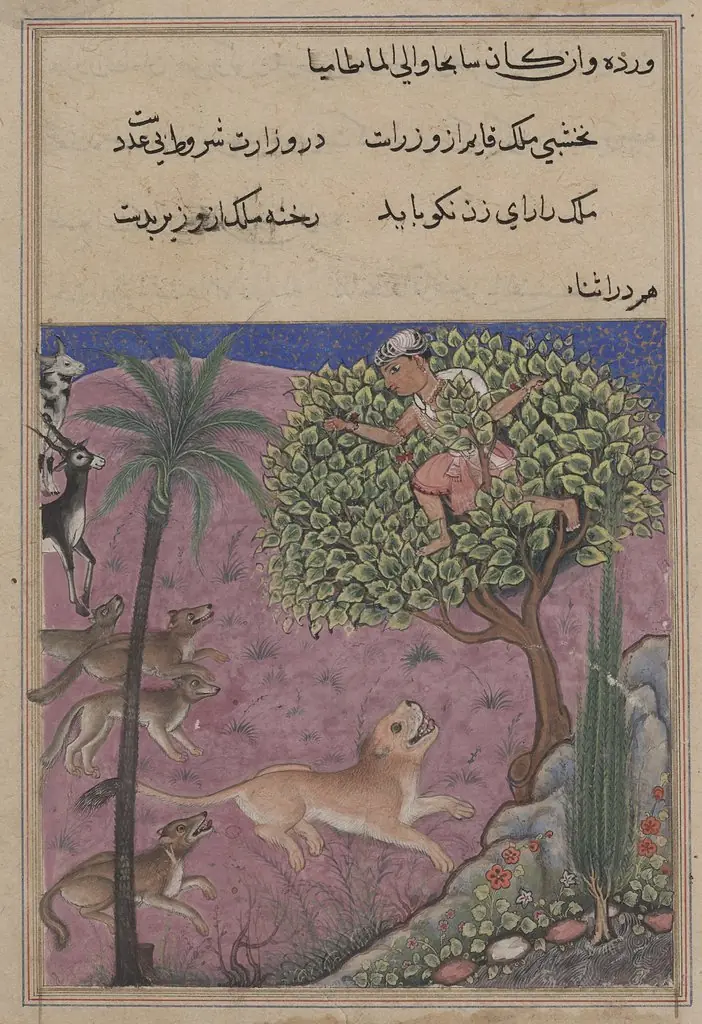 The wolf and the jackal, serving as viziers, instigate the lion who pursues the Brahman up a tree, from a Tuti-nama (Tales of a Parrot): Twenty-first Night