Artwork
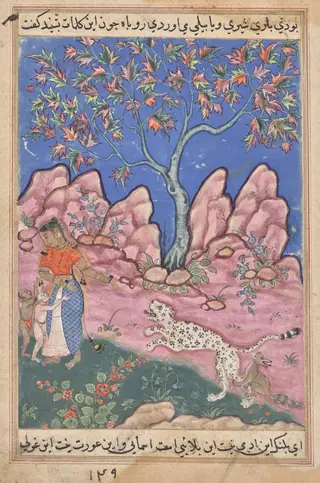
The woman conversing with her children, as the leopard returns, egged on by a fox who is tied to his leg, from a Tuti-nama (Tales of a Parrot): Thirtieth Night
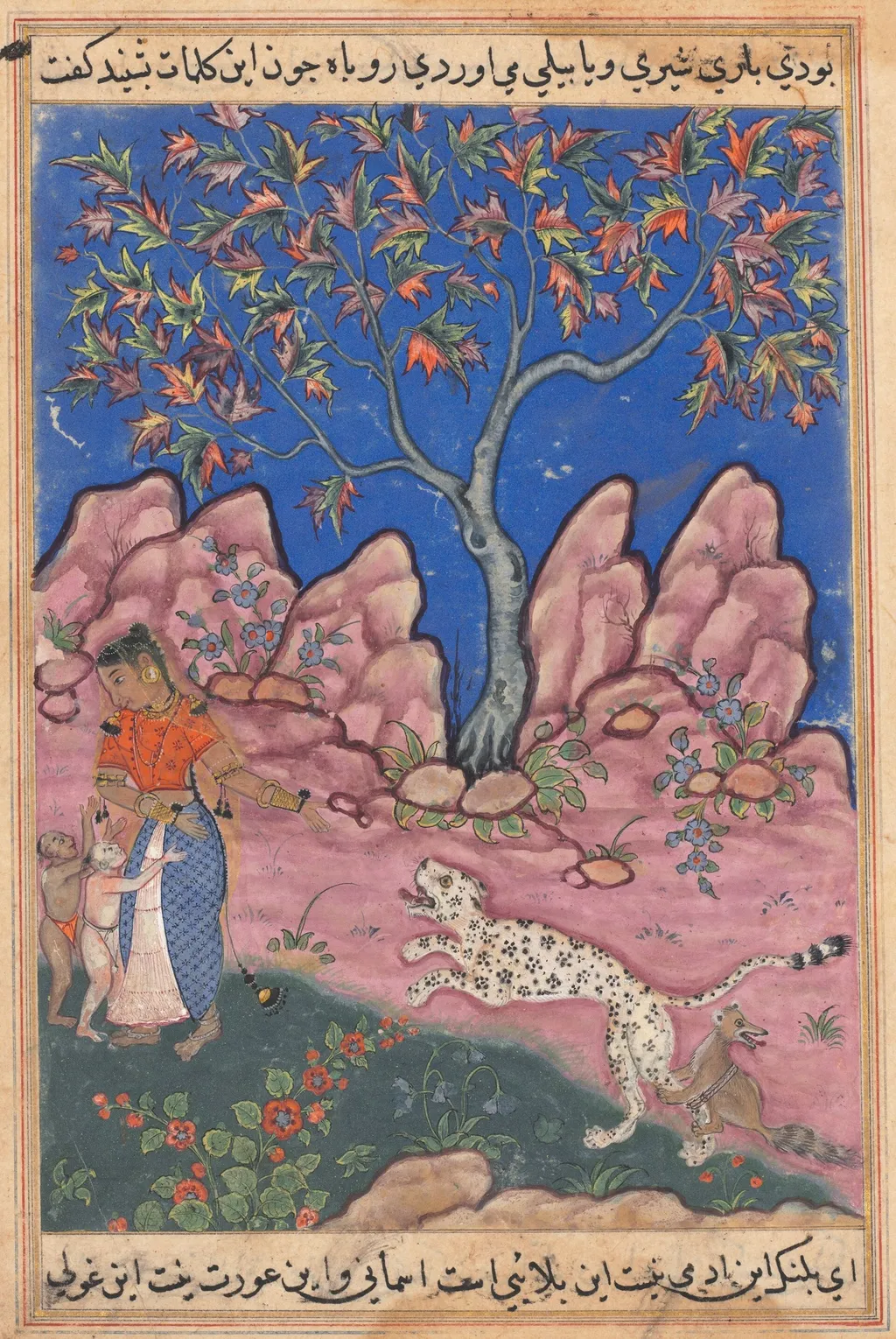
The woman conversing with her children, as the leopard returns, egged on by a fox who is tied to his leg, from a Tuti-nama (Tales of a Parrot): Thirtieth Night is an unspecified painting. It dates from 1560 and is held in the collection of the Cleveland Museum of Art.
About this work
A fox tied to the leopard’s leg urges the predator back toward a woman and her children in this c.
A fox tied to the leopard’s leg urges the predator back toward a woman and her children in this c. 1560 Mughal folio from the Cleveland Museum of Art. Part of the Tuti-Nama manuscript painted for Emperor Akbar, the scene shows the quick-witted mother convincing the leopard she is a hyena in human form, sending him fleeing once more. A plane tree rises behind the group, anchoring the drama in a recognizably Indian landscape.
Overview
This painting, titled "The woman conversing with her children, as the leopard returns, egged on by a fox who is tied to his leg," is a folio from the Tuti-Nama (Tales of a Parrot) manuscript. Created around 1560 in the court of Emperor Akbar, it represents a pivotal moment in the development of Mughal painting. The scene depicts a clever woman once again outwitting a leopard, a narrative drawn from a collection of moralizing Persian tales. It showcases the early integration of diverse artistic traditions under imperial patronage.
Subject & Meaning
The Thirtieth Night's tale unfolds as a leopard, previously foiled, returns to confront a woman and her children, incited by a fox tethered to its leg. The quick-witted protagonist employs a ruse, convincing the predator that she is a hyena disguised as a human. This deception leads the leopard to retreat once more, highlighting themes of intelligence and resourcefulness. The Tuti-Nama manuscript comprises fifty-two such moralizing narratives, originally penned in Persian during the fourteenth century.
Technique & Style
The composition positions the figures against a prominent plane tree, whose expansive canopy dominates the background and firmly anchors the scene within a North Indian setting. While the specific medium for this folio is not individually documented, the broader Tuti-Nama manuscript is recorded as executed in tempera. This early Mughal work exemplifies the nascent fusion of Persian, Indian, and Islamic visual conventions, characteristic of the imperial atelier's innovative approach to art.
History & Provenance
This folio entered the Cleveland Museum of Art in 1962, acquired from the estate of diplomat Breckinridge Long. Its journey to the museum involved transactions through Harry Burke Antiques and the Bernard Brown Agency, with funding provided by Mrs. A. Dean (Helen Wade Greene) Perry. As part of the Tuti-Nama, this painting contributes to one of the earliest surviving examples of Mughal manuscript illumination, underscoring its historical significance.
Context
The Tuti-Nama manuscript holds a crucial position in art history as one of the earliest and most significant surviving examples of Mughal painting. Produced under the direct patronage of Emperor Akbar around 1560, it marks the formative period when Persian, Indian, and Islamic artistic traditions began to coalesce. This fusion laid the groundwork for the distinctive visual language that would define the imperial Mughal style for centuries to come.
Artist & collection

- The woman conversing with her children, as the leopard returns, egged on by a fox who is tied to his leg, from a Tuti-nama (Tales of a Parrot): Thirtieth Night
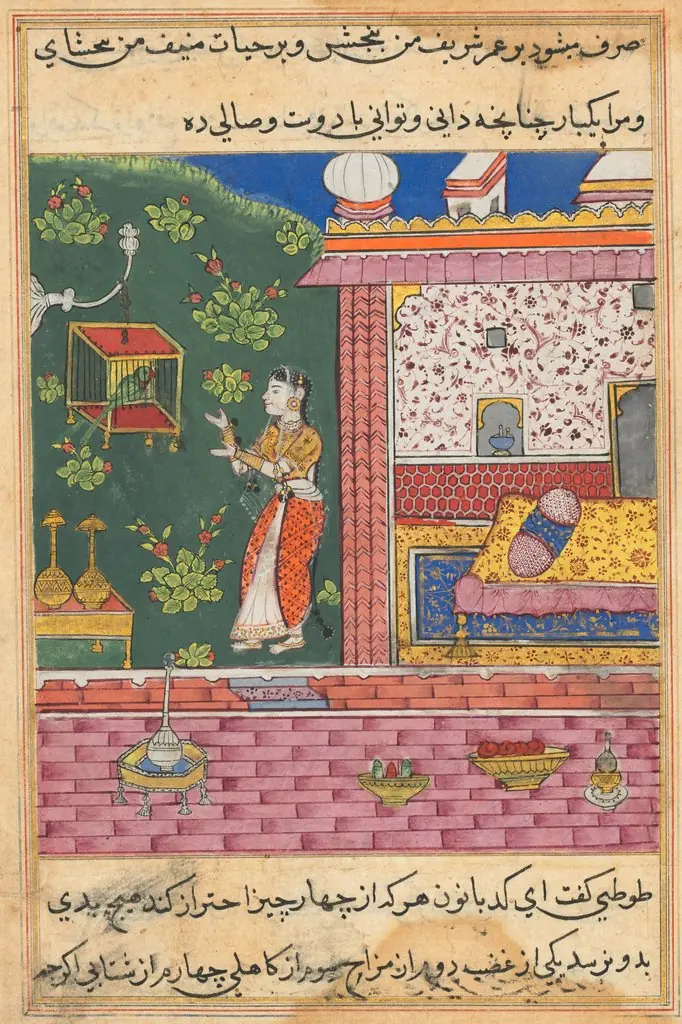 The Parrot Addresses Khujasta at the Beginning of the Thirtieth Night, from a Tuti-nama (Tales of a Parrot)
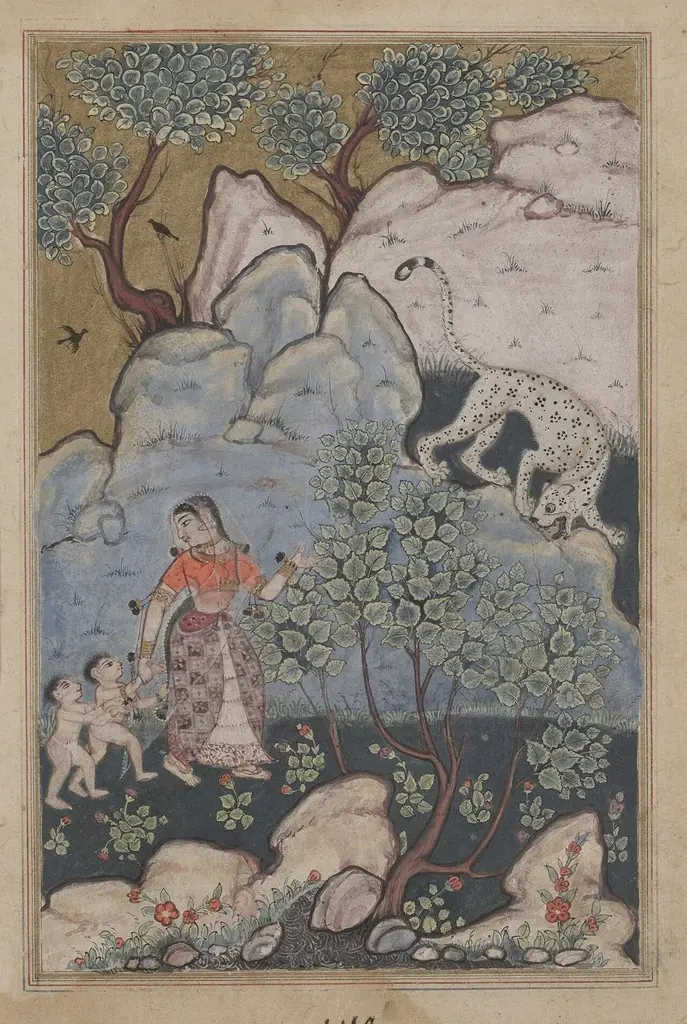 A woman with two children, having abandoned her home, goes into the forest where she encounters a leopard, from a Tuti-nama (Tales of a Parrot): Thirtieth Night
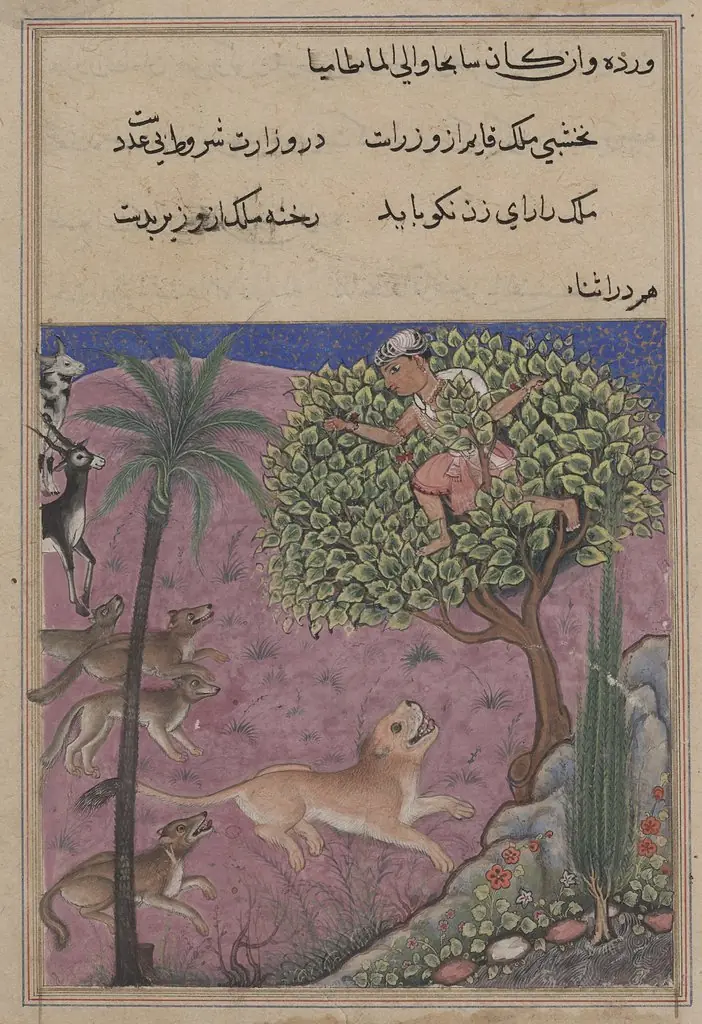 The wolf and the jackal, serving as viziers, instigate the lion who pursues the Brahman up a tree, from a Tuti-nama (Tales of a Parrot): Twenty-first Night
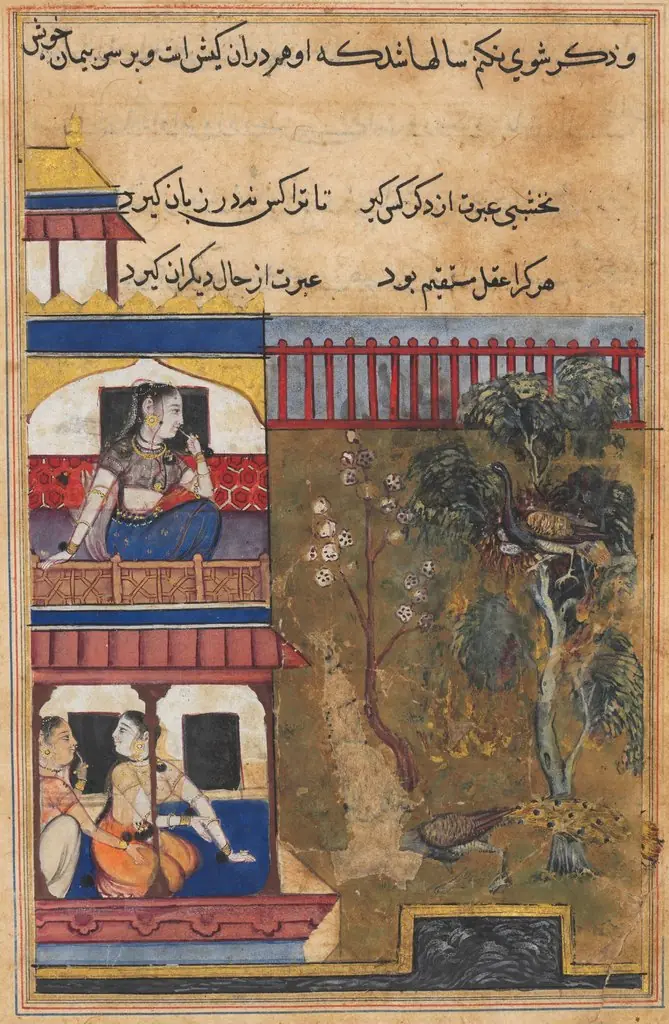 The queen of Rum watches the peahen prefer to burn rather than abandon her eggs while the peacock flees the nest, from a Tuti-nama (Tales of a Parrot): Thirty-ninth Night
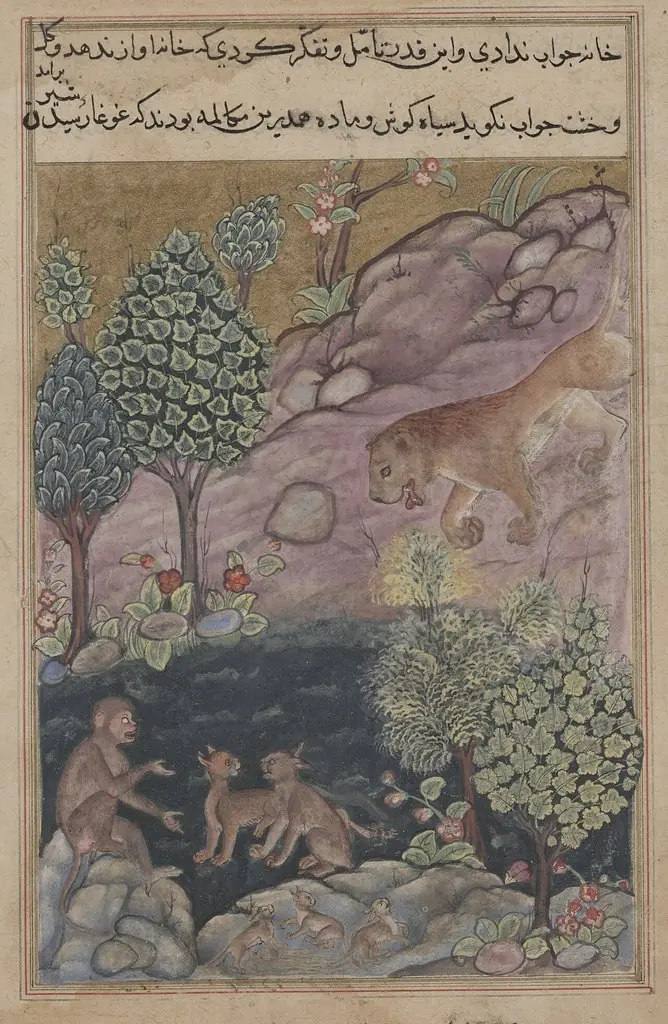 The lion returns to his territory and sees the monkey conversing with the lynx, from a Tuti-nama (Tales of a Parrot): Twenty-ninth Night
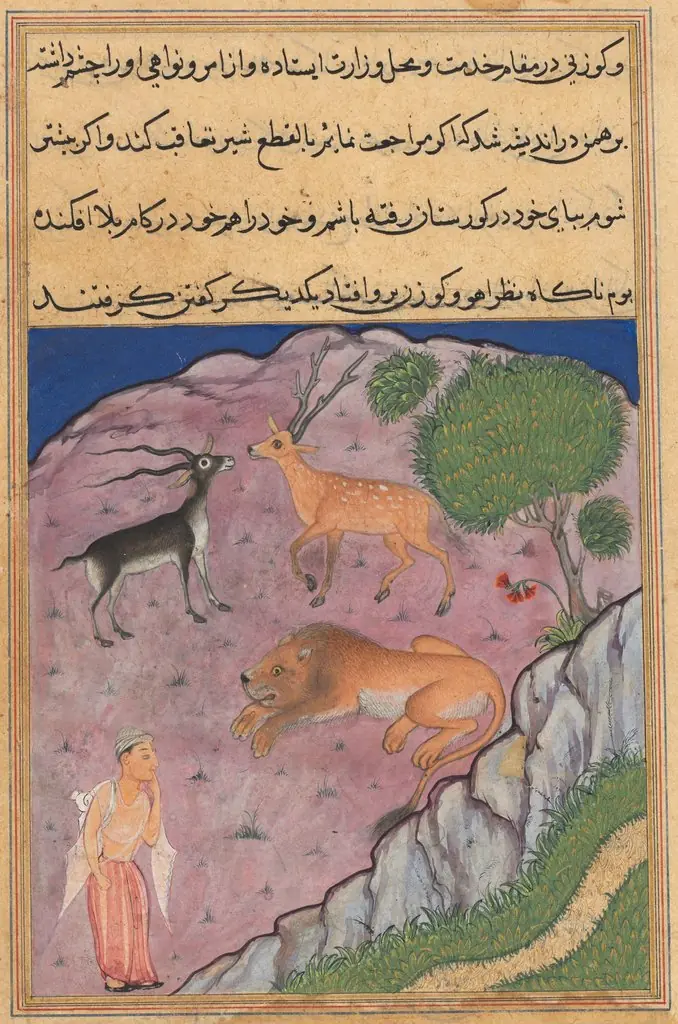 The Brahman comes upon a lion who has a deer and a gazelle as his viziers, from a Tuti-nama (Tales of a Parrot): Twenty-first Night
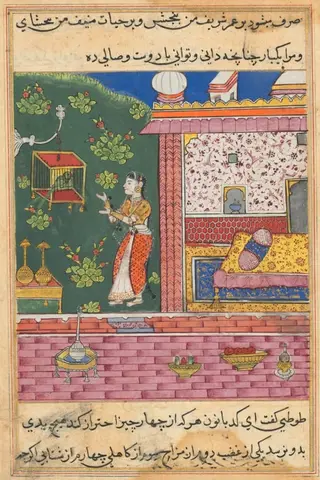 The Parrot Addresses Khujasta at the Beginning of the Thirtieth Night, from a Tuti-nama (Tales of a Parrot)
 The lion, suspecting treachery on the part of the monkey, slays him and flees, from a Tuti-nama (Tales of a Parrot): Twenty-ninth Night