Artwork
The Parrot Addresses Khujasta at the Beginning of the Thirtieth Night, from a Tuti-nama (Tales of a Parrot)
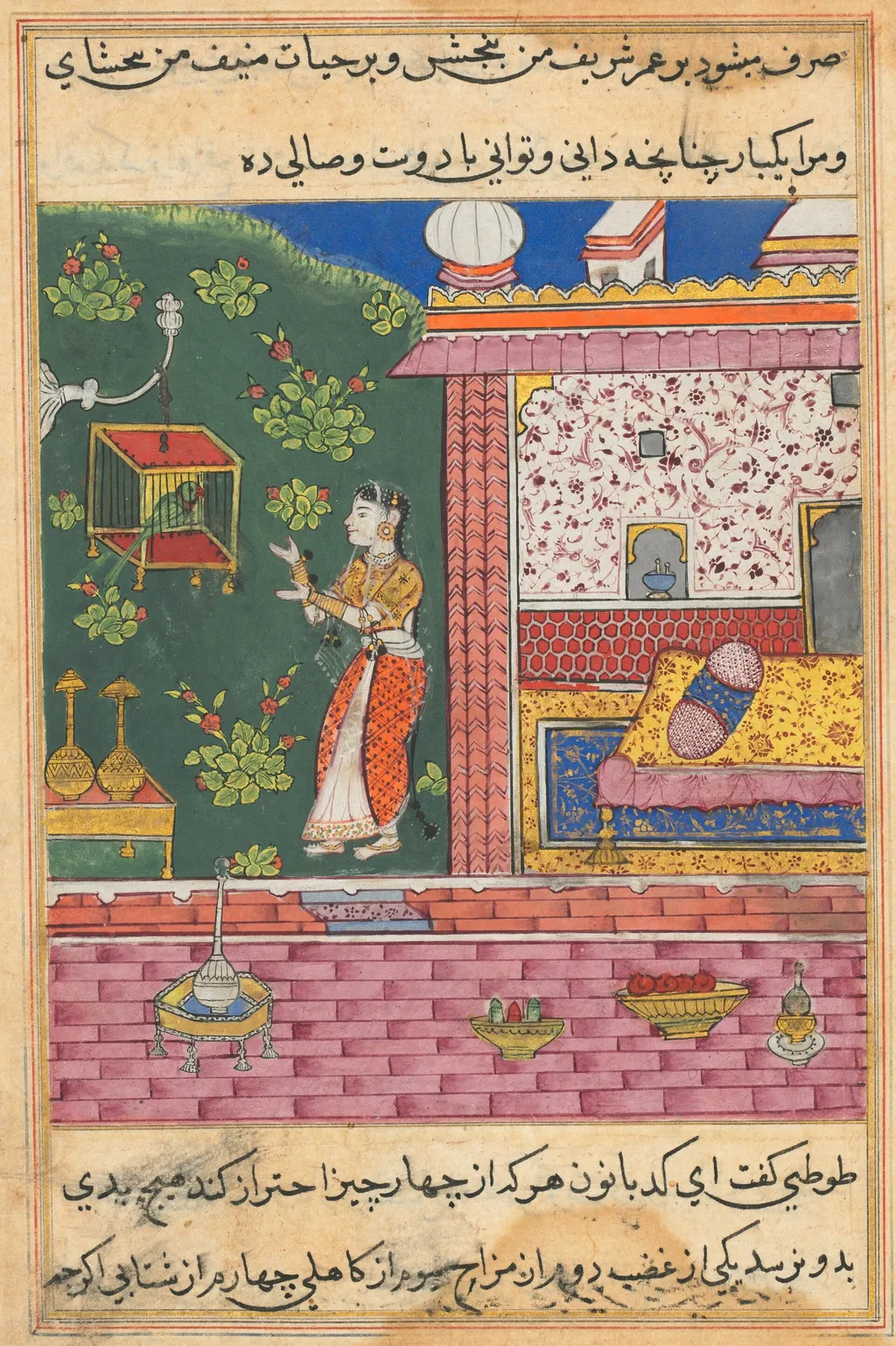
The Parrot Addresses Khujasta at the Beginning of the Thirtieth Night, from a Tuti-nama (Tales of a Parrot) is an unspecified painting. It dates from 1560 and is held in the collection of the Cleveland Museum of Art. The work portrays a seated woman in a verdant setting, surrounded by foliage and blossoms.
About this work
History & Provenance
The painting The Parrot Addresses Khujasta at the Beginning of the Thirtieth Night is held in the collection of the Cleveland Museum of Art in Cleveland.
This miniature painting is dated to 1560 and is attributed to an unknown artist within the Mughal Empire. It entered the Cleveland Museum of Art as part of an acquisition in 1962, where it is cataloged as 1962.279.198.a. The work is a page from a dispersed manuscript of the Tuti-nama (Tales of a Parrot), a text known for its illustrated narrative cycles in sixteenth-century Mughal India.
The Cleveland Museum of Art holds it as part of its collection, with no further documented owners or provenance prior to its 1962 accession.
The painting The Parrot Addresses Khujasta at the Beginning of the Thirtieth Night is held in the collection of the Cleveland Museum of Art in Cleveland. The work, created in 1560 within the Mughal Empire, is cataloged under the accession number 1962.279.198.a. No specific exhibition history is recorded in the provided sources.
Legacy
The work's later influence and legacy are evident in its continued scholarly attention and inclusion in major collections, such as the Cleveland Museum of Art, which holds the Tuti-nama folio dated 1560. Its status as a representative example of Mughal painting has contributed to discussions on Persianate artistic traditions in South Asia, reinforcing its reputation within art-historical scholarship.
Overview
The work portrays a seated woman in a verdant setting, surrounded by foliage and blossoms. She wears an orange‑white garment, embellished with jewelry, and gently holds a small bird. Adjacent elements include a hanging birdcage, a low table with a vase and box, and a fruit bowl on a wall, while a red‑brick building with a yellow and blue couch can be seen in the distance.
Subject & Meaning
The scene illustrates a moment from the Persian narrative collection known as the Tuti‑nama, in which a parrot addresses Khujasta at the start of the thirtieth night. The woman's calm gesture toward the bird suggests a dialogue between human and animal, reflecting themes of communication, wisdom, and the poetic interplay of nature and courtly life.
Technique & Style
Rendered in a delicate palette of greens, oranges, and muted reds, the painting balances detailed ornamental elements, such as the jewelry and patterned textiles, with a softened atmospheric background. The composition employs a shallow depth, using a low wall and scattered objects to guide the viewer’s eye toward the central figures.
Artist & collection

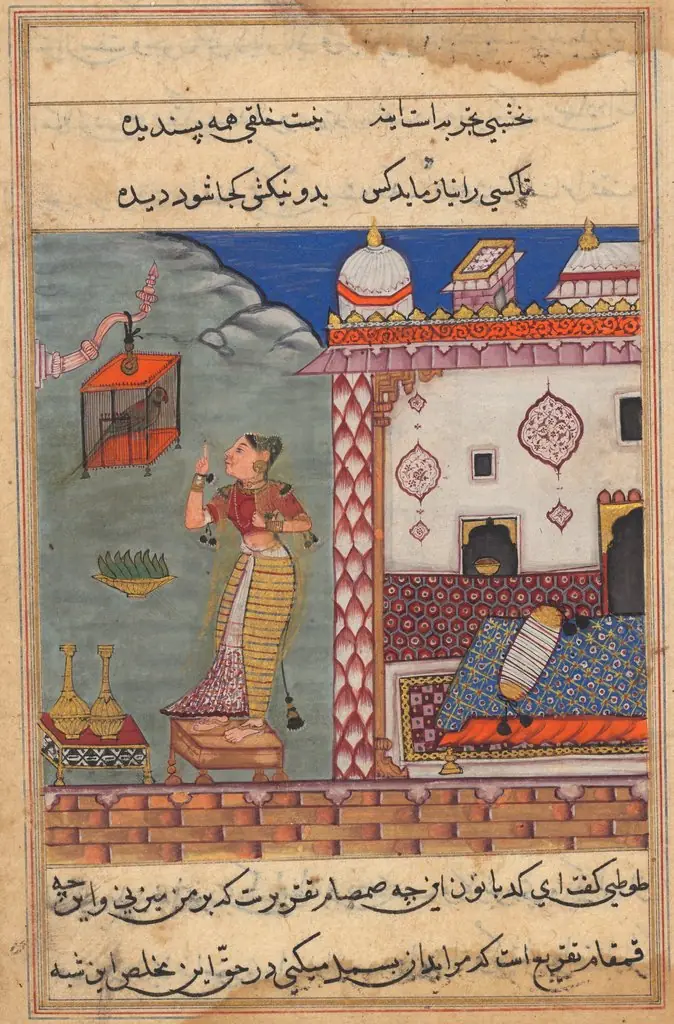
- The Parrot Addresses Khujasta at the Beginning of the Twenty-seventh Night, form a Tuti-nama (Tales of a Parrot)
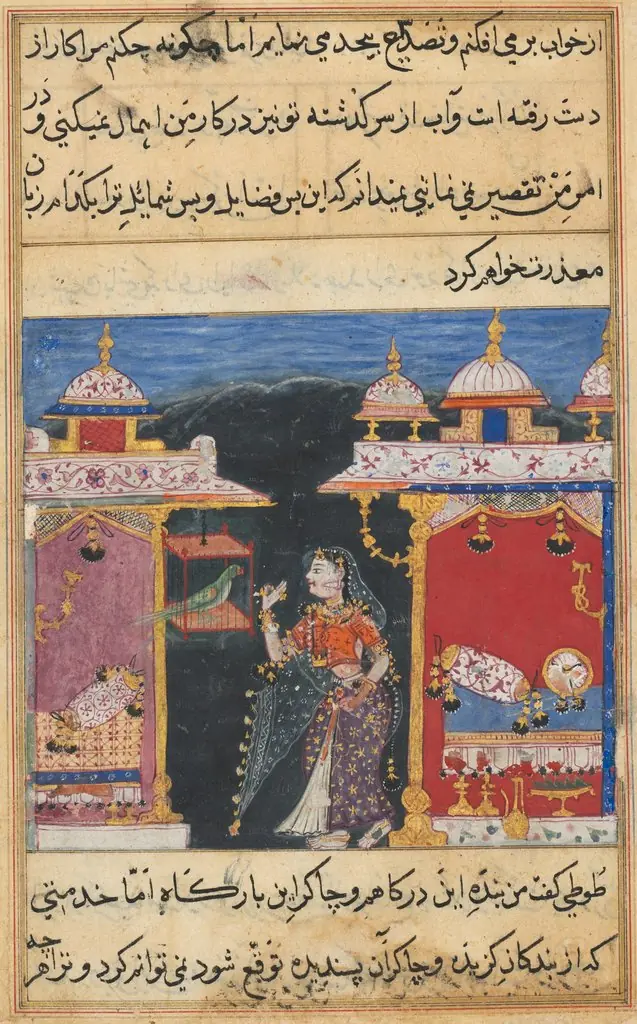 The Parrot Addresses Khujasta at the Beginning of the Seventh Night, from a Tuti-nama (Tales of a Parrot)
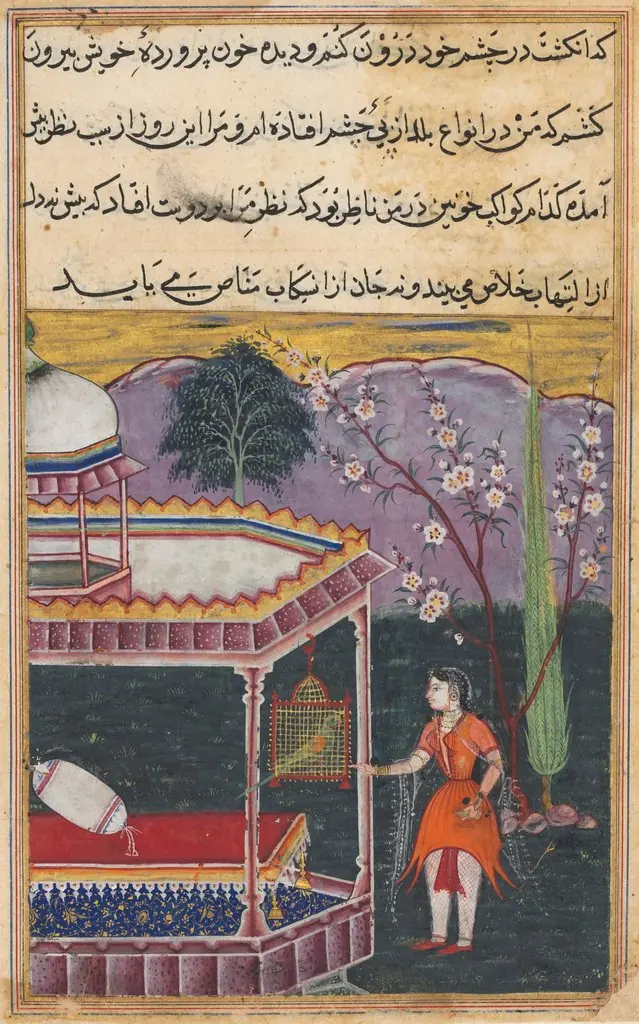 The Parrot Addresses Khujasta at the Beginning of the Eighth Night, from a Tuti-nama (Tales of a Parrot)
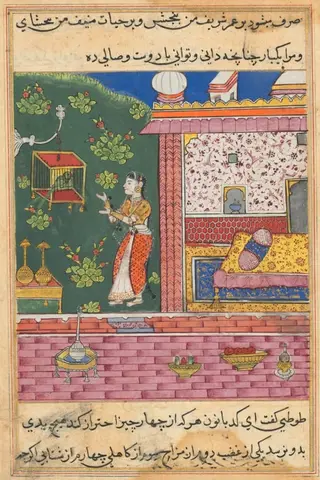 The Parrot Addresses Khujasta at the Beginning of the Thirtieth Night, from a Tuti-nama (Tales of a Parrot)
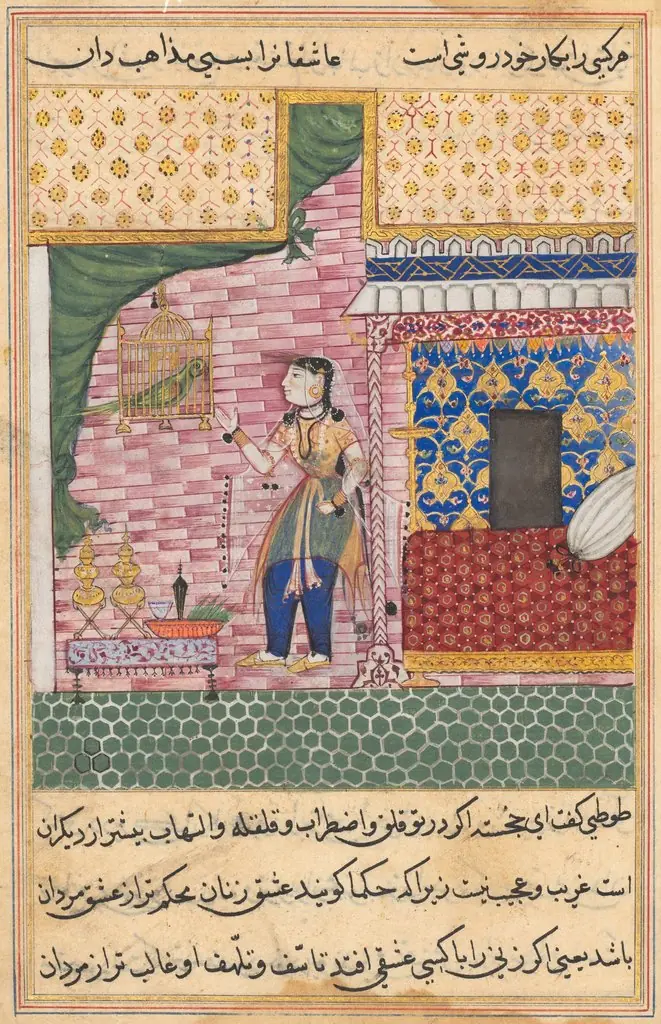 The Parrot Addresses Khujasta at the Beginning of the Seventeenth Night, from a Tuti-nama (Tales of a Parrot)
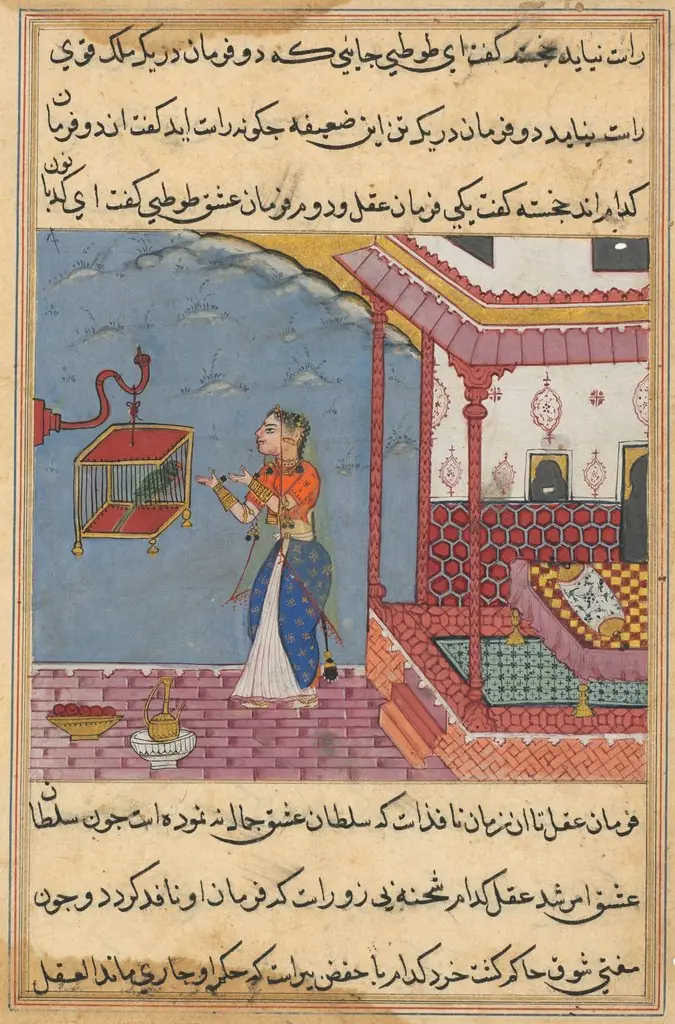 The Parrot Addresses Khujasta at the Beginning of the Twenty-Fourth Night, from a Tuti-nama (Tales of a Parrot)
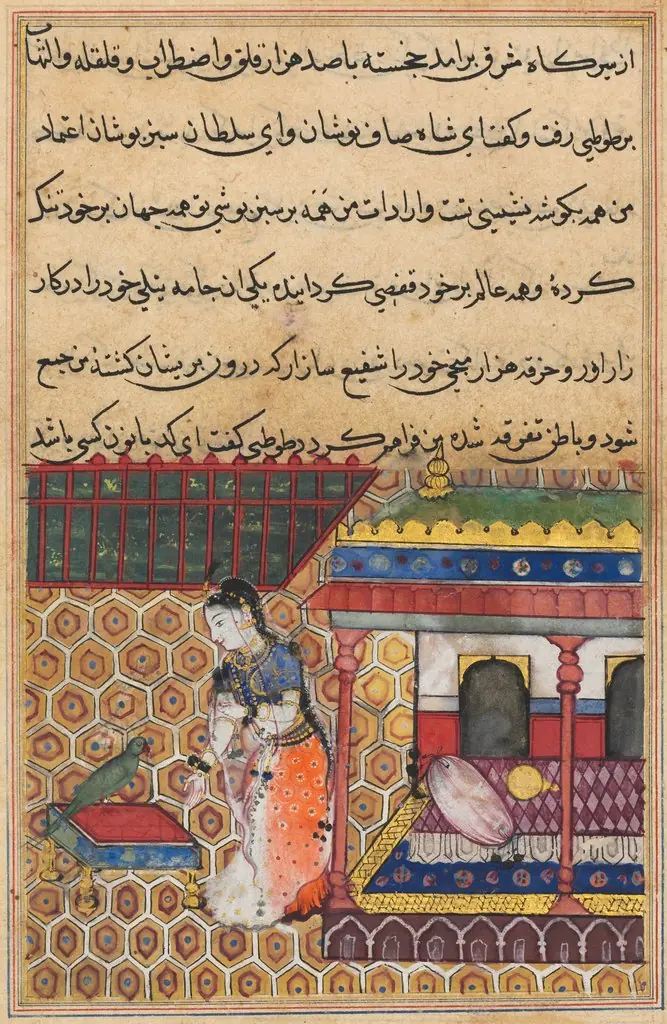 The parrot addresses Khujasta at the beginning of the thirty-eighth night, from a Tuti-nama (Tales of a Parrot)
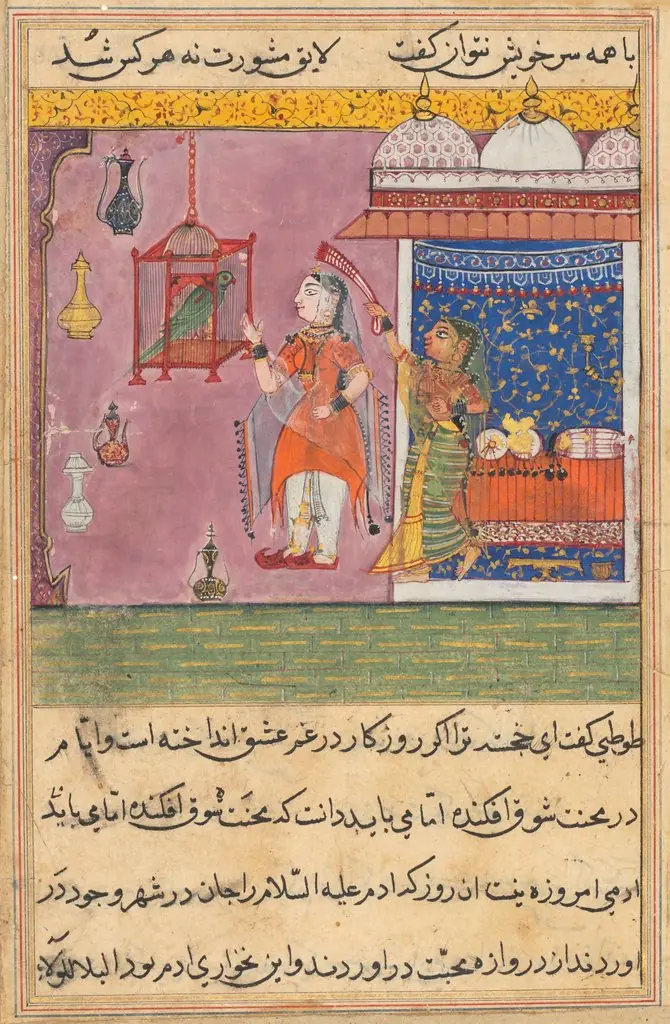 The Parrot Addresses Khujasta at the Beginning of the Nineteenth Night, from a Tuti-nama (Tales of a Parrot)
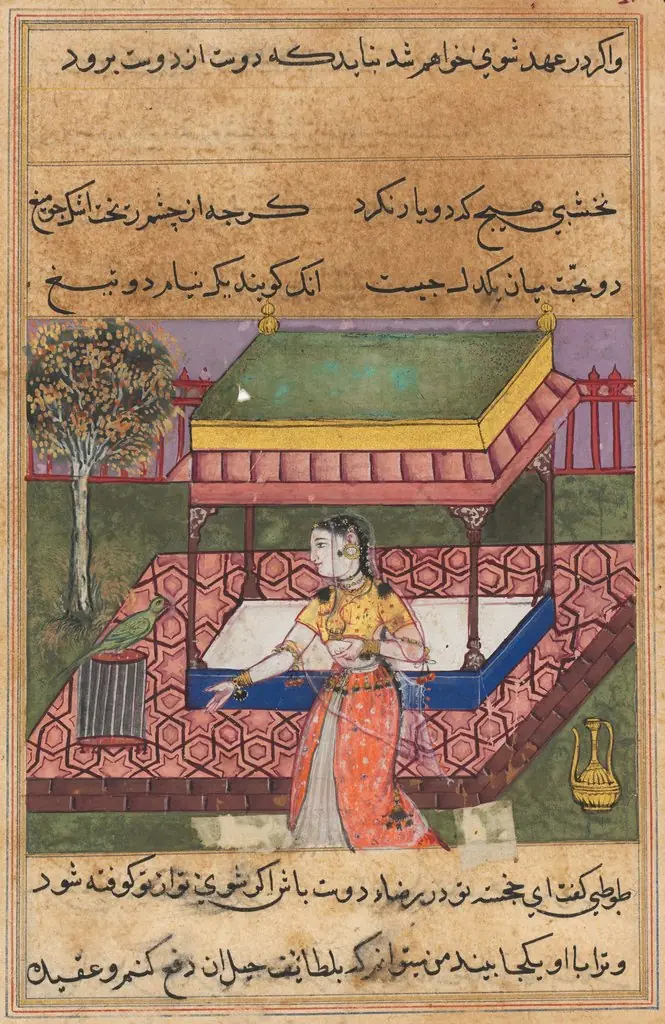 The parrot addresses Khujasta at the beginning of the fortieth night, from a Tuti-nama (Tales of a Parrot)
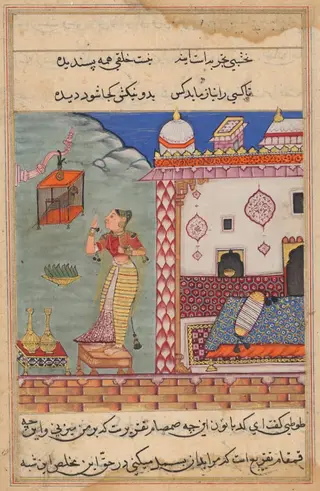 The Parrot Addresses Khujasta at the Beginning of the Twenty-seventh Night, form a Tuti-nama (Tales of a Parrot)
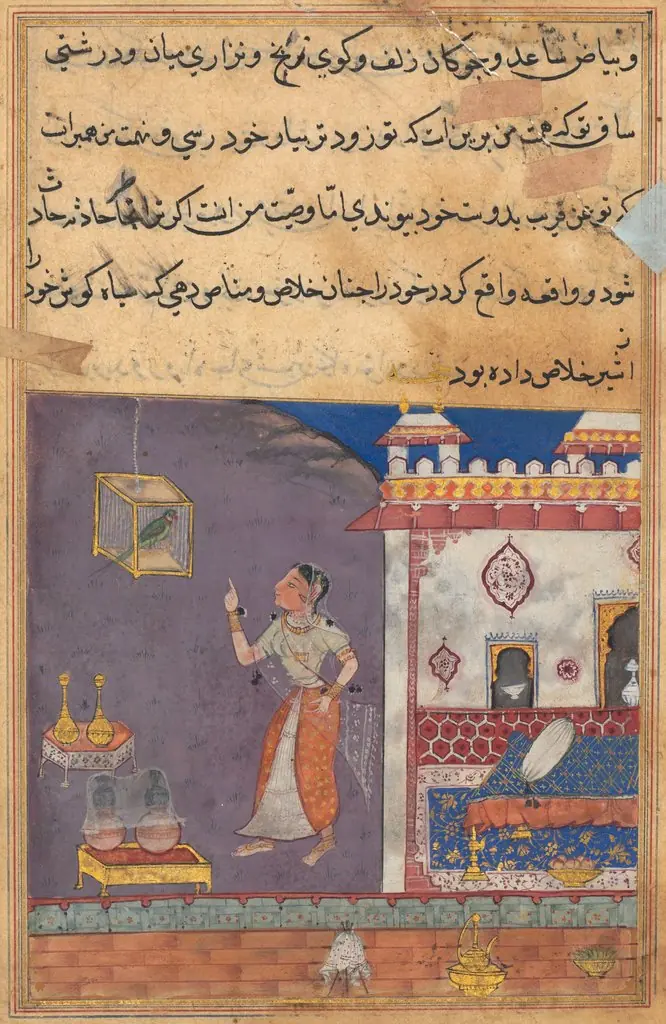 The Parrot Addresses Khujasta at the Beginning of the Twenty-ninth Night, from a Tuti-nama (Tales of a Parrot)
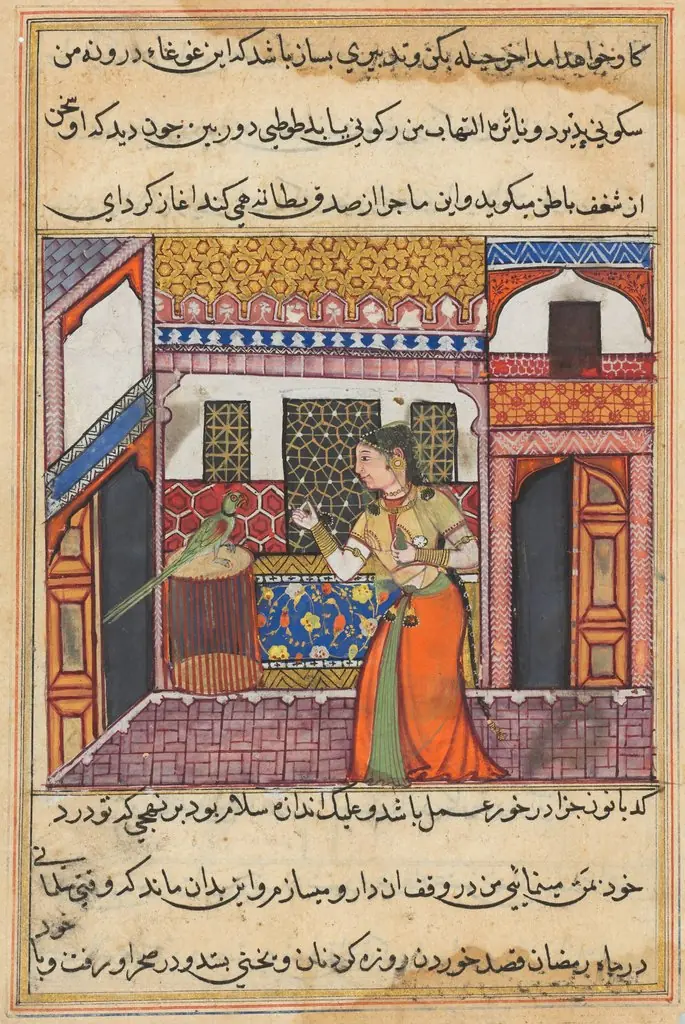 The parrot addresses Khujasta at the beginning of the forty-third night, from a Tuti-nama (Tales of a Parrot)
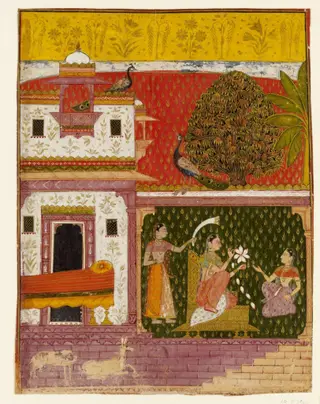 Malasri Ragini
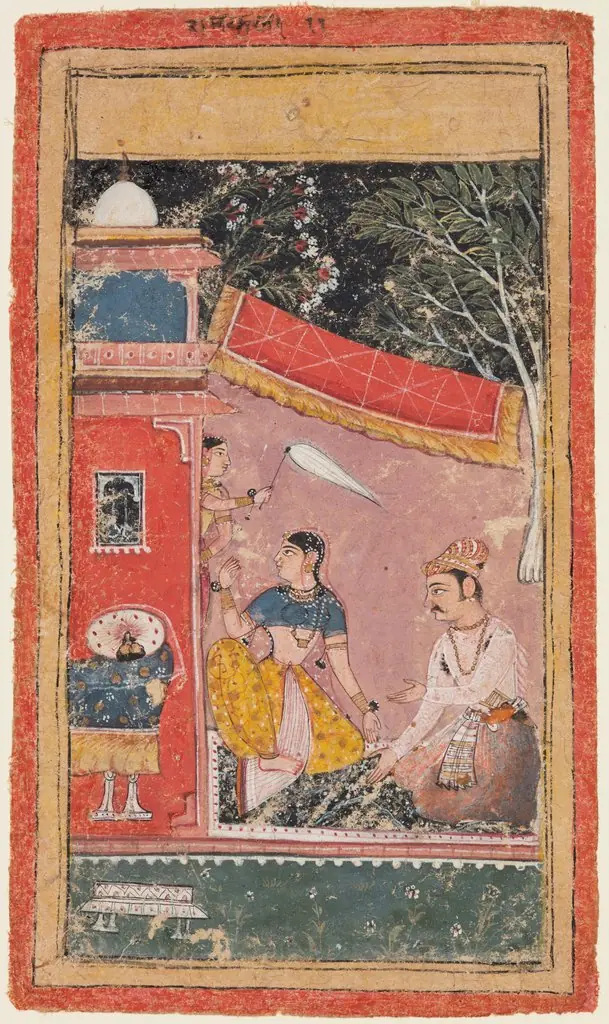 Lovers on a Terrace: Ramakali Ragini of Hindol, from a Bundi Ragamala
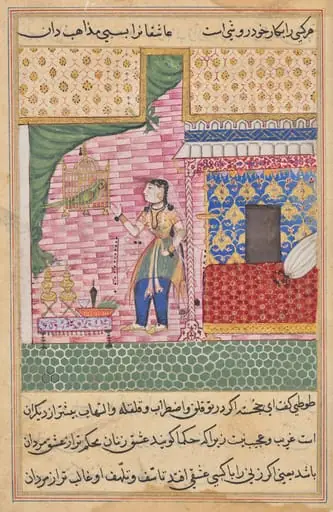 The Parrot Addresses Khujasta at the Beginning of the Seventeenth Night, from a Tuti-nama (Tales of a Parrot)
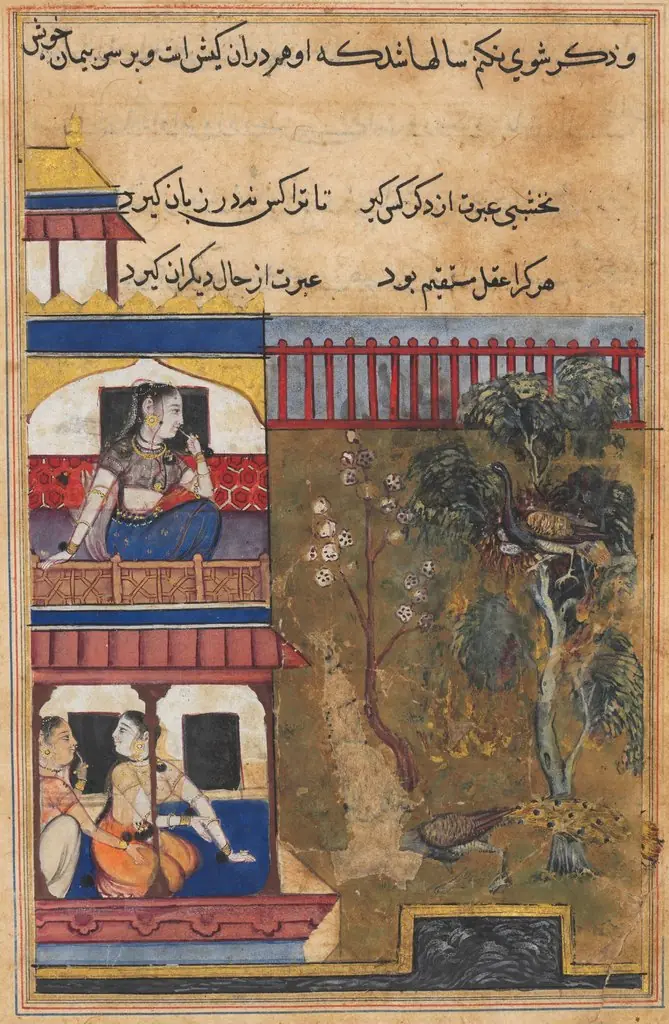 The queen of Rum watches the peahen prefer to burn rather than abandon her eggs while the peacock flees the nest, from a Tuti-nama (Tales of a Parrot): Thirty-ninth Night
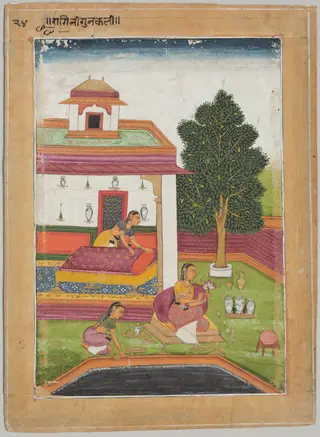 Illustration to the Musical Mode Malasari Ragini
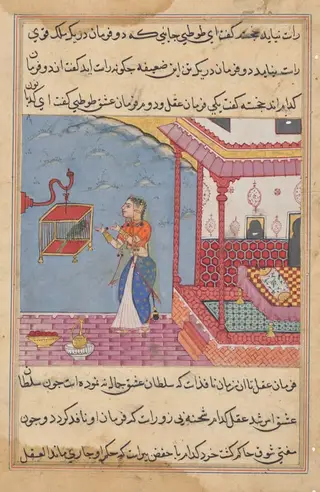 The Parrot Addresses Khujasta at the Beginning of the Twenty-Fourth Night, from a Tuti-nama (Tales of a Parrot)