Artwork
Three Views of the Pearl River: Canton, Macao, Whampoa
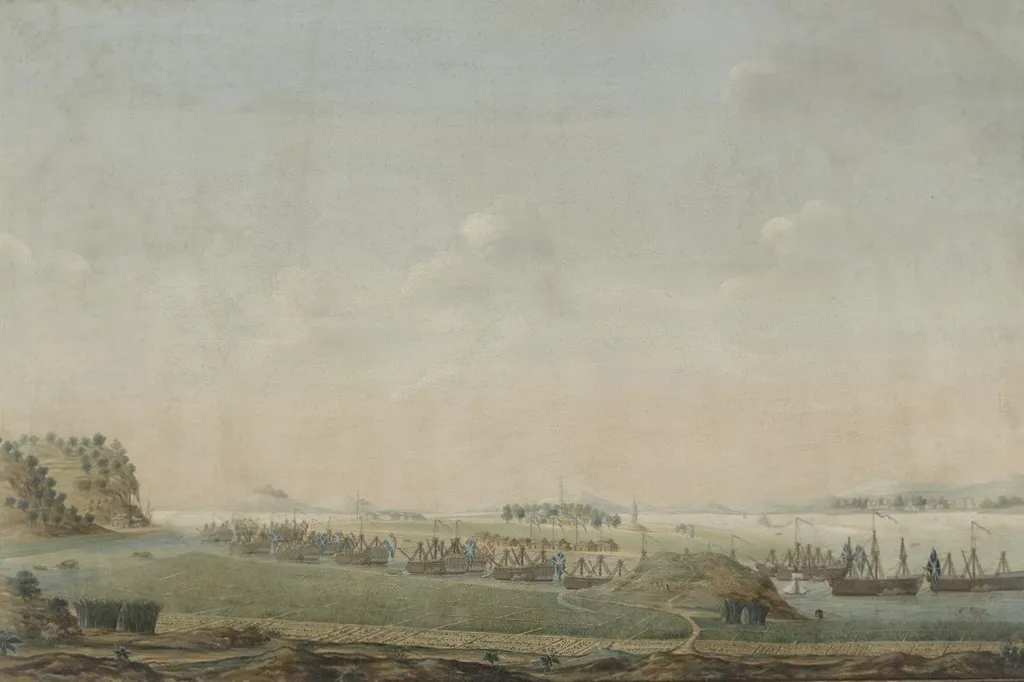
Three Views of the Pearl River: Canton, Macao, Whampoa is an unspecified painting. It dates from 1773 and is held in the collection of the Rijksmuseum.
About this work
Technique & Style
According to the Wikidata record, the work measures 52 cm in height by 76 cm in width and is held in the collection of the Rijksmuseum.
Three Views of the Pearl River: Canton, Macao, Whampoa is classified as a painting, dated to 1773. According to the Wikidata record, the work measures 52 cm in height by 76 cm in width and is held in the collection of the Rijksmuseum. The depicted subjects include trees and boats, consistent with the riverine views referenced in the title.
Beyond this classification and basic dimensional data, the available sources do not specify the medium, support, technique, handling, condition, or stylistic qualities of the work.
History & Provenance
Three Views of the Pearl River: Canton, Macao, Whampoa is an anonymous painting dated to 1773. It is classified as a painting, depicts a tree and a boat, and measures 52 cm in height by 76 cm in width. The work is part of the Rijksmuseum’s collection and remains housed in the museum in Amsterdam. No earlier owners, commission details, or further provenance information are recorded in the available sources.
Context
The painting Three Views of the Pearl River: Canton, Macao, Whampoa was created in 1773 and is housed in the Rijksmuseum collection. It is categorized as an anonymous painting depicting a tree and a boat. Contemporary scholarship situates the work within the broader European engagement with Asian landscapes during the 18th century, reflecting Orientalist interests in documenting colonial port cities.
The painting's composition and subject matter have been analyzed in art historical literature as representative of topographical traditions and cross-cultural visual exchange in the Dutch colonial period.
The attribution to an anonymous hand and its stylistic features have been discussed in relation to European travelers' visual records of Canton and Macao, with the work noted for its dual role as both artistic and documentary documentation of 18th-century maritime trade hubs.
Scholarship on the piece emphasizes its significance as part of a larger corpus of European artistic representations of Chinese urban and riverine environments, contributing to the understanding of early global visual cultures and the development of landscape painting as a genre influenced by colonial observation.
Overview
Three Views of the Pearl River: Canton, Macao, Whampoa is a painted panorama that captures a broad stretch of the Pearl River. The composition presents a tranquil sky, a low hill with sparse trees, and a bustling waterway populated by a diverse fleet of vessels. Human figures populate the boats, illustrating everyday activity along the river’s banks.
Subject & Meaning
The work emphasizes the river as a conduit of commerce and daily life rather than a purely scenic backdrop. By depicting passengers standing and seated, as well as cargo-laden boats, the artist conveys the rhythm of transport and the interdependence of the three port cities, Canton, Macao, and Whampoa, along this vital waterway.
Legacy
The piece offers a valuable visual record of 19th‑century riverine traffic and urban layout in the Pearl River Delta. Scholars and curators reference it to understand patterns of movement, vessel design, and the spatial relationship between the three ports during a time of expanding maritime activity.
Artist & collection

 English Ships of War
 Untitled
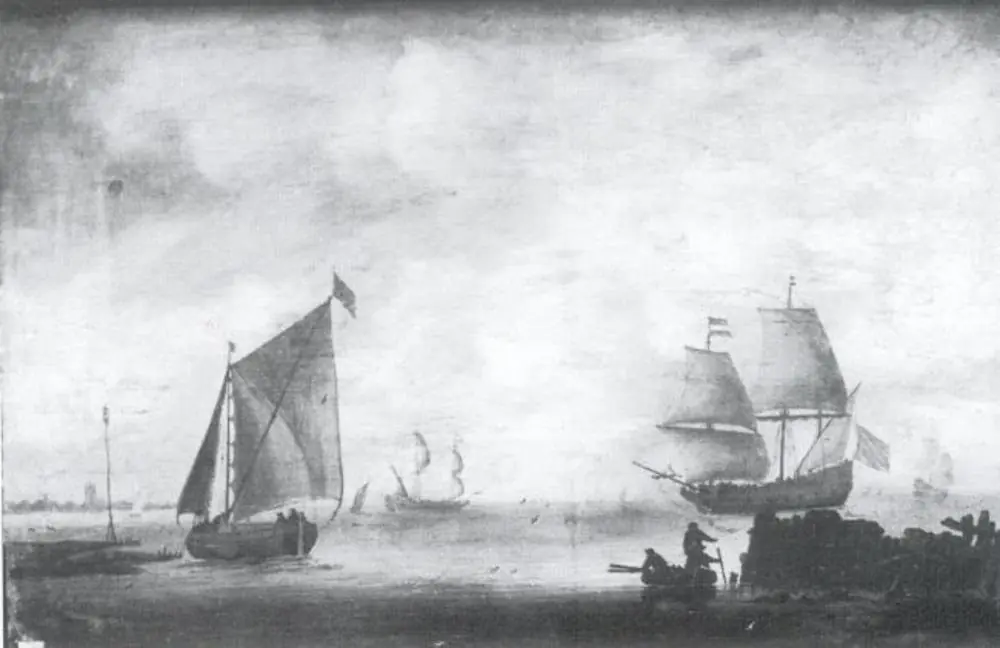 Sailing-ships in the Mouth of a River
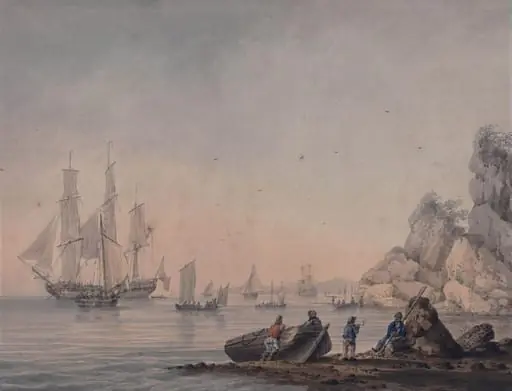 Marine View, with boats and figures on shore
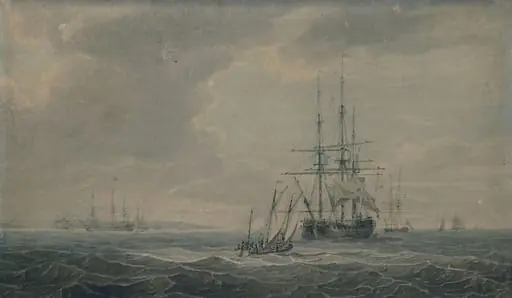 Shipping
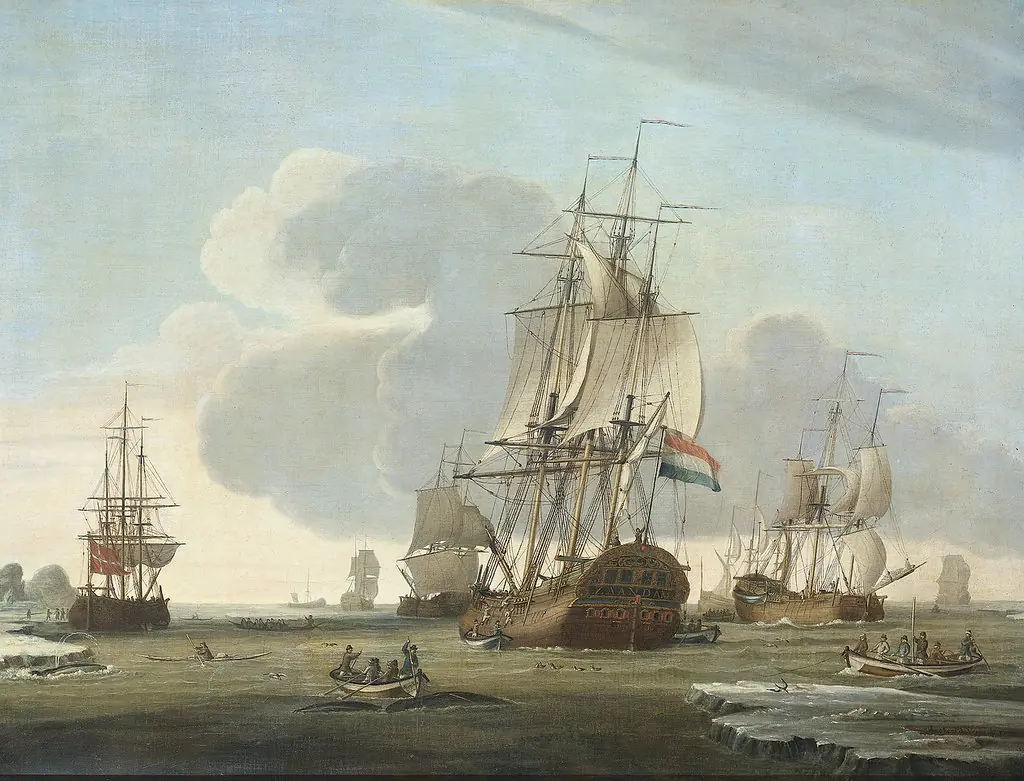 The Groenlandvaarder "Zaandam" of the Shipping Company Claes Taan and Son, Zaandam, on a Whale Hunt
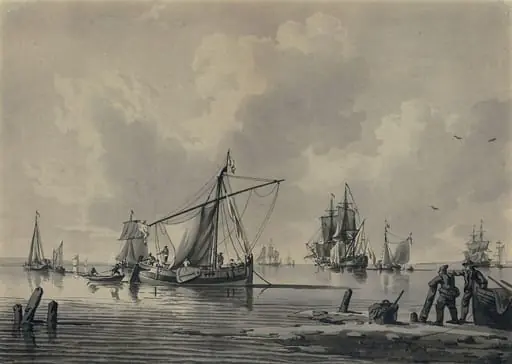 River with Shipping
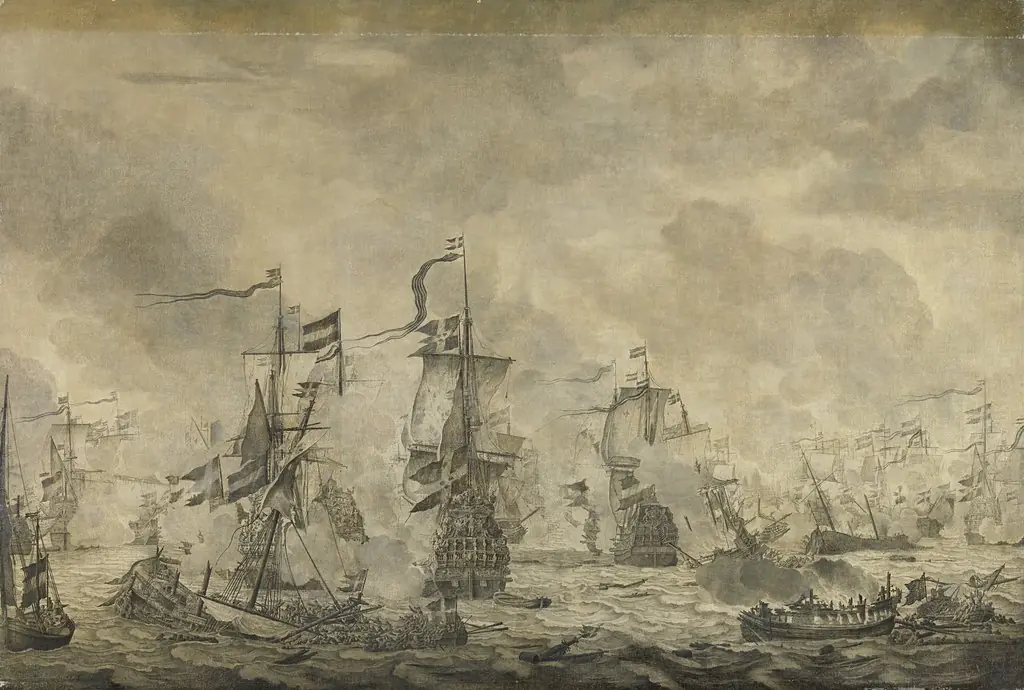 Episode from the Battle of the Sound between the Dutch and the Swedish fleets, 8 November 1658
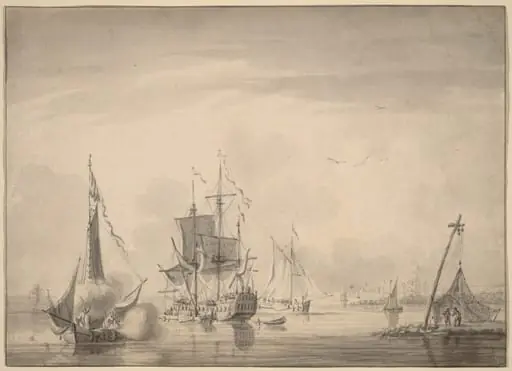 Harbor Scene
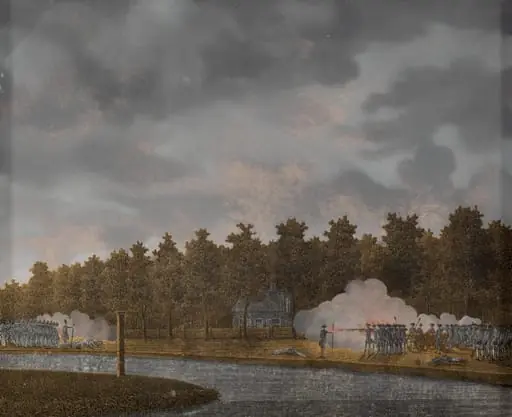 Exchange of Fire on the Vaartse Rijn near Jutphaas
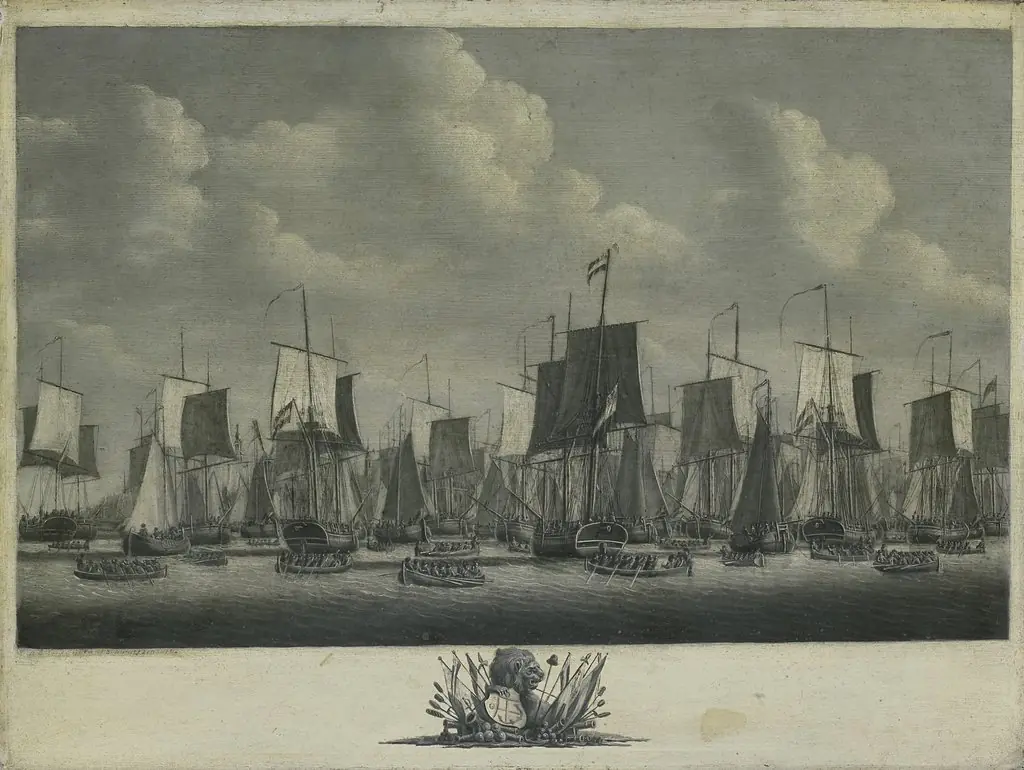 The Fleet Leaving the Port of Flushing, 1804
- Drie gezichten op de Parelrivier: Kanton, Macao, Whampoa
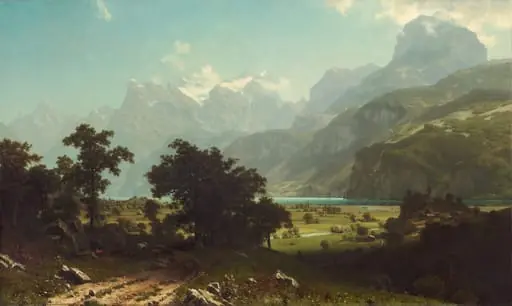 Lake Lucerne
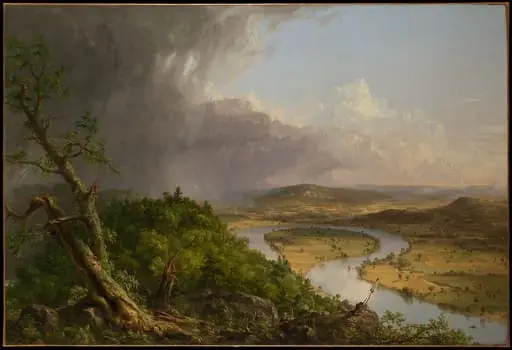 View from Mount Holyoke, Northampton, Massachusetts, after a Thunderstorm—The Oxbow
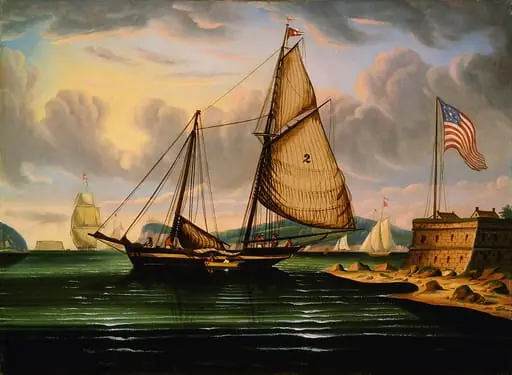 New York Harbor with Pilot Boat "George Washington"
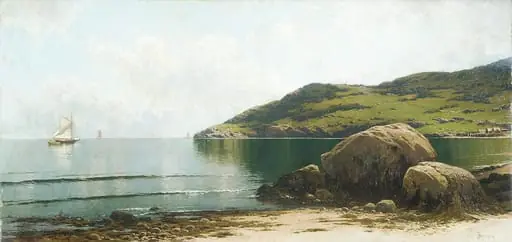 Marine Landscape
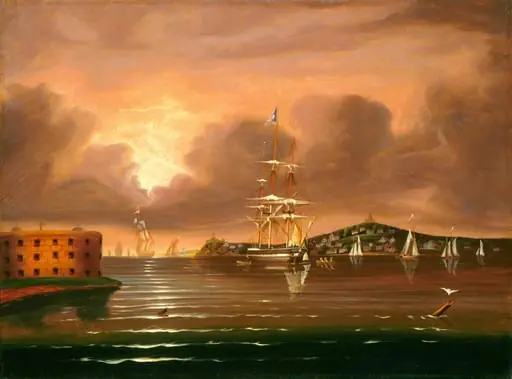 Threatening Sky, Bay of New York
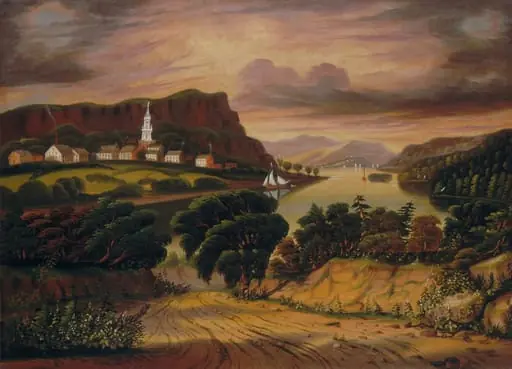 Lake George and the Village of Caldwell
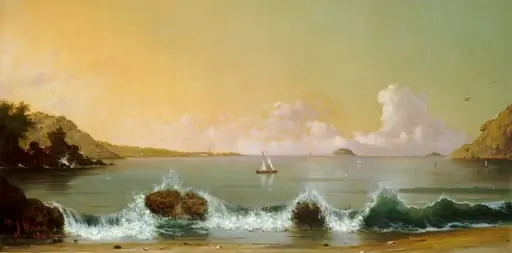 Rio de Janeiro Bay
 Packet Ship Passing Castle Williams, New York Harbor