Artwork
Tsong Khapa, Founder of the Geluk Order
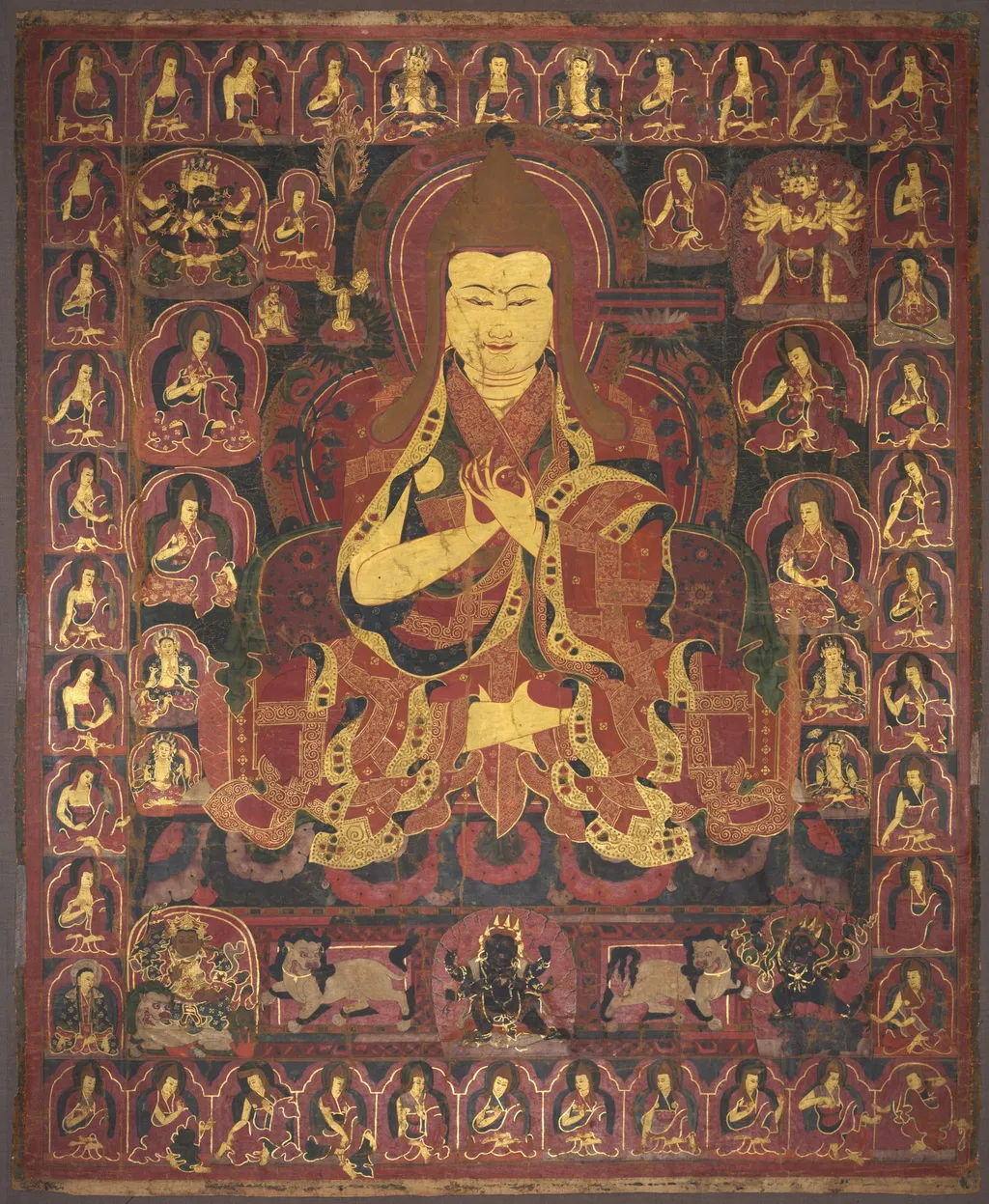
Tsong Khapa, Founder of the Geluk Order is an unspecified painting. It dates from 1455 and is held in the collection of the Cleveland Museum of Art.
About this work
History & Provenance
The painting entered the collection of the Cleveland Museum of Art at an undocumented date, and its current ownership is attributed to the museum.
The work titled \"Tsong Khapa, Founder of the Geluk Order\" is a religious painting produced in 1455, as recorded in contemporary documentation and corroborated by its entry in the Cleveland Museum of Art catalog. It depicts the founder of the Geluk school of Tibetan Buddhism and belongs to the religious art genre.
The painting entered the collection of the Cleveland Museum of Art at an undocumented date, and its current ownership is attributed to the museum. No further details about commissioning, patronage, or subsequent owners are documented in the available sources.
The painting titled Tsong Khapa, Founder of the Geluk Order, dated to 1455, is held in the collection of the Cleveland Museum of Art in Cleveland. The work is cataloged under the accession number 1981.33. While the specific artist remains unidentified, the piece is classified as a religious painting created in the mid-15th century.
Overview
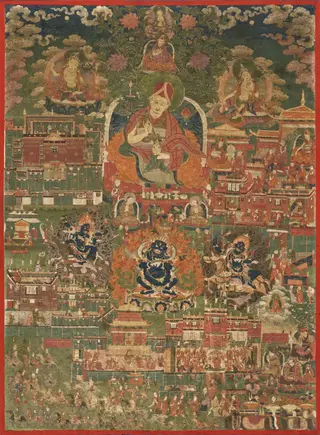
This painting, titled Tsong Khapa, Founder of the Geluk Order, depicts the central figure of Tsong Khapa, distinguished by his golden hue and serene posture. He is surrounded by a multitude of smaller devotees arranged in structured rows. The artwork is characterized by its rich decorative elements, including a dark red background with intricate gold patterns and a patterned border. This painting is held in the collection of The Cleveland Museum of Art.
Subject & Meaning
The artwork centers on Tsong Khapa, the revered founder of the Geluk school of Tibetan Buddhism. His prominent, golden form signifies his spiritual importance and enlightened status. The numerous smaller figures surrounding him, depicted in orderly rows, likely represent his disciples or the wider monastic community, gathered in reverence. Their presence underscores his role as a central teacher and the leader of a significant religious tradition.
Technique & Style
The composition employs a hierarchical scale, emphasizing Tsong Khapa through his central placement and luminous golden coloring, which sets him apart from the more simply attired surrounding figures. A sense of order is conveyed by the precise arrangement of these smaller individuals in structured rows. The background features a dark red field adorned with delicate gold patterns, while a border of repeating motifs frames the entire scene, contributing to the painting's decorative quality.
Artist & collection

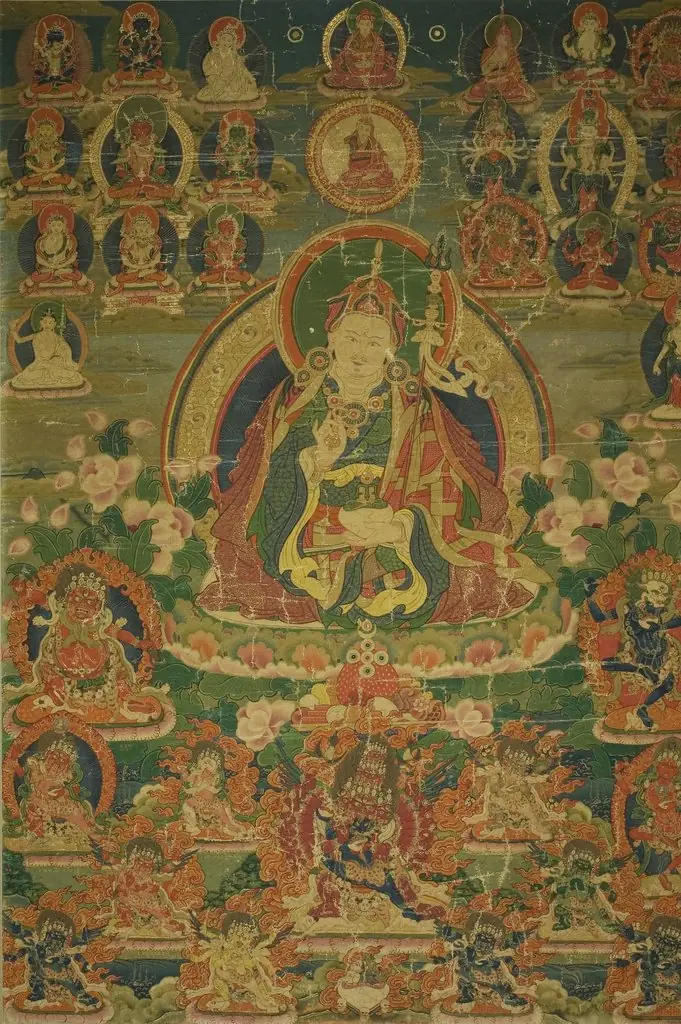 Painted Banner (Thangka) of Sage Guru Padmasambhava Seated Holding a Thunderbolt (Vajra) and Skull Cup (Kapala)
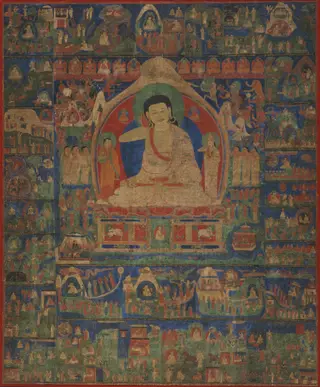 The Life of Milarepa (1040-1123)
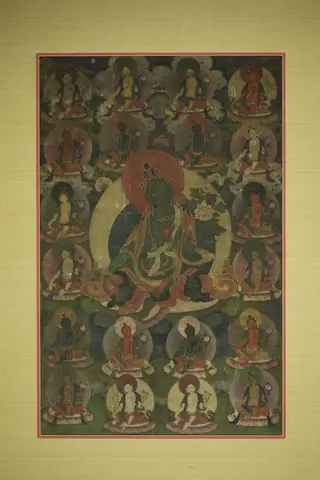 Painted Banner (Thangka) of Green Tara Surrounded by Twenty Manifestations
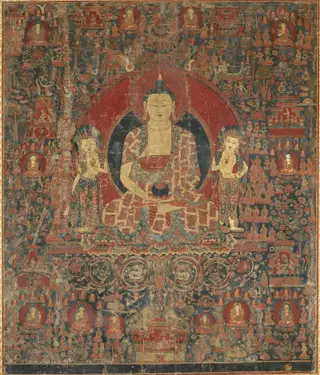 The Jina Buddha of Infinite Light (Amitabha) in His Pure Land Paradise (Sukhavati)
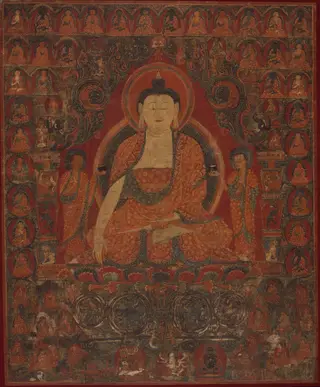 Shakyamuni with the Thirty-Five Buddhas of the Confession of Sins and the Eighteen Arhats
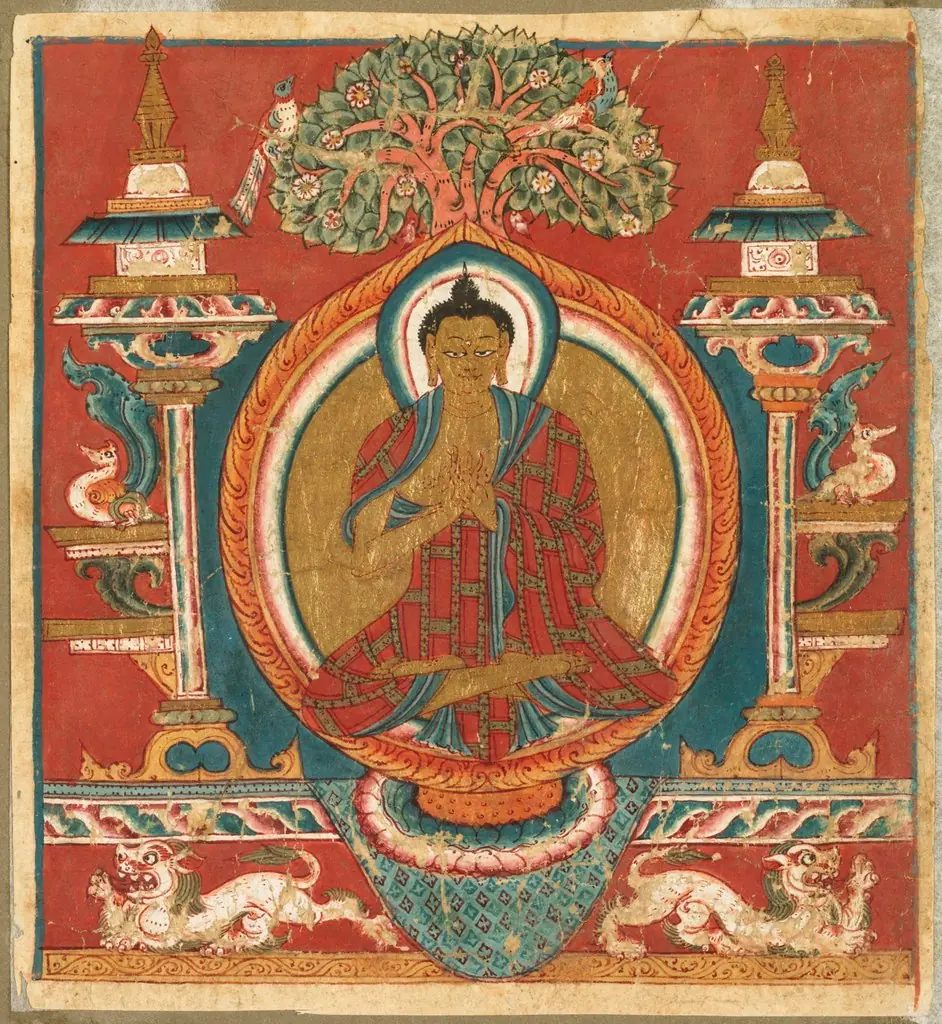 Preaching Sakyamuni
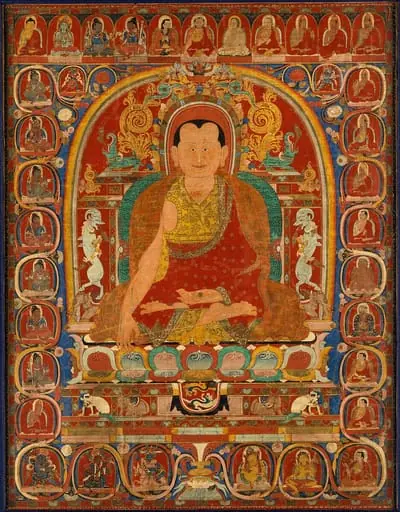 Untitled
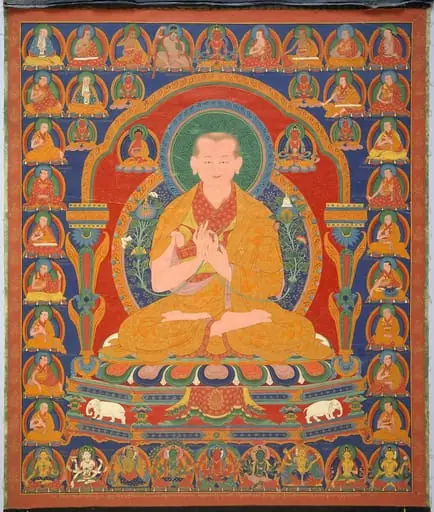 Untitled
 Kunga Tashi and Incidents from His Life (Abbot of Sakya Monastery, 1688-1711)