Artwork
Untitled
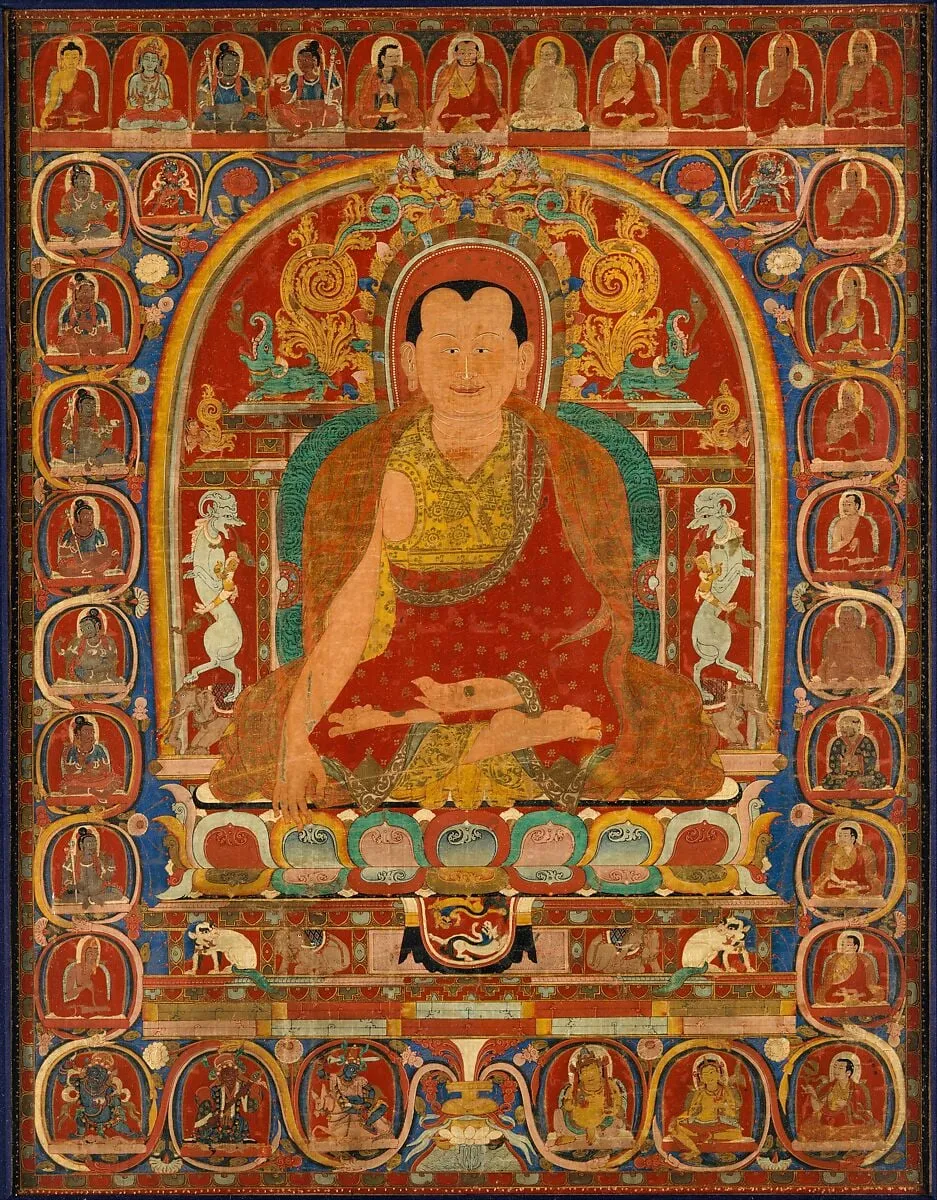
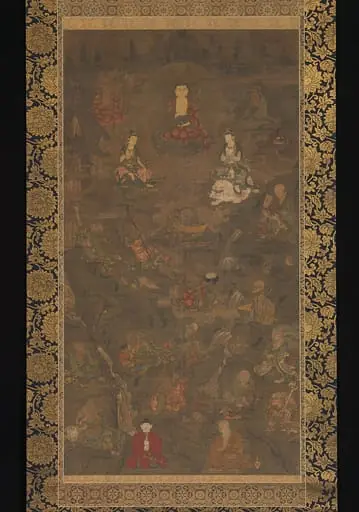
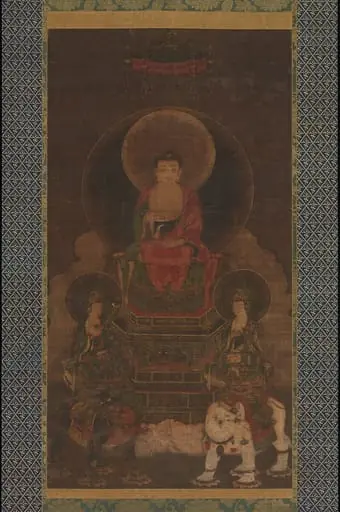
Untitled is a distemper painting. It dates from 1350 and is held in the collection of the Metropolitan Museum of Art.
- Accession no.
- 1991.304
- Credit line
- Purchase, Miriam and Ira D. Wallach Philanthropic Fund Gift, 1991
About this work
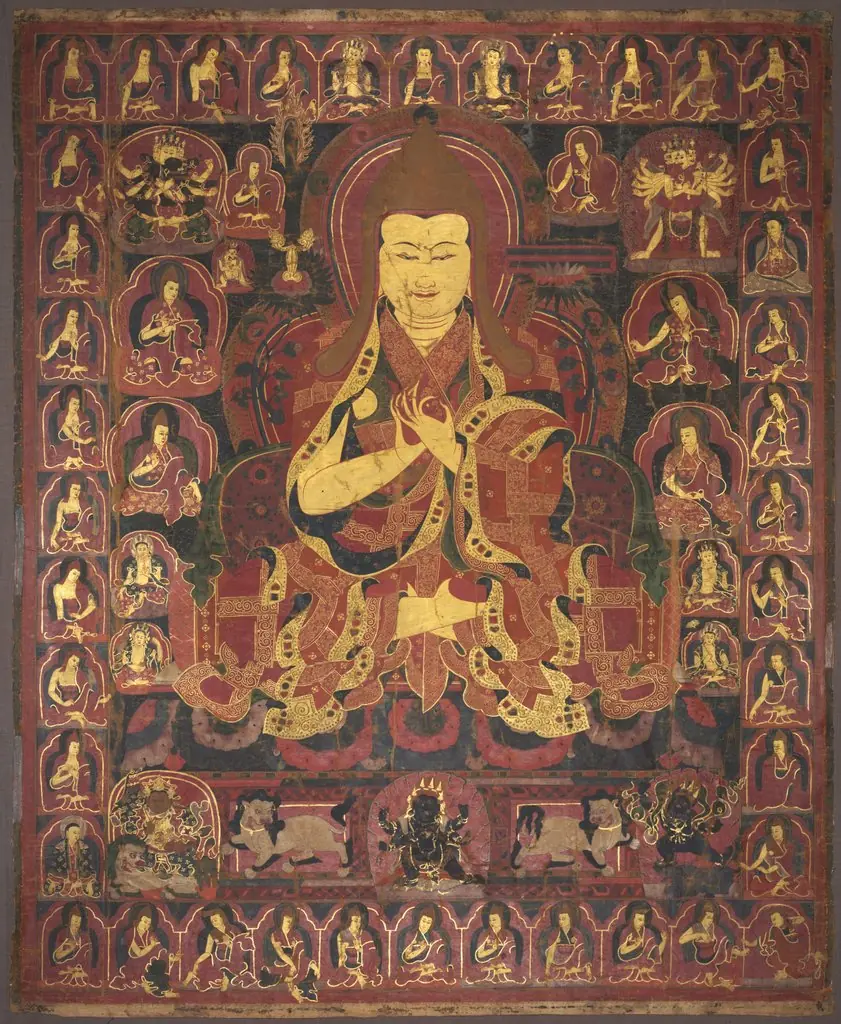
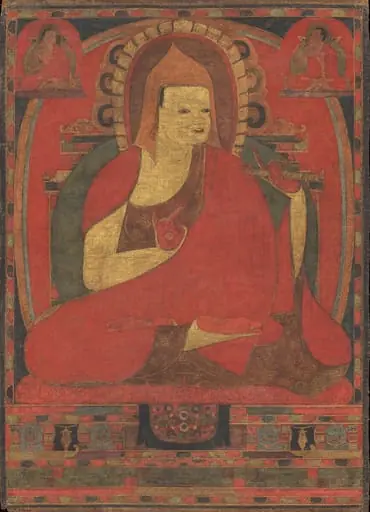
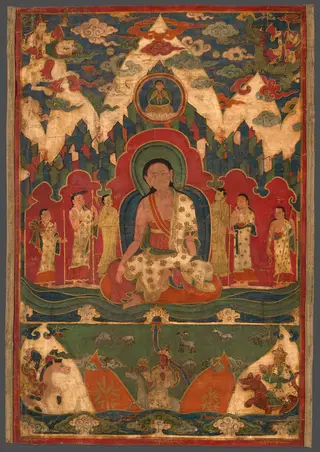
Indian pandits fill roundels above him, while below stand protective deities and a monk with a gilded censer, likely the man who commissioned it.
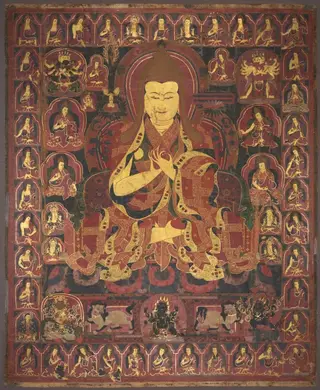
An abbot of the Kagyupa order sits in bhumisparsha mudra, his right hand touching the earth as Buddha Sakyamuni did at his awakening. Painted around 1350 in Central Tibet, the distemper-on-cloth portrait gives the hierarch's receding hairline and features an unusual naturalism. Indian pandits fill roundels above him, while below stand protective deities and a monk with a gilded censer, likely the man who commissioned it.
Subject & Meaning
The painting Untitled (1350) depicts a Buddhist-themed portrait featuring a central male figure accompanied by an elephant and a mythical creature. The iconography aligns with Buddhist symbolism, where the elephant often represents strength, wisdom, and the historical Buddha’s journey, while mythical beings may signify protective or transcendent forces within the faith. The man’s portrait likely embodies a spiritual or revered figure, potentially a monk or deity, reinforcing themes of devotion and enlightenment.
Together, these elements suggest the work serves as a devotional or didactic image, conveying ideals of Buddhist teachings and the interplay between mortal and divine realms.
Technique & Style
The work, titled Untitled, is a 14th‑century Buddhist portrait painted in distemper on cloth, a support typical of early Indian panel paintings. Its dimensions, recorded in the Metropolitan Museum of Art catalogue, measure 77.2 cm in height by 59.7 cm in width. The composition depicts a man alongside an elephant and a mythical creature, arranged in a flattened, symbolic space that reflects the stylized iconography of the period.
Executed by an anonymous hand, the painting employs a restrained palette of earth tones and linear outlines characteristic of distemper technique, with subtle surface wear that has not been documented. The work is classified as a portrait within the museum’s collection.
History & Provenance
Created around 1350, this untitled portrait was executed by an anonymous artist using distemper on cloth. The work depicts a man alongside an elephant, a mythical creature, and Buddhist themes. Measuring 77.2 cm in height and 59.7 cm in width, the painting eventually entered the collection of the Metropolitan Museum of Art, where it is currently housed.
The specific commission circumstances and the detailed chain of ownership prior to its arrival at the Metropolitan Museum of Art remain unrecorded in the available sources.
Legacy
The work is recognized in major museum collections as a key example of 14th‑century anonymous Buddhist painting. Its presence in the Metropolitan Museum of Art, documented in the catalogue entry, has made it a reference point for scholars examining early portraiture that blends narrative iconography with devotional subjects. The depiction of a man with an elephant and mythical creatures illustrates the integration of Buddhist symbolism into secular portrait formats, influencing later studies of cross‑cultural artistic exchange.
Because the artist remains unidentified, the piece is frequently cited in discussions of anonymous workshops and the transmission of visual motifs across regions.
Overview
This untitled thangka, painted around 1350, depicts an unidentified abbot of the Kagyupa order, a significant branch of Tibetan Buddhism. Executed in distemper on cloth, the artwork measures approximately 30 by 23 inches. It was acquired by the Metropolitan Museum of Art in 1991 through the Miriam and Ira D. Wallach Philanthropic Fund.
The painting showcases a distinctive synthesis of Nepalese and eastern Indian artistic traditions prevalent in Central Tibet during the mid-fourteenth century.
Artist & collection

- Untitled
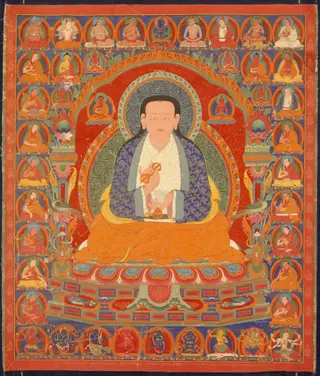 Sonam Tsemo (1142-1182) and His Lineage
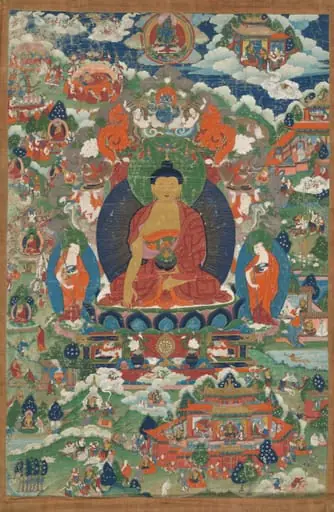 Shakyamuni Buddha with scenes from his life story
 Tsong Khapa, Founder of the Geluk Order
 Tsong Khapa, Founder of the Geluk Order
 Mandara (pantheon)
 Untitled
 Untitled
 Preaching Sakyamuni
 The Life of Milarepa (1040-1123)
 Untitled
 Painted Banner (Thangka) of Milarepa on Mount Kailasha