Artwork
석가삼존도 조선|釋迦三尊圖 朝鮮|Shakyamuni triad
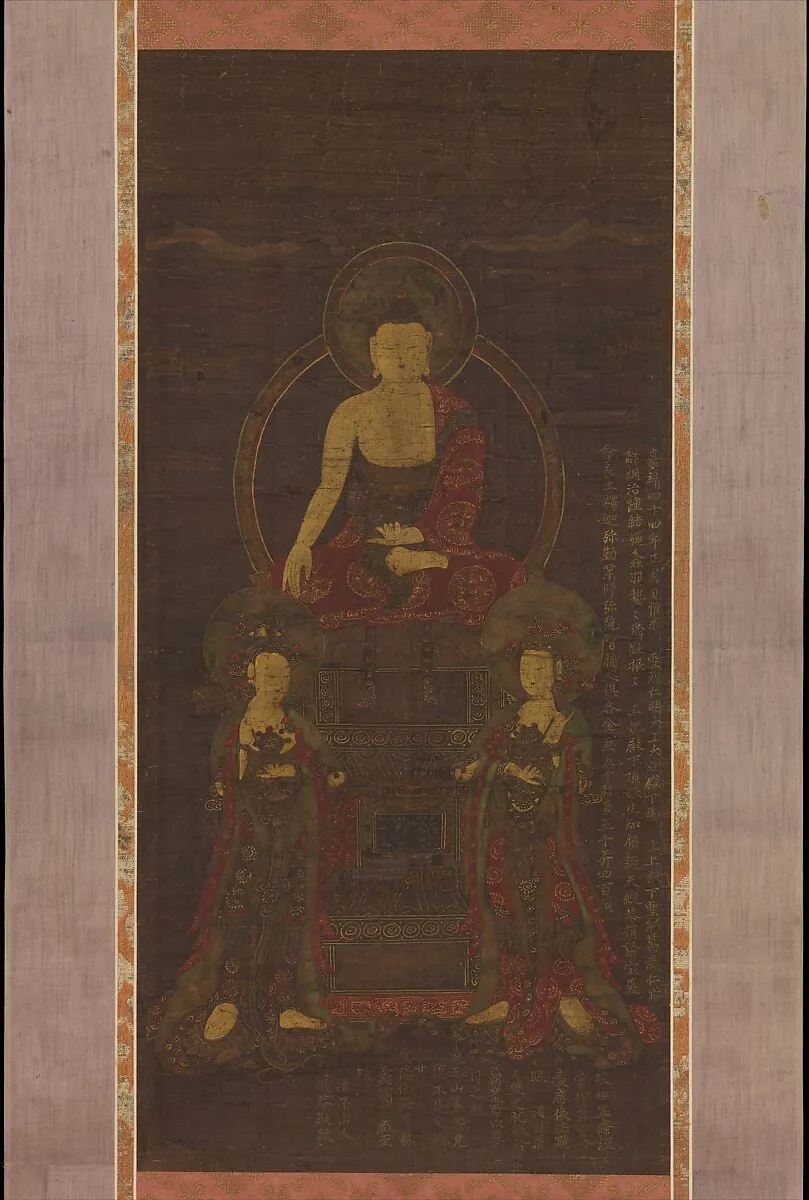
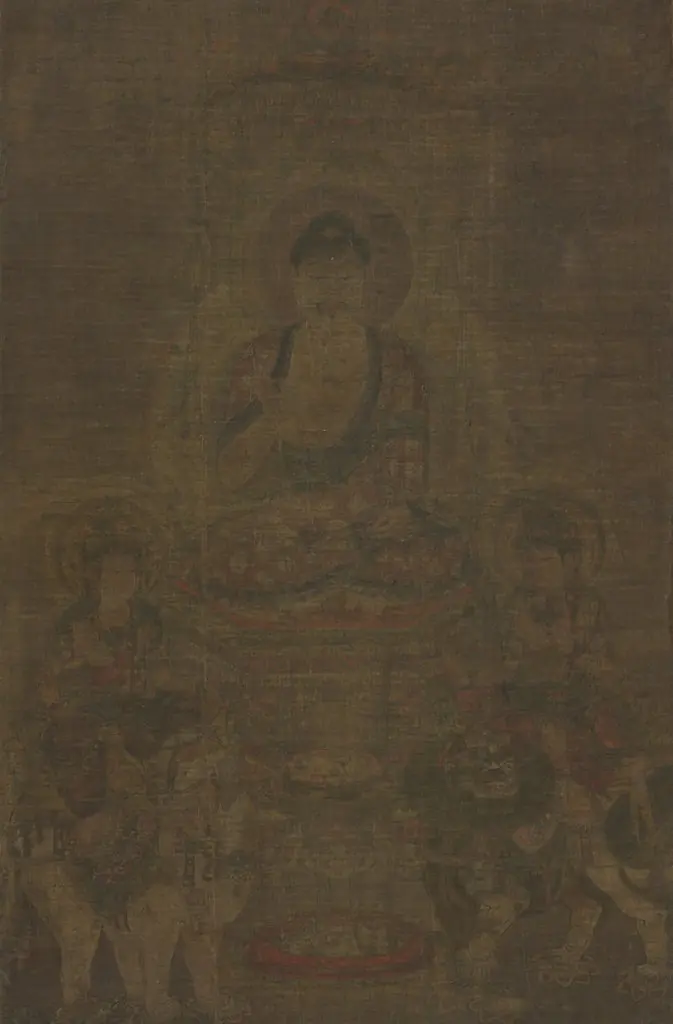
석가삼존도 조선|釋迦三尊圖 朝鮮|Shakyamuni triad is a gold painting. It dates from 1565 and is held in the collection of the Metropolitan Museum of Art. This hanging scroll, titled Shakyamuni Triad, was created in Korea in 1565.
About this work
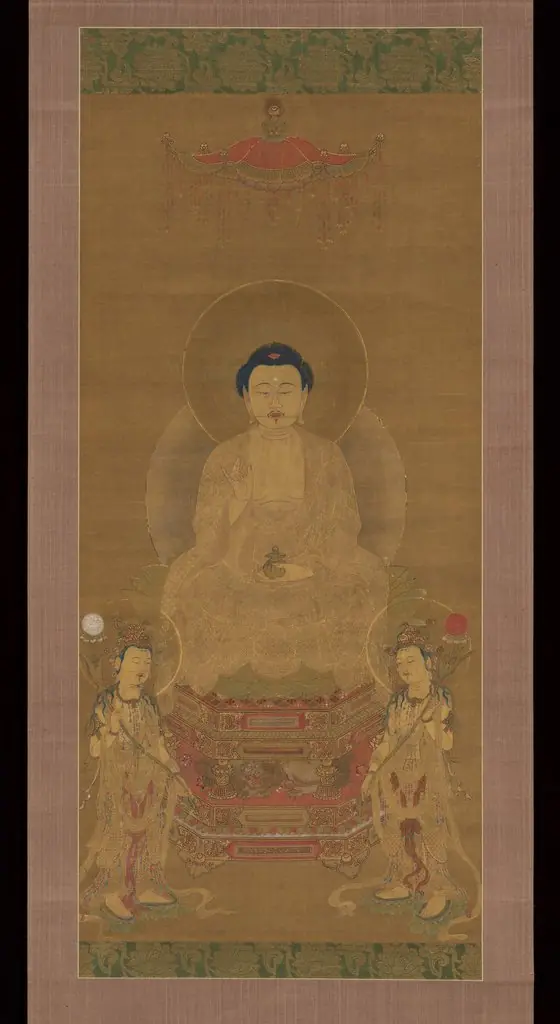
A tall silk scroll with three golden figures against deep red. The central Buddha sits on a lotus, hands resting in calm gestures, with two smaller bodhisattvas standing beside him in shimmering gold robes. Made in Korea in 1565, it shows how Buddhism blended styles across cultures. The gold leaf is meant to glow like divine light in a dim temple.
Subject & Meaning
The hanging scroll known as 석가삼존도 (Shakyamuni triad) portrays the historical Buddha Shakyamuni seated in the central position, flanked by two bodhisattvas.
The hanging scroll known as 석가삼존도 (Shakyamuni triad) portrays the historical Buddha Shakyamuni seated in the central position, flanked by two bodhisattvas. The figures are rendered in color and gold on silk, a medium typical of Joseon-era Buddhist painting, emphasizing the sacred nature of the scene. Iconographically, the Buddha’s ushnisha and lotus pedestal signal enlightenment, while the bodhisattvas’ jeweled crowns and flowing robes denote compassion and guidance toward awakening.
Together they symbolize the triadic relationship of the Buddha, his teaching, and the path of liberation, reflecting the devotional focus of Korean Buddhist practice in the mid-16th century.
Technique & Style
Executed as a hanging scroll, this Shakyamuni triad is rendered in color and gold on silk, a support and palette characteristic of mid-sixteenth-century Joseon Buddhist painting. The choice of silk allowed for the fine linear definition needed to differentiate the central Buddha from the flanking bodhisattvas, while the application of gold leaf and polychrome pigments produced the luminous surface associated with religious icons of the period. The composition arranges the three sacred figures in a hierarchical triad format, with the Buddha centered and the bodhisattvas positioned as attendant deities. The work is held in the collection of the Metropolitan Museum of Art.
History & Provenance
The 1565 hanging scroll titled Shakyamuni Triad is held in the collection of the Metropolitan Museum of Art. By an anonymous painter, the work is classified as religious art depicting the Buddha and bodhisattvas. The museum's records date the piece to 1565, and it is part of the permanent holdings.
No specific inventory or accession number is provided in the available documentation, nor is there any recorded exhibition history for this work within the provided sources.
Legacy
The hanging scroll known as 석가삼존도, dated 1565 and executed in colour and gold on silk, entered the collection of the Metropolitan Museum of Art. Its presence in a major Western museum has made it accessible for the study of Joseon-period Buddhist painting, and its iconography of the Shakyamuni triad, rendered with gold leaf, exemplifies the religious art of mid-sixteenth-century Korea.
Overview
This hanging scroll, titled Shakyamuni Triad, was created in Korea in 1565. Executed with color and gold on silk, it depicts a central Buddha figure seated on a lotus throne, flanked by two standing bodhisattvas. The vibrant gold of the figures contrasts with a deep red background, characteristic of sacred Buddhist art from the Joseon dynasty. Its vertical format is typical of scrolls displayed in temple halls.
Context
Created during Korea's Joseon dynasty, this Shakyamuni Triad reflects the enduring tradition of Buddhist painting despite the period's official Confucianism. The artwork subtly embodies the broader phenomenon of Buddhism's transnational journey, where artistic styles and iconographies adapted and integrated local influences across various cultures. This piece serves as an example of such quiet cultural exchange and artistic continuity.
Artist & collection

 地蔵菩薩来迎図|Welcoming Descent of the Bodhisattva Jizō
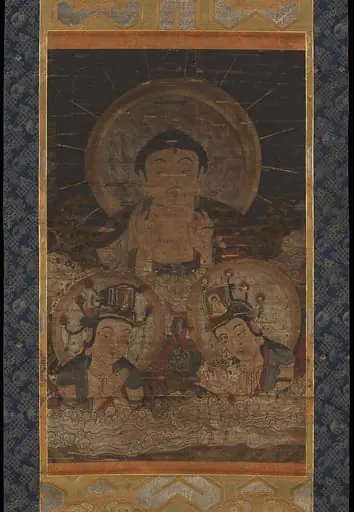 Untitled
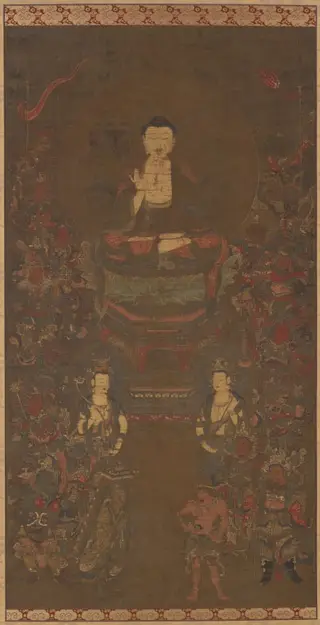 Shakyamuni with the Sixteen Benevolent Deities
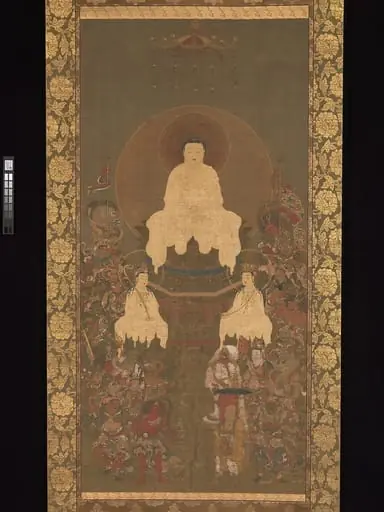 釈迦三尊十六善神像|Shaka (Shakyamuni), the Historical Buddha, with Two Attendant Bodhisattvas and Sixteen Benevolent Deities
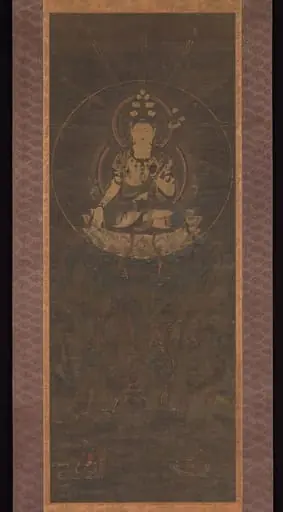 十一面観音影向図|Eleven-Headed Kannon on Mount Fudaraku
 Triad of the Medicine Master Buddha Yakushi (Bhaisajya Buddha)