Artwork
阿弥陀聖衆来迎図 |Welcoming Descent of Amida and Bodhisattvas
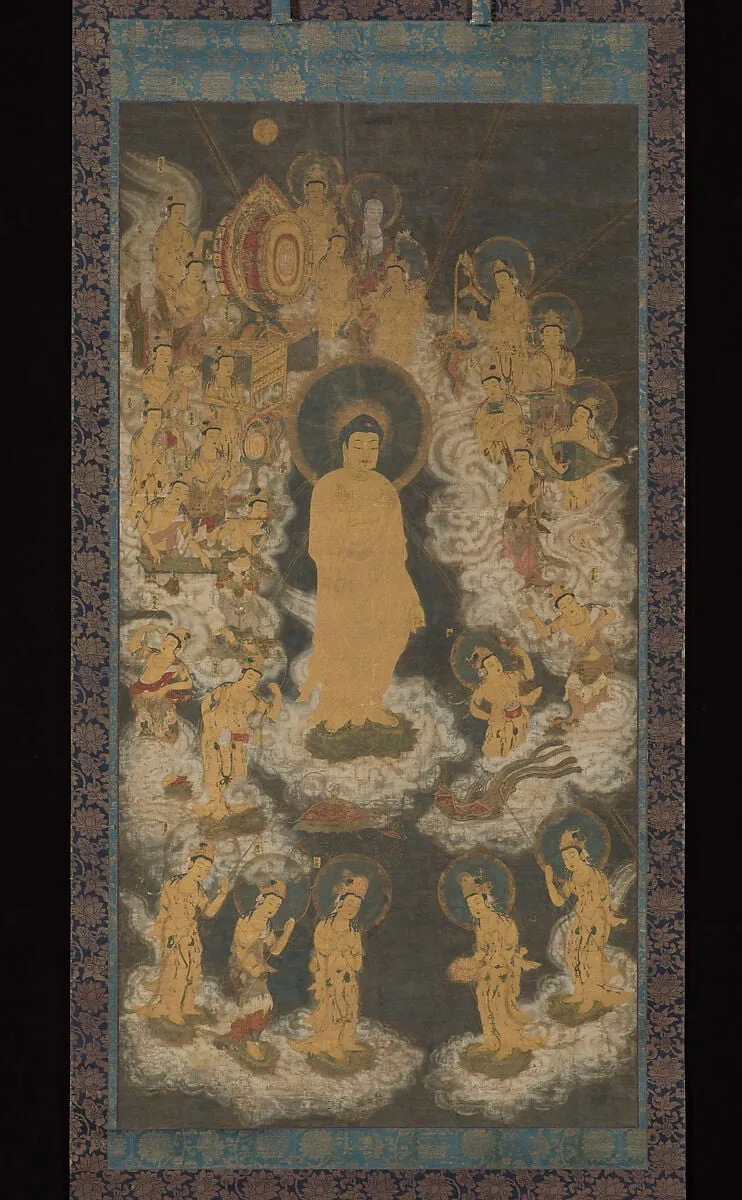
阿弥陀聖衆来迎図 |Welcoming Descent of Amida and Bodhisattvas is an ink painting. It dates from 1379 and is held in the collection of the Metropolitan Museum of Art. This hanging scroll, titled Welcoming Descent of Amida and Bodhisattvas, is a painting created with ink, color, and gold on silk.
About this work
Subject & Meaning
Created in Japan in 1379, this religious painting visualizes the moment these divine figures descend from the Pure Land to greet a dying believer's soul.
The artwork depicts the Buddhist concept of the Welcoming Descent, specifically illustrating the arrival of Amida Buddha and a retinue of Bodhisattvas. Created in Japan in 1379, this religious painting visualizes the moment these divine figures descend from the Pure Land to greet a dying believer's soul. As a hanging scroll executed in ink, color, and gold on silk, the work serves a devotional function within the Buddhist tradition, representing the promise of salvation and the compassionate intervention of the Western Paradise figures.
Technique & Style
The hanging scroll employs ink, mineral pigments, and gold on dyed silk, combining line drawing with delicate flat washes and gold-leaf accents to articulate halos and drapery folds. The composition is organized along a central vertical axis where Amida descends amid a nimbus of attendant bodhisattvas, their bodies rendered in attenuated, sinuous forms consistent with Nanbokucho-period yamato-e painting conventions. Drapery lines are incised with fine brushwork and reinforced by subtle ink shading, while gold pigment highlights jewelry, crowns, and mandorla edges.
History & Provenance
The hanging scroll is dated to 1379 based on a dated inscription on the painting itself. Its early ownership history is undocumented; it entered the collection of the Metropolitan Museum of Art without recorded provenance prior to its acquisition. The painting measures approximately 167 cm in height and 85.1 cm in width.
The sources do not record an explicit accession or inventory number, nor do they list any documented exhibition history for this piece.
Context
The painting 阿弥陀聖衆来迎図, dated 1379, is a hanging scroll in ink, color, and gold on silk, classified as a religious work depicting Amida Buddha and Bodhisattvas. It is part of the Metropolitan Museum of Art's collection, listed as an anonymous Japanese artwork. Its inclusion in a major Western museum reflects its recognized significance within the corpus of Nanbokucho- and early Muromachi-period Buddhist painting, while the anonymity of the artist situates it among other unnamed practitioners of the era.
Overview
This hanging scroll, titled Welcoming Descent of Amida and Bodhisattvas, is a painting created with ink, color, and gold on silk. It depicts a central scene in Buddhist belief, showing Amida Buddha and accompanying bodhisattvas descending. The artwork is characterized by its intricate details and a distinctive blend of artistic traditions, making it a notable example within its historical period.
Artist & collection

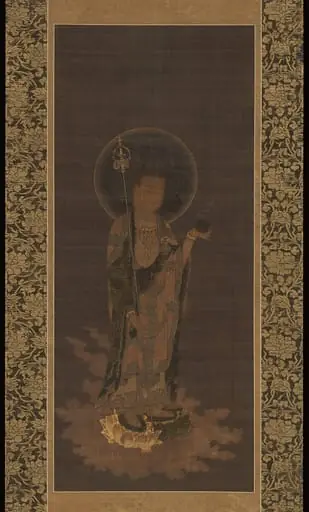
- 地蔵菩薩来迎図|Welcoming Descent of the Bodhisattva Jizō
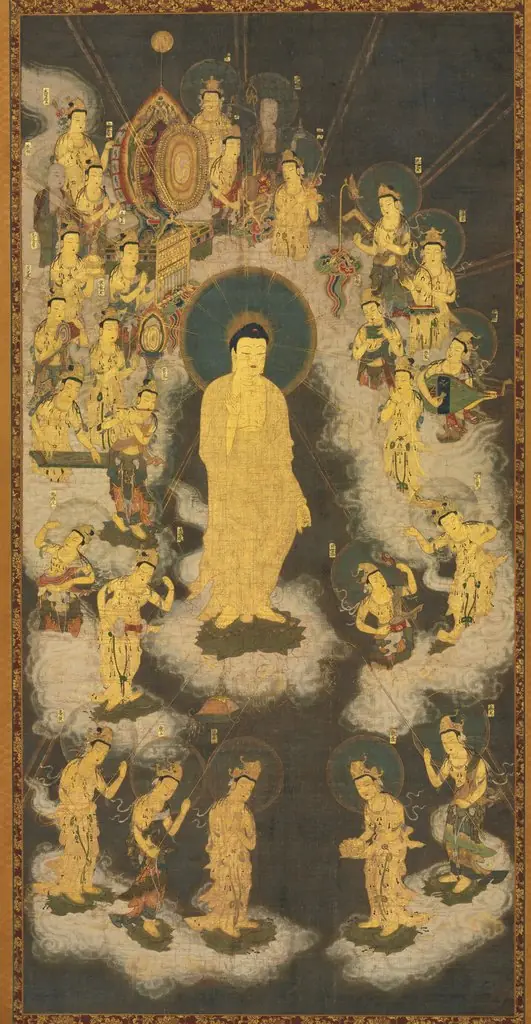 Welcoming Descent of Amida (Amida Raigō)
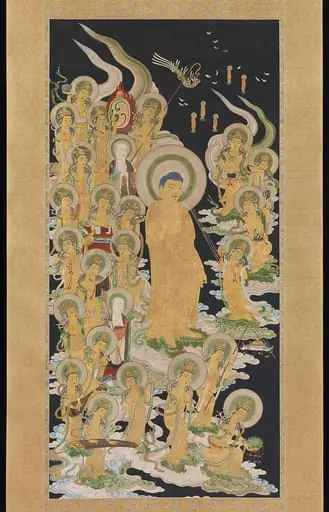 阿弥陀二十五菩薩来迎図|Buddha and Attendants
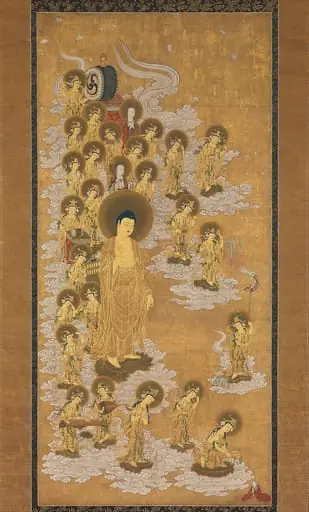 阿弥陀二十五菩薩来迎図|Welcoming Descent of Amida Buddha and Twenty-five Bodhisattvas
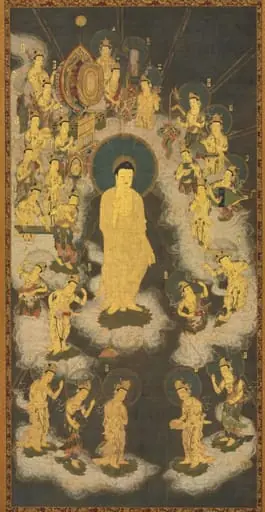 Welcoming Descent of Amida (Amida Raigō)
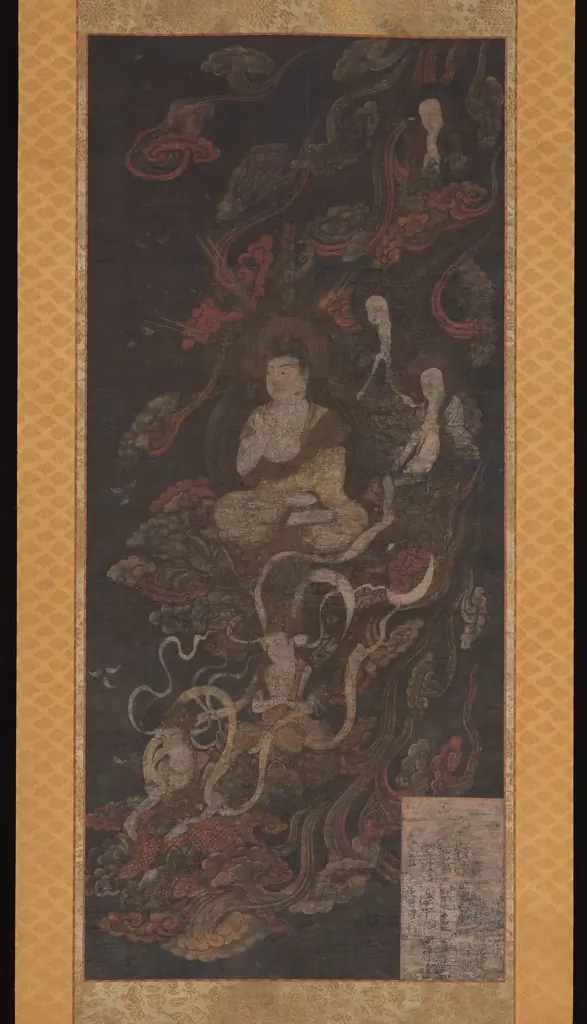 Welcoming Descent of Amida, the Buddha of Infinite Light, and His Holy Retinue
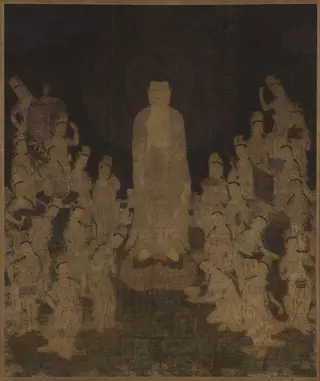 Welcoming Descent of Amida with Twenty-Five Bodhisattvas
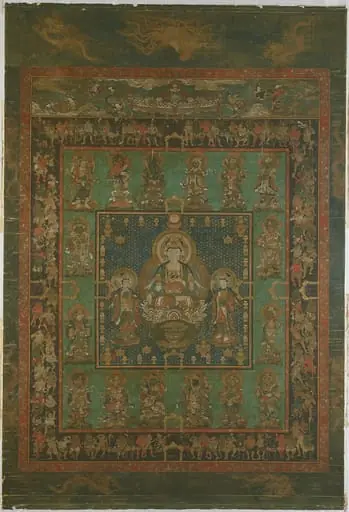 般若菩薩曼荼羅図|Mandala of the Bodhisattva Hannya (Prajnaparamita)
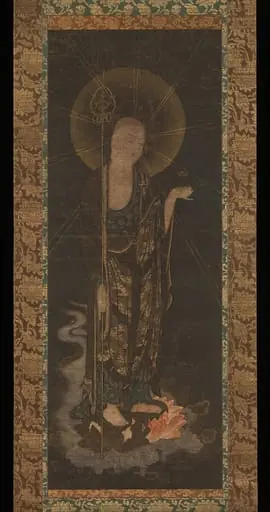 地蔵来迎図|Welcoming Descent of Jizō