Artwork
Untitled
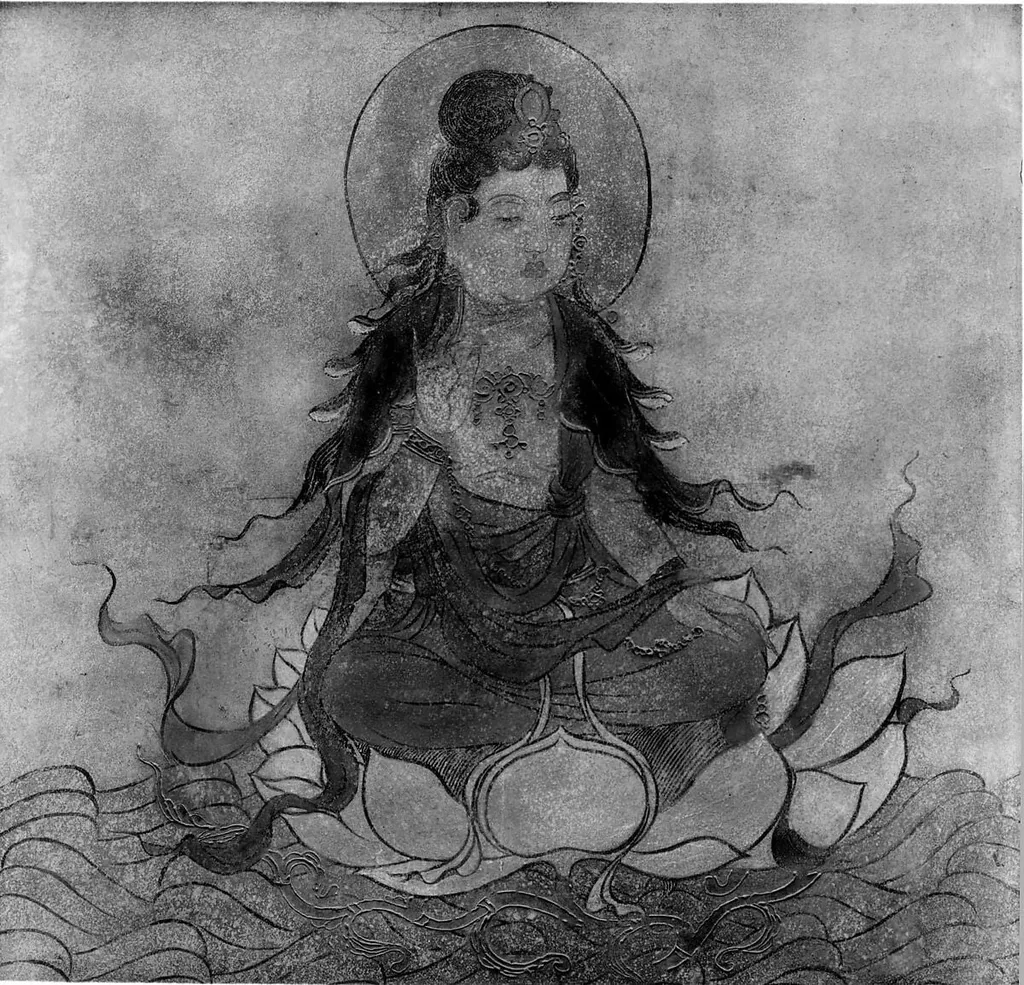
Untitled is a fresco painting. It dates from 1120 and is held in the collection of the Metropolitan Museum of Art.
- Accession no.
- 29.76
- Credit line
- Gift of Otto Burchard, 1929
About this work
Subject & Meaning
The work portrays a Bodhisattva, a compassionate figure in Buddhist iconography, within a religious context.
The work portrays a Bodhisattva, a compassionate figure in Buddhist iconography, within a religious context. As a fresco executed in China, the painting functions as a devotional image that embodies the ideals of mercy and enlightenment associated with Bodhisattva status. Its subject reflects the broader Buddhist emphasis on altruistic aspiration, using the traditional representation of a Bodhisattva to convey spiritual aspirations.
The anonymous execution and placement in the Metropolitan Museum of Art’s collection underscore its significance as a rare surviving example of early Buddhist visual art.
Technique & Style
The work is a fresco, executed on plaster while still wet to bind pigments permanently to the wall. Its compact dimensions (58.4 cm high × 60.3 cm wide) correspond to a portable devotional panel, typical of Chinese Buddhist practice during the Tang period. The composition centers on a serene Bodhisattva figure rendered in muted earth tones and mineral pigments, with delicate linear drapery folds that frame the body in rhythmic patterns.
Handling emphasizes flat, decorative surfaces over modeled volume, aligning with contemporaneous Buddhist iconographic conventions that prioritize symbolic clarity over naturalistic illusionism.
History & Provenance
Untitled is a fresco painted by an anonymous Chinese artist, created in China and depicting a Bodhisattva within a Buddhist context. The work is classified as a religious painting and is part of the Metropolitan Museum of Art's collection. Its dimensions measure 58.4 cm by 60.3 cm. The painting's authorship is attributed to an unknown master, and it entered the museum's holdings as part of the MET 29.76 acquisition. No further details about commissioning or prior owners are recorded.
Untitled is held by the Metropolitan Museum of Art, where it is recorded under the inventory designation MET 29.76. The work, a fresco from China, is classified as a painting and depicts a Bodhisattva within a Buddhist context. No exhibition history is documented in the available sources.
Context
Scholars view the untitled fresco as a representative example of Chinese Buddhist painting from the early medieval period, noting its stylistic alignment with regional monastic workshops. The anonymous hand is situated within a broader tradition of devotional art that blended indigenous iconography with imported Buddhist motifs, a context highlighted by its depiction of a Bodhisattva and classification as a religious work. Its inclusion in the Metropolitan Museum of Art’s collection has prompted discussions about the preservation of fresco technique and the transnational exchange of artistic ideas.
Researchers cite the piece as evidence of the cultural reach of Buddhism into China, underscoring its significance in the study of Asian art history.
Overview
This untitled fresco depicts a serene, golden figure seated in a cross-legged posture upon a lotus blossom. Its hands are gently raised in symbolic gestures, framed by a soft red halo. Created using the ancient technique of fresco painting, this work originates from a cave temple in China, though the specific artist remains unrecorded. It represents a common motif found in such sacred spaces.
Artist & collection

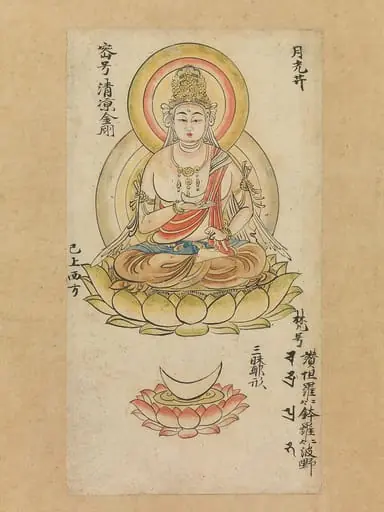
- 伝託磨為遠筆 月光菩薩像 「金胎仏画帖」断簡|Gakkō Bosatsu, from “Album of Buddhist Deities from the Diamond World and Womb World Mandalas” (“Kontai butsugajō”)
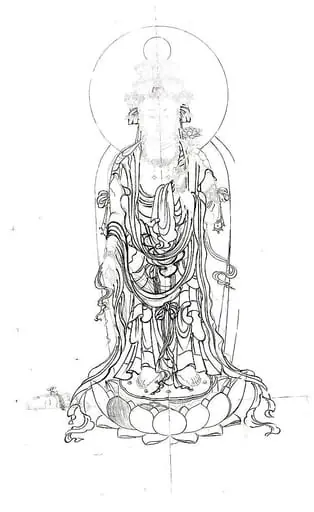 十一面観音像下絵|Drawing of Eleven-headed Kannon
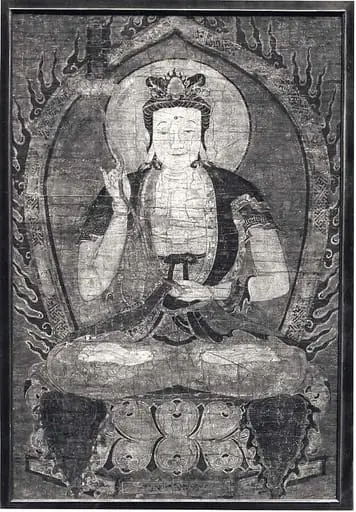 Untitled
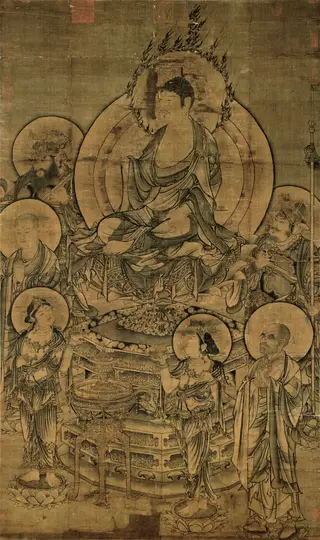 The Buddha Preaching the Law
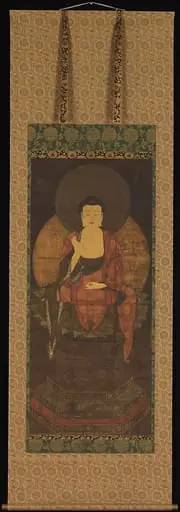 釈迦如来像|Shaka Nyorai
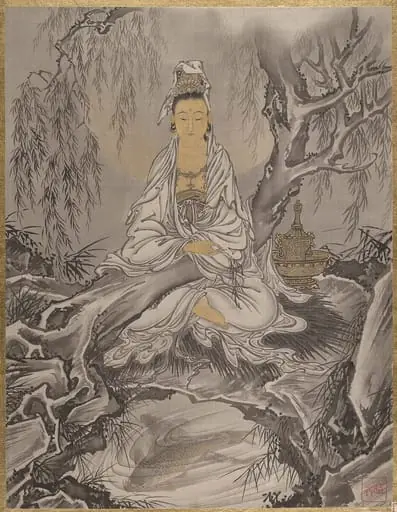 白衣観音図|White-Robed Kannon
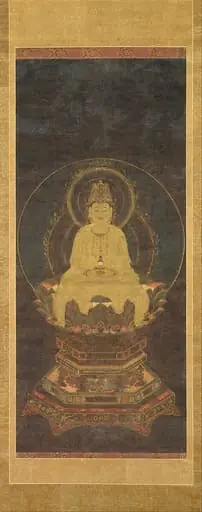 弥勒菩薩像|Miroku Bosatsu
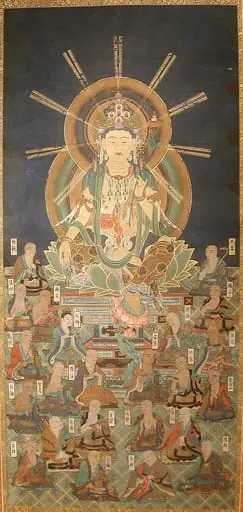 Untitled
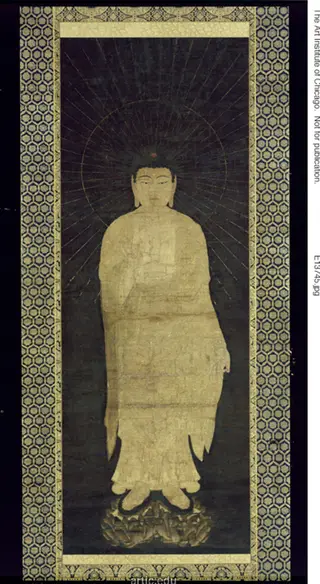 The Buddha Amida, from the triptych Approach of the Amida Trinity
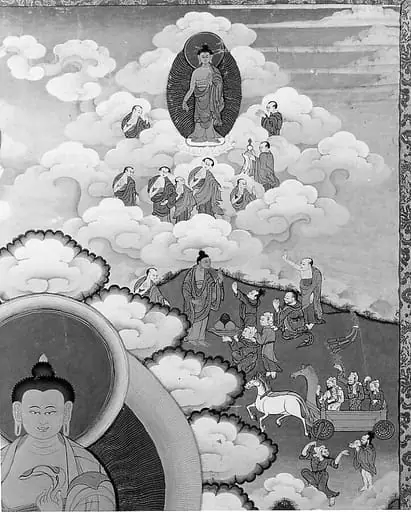 Untitled
 Untitled
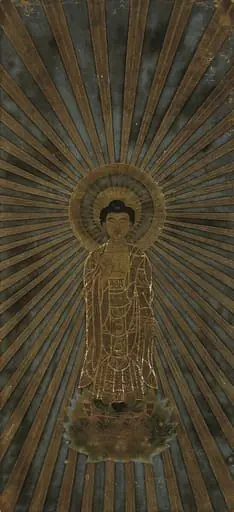 方便法身尊影|Amida Manifesting in the Dharma-body of Expedient Means