Artwork
釈迦如来像|Shaka Nyorai
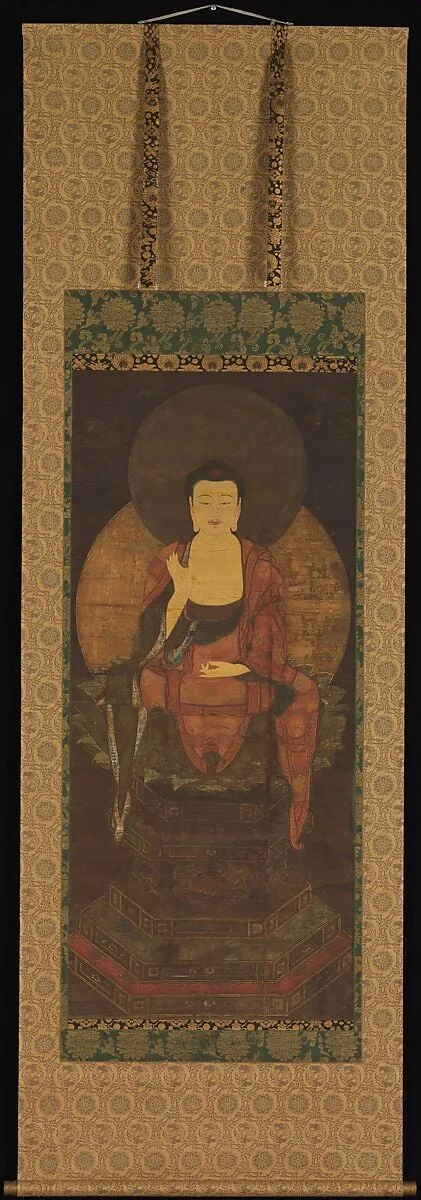
釈迦如来像|Shaka Nyorai is an ink painting. It dates from 1364 and is held in the collection of the Metropolitan Museum of Art. This Japanese hanging scroll, titled Shaka Nyorai, depicts the Buddha rendered in ink, color, and gold on silk.
About this work
Subject & Meaning
As Shaka Nyorai, the figure represents the enlightened teacher who attained awakening and is venerated as the founder of the Buddhist teachings.
The hanging scroll depicts Shaka Nyorai, the Japanese name for Shakyamuni, the historical Buddha, who is the central figure of Buddhism. As Shaka Nyorai, the figure represents the enlightened teacher who attained awakening and is venerated as the founder of the Buddhist teachings. The work belongs to the religious genre of painting, with the subject matter identified as both the Buddha and Buddhism more broadly.
Created in Japan in 1364, the image is rendered in ink, color, and gold on silk, materials consistent with devotional Buddhist icons intended for veneration rather than narrative illustration. The use of gold leaf and pigment on silk reflects the sacred status of the subject, presenting Shaka Nyorai as an object of worship and a symbol of enlightenment, compassion, and the ultimate truth of Buddhist doctrine.
Technique & Style
The Shaka Nyorai is executed as a hanging scroll using ink, color, and gold applied to a silk support, a combination characteristic of Japanese Buddhist devotional painting of the mid-fourteenth century. The use of gold leaf or gold pigment alongside polychrome ink on silk indicates a technique associated with decorated sutra altars and devotional icons intended for ritual display. The anonymous painter's handling of these materials reflects the conventions of religious painting produced in Japan in 1364, with the silk ground providing a luminous surface for the layered application of mineral pigments and metallic gold.
The work is classified within the Metropolitan Museum of Art's paintings holdings as a religious painting, underscoring its function as a cult image of the historical Buddha rendered in the medium and style of late Kamakura to early Muromachi Buddhist portraiture.
History & Provenance
The Shaka Nyorai (釈迦如来像) was created in 1364 and is attributed to an anonymous artist working in Japan during the Nanboku-chō period. Its commissioning context remains undocumented, though the religious subject matter suggests it may have been produced for a Buddhist temple or devotional setting. The hanging scroll, executed in ink, color, and gold on silk, is held in the collection of the Metropolitan Museum of Art, New York, where it is classified as religious art. The available records do not provide an accession number, earlier ownership history, or loan and exhibition record.
Overview
This Japanese hanging scroll, titled Shaka Nyorai, depicts the Buddha rendered in ink, color, and gold on silk. Created during the 1300s, the painting presents the enlightened figure seated in a meditative posture. Its production reflects the widespread practice of crafting Buddhist art for religious institutions during this historical period. The artwork emphasizes spiritual presence through its composition and the deliberate use of materials.
Context
Produced in Japan during the fourteenth century, this painting exemplifies the era's strong tradition of creating Buddhist artworks. Such hanging scrolls were frequently commissioned for temples, where they served as focal points for devotion and contemplation. The radiant gold background was not merely an aesthetic flourish; it was specifically intended to interact with candlelight, enhancing the perception of the Buddha as a luminous and distant spiritual entity.
Artist & collection

 弥勒菩薩像|Miroku Bosatsu
 Welcoming Descent of Amida Buddha (Raigō)
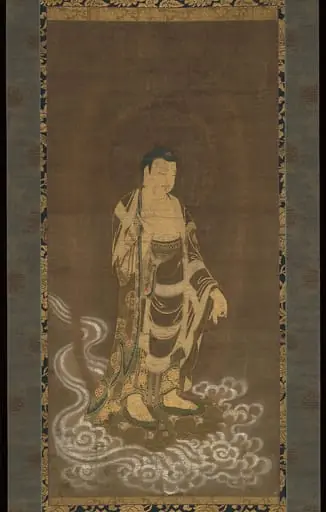 阿弥陀如来像|Welcoming Descent of Amida Buddha
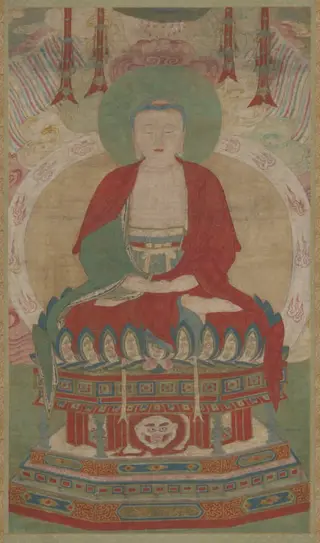 Seated Amitābha
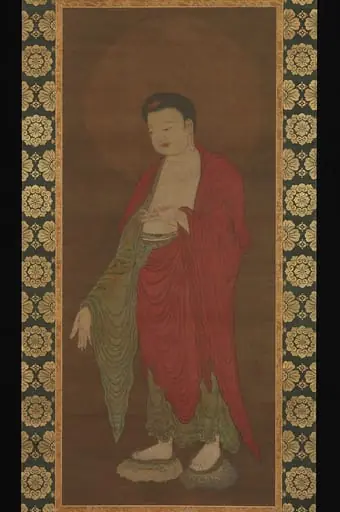 南宋 佚名 阿彌陀佛圖 軸|Buddha Amitabha Descending from his Pure Land
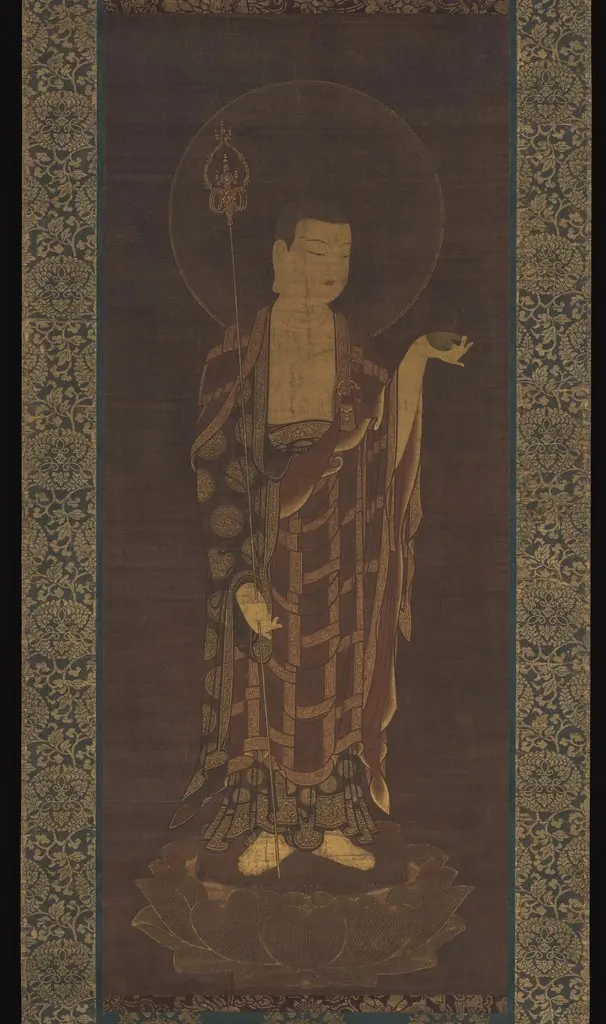 Jizō Bosatsu (Sanskrit: Ksitigharba)
 Seated Manjusri
 Shakyamuni with the Sixteen Benevolent Deities
 Untitled
 Untitled
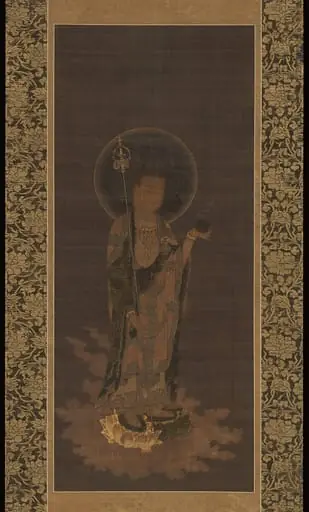 地蔵菩薩来迎図|Welcoming Descent of the Bodhisattva Jizō
- 釈迦三尊像|Shaka (Shakyamuni) Triad