Artwork
方便法身尊影|Amida Manifesting in the Dharma-body of Expedient Means
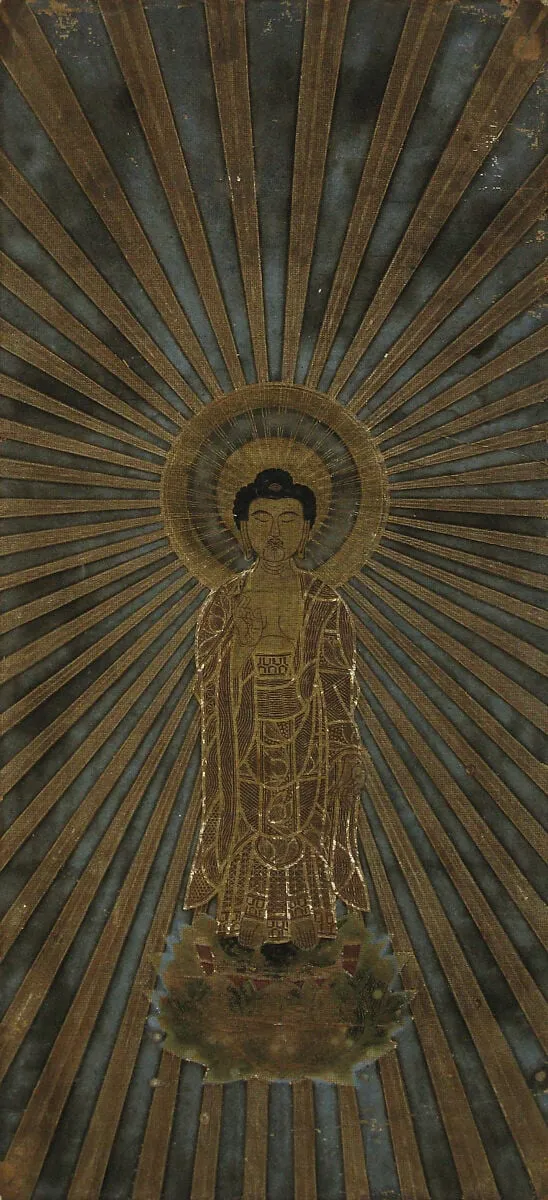
方便法身尊影|Amida Manifesting in the Dharma-body of Expedient Means is an ink painting. It dates from 1749 and is held in the collection of the Metropolitan Museum of Art.
About this work
Subject & Meaning
The painting depicts Amida, the Japanese name for Amitābha, the principal Buddha of the Pure Land tradition in Mahayana Buddhism.
The painting depicts Amida, the Japanese name for Amitābha, the principal Buddha of the Pure Land tradition in Mahayana Buddhism. Amida is shown frontally, seated on a lotus pedestal with hands arranged in the meditation gesture (dhyāna mudrā), a posture signifying concentration and the attainment of enlightenment.
The title identifies the subject as Amida Manifesting in the Dharma-body of Expedient Means (方便法身尊影), a concept in Pure Land Buddhism that refers to the Buddha’s ability to appear in forms accessible to devotees to guide them toward liberation. The central iconography underscores the salvific role of Amida, emphasizing compassionate intervention through skillful means.
Technique & Style
Created in 1749 in Japan, this religious painting depicts the Buddha within the Buddhist tradition. The work is executed on a silk support using ink and color pigments. A distinctive technical feature is the application of cut silver, which is integrated alongside the painted elements to form the image.
The composition is vertical, measuring approximately 35.6 cm in height and 16.5 cm in width. As an anonymous work from the mid-18th century, it represents a specific devotional format utilizing mixed media on textile.
History & Provenance
The painting was created in Japan in 1749, executed in ink, color, and cut silver on silk. It is attributed to an anonymous painter, with no specific artist, patron, or commission documented in the available records. The work is held in the collection of the Metropolitan Museum of Art, where it is currently located.
No further details regarding prior ownership, intermediate custody, or acquisition circumstances are recorded in the available sources.
The painting Amida Manifesting in the Dharma-body of Expedient Means is held in the collection of the Metropolitan Museum of Art in New York. Created in Japan in 1749, the work is part of the museum's holdings of Asian art, specifically within its paintings classification. The museum's records list the piece as being created by an anonymous artist and depict Buddhist iconography, including the Buddha.
While the specific accession number is not provided in the available sources, the work's physical dimensions are recorded as 35.6 cm in height and 16.5 cm in width. The sources do not contain information regarding a specific exhibition history or detailed provenance trail beyond its current institutional location.
Overview
The painting, titled Amida Manifesting in the Dharma-body of Expedient Means, depicts a golden Buddha figure suspended in a dark, cloud-filled sky. Tiny attendant figures surround the central deity, which is rendered with ink and color on silk. The artwork's surface incorporates delicate cut silver, adding a unique visual dimension to the composition. This piece exemplifies a form of devotional painting intended for personal contemplation rather than public display.
Context
Created for private devotion, this painting was designed to be experienced intimately rather than displayed in a public setting. The subtle glow produced by the cut silver, especially when viewed under flickering candlelight, would have imbued the Buddha figure with a sense of vitality and immediacy. This intended interaction fostered a personal and profound connection between the artwork and the individual practitioner, making the divine presence feel tangible and close.
Artist & collection

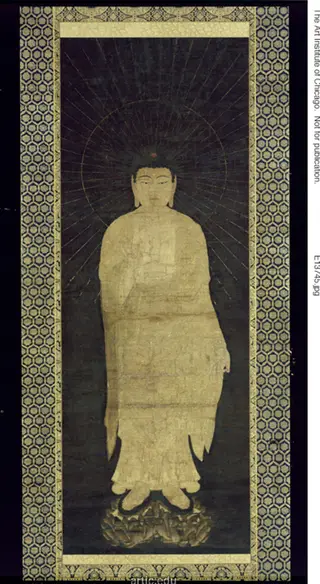
- The Buddha Amida, from the triptych Approach of the Amida Trinity
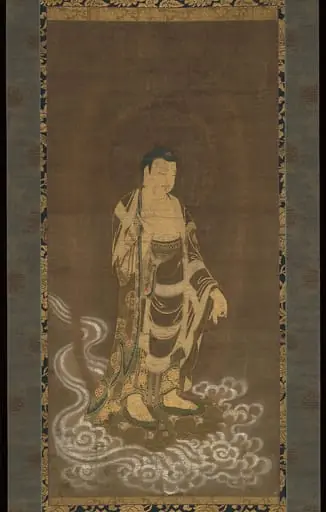 阿弥陀如来像|Welcoming Descent of Amida Buddha
 Welcoming Descent of Amida Buddha (Raigō)
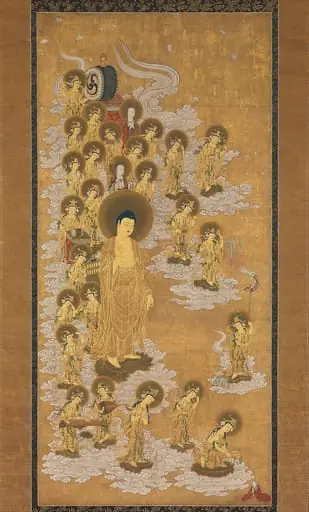 阿弥陀二十五菩薩来迎図|Welcoming Descent of Amida Buddha and Twenty-five Bodhisattvas
 Welcoming Descent of Amida Buddha (Raigō)
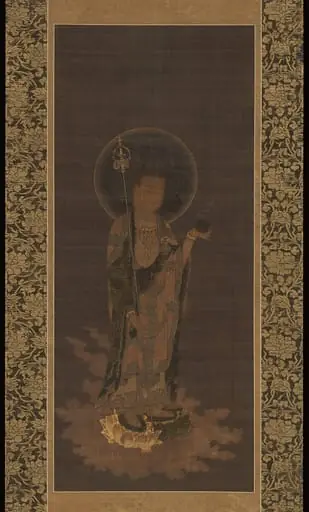 地蔵菩薩来迎図|Welcoming Descent of the Bodhisattva Jizō
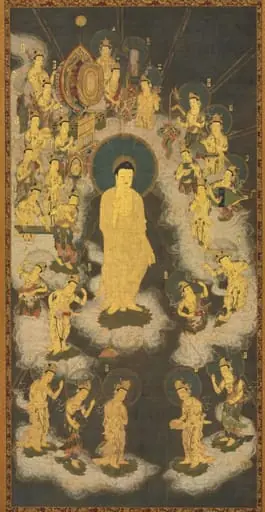 Welcoming Descent of Amida (Amida Raigō)
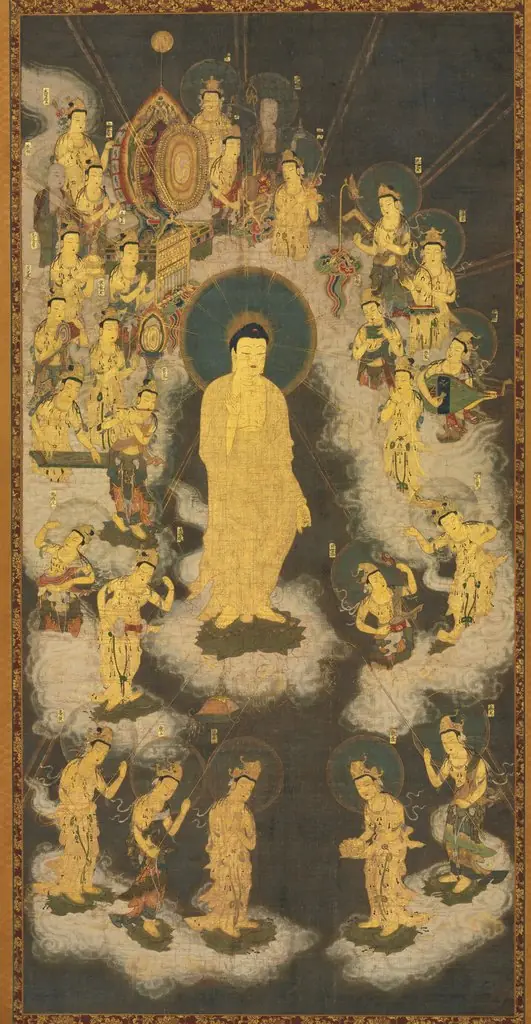 Welcoming Descent of Amida (Amida Raigō)
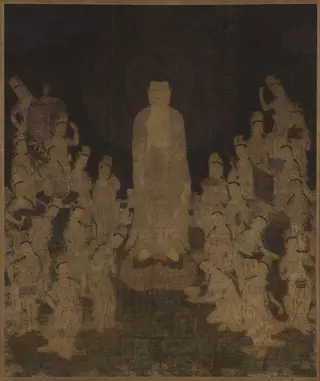 Welcoming Descent of Amida with Twenty-Five Bodhisattvas