Artwork
十一面観音像下絵|Drawing of Eleven-headed Kannon
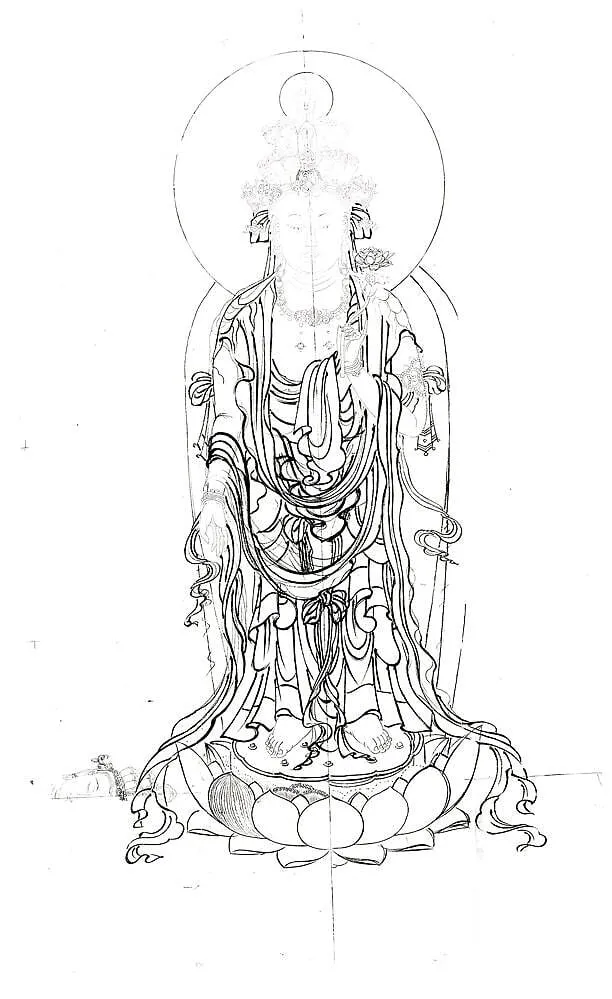
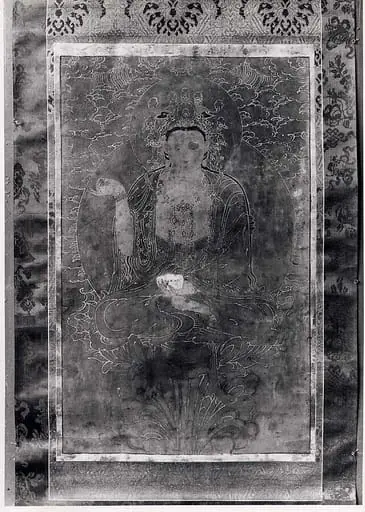
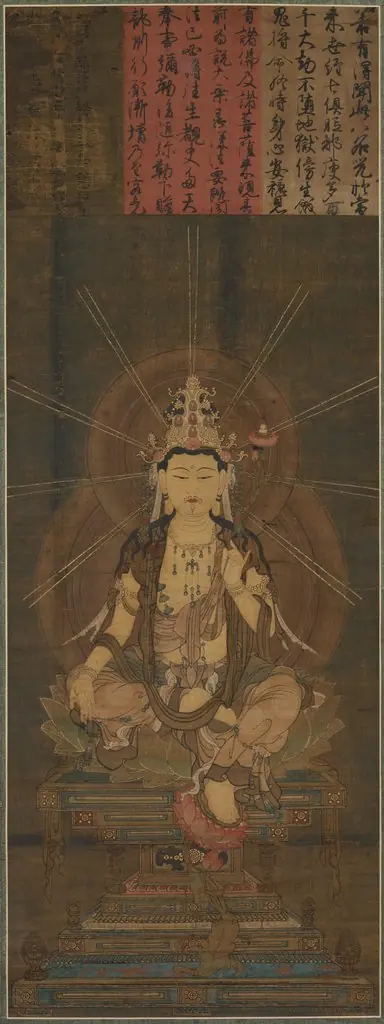
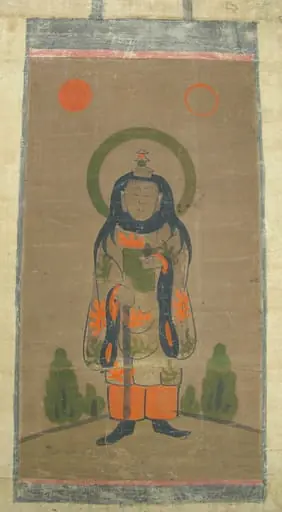
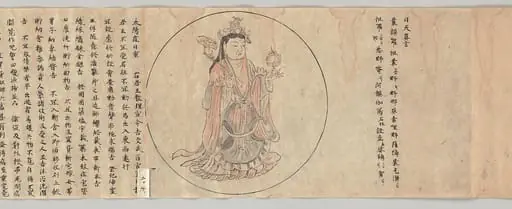
十一面観音像下絵|Drawing of Eleven-headed Kannon is an ink painting. It dates from 1649 and is held in the collection of the Metropolitan Museum of Art. This ink-on-paper drawing, titled Drawing of Eleven-headed Kannon (Jūichimen Kannon-zō Shitae), serves as a preparatory sketch.
About this work
Subject & Meaning
The drawing depicts the bodhisattva known as Eleven-headed Kannon (Jūichimen Kannon), a major compassionate figure in East Asian Buddhism.
The drawing depicts the bodhisattva known as Eleven-headed Kannon (Jūichimen Kannon), a major compassionate figure in East Asian Buddhism. The eleven heads are a distinctive iconographic feature, traditionally arranged as three groups of three faces representing the bodhisattva's meditative, wisdom, and primal aspects, surmounted by a tenth face of the Buddha Amitabha and an eleventh head at the apex. Together they symbolize the bodhisattva's capacity to perceive the suffering of beings across the ten directions of the universe and to respond with enlightened compassion.
As a preparatory sketch (下絵, shitagae) for a larger devotional image, the work would have served as a design template guiding the production of a sculpted or painted icon intended for Buddhist worship. Its religious function placed it within the visual tradition of Kannon imagery that flourished in Japan, where the eleven-headed form was widely venerated for its promise of salvation and protection.
Technique & Style
Created in 1649, the Drawing of Eleven-headed Kannon is executed as an ink drawing on paper. The work, attributed to an anonymous Japanese artist, depicts a Buddhist Bodhisattva. It measures 52 cm in height and 93.4 cm in width. The piece is currently matted and held within the collection of the Metropolitan Museum of Art.
History & Provenance
The drawing is dated to 1649 and was produced in Japan, where it depicts the bodhisattva Kannon in the eleven-headed form associated with Buddhist devotional imagery. The artist is recorded as unknown, and no information about a specific patron, commissioner, or workshop context has been documented for the work.
The piece is held in the collection of the Metropolitan Museum of Art, which is listed as both its current location and its associated repository. No earlier ownership history, intermediate custodians, or acquisition circumstances are recorded in the available documentation, leaving the chain of custody prior to the museum's holdings untraced.
The drawing is held by the Metropolitan Museum of Art, New York, where it is catalogued as an anonymous painting accessioned in 1911.
It was included in the exhibition “Zen: The Art of Disciplined Seeing,” held at the Metropolitan Museum of Art from 18 October 2018 to 10 March 2019.
Overview
This ink-on-paper drawing, titled Drawing of Eleven-headed Kannon (Jūichimen Kannon-zō Shitae), serves as a preparatory sketch. It depicts the bodhisattva Kannon, characterized by a main face surmounted by eleven smaller heads arranged in a stack. The figure stands upon a cloud, holding a vase and a lotus blossom. The delicate lines suggest a preliminary study, likely intended for a larger, more elaborate religious artwork.
Artist & collection