Artwork
Untitled
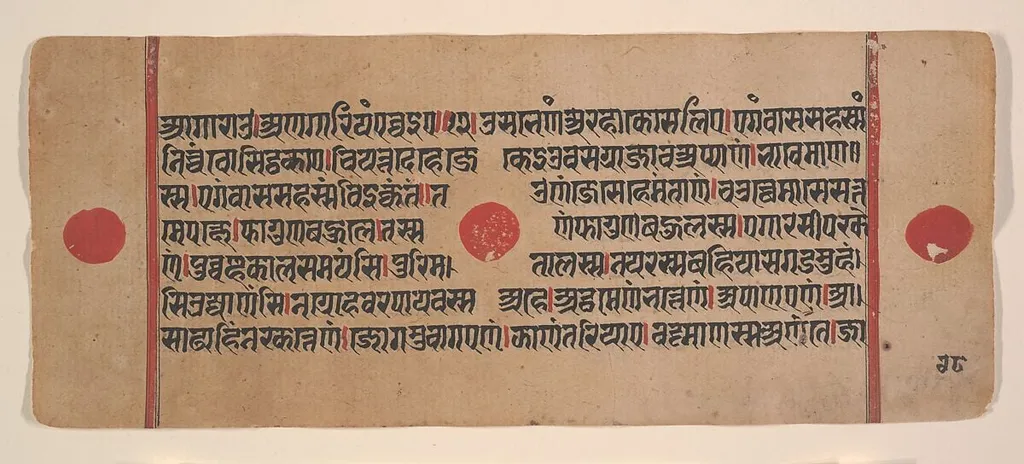
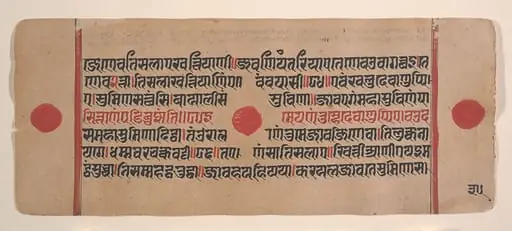
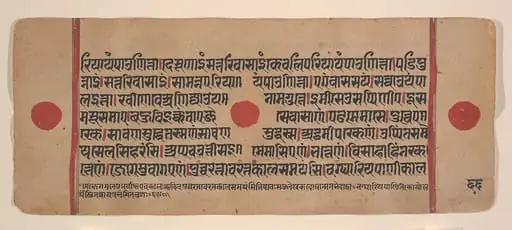
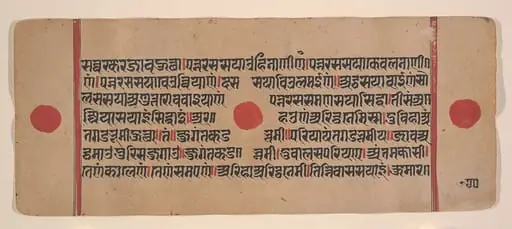
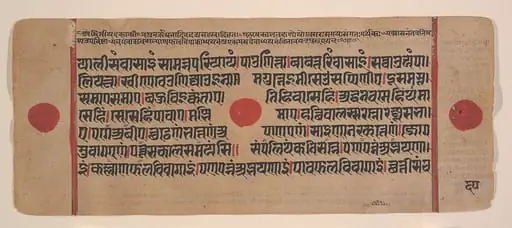
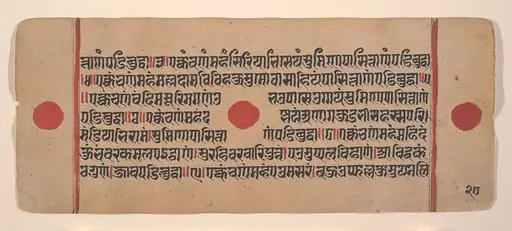
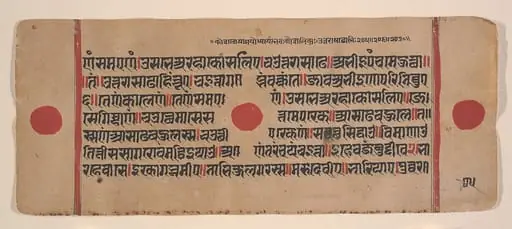
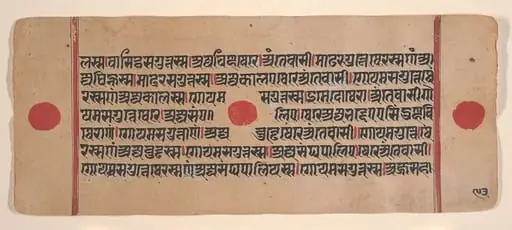
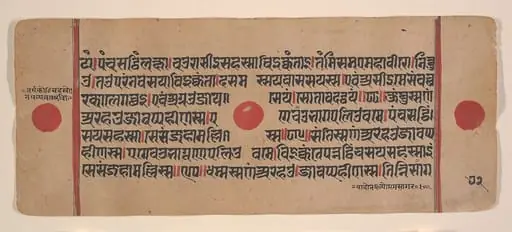
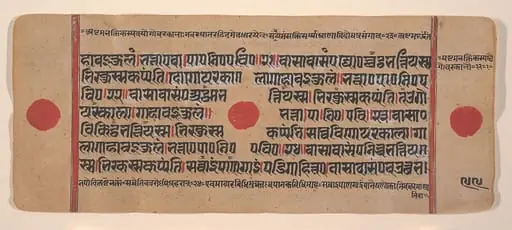
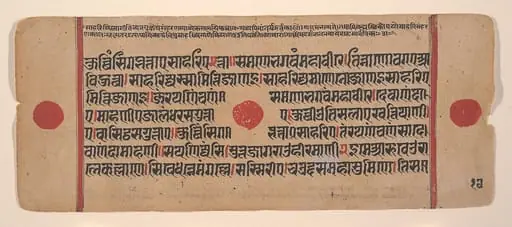
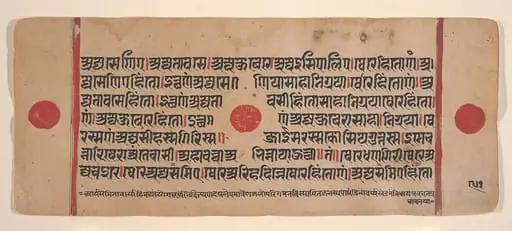
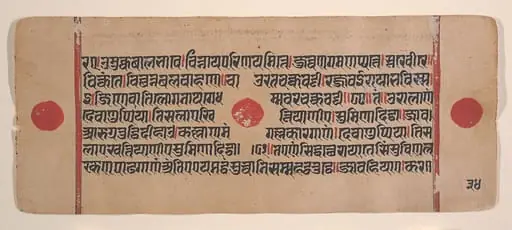
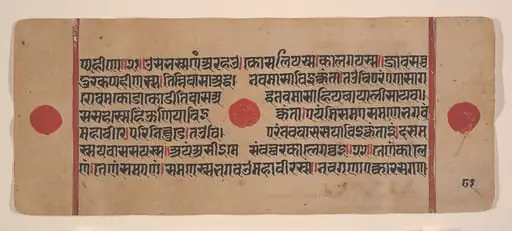
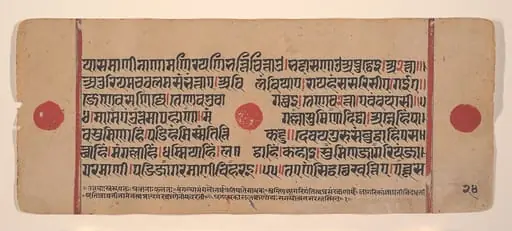
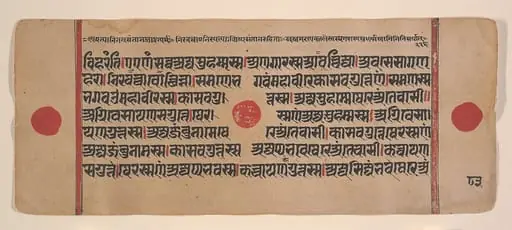
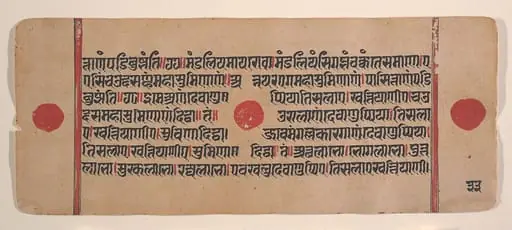
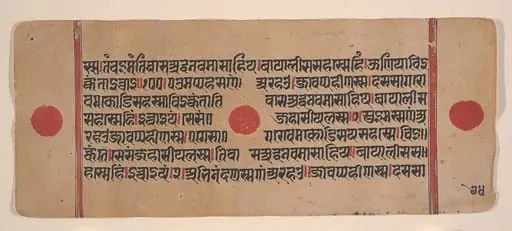
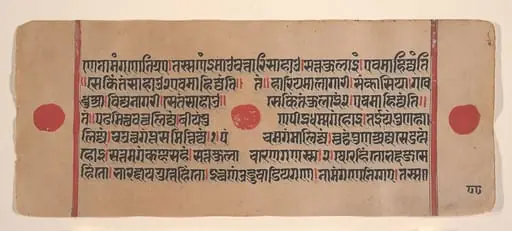
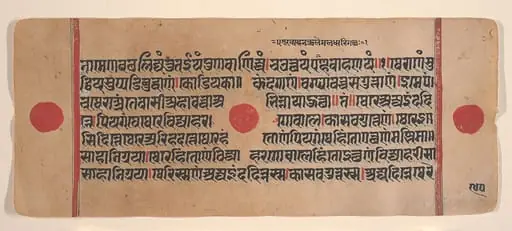
Untitled is a watercolor painting. It dates from 1449 and is held in the collection of the Metropolitan Museum of Art.
About this work
Technique & Style
1 cm in height, with handling characterized by fine brushwork and precise hatching to articulate figures and decorative motifs.
The work employs ink and opaque watercolor heightened with gold on paper, executed in a delicate linear style typical of fifteenth-century Jain manuscript painting. The support is a single sheet of paper, measuring approximately 27 cm in width and 11.1 cm in height, with handling characterized by fine brushwork and precise hatching to articulate figures and decorative motifs. Stylistic qualities include attenuated, hieratic figures arranged in registers, outlined in black ink and filled with flat areas of color, while gold is reserved for halos, jewelry, and architectural details. The palette relies on earth tones, ochers, reds, and greens, layered to create subtle tonal variation.
History & Provenance
Created in 1449, this anonymous work originated in India as a religious painting depicting Jainism. Executed in ink, opaque watercolor, and gold on paper, the piece measures 11.1 by 27 centimetres. While the specific commission details and the name of the original patron remain unrecorded due to the artist's anonymity, the work eventually entered the collection of the Metropolitan Museum of Art in New York.
It is cataloged there under the accession number 55.121.38.87. The painting's provenance prior to its acquisition by the museum is not detailed in the available records, though its classification as a religious artwork from the mid-15th century is firmly established by its physical characteristics and historical context.
Context
The untitled painting, dated 1449, is executed in ink, opaque watercolor, and gold on paper and is categorized as a religious work depicting Jainism. Its creator is anonymous, and it belongs to the Metropolitan Museum of Art's collection of early Indian religious art. As a representative example of fifteenth-century Indian manuscript illumination, the piece contributes to the understanding of Jain visual culture and the development of religious painting in the Indian subcontinent.
Overview
This untitled painting, created with ink, opaque watercolor, and gold on paper, depicts a woman seated beneath a heavily fruiting mango tree. Originating from a Jain manuscript in Gujarat, India, the artwork combines detailed figural representation with symbolic natural elements. It offers a glimpse into the visual culture associated with Jain religious texts and practices from the region.
Subject & Meaning
The central figure, adorned in a red sari, holds a book while seated under a mango tree laden with fruit. Tiny figures are shown carefully harvesting the bounty from its branches. This portrayal of an abundant, undamaged tree, with no broken branches or fallen fruit, directly reflects Jain principles of ahimsa, or non-violence, emphasizing reverence for all life and the natural world.
Artist & collection