Artwork
Untitled
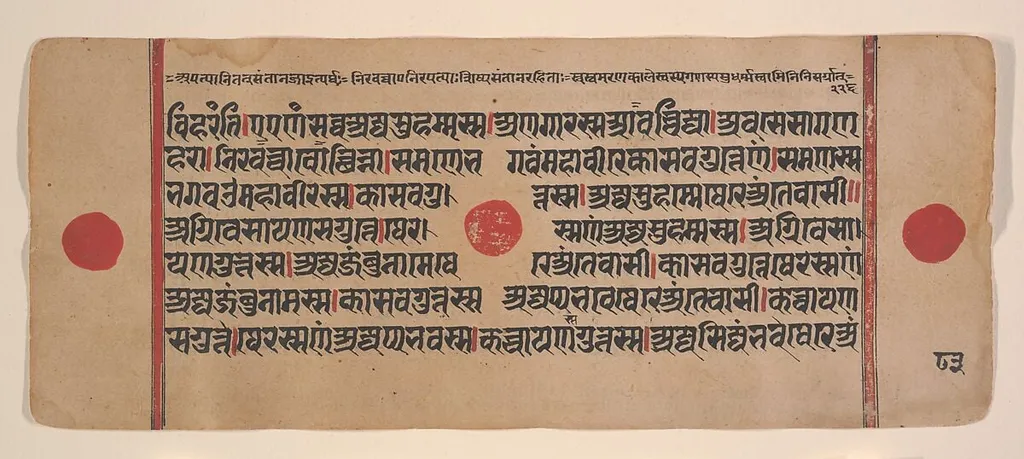
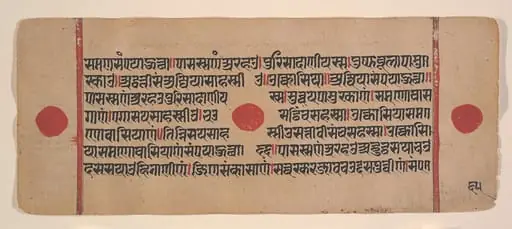
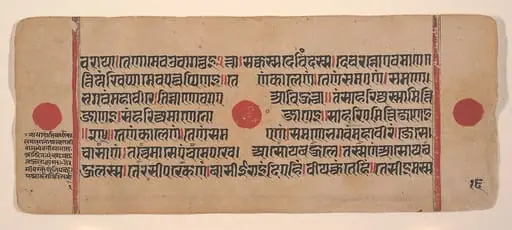
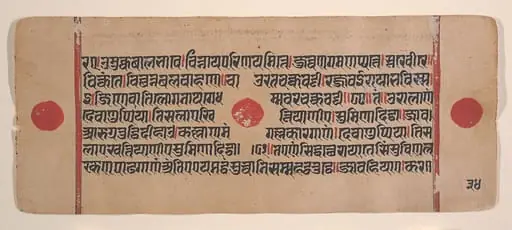
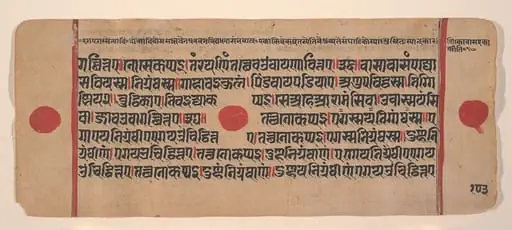
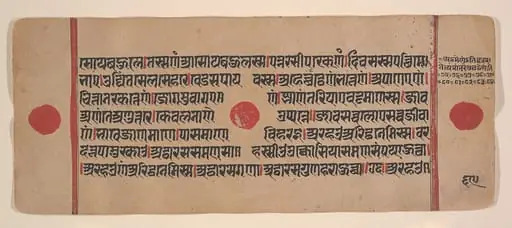
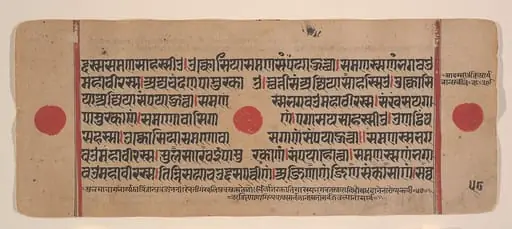
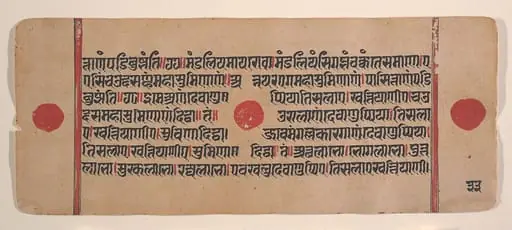
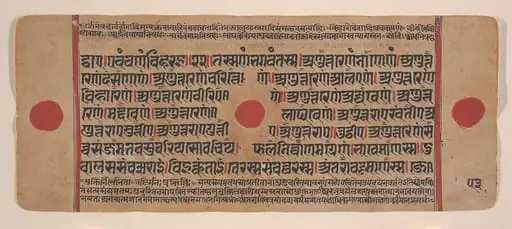
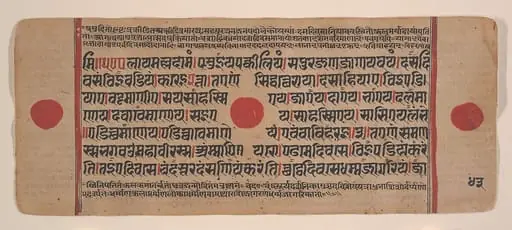
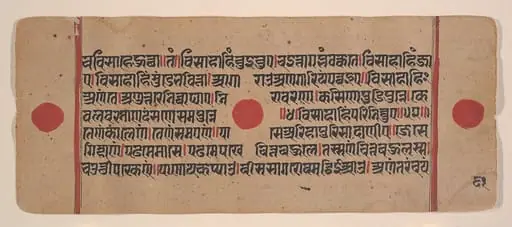
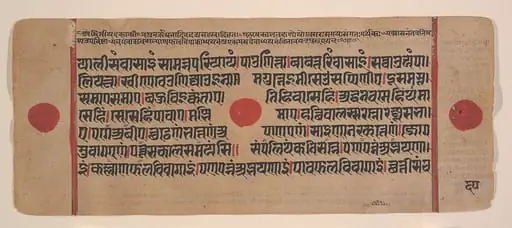
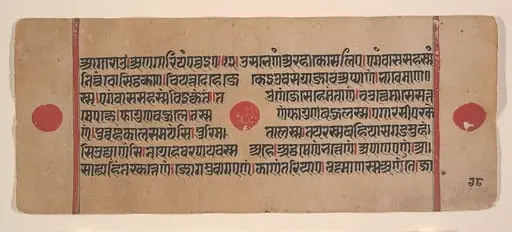
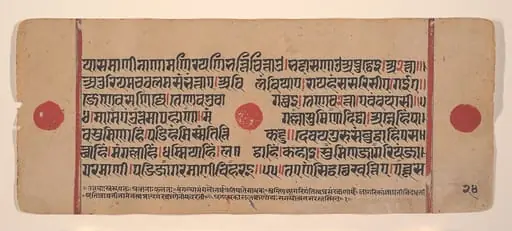
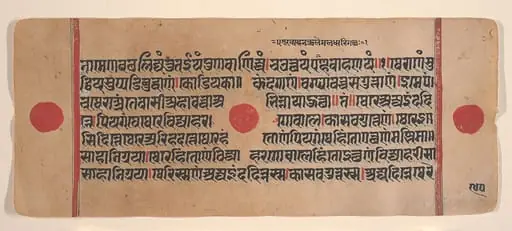
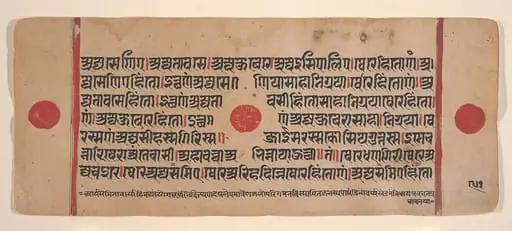
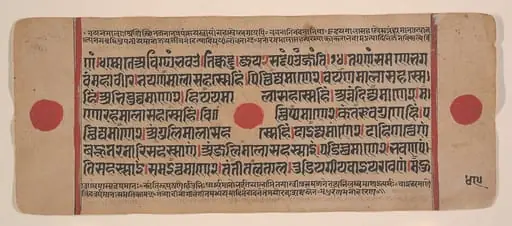
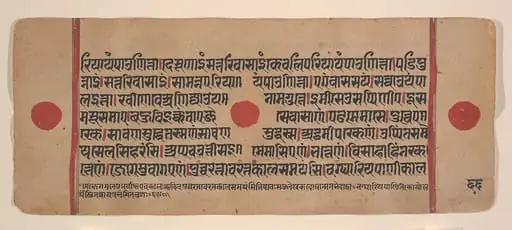
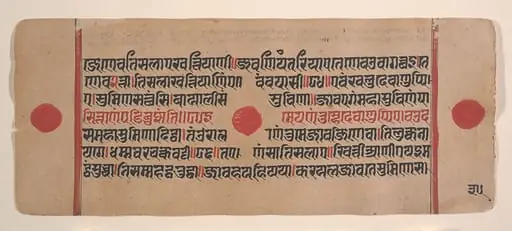
Untitled is a watercolor painting. It dates from 1449 and is held in the collection of the Metropolitan Museum of Art.
About this work
Subject & Meaning
This untitled painting belongs to the religious genre and is associated with Jainism, the Indian faith tradition to which its iconography is devoted.
This untitled painting belongs to the religious genre and is associated with Jainism, the Indian faith tradition to which its iconography is devoted. Executed in 1449 in India using ink, opaque watercolor, and gold on paper, the work functions as a devotional image whose imagery derives from Jain religious themes. The horizontal format, measuring 27 cm wide by 11.1 cm tall, is consistent with manuscript or album-leaf compositions used to depict sacred subjects within Jain visual culture.
As a piece of religious art, the painting conveys the doctrinal and contemplative values of the Jain tradition, with its gold and pigmented surface supporting the spiritual function of the depicted subject. The Metropolitan Museum of Art holds the work as part of its collection of Jain religious paintings.
Technique & Style
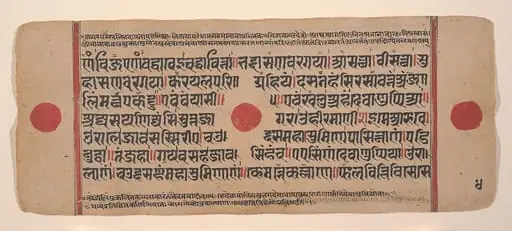
Created in 1449 in India, this anonymous religious work utilizes ink, opaque watercolor, and gold applied to a paper support. The piece exemplifies Jain artistic tradition through its specific material combination, where the luminosity of gold likely contrasts with the matte finishes of the pigments. Measuring 11.1 centimeters in height and 27 centimeters in width, the horizontal format suggests a manuscript page or a detached folio rather than a large-scale wall painting.
The handling of these materials on paper indicates a delicate, precise technique characteristic of Indian miniature painting traditions of the period. The inclusion of gold leaf or pigment points to a high level of craftsmanship intended to convey spiritual significance within the religious genre.
History & Provenance
Untitled is a 1449 Indian painting executed in ink, opaque watercolor and gold on paper by an anonymous artist. The work, classified as a religious painting depicting Jainism, entered the collection of the Metropolitan Museum of Art, where it is catalogued under accession number 55.121.38.76 and displayed in New York. Its creation history places its production in India during the mid‑15th century, and the piece has remained in the museum's custody since acquisition, with no documented change of ownership.
The work is held in the collection of the Metropolitan Museum of Art, where it is identified by the accession number 55.121.38.76. According to the Wikidata record, the painting is located at the Metropolitan Museum of Art and forms part of its holdings of religious art. No exhibition history is documented in the available sources, and no further provenance details beyond its current institutional custody are recorded.
Overview
This untitled painting, executed with ink, opaque watercolor, and gold on paper, originates from a Jain manuscript created in Gujarat, India. It depicts a woman in a red sari seated beneath a tree, engrossed in a book, with a peacock positioned nearby. The artwork offers a glimpse into the visual culture of Jainism, reflecting its core tenets through a serene and contemplative scene.
Context
As a page from a Jain manuscript, this painting served a didactic or devotional purpose within its original context in Gujarat, India. Jain manuscripts often contained religious texts, philosophical treatises, and narratives, with illustrations like this one providing visual interpretations or embellishments. The artwork thus functions as both an aesthetic object and a cultural artifact, reflecting the intellectual and spiritual life of its creators.
Artist & collection