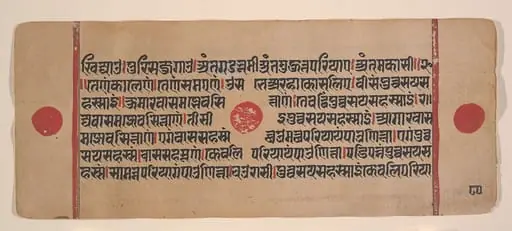
Artwork
Untitled
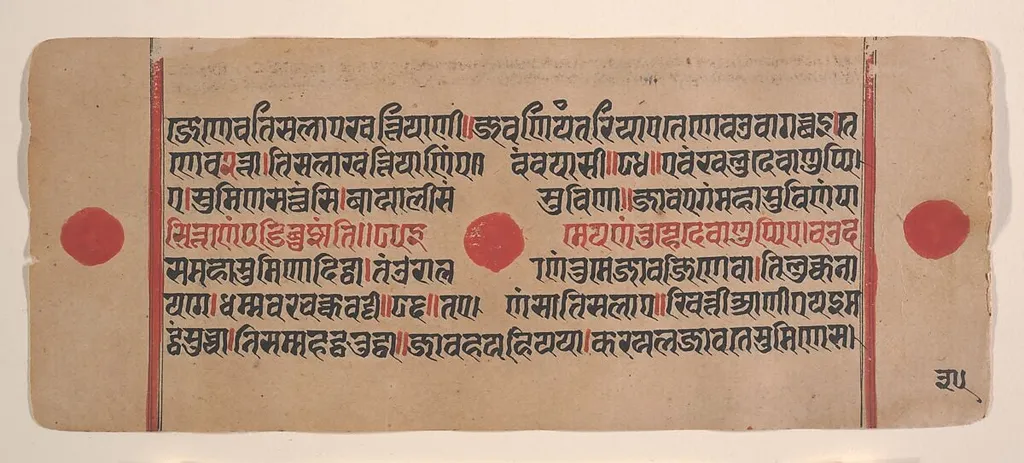
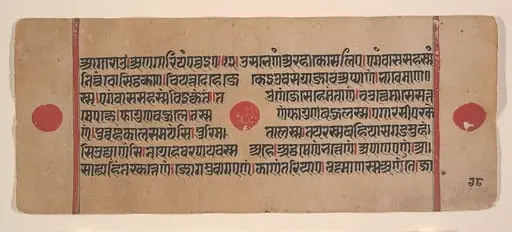
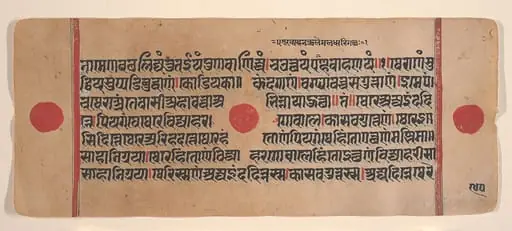
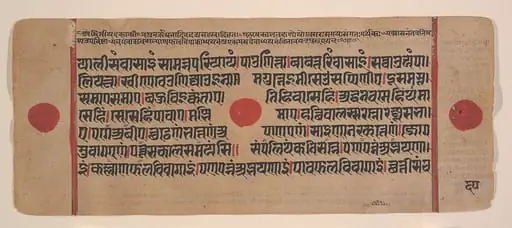
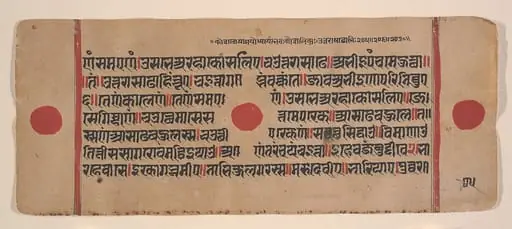
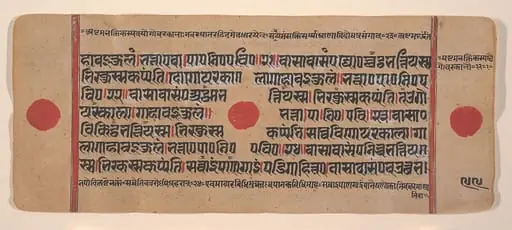
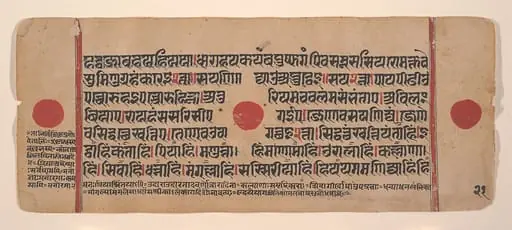
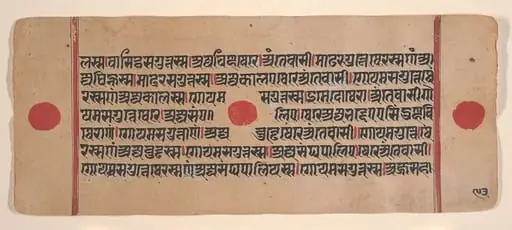
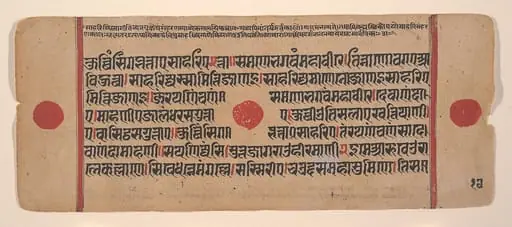
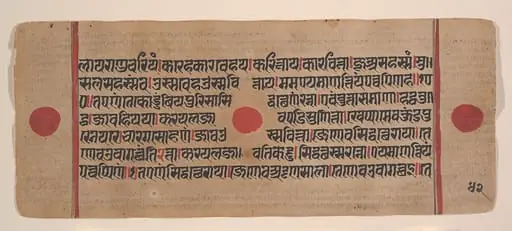
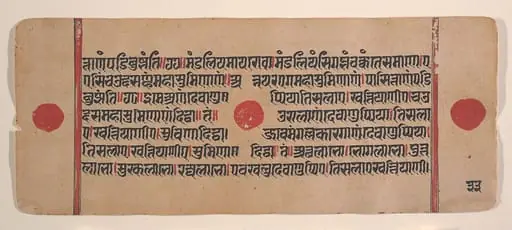
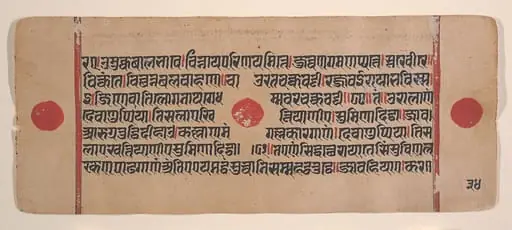
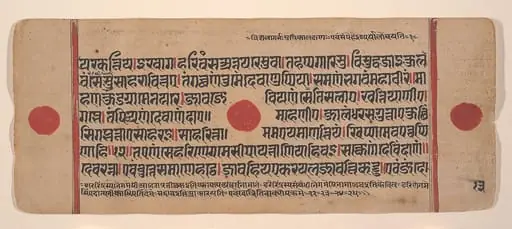
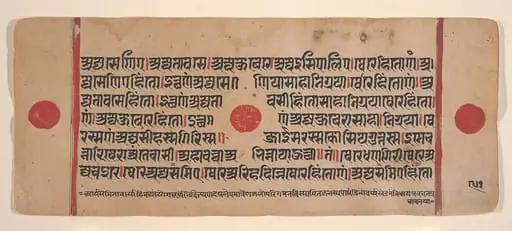
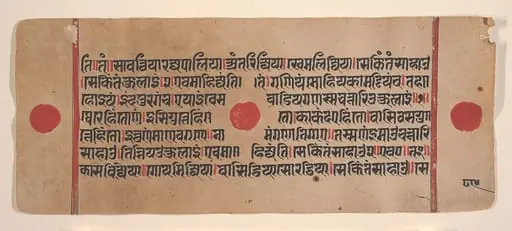
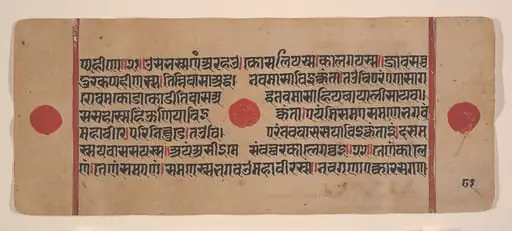
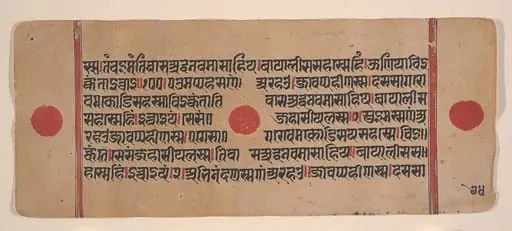
Untitled is a watercolor painting. It dates from 1449 and is held in the collection of the Metropolitan Museum of Art.
About this work
Subject & Meaning
Executed in ink, opaque watercolor, and gold on paper, the painting's primary subject matter is the Jain faith itself.
Created in 1449 within India, this anonymous work functions as a piece of religious art dedicated to Jainism. Executed in ink, opaque watercolor, and gold on paper, the painting's primary subject matter is the Jain faith itself. While the specific figures or narrative scenes are not detailed in the available records, the work is explicitly classified by its depiction of Jainism, indicating that its iconography and symbolism serve to represent theological concepts, revered figures, or cosmological elements central to that tradition.
The inclusion of gold suggests a ceremonial or devotional purpose, aligning with the manuscript illumination practices common to religious texts of the region and period. Consequently, the artwork represents a visual expression of Jain spiritual beliefs.
Technique & Style
The work is a manuscript painting executed in ink, opaque watercolor and gold leaf applied to paper, a support typical of Indian religious manuscripts of the fifteenth century. The pigments are laid down in fine lines that define figures and narrative scenes, while the gold highlights accentuate sacred attributes. The composition follows Jain iconographic conventions, depicting a Jain narrative within a rectangular format measuring approximately 11.1 cm in height and 27 cm in width.
The piece is dated to 1449 and is housed in the Metropolitan Museum of Art, where it is catalogued as a religious painting of unknown authorship.
History & Provenance
The work was created in 1449 in India, executed in ink, opaque watercolor, and gold on paper. According to the Metropolitan Museum of Art records, it is catalogued as MET 55.121.38.106 and attributed to an anonymous painter. The accession number embedded in the catalogue identifier indicates its entry into the museum's collection, where it is currently held. No further details concerning prior ownership, commission, or intermediate provenance are documented in the available sources.
The work is held in the collection of the Metropolitan Museum of Art in New York; its precise accession or inventory number is not specified in the available documentation; no exhibition history is recorded in the provided sources. The dating of 1449 and the medium of ink, opaque watercolor, and gold on paper are documented, and the piece is classified as a religious painting depicting Jainism.
Context
The untitled painting dated 1449, executed in ink, opaque watercolor and gold on paper, is classified as a religious work depicting Jainism. It is attributed to an anonymous Indian painter and is part of the Metropolitan Museum of Art's collection, underscoring its relevance to the study of early Indian religious art. Scholars note its significance as an example of 15th‑century manuscript illumination that combines intricate draftsmanship with gold embellishment, situating it within the broader tradition of Jain visual culture.
The work's presence in a major museum highlights its recognized importance in the historiography of South Asian painting.
Overview
This untitled painting, rendered with ink, opaque watercolor, and gold on paper, originates from a Jain manuscript created in Gujarat, India. It depicts a significant figure, characteristic of the devotional art found within such religious texts. The work served as an illustration, enhancing the sacred content of the manuscript it once belonged to.
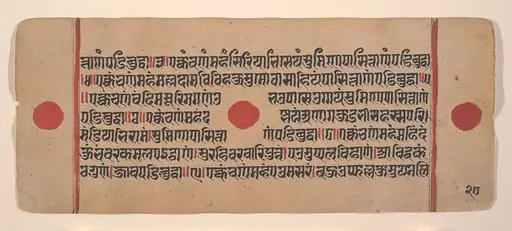
Artist & collection