Artwork
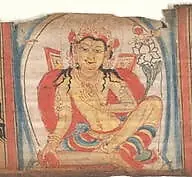
Folio 22 from a Gandavyuha-sutra (Scripture of the Supreme Array): Samantabhadra spinning clouds of things (recto); Text (verso)

Folio 22 from a Gandavyuha-sutra (Scripture of the Supreme Array): Samantabhadra spinning clouds of things (recto); Text (verso) is an unspecified painting. It dates from 1100 and is held in the collection of the Cleveland Museum of Art. This artwork, Folio 22 from a Gandavyuha-sutra, is a rectangular wooden panel combining carved text and a central painted image.
About this work
Technique & Style
The painting employs mineral pigments and organic dyes on a prepared cotton support, a common medium for Nepalese manuscripts of the late eleventh century.
The painting employs mineral pigments and organic dyes on a prepared cotton support, a common medium for Nepalese manuscripts of the late eleventh century. The recto depicts Samantabhadra rendered with fine, flowing ink lines and delicate color washes, while the verso preserves a continuous block of black ink calligraphy in a formal Newari script.
Condition reports note localized pigment flaking along the upper edge and minor cockling of the cotton support, consistent with age and handling. Stylistically, the composition balances hieratic symmetry with subtle dynamism, as the central figure's elongated limbs and serene posture convey both spiritual authority and narrative movement.
History & Provenance
Created in Nepal around 1100, this recto-verso folio belongs to a Gandavyuha-sutra known as the Scripture of the Supreme Array. The painting depicts the bodhisattva Samantabhadra surrounded by clouds of phenomena, while the verso bears textual script. The work entered the collection of the Cleveland Museum of Art, where it is catalogued under accession number 1955.49.6 and displayed as a religious painting. No further ownership records are documented prior to its acquisition by the museum.
Overview
This artwork, Folio 22 from a Gandavyuha-sutra, is a rectangular wooden panel combining carved text and a central painted image. It originates from a significant Buddhist scripture, the "Scripture of the Supreme Array." The panel's recto features a depiction of Samantabhadra, while its verso contains further textual elements. This object exemplifies the integration of visual art and sacred writing in its cultural context.
Subject & Meaning
The central painted scene on this folio portrays Samantabhadra, a prominent bodhisattva in Mahayana Buddhism, engaged in an act described as "spinning clouds of things." This imagery likely symbolizes the bodhisattva's boundless compassion and ability to manifest various forms or blessings. The accompanying carved text on the panel's three sides is integral to the Gandavyuha-sutra, a foundational religious and philosophical work.

Artist & collection

- Samantabhadra spinning clouds of things, folio 22 (recto) from a Gandavyuha-sutra (Scripture of the Supreme Array)
 Folio 73 from a Gandavyuha-sutra (Scripture of the Supreme Array): Sudhana and an antelope (recto); text (verso)
 Folio 348 from a Gandavyuha-sutra (Scripture of the Supreme Array): Bodhisattva Manjushri with two forms of Avalokiteshvara (recto); Bodhisattva Samantabhadra purifies the path to enlightenment, with Manjushri (verso)
 Sudhana and an antelope, folio 73 (recto) from a Gandavyuha-sutra (Scripture of the Supreme Array)
 Samantabhadra spinning clouds of things, folio 22 (recto) from a Gandavyuha-sutra (Scripture of the Supreme Array)
 Folio 20 from a Gandavyuha-sutra (Scripture of the Supreme Array): Sudhana and a parrot (recto); Text (verso)
 Folio 37 from a Gandavyuha-sutra (Scripture of the Supreme Array): Sudhana and a pair of antelopes (recto); text (verso)
 Bodhisattva Manjushri with two forms of Avalokiteshvara, folio 348 (recto) from a Gandavyuha-sutra (Scripture of the Supreme Array)
 Sudhana and a parrot, folio 20 (recto) from a Gandavyuha-sutra (Scripture of the Supreme Array)
 Folio 115 from a Gandavyuha-sutra (Scripture of the Supreme Array): Sudhana and a buffalo (recto); text (verso)
 Sudhana and the rishi Bhishmottaranirgosha, folio 94 (recto) from a Gandavyuha-sutra (Scripture of the Supreme Array)
 Folio 94 from a Gandavyuha-sutra (Scripture of the Supreme Array): Sudhana and the rishi Bhishmottaranirgosha (recto); text (verso)
 Prajnaparamita flanked by a white female figure and a white bodhisattva, folio 90 (recto), from a Manuscript of the Perfection of Wisdom in Eight Thousand Lines (Ashtasahasrika Prajnaparamita-sutra)
 Bodhisattva Manjushri with two forms of Avalokiteshvara, folio 348 (recto) from a Gandavyuha-sutra (Scripture of the Supreme Array)
 Prajnaparamita flanked by a white female figure and a white bodhisattva, folio 90 (recto), from a Manuscript of the Perfection of Wisdom in Eight Thousand Lines (Ashtasahasrika Prajnaparamita-sutra)
 Sudhana and a pair of antelopes, folio 37 (recto) from a Gandavyuha-sutra (Scripture of the Supreme Array)
 Untitled