Artwork
Untitled
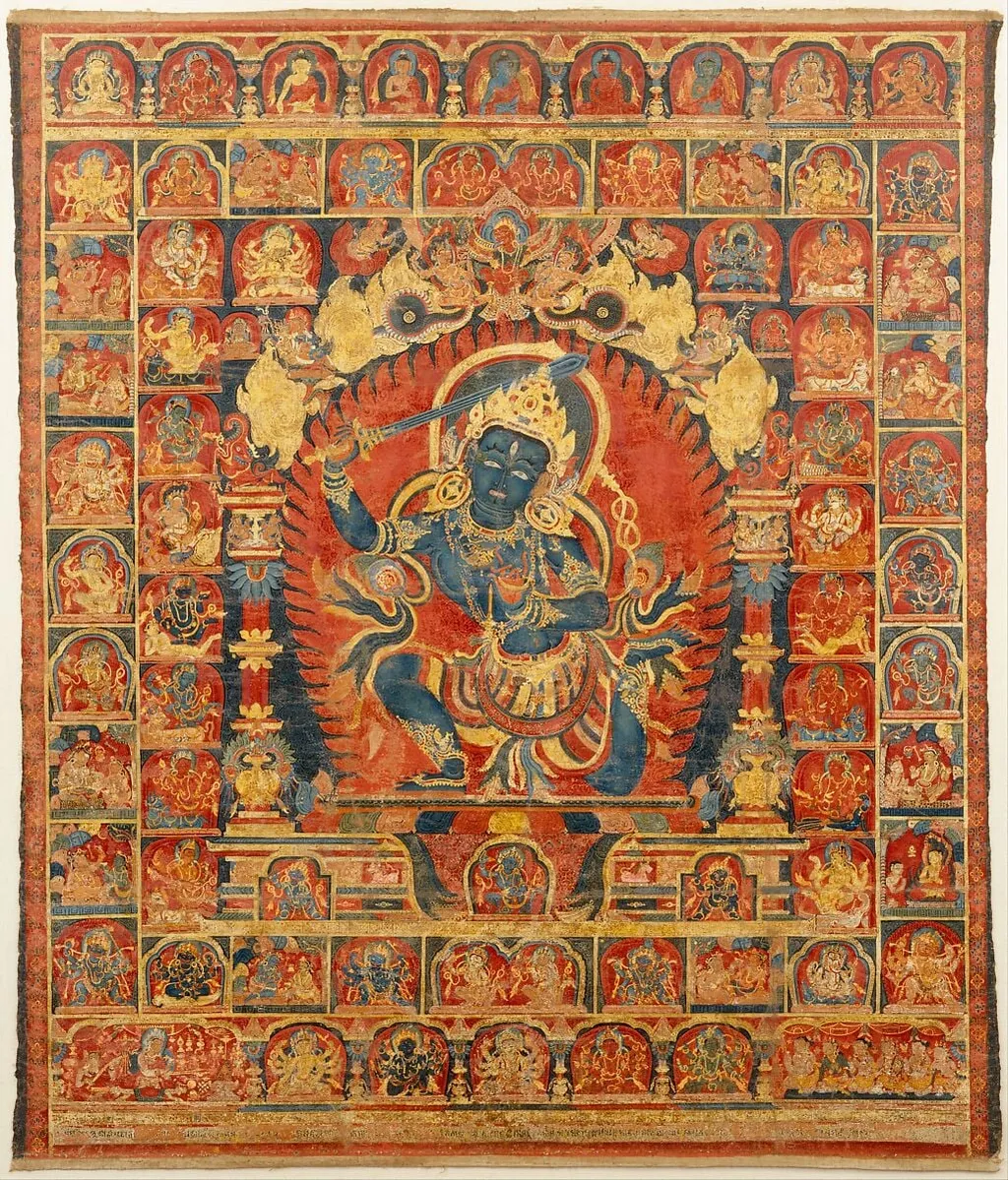
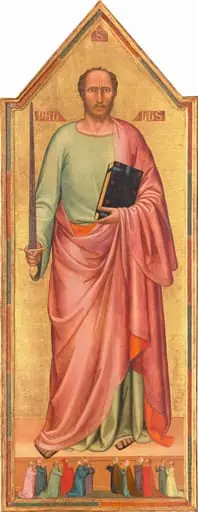
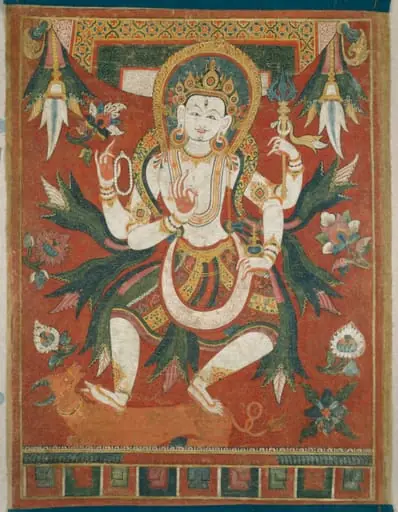
Untitled is a distemper painting. It dates from 1322 and is held in the collection of the Metropolitan Museum of Art.
About this work
Subject & Meaning
Rendered in distemper with gold accents on cloth around 1450, the work originates from Nepal and now resides in the Metropolitan Museum of Art.
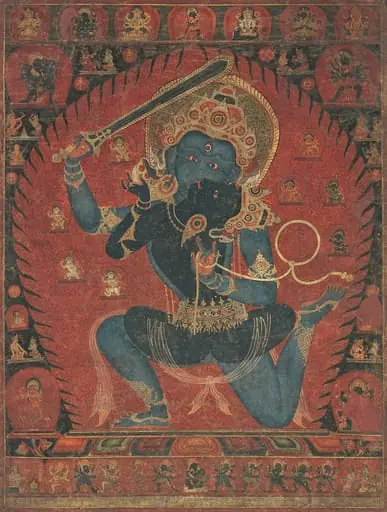
The painting portrays the Buddhist deity Mañjuśrī holding a sword, a standard attribute that signifies discriminating wisdom. Rendered in distemper with gold accents on cloth around 1450, the work originates from Nepal and now resides in the Metropolitan Museum of Art. The sword’s presence underscores Mañjuśrī’s role as the embodiment of enlightened insight, while the surrounding religious genre situates the image within devotional practice. As an anonymous piece, it reflects the transmission of Himalayan artistic traditions to broader museum collections.
Technique & Style
The painting Untitled, dated to 1450, is executed in distemper on cloth with applied gold leaf, a technique typical of Himalayan religious artworks. The support is a textile substrate, and the work measures roughly 81.3 cm in height by 67.3 cm in width. It portrays the bodhisattva Mañjuśrī brandishing a sword, a subject identified in the source records as part of a Nepali religious iconographic tradition.
The piece was created in Nepal and is presently held in the Metropolitan Museum of Art. Its formal qualities include a flat, decorative surface, restrained color palette of distemper pigments, and the use of gold to accentuate sacred attributes.
History & Provenance
The work, titled Untitled, is a religious painting created around 1450 in Nepal. It was produced by an anonymous artist using distemper and gold applied to cloth. The artwork depicts the figure of Mañjuśrī holding a sword.
While the specific commission details and original ownership chain are not documented in the available records, the piece eventually entered the collection of the Metropolitan Museum of Art. The physical dimensions of the painting are recorded as 81.3 cm in height and 67.3 cm in width. Its creation is firmly dated to the mid-15th century, reflecting the artistic traditions of the region during that period.
The work titled Untitled is housed in the Metropolitan Museum of Art in New York, where it is listed as part of the museum’s collection of paintings. According to the museum’s catalogue, the piece is attributed to an anonymous painter and is classified as a religious artwork depicting the bodhisattva Mañjuśrī holding a sword. Its creation is dated to around 1450 and it was produced in Nepal, measuring approximately 81.3 cm in height and 67.3 cm in width.
The painting’s medium consists of distemper and gold applied to cloth, a technique typical of Himalayan religious imagery of the period.
Context
The painting, dated to 1450 and executed in distemper with gold on cloth, is classified as a religious work by an anonymous Nepalese artist. It depicts the bodhisattva Mañjuśrī holding a sword, a motif linked to Himalayan Buddhist iconography. The piece measures 81.3 × 67.3 cm and is part of the Metropolitan Museum of Art’s collection, where it is studied as an early example of painted Mañjuśrī imagery in the region. Its stylistic features inform broader discussions of how Buddhist symbols spread across Himalayan artistic networks.
Overview
This untitled painting from early 14th-century Nepal features a prominent blue-skinned deity on a golden ground. Rendered in distemper and gold on cloth, the central figure is depicted seated on a lotus, wielding a flaming sword. Surrounding the main subject are smaller figures and intricate patterns in red and green, characteristic of the period's artistic traditions.
Artist & collection

- Bon Deity Trowo Tsochog Khagying
 Mahakala and his Entourage
 Mahakala Panjarnata (Lord of the Pavilion)
 Painted Banner (Thangka) of Bodhisattva Maitreya Surrounded by his Retinue
 Mandala
 Untitled
 Khadgayogini
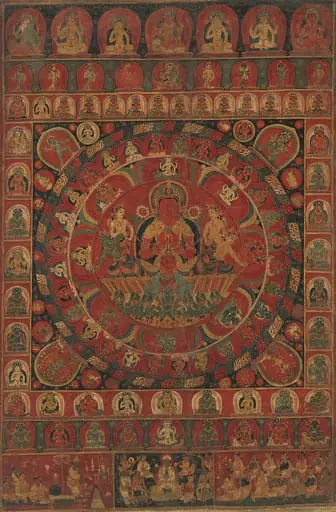 Untitled
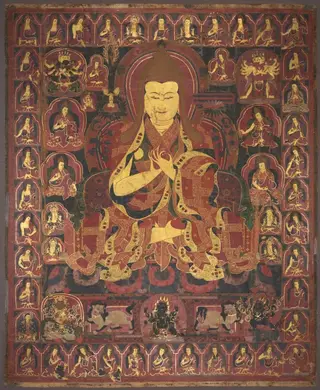 Tsong Khapa, Founder of the Geluk Order
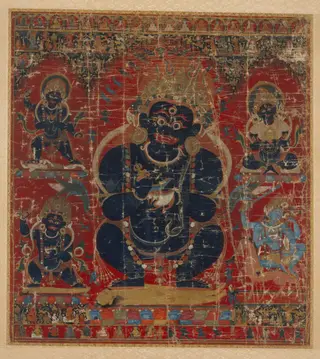 Mahakala Panjarnata (Lord of the Pavilion)
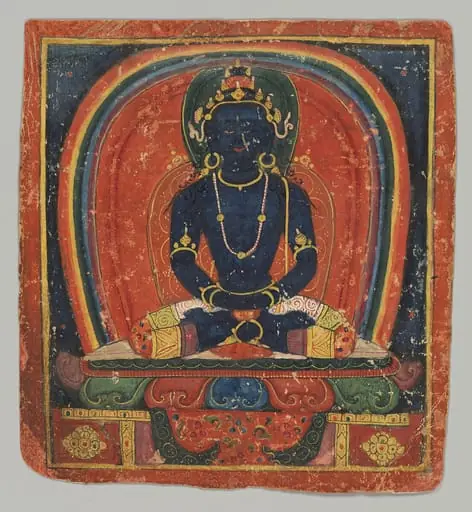 Untitled
 Double-Sided Painted Banner (Paubha) with God Shiva