Artwork
Untitled
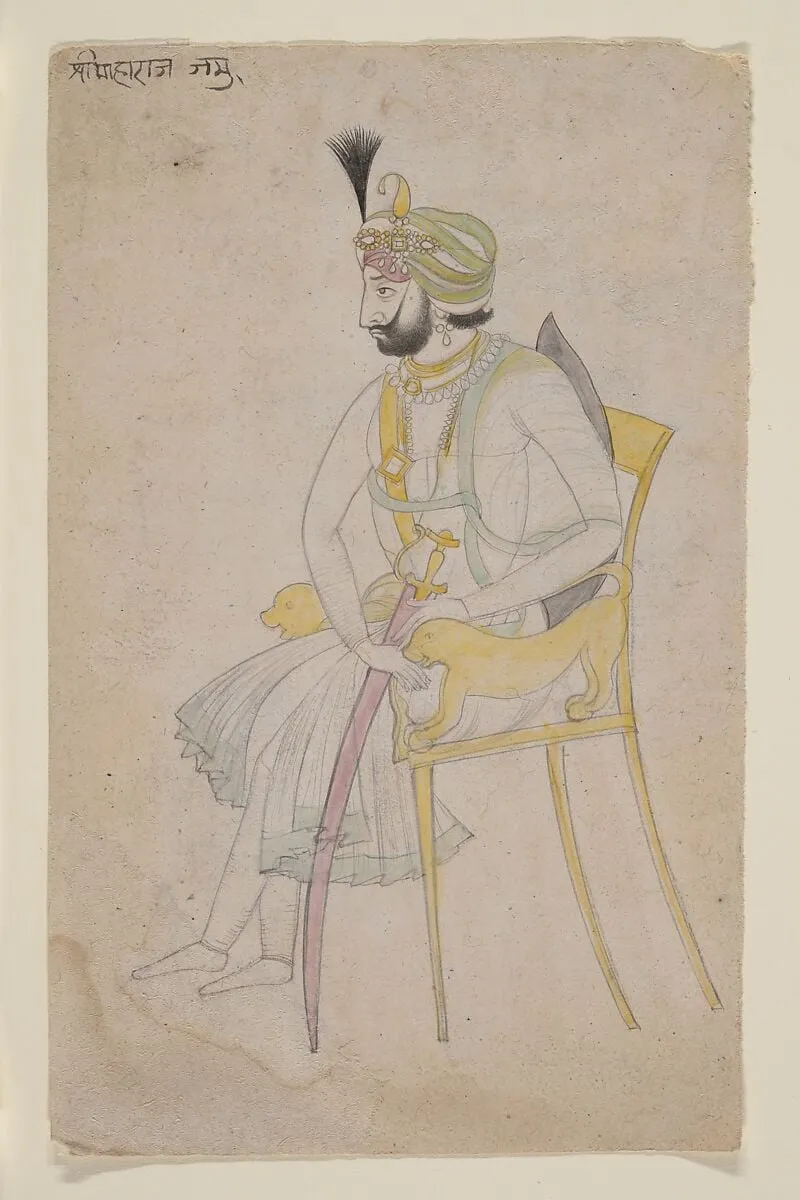
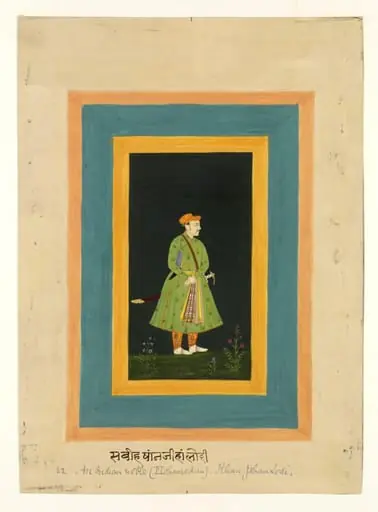
Untitled is a watercolor painting. It dates from 1870 and is held in the collection of the Metropolitan Museum of Art.
About this work
Subject & Meaning
The inclusion of the sword suggests a connection to military leadership or warrior status, while the throne signifies royal rank or administrative rule.
Created in 1870 in Jammu, this ink and transparent watercolor work functions as a portrait, though the specific sitter remains unidentified. The composition centers on the depiction of a sword and a throne, objects that serve as primary iconographic elements within the piece. In the context of regional portraiture, these items typically symbolize martial authority and sovereign power, respectively.
The inclusion of the sword suggests a connection to military leadership or warrior status, while the throne signifies royal rank or administrative rule. Together, these depicted elements construct a visual narrative of high status and governance, representing the subject's dual capacity for command and rulership without relying on a named historical figure.
Technique & Style
The work Untitled, dated 1870, is executed in ink and transparent watercolor on paper, a thin support typical of delicate watercolor sheets. Its modest dimensions, approximately 20.3 × 12.7 cm, were recorded for the piece held at the Metropolitan Museum of Art, which notes its creation in Jammu. The medium allows fine linear detail combined with translucent washes, producing a portrait that combines realistic facial rendering with symbolic attributes of a sword and throne.
As an anonymous painting, the handling has likely been minimal, preserving the fragile paper surface, though the condition is described only implicitly through its archival classification.
History & Provenance
The artwork titled Untitled, created in 1870 by an anonymous painter, is held in the collection of the Metropolitan Museum of Art. While the specific inventory or accession number is not provided in the available records, the work is classified as a painting originating from Jammu. The piece depicts a portrait featuring a sword and a throne.
No specific exhibition history is documented in the provided sources, though the work remains part of the museum's holdings. The physical dimensions of the piece are recorded as 20.3 cm in height and 12.7 cm in width.
Overview
This untitled painting, executed in ink and transparent watercolor on paper, depicts a regal figure seated on a throne. Created in Jammu, a region in northern India, around the 1860s, the artwork showcases a distinctive regional style. The composition features a man richly attired in reds and golds, set against a pale blue background, with intricate details rendered in crisp black ink.
Context
This work exemplifies the artistic traditions prevalent in Jammu during the mid-19th century. The distinct visual language, characterized by its detailed draftsmanship and specific color palette, aligns with other productions from this northern Indian region. Examining additional artworks from Jammu can provide further insight into the stylistic conventions and thematic concerns shared by artists working in this particular cultural milieu.
Artist & collection

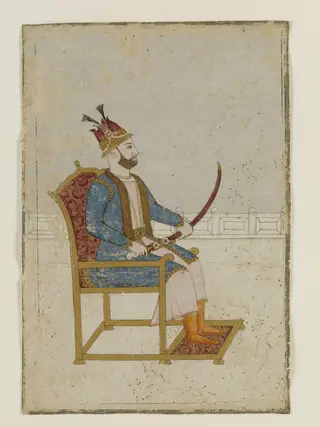
- Nadir Shah
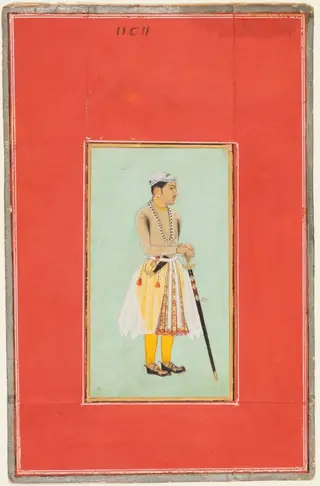 Portrait of Prince Sur Singh Rathor of Bikaner (1594–1631)
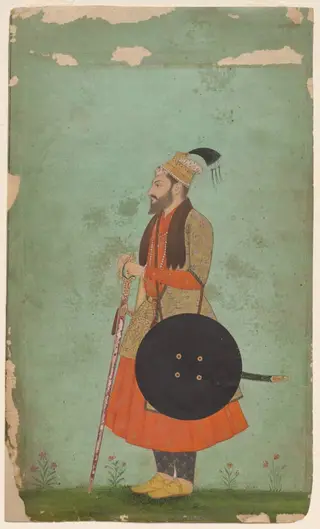 Portrait of Prince Murad Baksh (1624–1661)
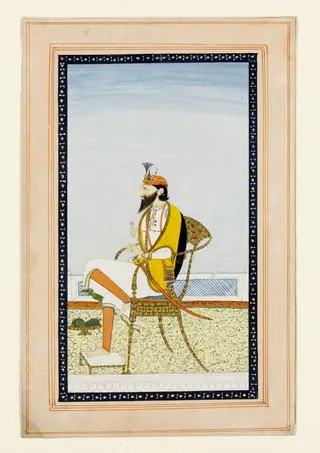 Raja Dhian Singh
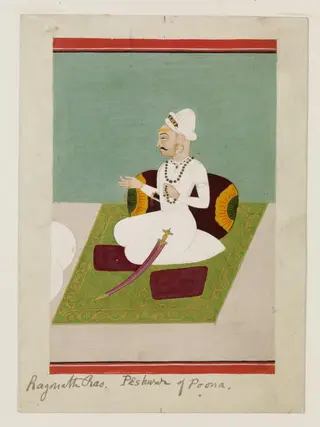 Peshwar Raghunath Rao
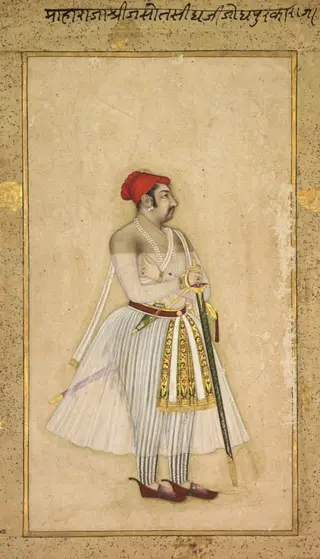 Jaswant Singh of Jodhpur (reigned 1635–1678)
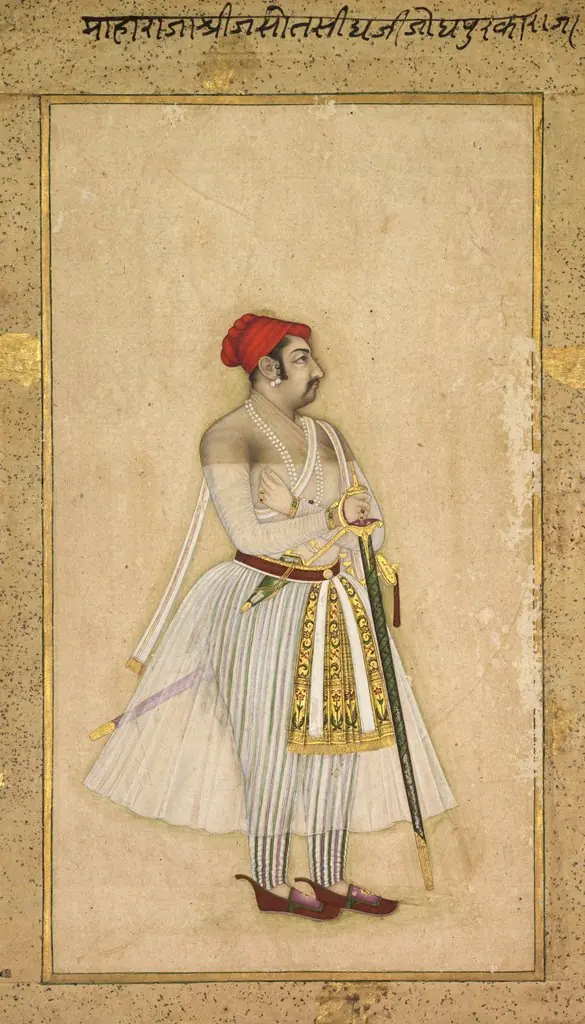 Jaswant Singh of Jodhpur (reigned 1635–1678)
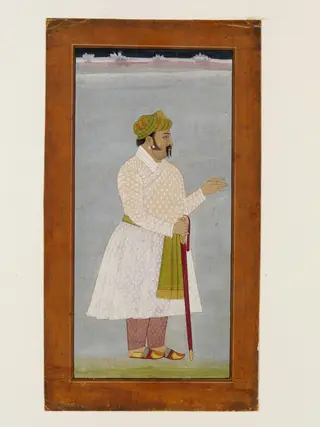 Rajah Birbar (Birbal)
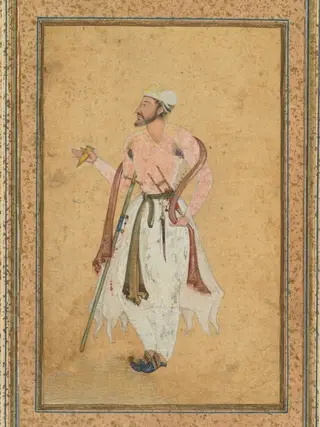 A Mughal courtier
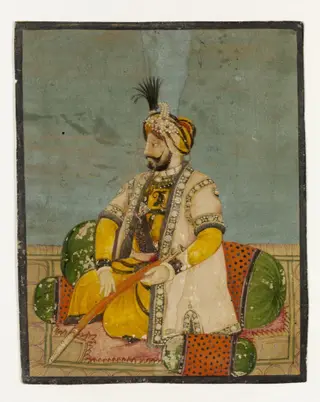 Raja Ranbir Singh
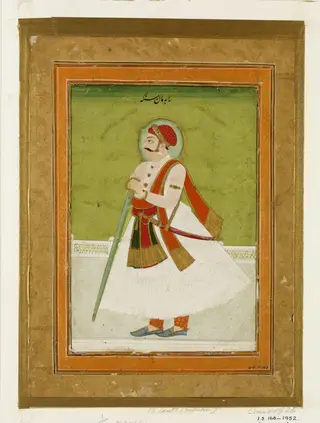 Raja Man Singh
 Untitled