Artwork
Untitled
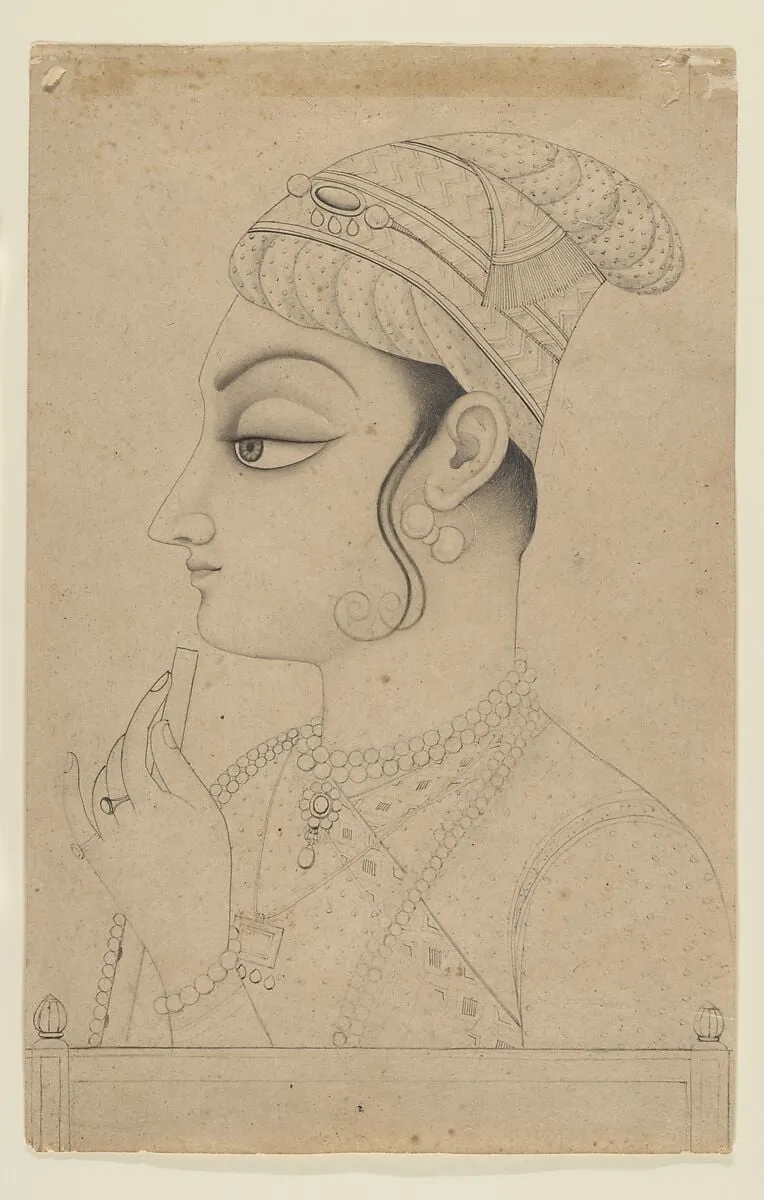
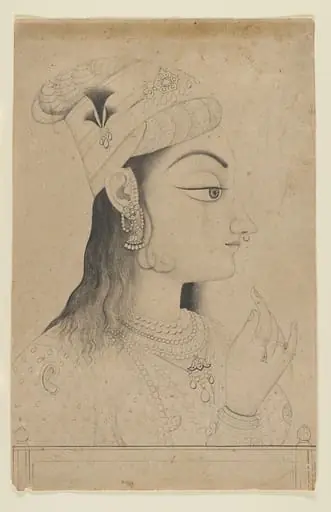
Untitled is an ink painting. It dates from 1774 and is held in the collection of the Metropolitan Museum of Art.
About this work
Subject & Meaning
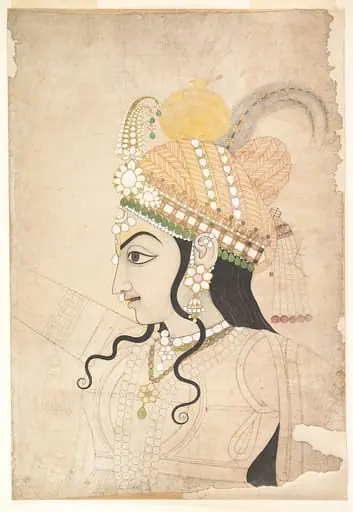
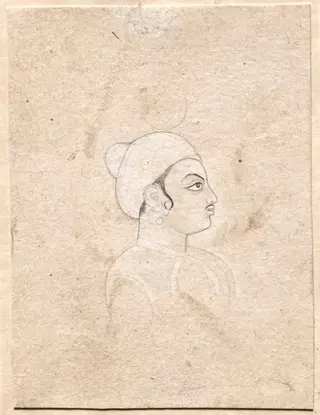
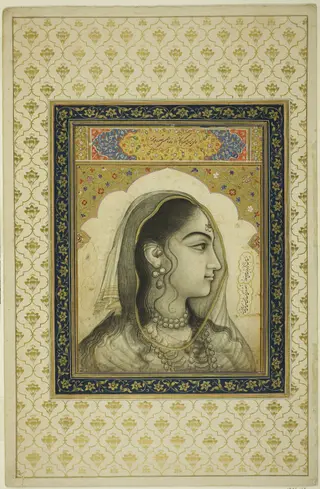
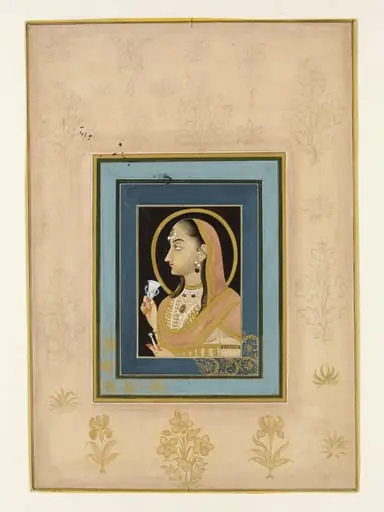
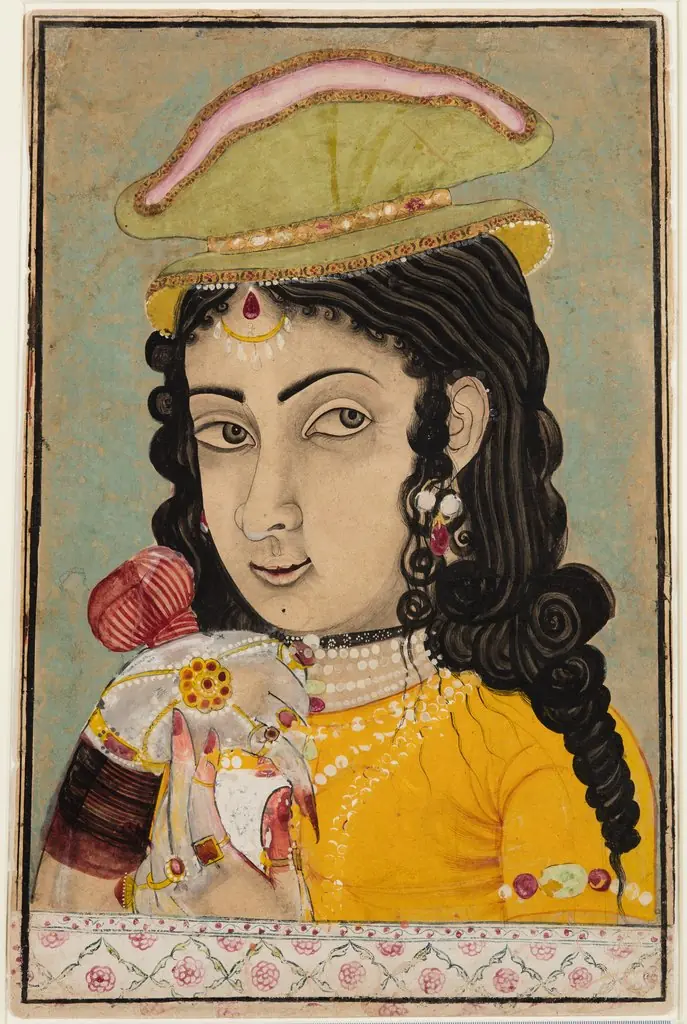
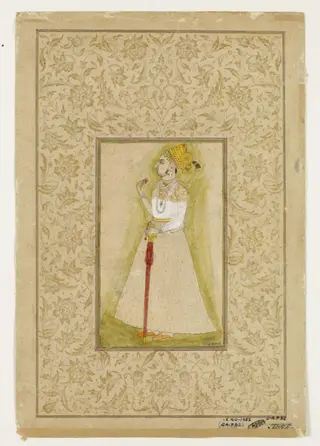
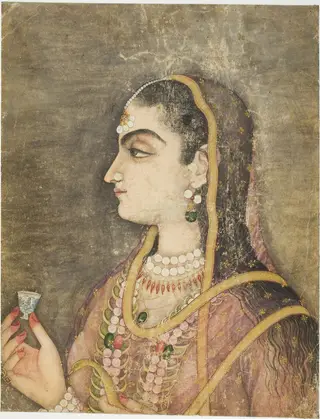
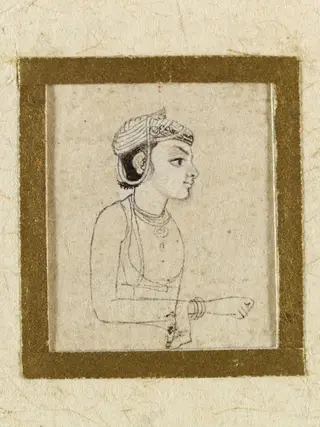
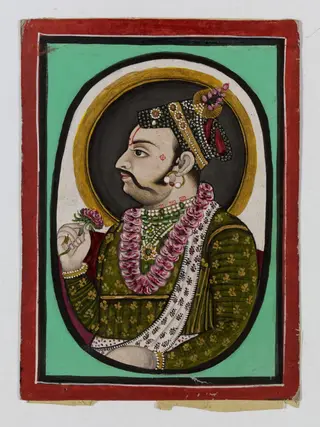
This untitled ink and wash drawing on paper depicts the Hindu deity Krishna alongside a woman and a flute.
This untitled ink and wash drawing on paper depicts the Hindu deity Krishna alongside a woman and a flute. The pairing of Krishna with the flute is a recurring motif in Indian devotional art, where the instrument is closely associated with the god's mythological persona as a divine musician whose music enchants the gopis, or cowherd women, of Vrindavan. The inclusion of a female figure within this composition points to the iconographic theme of Krishna's amorous pastoral encounters, a subject that became especially prominent in Rajasthani painting traditions during the eighteenth century.
Produced in Rajasthan in 1774, the work fits within the regional courtly and devotional visual culture that frequently rendered Krishna's lila, or divine play, in intimate, lyrical scenes. The combination of deity, consort figure, and flute thus situates the drawing within a well-established symbolic vocabulary celebrating divine love and the sensory allure of Krishna's presence.
Technique & Style
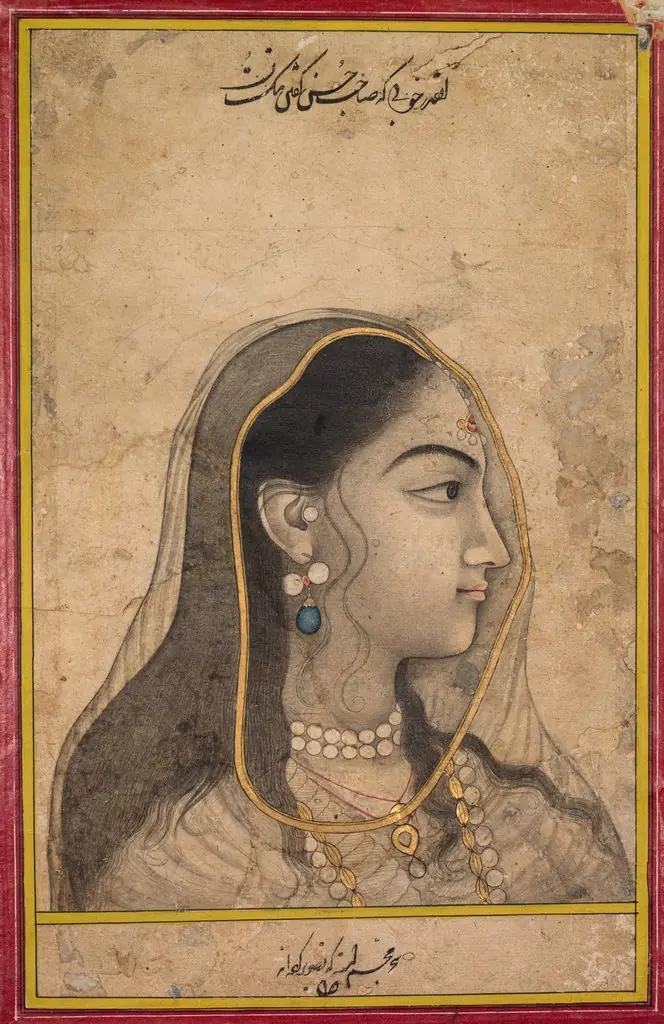
The work is executed in ink and wash on paper, a technique common to eighteenth-century Rajasthani portraiture that combines precise line-work with graduated tonal washes to model form. The composition is dominated by a central standing figure of Krishna holding a flute, flanked by a female attendant; both are rendered in fluid, calligraphic outlines that modulate into delicate wash shading to suggest volume and drapery. The palette is restrained, relying on monochrome ink with subtle grey washes to articulate flesh, textiles, and the surrounding setting.
Stylistic features include elongated proportions, a frontal pose for the deity, and the use of rhythmic contour lines to convey movement and grace, aligning with late-eighteenth-century Mewar or Kishangarh aesthetics.
History & Provenance
The work is dated to 1774 and attributed to an anonymous painter active in Rajasthan, India. It entered the collection of the Metropolitan Museum of Art, New York, where it is currently located. No documented commission or original ownership history prior to its acquisition by the museum is recorded in available sources.
The work titled Untitled, created in 1774 by an anonymous artist in Rajasthan, India, is currently held in the collection of the Metropolitan Museum of Art. The museum houses this ink and wash on paper painting, which measures 34 cm in height and 21.9 cm in width. While the provided records confirm its location within the Met's holdings and its acquisition of a painting depicting Krishna with a flute and a woman, the specific inventory or accession number is not detailed in the available sources.
Furthermore, the current documentation does not list any past or future exhibition history for this specific piece, limiting the historical record to its creation date, origin, and current institutional home.
Overview
This untitled work, rendered in ink and wash on paper, originates from the Kishangarh kingdom in Rajasthan. It depicts a serene gathering of figures, characterized by a distinctive, subdued aesthetic that sets it apart from many contemporary Indian miniatures. The artist remains anonymous, and the original purpose of the painting is not documented.
Context
Originating from the Kishangarh school, this painting represents a less common stylistic approach within the broader tradition of Indian miniature painting. While many regional styles are known for their bright colors and intricate compositions, this work exemplifies a quieter, more introspective aesthetic, offering a unique perspective on artistic expression from Rajasthan.
Artist & collection