Artwork
Untitled

Untitled is an ink painting. It dates from 1149 and is held in the collection of the Metropolitan Museum of Art.
About this work
Subject & Meaning
As a representation of Buddhist cosmology, the piece functions as a visual mantra, inviting contemplation of spiritual concepts such as compassion and wisdom.
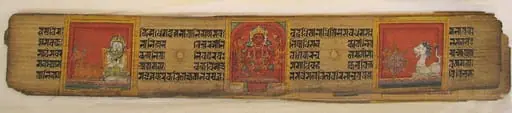
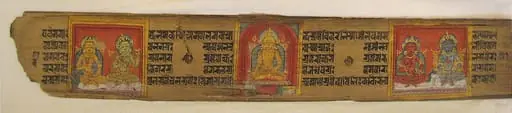
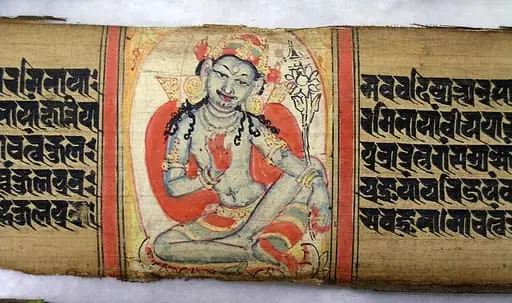
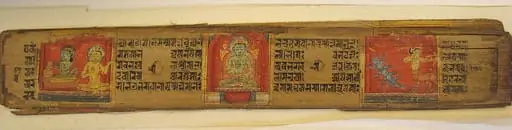
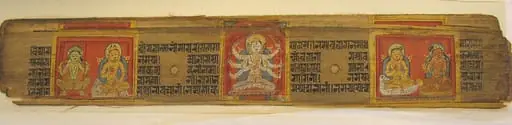
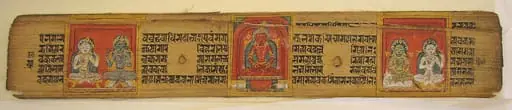
The work portrays a Buddhist deity rendered in ink and pigment on a palm leaf, situating it within the religious art tradition of eleventh‑century India. Its iconography aligns with conventional attributes associated with the figure, suggesting a devotional focus on enlightenment and divine presence. As a representation of Buddhist cosmology, the piece functions as a visual mantra, inviting contemplation of spiritual concepts such as compassion and wisdom.
The painting’s provenance in the Metropolitan Museum of Art underscores its significance as a rare surviving example of early medieval Indian religious painting, embodying both artistic craftsmanship and doctrinal symbolism.
Technique & Style
Created in 1149 in India, this anonymous religious painting is executed in ink and color on a palm leaf support. The work exemplifies the traditional medium of palm-leaf manuscript illumination, a durable yet flexible format historically utilized for Buddhist texts and devotional imagery in the region. Stylistically, the piece adheres to conventions of religious art, depicting a Buddhist deity with formal precision suitable for its sacred function.
The application of pigment and ink on the organic leaf surface reflects the specific material constraints and aesthetic priorities of twelfth-century Indian painting traditions. The Metropolitan Museum of Art holds this work, which remains a significant example of early religious art from the subcontinent, preserving the visual language of its era through its distinctive material composition and iconographic focus.
History & Provenance
The artwork, titled Untitled, was created in 1149 by an anonymous artist in India. Executed in ink and color on palm leaf, this religious painting depicts Buddhist deities. The work is currently held in the collection of the Metropolitan Museum of Art.
No specific commission details or earlier ownership records are provided in the available records, though the piece is classified as a religious painting from the mid-12th century. Its creation location is identified as India, and it remains attributed to an unknown painter.
The painting is held in the collection of the Metropolitan Museum of Art, where it remains located. Its placement at the Met is documented through the institution's records as the holding repository for this work. The sources do not provide a specific inventory or accession number for the piece.
Likewise, no exhibition history is recorded in the available documentation, and there is no record of prior loans, displays, or curatorial installations beyond its current residence at the museum.
Overview
This untitled painting, rendered in ink and color on a palm leaf, presents a vibrant depiction of divine figures. Created in India approximately eight centuries ago, it exemplifies an early form of manuscript illumination. The artwork's small scale and rich palette of gold, red, and blue suggest its original purpose as part of a larger, revered text.
Artist & collection

 Untitled
 Untitled
 Untitled
 Untitled
 Prajnaparamita flanked by two bodhisattvas, folio 187 (recto), from a Manuscript of the Perfection of Wisdom in Eight Thousand Lines (Ashtasahasrika Prajnaparamita-sutra)
 Untitled
 Untitled
 Untitled
 Untitled
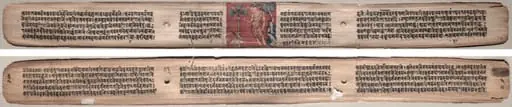 Folio 73 from a Gandavyuha-sutra (Scripture of the Supreme Array): Sudhana and an antelope (recto); text (verso)
 Untitled
- Untitled