Artwork
Untitled
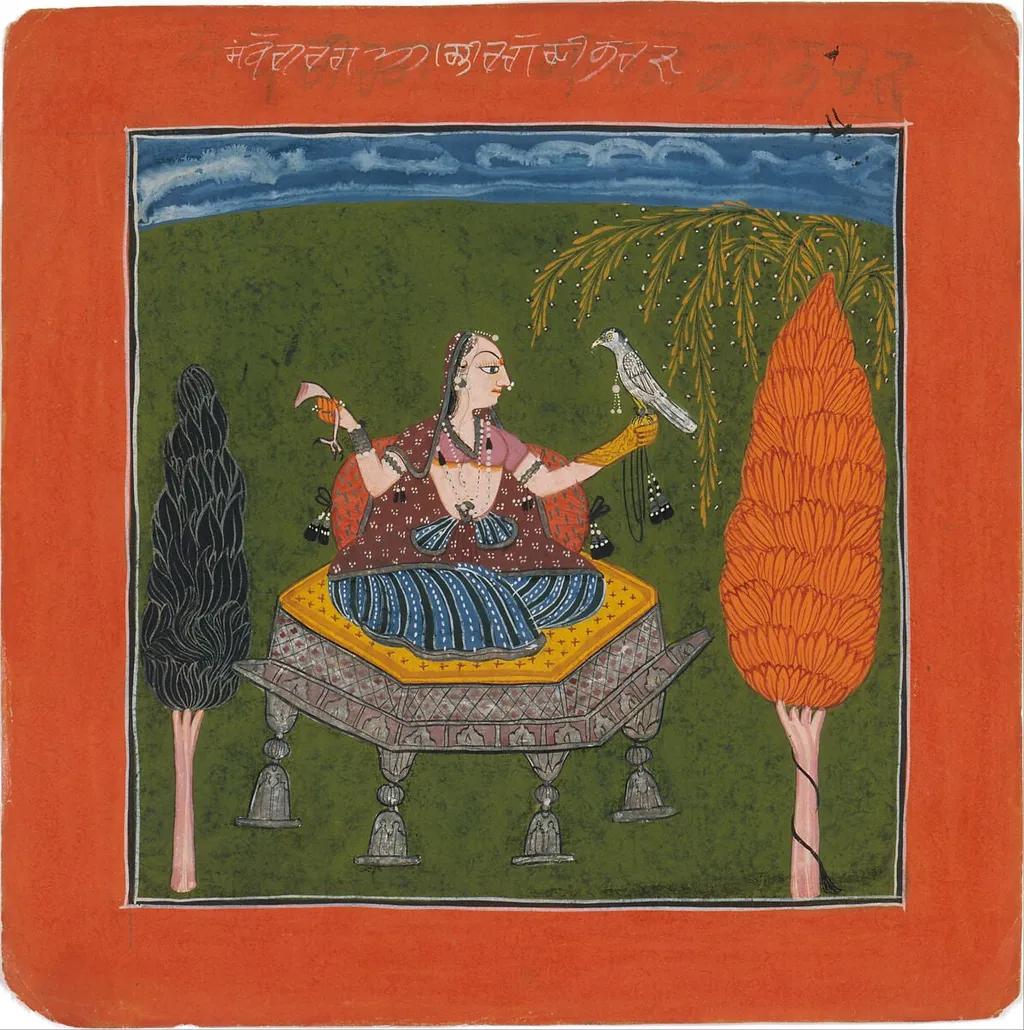
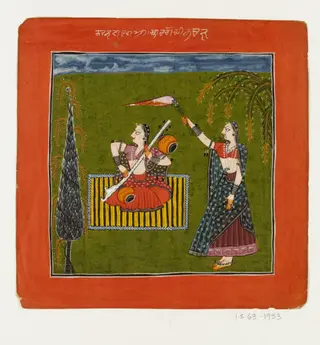
Untitled is a watercolor painting. It dates from 1705 and is held in the collection of the Metropolitan Museum of Art.
About this work
No one knows who painted it, but the style is called Basohli, bold outlines, rich colors, and no shadows.
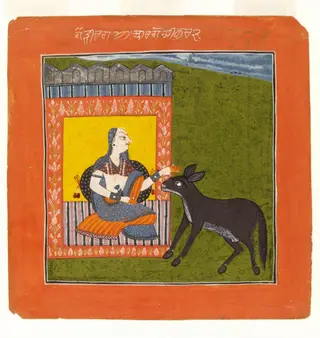
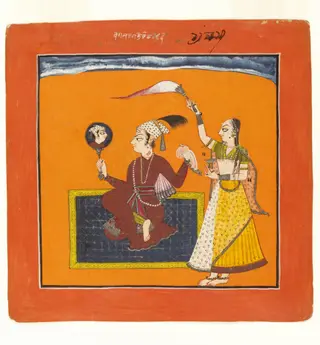
A woman in a bright red dress holds a falcon on her wrist. Tiny silver dots sparkle on the bird’s feathers and her jewelry. The background is flat, deep green.
This painting comes from a small hill kingdom in northern India around 1700. Artists there used crushed minerals and silver leaf to make colors glow. No one knows who painted it, but the style is called Basohli, bold outlines, rich colors, and no shadows.
To see more paintings like this, look up India (Himachal Pradesh, possibly Basohli or Nurpur).
Subject & Meaning
The work is a portrait depicting a woman accompanied by a falcon. Executed in ink, opaque watercolor, and silver on paper in 1705, the composition centers on the female figure, with the bird of prey positioned alongside her. In Mughal and Deccani courtly portraiture of this period, the pairing of a woman with a falcon carried specific associations: falcons were emblems of royal status, hunting prowess, and aristocratic refinement, and their inclusion in female portraits signaled the sitter's elevated rank and access to courtly pursuits.
The presence of silver pigment, likely used for ornamental details, further reinforces the image's function as a luxury object intended to convey prestige. Together, the woman and falcon communicate themes of nobility, leisure, and the elevated social standing of the subject within the courtly culture of early eighteenth-century India.
Technique & Style
The work is executed in ink, opaque watercolor and silver pigment on paper, a combination that creates a luminous surface typical of early 18th‑century Indian manuscript painting. The paper support, measuring roughly 20.6 × 20.6 cm, shows signs of age but remains intact, suggesting careful handling over centuries. Formal analysis reveals a tightly rendered portrait of a woman accompanied by a falcon, rendered with fine line work and subtle tonal gradations that emphasize the bird’s plumage and the sitter’s delicate features.
The stylized composition and limited palette reflect the portrait genre’s emphasis on symbolic iconography within the Indian artistic tradition.
History & Provenance
The artwork titled Untitled, created circa 1705 by an anonymous artist, is held in the collection of the Metropolitan Museum of Art. While the specific inventory or accession number is not detailed in the available records, the work is classified within the museum's holdings of paintings. The piece, which depicts a woman and a falcon executed in ink, opaque watercolor, and silver on paper, measures 20.6 centimeters in both height and width.
It is attributed to an origin in India. The provided sources do not contain a documented exhibition history for this specific work, nor do they list a unique accession identifier beyond its presence in the museum's collection.
Overview
This untitled painting, executed with ink, opaque watercolor, and silver on paper, originates from a small hill kingdom in northern India around 1700. It depicts a woman holding a falcon, rendered in a distinctive regional style. The artwork exemplifies the vibrant palette and precise draftsmanship characteristic of painting traditions from the Himalayan foothills during this period.
Context
This painting belongs to a regional artistic tradition found in what is now Himachal Pradesh, India. While the exact kingdom is unconfirmed, its style aligns with works from centers such as Basohli or Nurpur. Such works collectively form a significant chapter in the history of Indian miniature painting, reflecting local patronage and aesthetic preferences.
Artist & collection