Artwork
Untitled
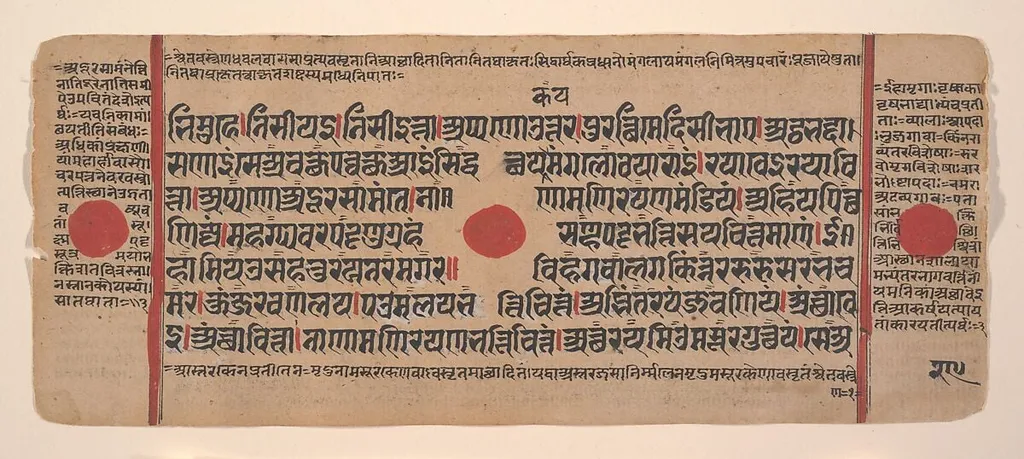
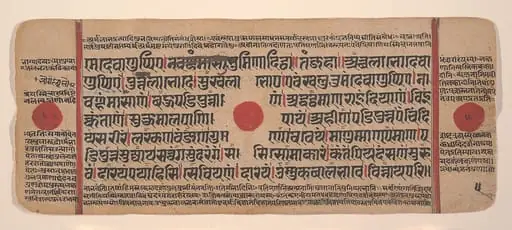
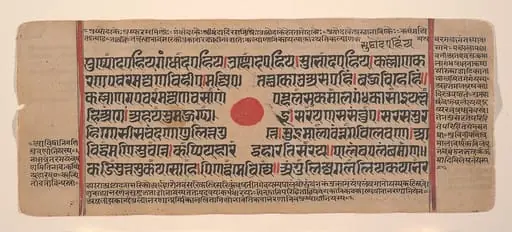
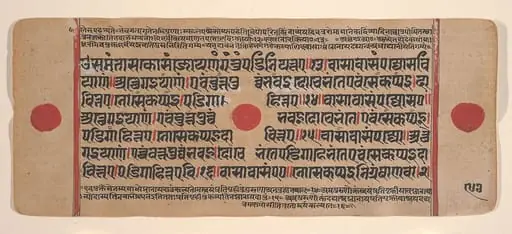
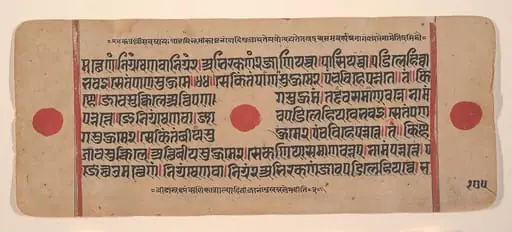
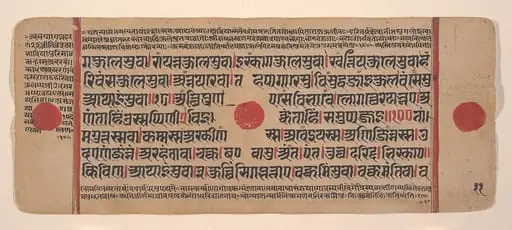
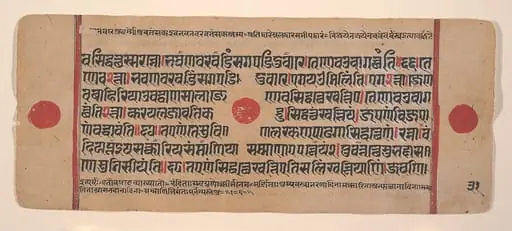
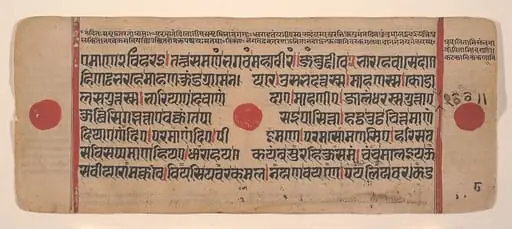
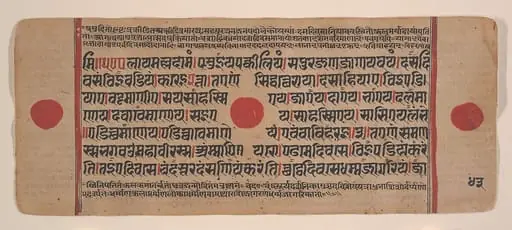
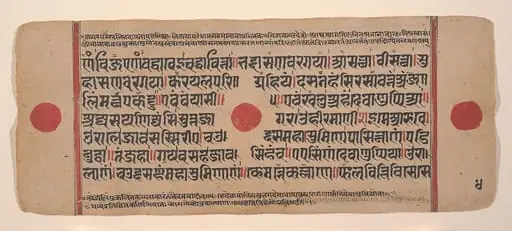
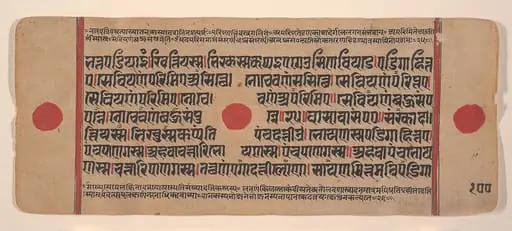
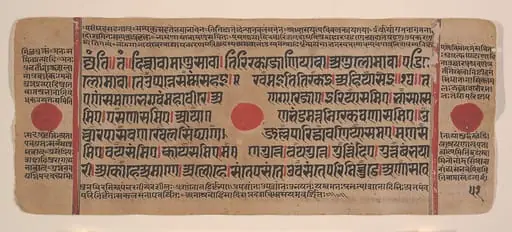
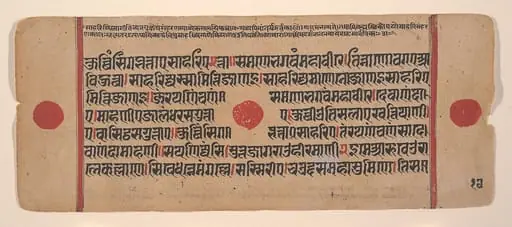
Untitled is a watercolor painting. It dates from 1449 and is held in the collection of the Metropolitan Museum of Art.
About this work
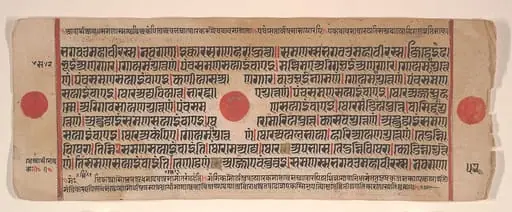
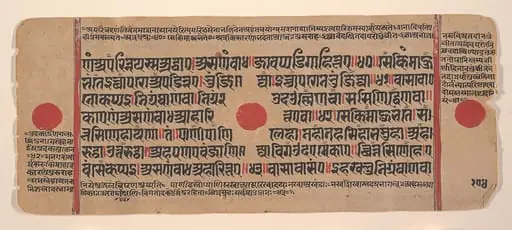
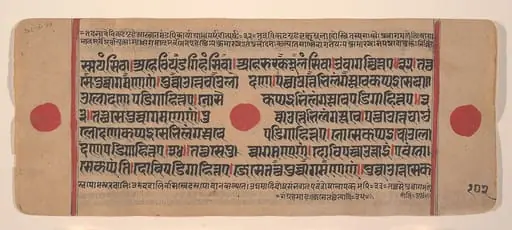
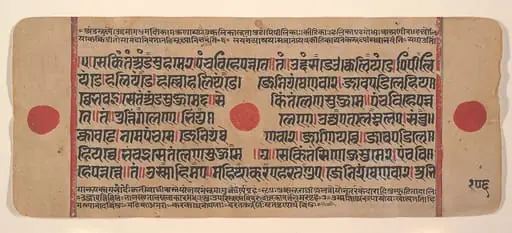
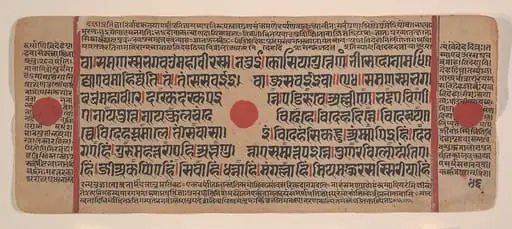
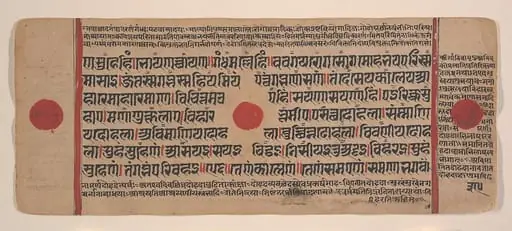
You see a small paper page covered in fine black ink lines and bright colors, figures in robes, animals, and trees against a gold background.
You see a small paper page covered in fine black ink lines and bright colors, figures in robes, animals, and trees against a gold background.
This painting comes from a Jain manuscript in Gujarat, India, around 1450. The gold isn’t paint; it’s real gold leaf pressed onto the paper. Jains used these books to tell stories of their saints, called tirthankaras, who taught non-violence and truth.
To see more like it, look up the subject Jainism.
Technique & Style
Executed in ink, opaque watercolor, and gold on paper, this small-scale devotional work measures 11.1 by 27 centimeters, a horizontal format well suited to manuscript-style painting. The combination of metallic gold with dense, saturated pigments is characteristic of fifteenth-century Indian religious painting on paper supports, where gold leaf or shell was burnished to create luminous passages against the matte watercolor ground. Fine ink underdrawing likely guided the composition before the application of opaque color, a standard handling practice for works of this period and tradition.
The painting is classified within the Metropolitan Museum of Art's holdings as a religious work associated with Jainism, consistent with the iconographic conventions typical of such opaque-watercolor manuscripts.
History & Provenance
The work, titled Untitled, is a religious painting created in India in 1449. It was produced by an anonymous artist using ink, opaque watercolor, and gold on paper. The piece depicts themes related to Jainism.
While the specific commission details and original ownership records are not documented in the available sources, the work is currently held by the Metropolitan Museum of Art in New York, where it is cataloged under the accession number 55.121.38.37. The painting measures 11.1 cm in height and 27 cm in width. Its creation in the mid-15th century places it within a significant period of Indian religious art production, though the precise circumstances of its initial acquisition remain unrecorded in the provided documentation.
The 1449 Jain religious painting titled Untitled is held in the collection of the Metropolitan Museum of Art in New York. The institution identifies the work with the accession number 55.121.38.37. Created in India using ink, opaque watercolor, and gold on paper, the piece measures 11.1 by 27 units.
While the artwork is attributed to an anonymous painter and remains part of the museum's permanent holdings, the available records do not list specific past exhibitions or loan history for this particular folio.
Overview
This untitled painting, executed with ink, opaque watercolor, and gold on paper, originates from a Jain manuscript created in Gujarat, India, around 1450. The small-scale work features intricate black ink lines and vibrant colors, depicting robed figures, various animals, and trees set against a luminous gold ground. It served as an illustrative component within religious texts, offering visual narratives to accompany spiritual teachings.
Subject & Meaning
This illustration is part of a Jain manuscript, which served to narrate the lives and teachings of tirthankaras, the revered saints of Jainism. These spiritual leaders advocated principles of non-violence and truth, central tenets of the faith. The visual elements, including human figures, animals, and flora, likely contribute to the narrative of a specific sacred story, guiding devotees through moral and spiritual lessons.
Context
Created in Gujarat, a region in western India known for its rich tradition of manuscript illumination, this painting dates to approximately 1450. It represents a significant example of Jain artistic production during the medieval period. Such manuscripts were vital for the dissemination and preservation of Jain religious narratives and philosophical teachings, reflecting the cultural and spiritual landscape of the time.
Artist & collection