Artwork
Untitled
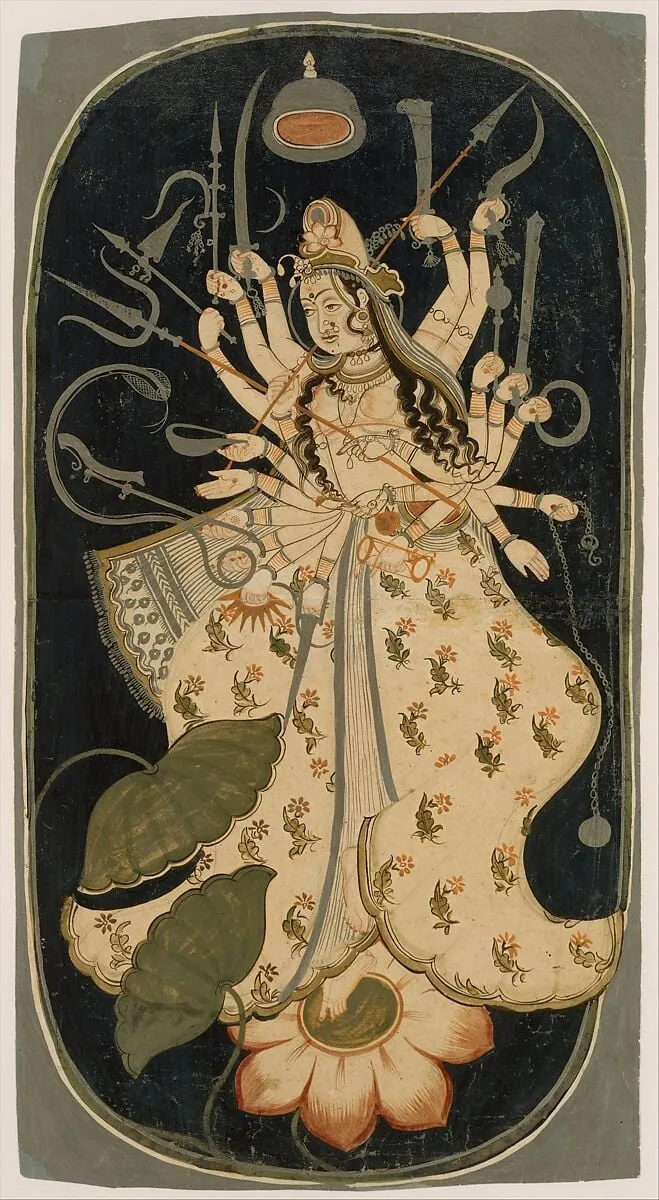
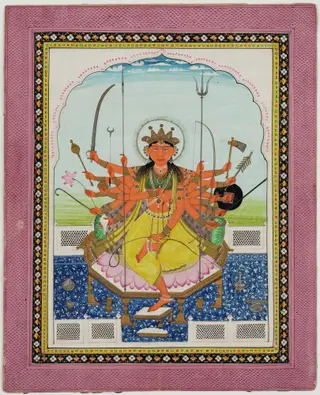
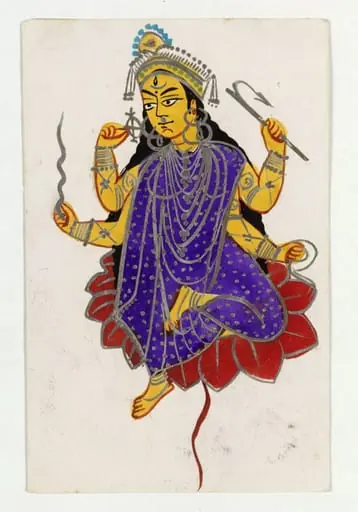
Untitled is a watercolor painting. It dates from 1725 and is held in the collection of the Metropolitan Museum of Art.
About this work
To see more figures like this, look up the subject goddess, india (rajasthan, bikaner).
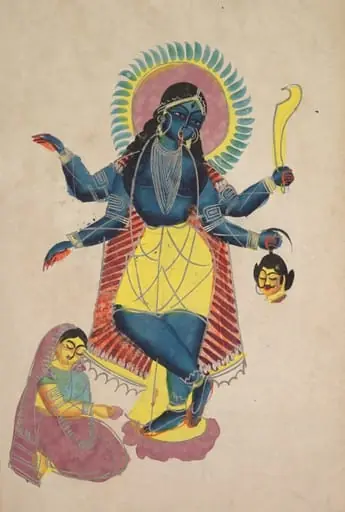
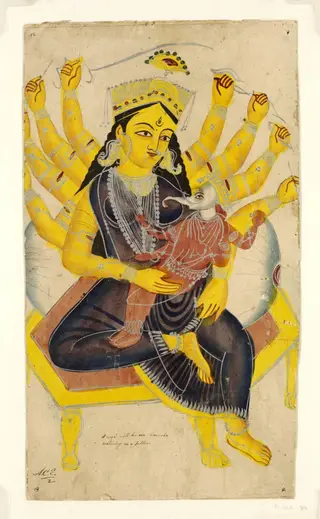
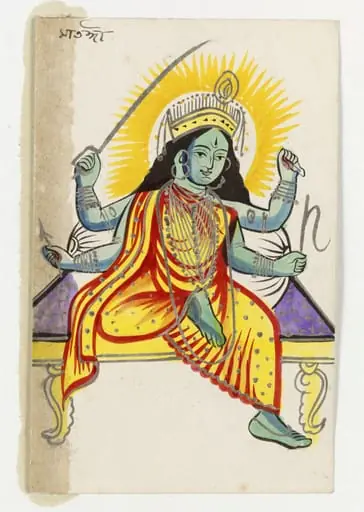
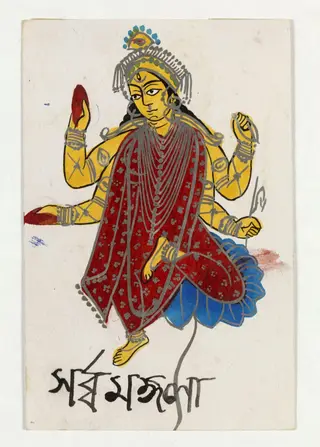
A woman in a red sari sits on a cloud, holding a sword and a shield. Her skin is blue, her eyes are wide, and tiny figures kneel at her feet.
This painting comes from a royal workshop in Bikaner, India, around 1725. The artist used silver leaf for her jewelry and weapons, making them shimmer even now. We don’t know who made it, many court painters worked without signing their names.
To see more figures like this, look up the subject goddess, india (rajasthan, bikaner).
Subject & Meaning
Created in India in 1725, this work depicts a goddess, firmly establishing its subject within the realm of mythology. The iconography centers on this divine female figure, rendered using ink, opaque watercolor, and silver on paper. While the specific identity of the deity is not detailed in the available records, the classification of the piece as a mythological genre painting confirms that the image represents a sacred or supernatural entity from Indian religious tradition.
The use of silver alongside traditional pigments may suggest a symbolic emphasis on divinity or celestial status, common in depictions of gods and goddesses from this region and period. The work serves as a visual representation of religious devotion, focusing entirely on the portrayal of the goddess without additional narrative context provided in the sources.
Technique & Style
The work is executed in ink, opaque watercolor, and silver on paper, a combination typical of Indian painting traditions of the period. Measuring 54.6 by 29.2 centimeters, the composition depicts a goddess within a mythological genre, rendered with metallic silver accents that would have created luminous effects against the opaque watercolor layers. The use of ink outlines suggests precise draftsmanship, while the paper support indicates a portable, courtly format common to 18th-century Indian painting.
The integration of precious metal with watercolor and ink points to a work intended for elite patronage, where material richness carried symbolic and aesthetic significance. The silver application would require careful handling to prevent oxidation and preserve its reflective quality.
History & Provenance
Created in 1725, the work titled Untitled is an anonymous painting originating from India. Executed in ink, opaque watercolor, and silver on paper, the artwork depicts a goddess within the mythology genre. While the specific commission details and the identity of the original patron remain unrecorded in the available documentation, the piece has been attributed to an unknown painter from the early eighteenth century.
The work subsequently entered the collection of the Metropolitan Museum of Art, where it is currently held. No further details regarding the intermediate ownership chain or specific acquisition dates prior to its current museum residence are provided in the source records.
Legacy
The work is part of the Metropolitan Museum of Art’s collection, where it is cited as a representative example of 18th‑century Indian miniature painting that portrays a goddess. Its classification as a mythological painting and anonymous authorship have made it a reference point in studies of anonymity and devotional art in the region. Because it is displayed alongside other works of Indian painting, it contributes to the museum’s reputation for holding significant examples of this genre, influencing scholarly narratives about early Indian artistic production.
Overview
This untitled painting, created around 1725 in a royal workshop in Bikaner, India, depicts a powerful blue-skinned female figure. Seated on a cloud, she holds a sword and shield, while small devotees kneel before her. The work utilizes ink, opaque watercolor, and silver on paper, reflecting the artistic traditions of the period and region.
Artist & collection