Artwork
Untitled
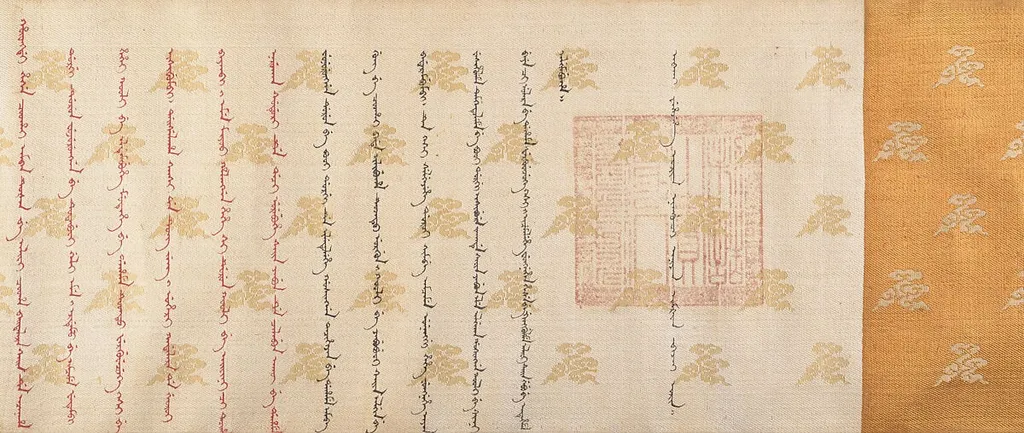
Untitled is an ink painting. It dates from 1761 and is held in the collection of the Metropolitan Museum of Art.
About this work
Technique & Style
As a painted handscroll, the piece is designed to be unrolled and examined section by section rather than displayed fully at once.
Created in 1761 in China, this anonymous landscape is executed as a handscroll. The artist applied ink and color onto a support composed of both silk and paper. The work measures 417.8 cm in length and 31.8 cm in height, dimensions characteristic of the format which allows for a continuous, unfolding viewing experience.
As a painted handscroll, the piece is designed to be unrolled and examined section by section rather than displayed fully at once.
History & Provenance
The handscroll was created in 1761 in China, executed in ink and color on silk and paper by an anonymous painter. According to Wikidata records, the work entered the collection of the Metropolitan Museum of Art, where it is presently held. No further details regarding prior ownership, commission, or chain of custody are documented in the available sources.
The handscroll titled Untitled, created in 1761 by an anonymous artist, is held in the collection of the Metropolitan Museum of Art. The work, classified as a landscape painting executed in ink and color on silk and paper, measures 417.8 cm in height and 31.8 cm in width. It was produced in China and is currently located at the museum in New York.
The provided sources do not list a specific inventory or accession number for the work, nor do they record any exhibition history.
Overview
This handscroll, executed in ink and color on silk and paper, presents a composition of vertical black and red script set against a muted beige ground. Gold floral motifs weave through the surface, and a distinctive red rectangular seal appears on the right edge, marking the work’s authorship or provenance.
Subject & Meaning
The scroll’s primary focus is the calligraphic text, rendered in a non‑Latin script that suggests a literary or documentary purpose. The surrounding gold foliage serves a decorative function, framing the writing without depicting narrative scenes, a common approach in works that prioritize textual content.
Context
Classified within the Romantic movement, the piece aligns with the period’s interest in emotive expression and the revival of historic or foreign motifs. The integration of calligraphy, gold ornamentation, and luxurious materials exemplifies Romanticism’s embrace of the exotic and the decorative.
Artist & collection

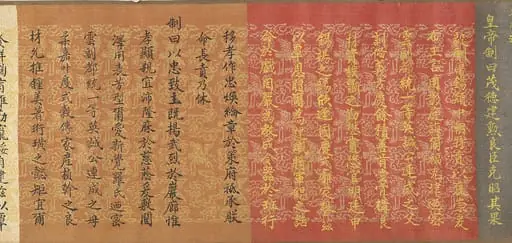
- 清 佚名 楷書英連成父母 誥命 卷|Scroll of Commission
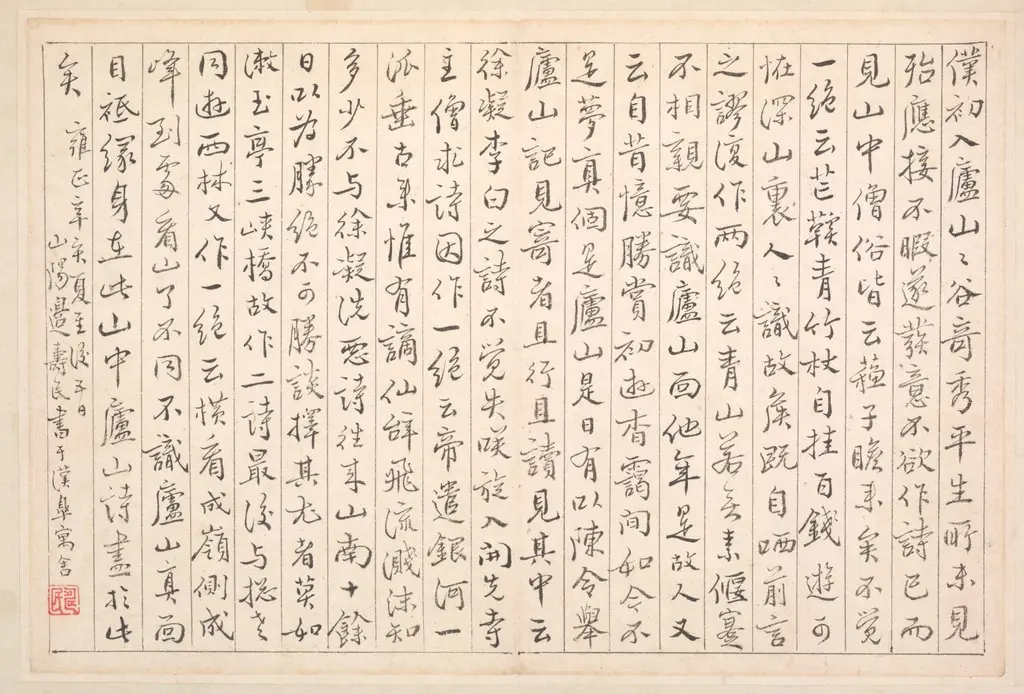 Album of Calligraphy and Paintings
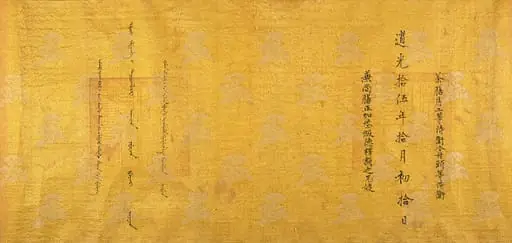 Untitled
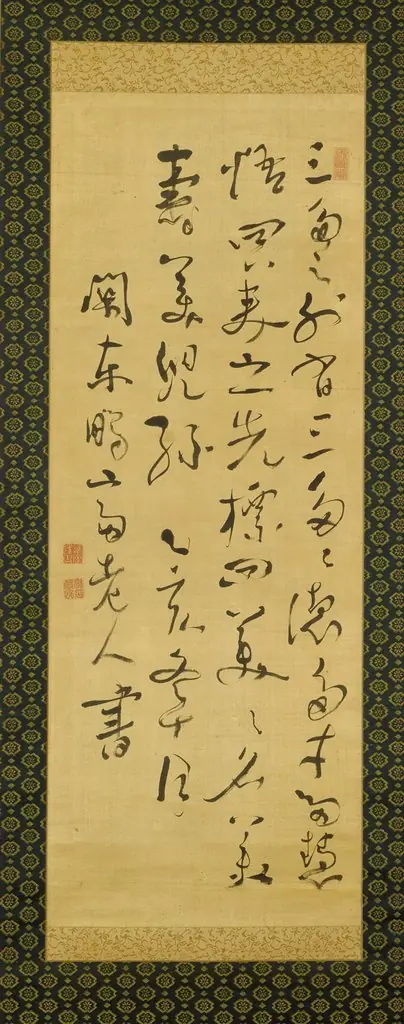 Confucian Poem
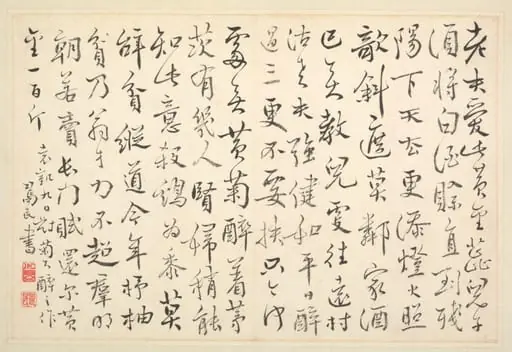 Album of Calligraphy and Paintings
 Traveling to Ugeumam, Buan
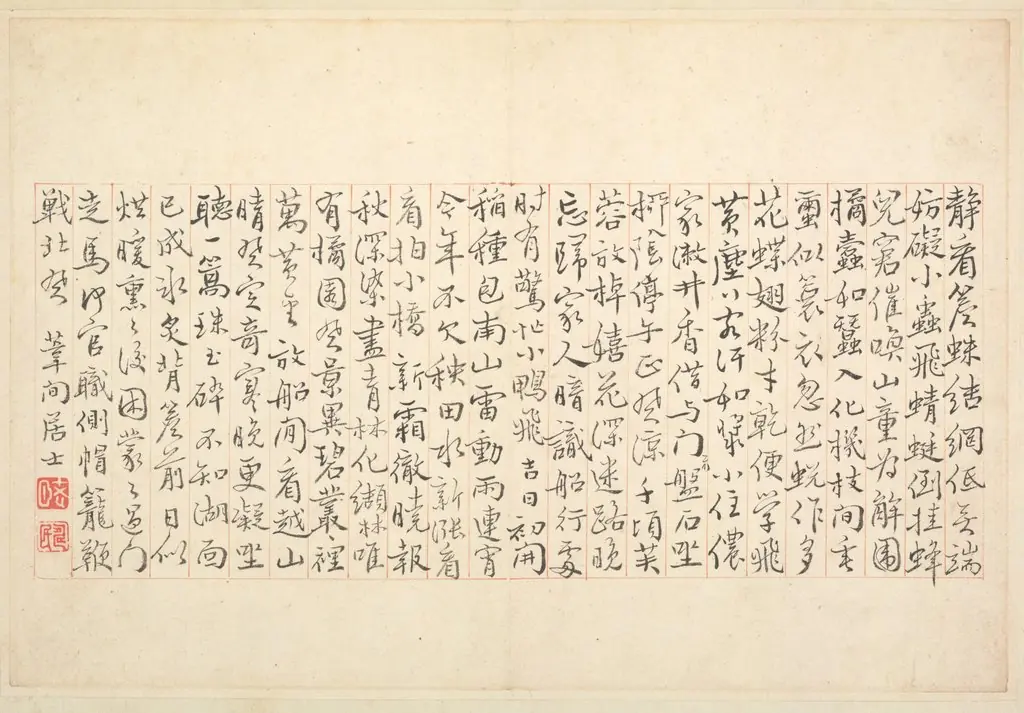 Album of Calligraphy and Paintings
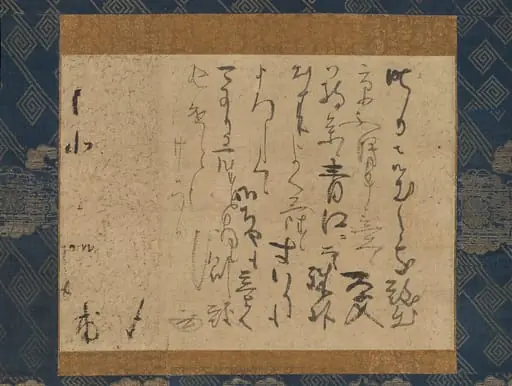 Untitled
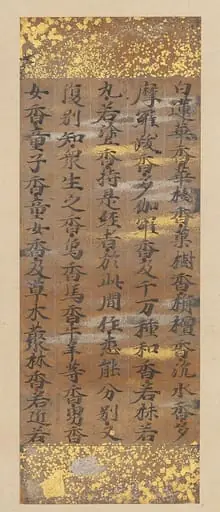 伝九条兼実書 『法華経』 の内|Segment of the Lotus Sutra (Hoke-kyō)
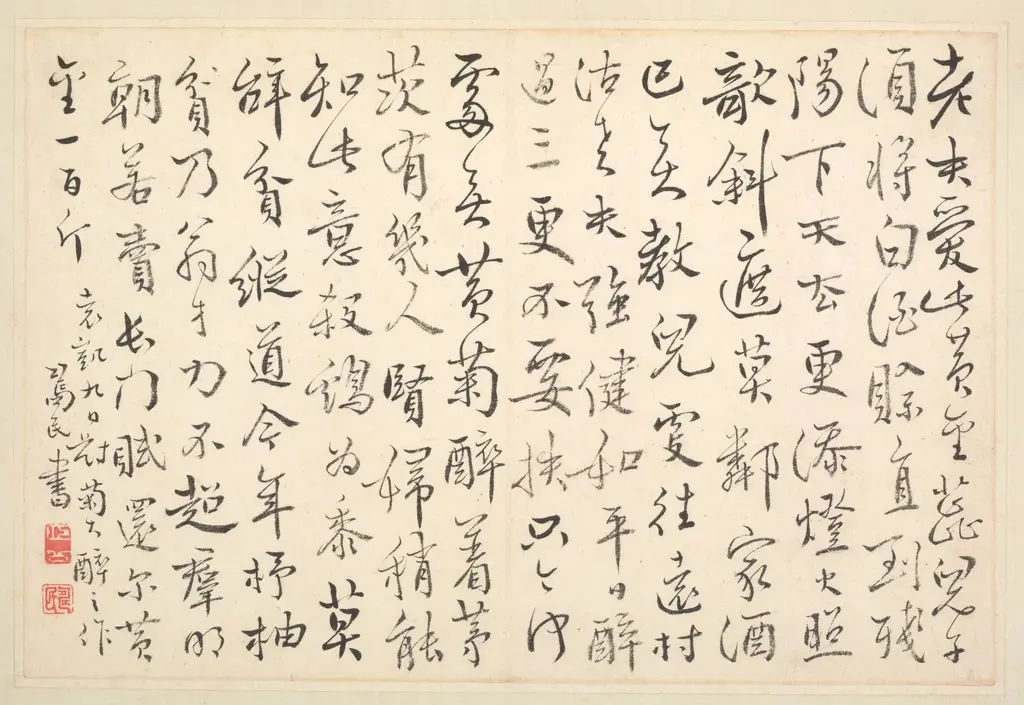 Album of Calligraphy and Paintings
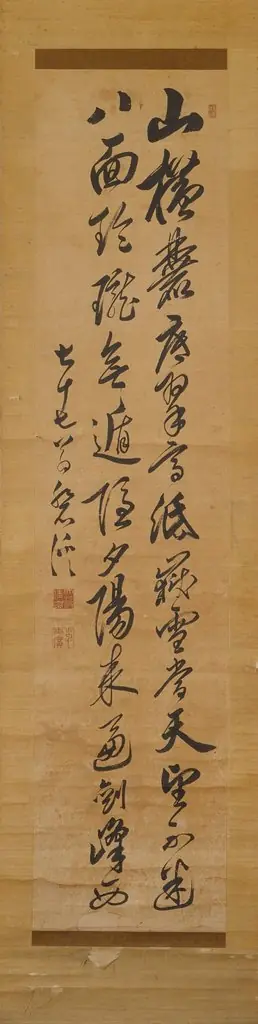 Chinese Poem: Seven-character-quatrain
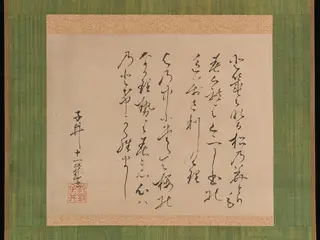 Untitled