Artwork
Untitled
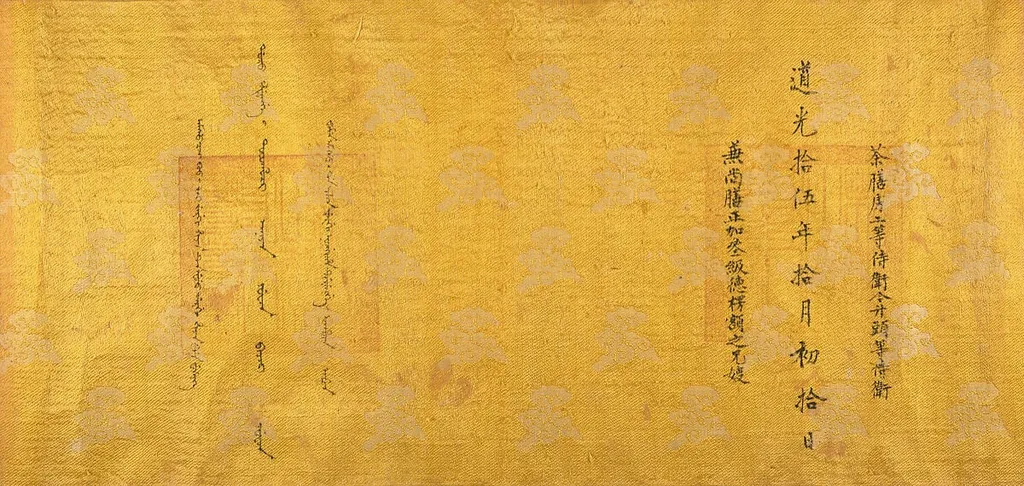
Untitled is an ink painting by the Romanticist artist Unknown. It dates from 1835 and is held in the collection of the Metropolitan Museum of Art. A long, horizontal scroll composed of silk and paper, this work features ink and faint color on a muted gold ground.
About this work
Overview
The background remains largely unadorned, save for a subtle tonal shift near the lower edge, suggesting depth or spatial suggestion without literal imagery.
A long, horizontal scroll composed of silk and paper, this work features ink and faint color on a muted gold ground. The composition centers on two vertical columns of handwritten text, densely arranged with varying stroke weights and occasional overlaps. The background remains largely unadorned, save for a subtle tonal shift near the lower edge, suggesting depth or spatial suggestion without literal imagery.
Subject & Meaning
The content consists of handwritten script, likely a poetic or literary passage, rendered in a formal cursive style common for scholarly or ceremonial texts. The tight spacing and irregular brushwork imply urgency or personal expression, aligning with traditions where calligraphy conveyed intellectual or emotional weight beyond mere communication. The absence of imagery directs focus entirely to the written word.
Technique & Style
Ink application varies deliberately, some strokes are bold and fluid, others thin and broken, revealing the hand’s motion. The silk support allows subtle ink diffusion, contributing to the uneven texture. Faint gold pigment and a soft shadow at the base hint at layered materials and deliberate tonal modulation, though no illustrative forms are present. The style prioritizes rhythmic brush control over uniformity.
History & Provenance
The materials, silk and paper with gold accents, suggest an object of moderate to high status, possibly created for a literati audience or courtly context. Its preservation in scroll form indicates it was intended for private, sequential viewing, a common practice in East Asian scholarly circles. Exact origin and authorship remain undocumented, but the technique aligns with late medieval to early modern manuscript traditions.
Context
This work reflects a cultural emphasis on calligraphy as a refined art form, where the beauty of handwriting was equated with moral and intellectual character. Unlike illustrated scrolls, this piece omits imagery to elevate the textual act itself. The faint gold and shadowing may echo landscape conventions, subtly linking the written word to natural harmony without depicting it directly.
Legacy
The scroll exemplifies how text could function as visual art in East Asian traditions, influencing later practices that valued spontaneity and brush rhythm over mechanical precision. Its unadorned form and material restraint resonate with minimalist aesthetics in modern calligraphy, preserving a lineage where the hand’s trace carries enduring cultural significance.
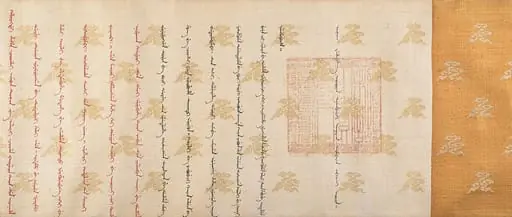
Artist & collection









- Untitled
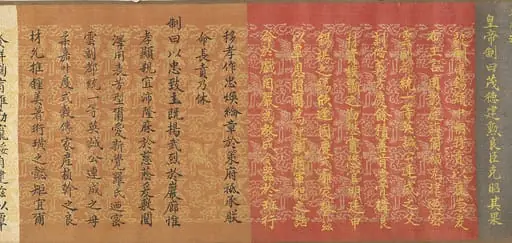 清 佚名 楷書英連成父母 誥命 卷|Scroll of Commission
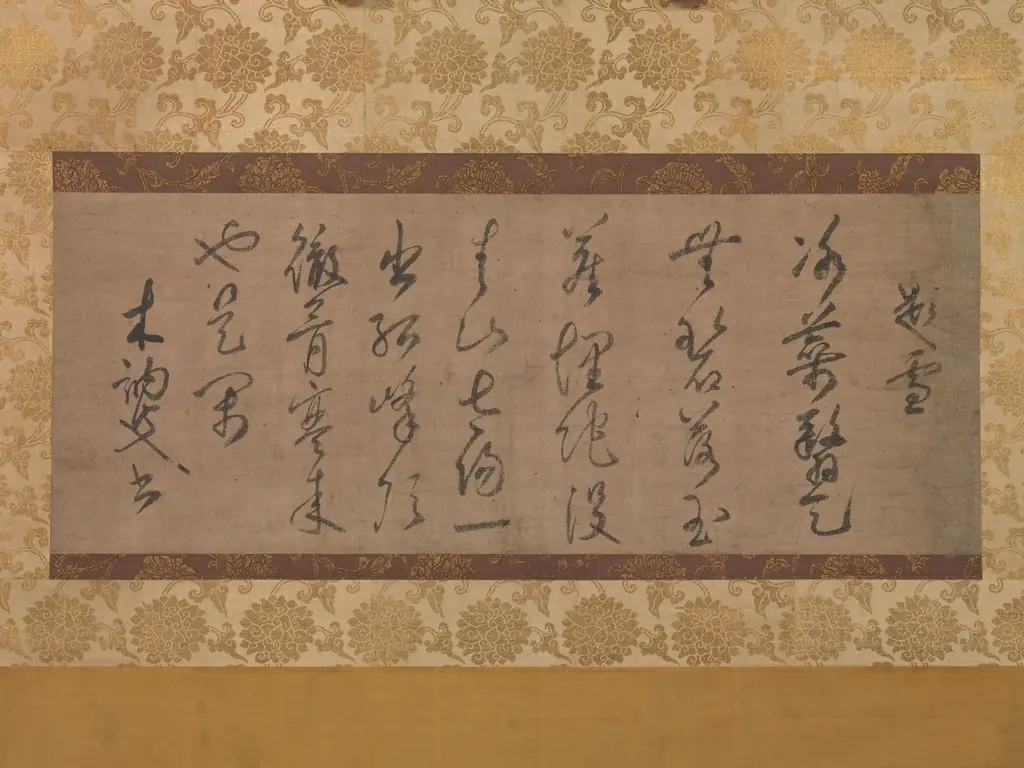 Poem on the Theme of Snow
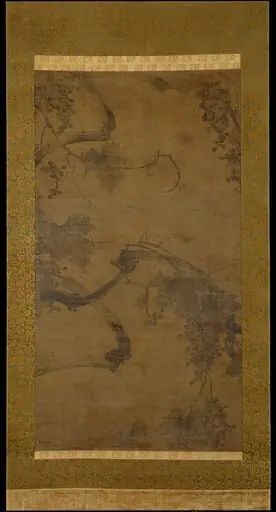 작자미상 포도 조선|作者未詳 墨葡萄圖 朝鮮|Grapevine in the Wind
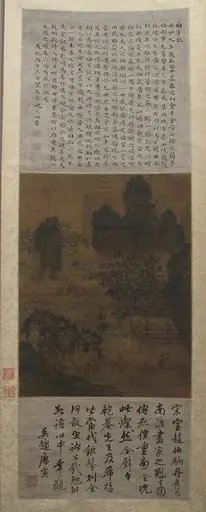 明/清 佚名(舊傳趙伯駒) 蘭亭圖 軸|Orchid Pavilion or Lanting
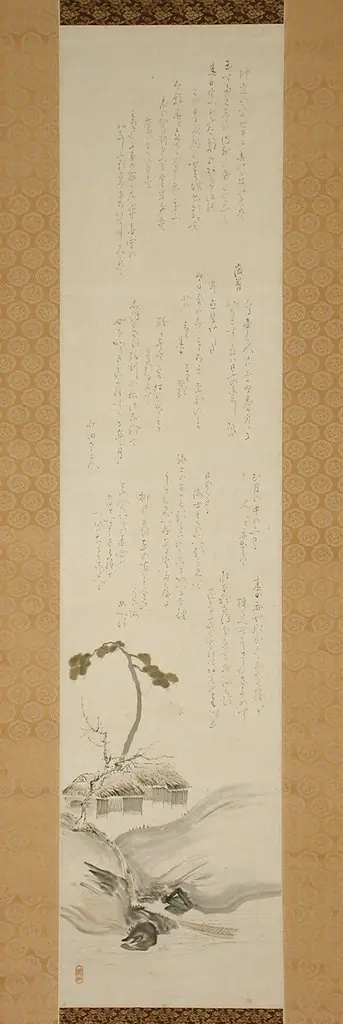 Poet's Abode by the Shore, with New Year's Poems
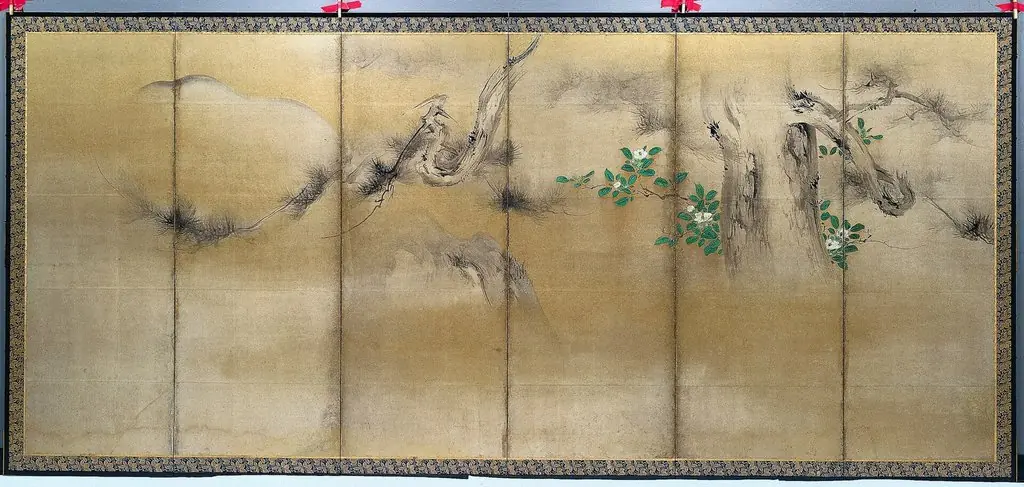 Winter and Summer Flowers
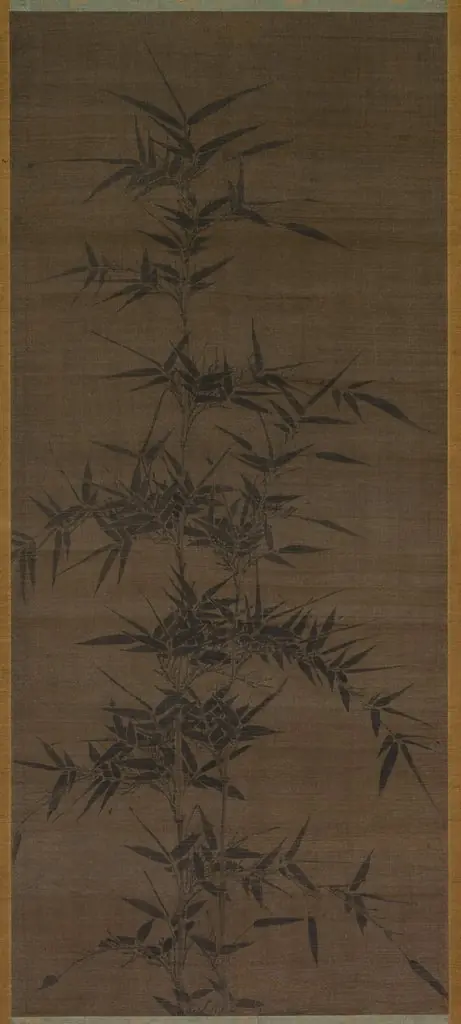 Ink Bamboo
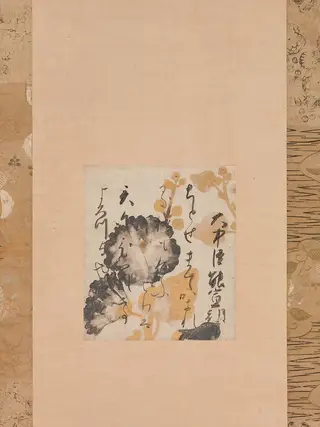 松花堂昭乗書・伝俵屋宗達下絵 和歌色紙 |Poem by Onakatomi Yoshinobu with Underpainting of Hollyhocks
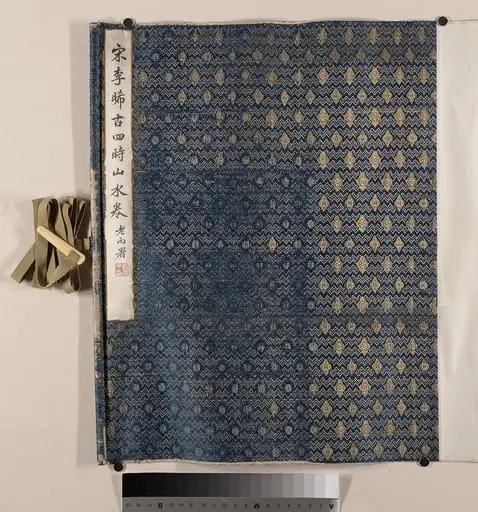 明 佚名 舊傳李唐 四時山水圖 卷|The Four Seasons
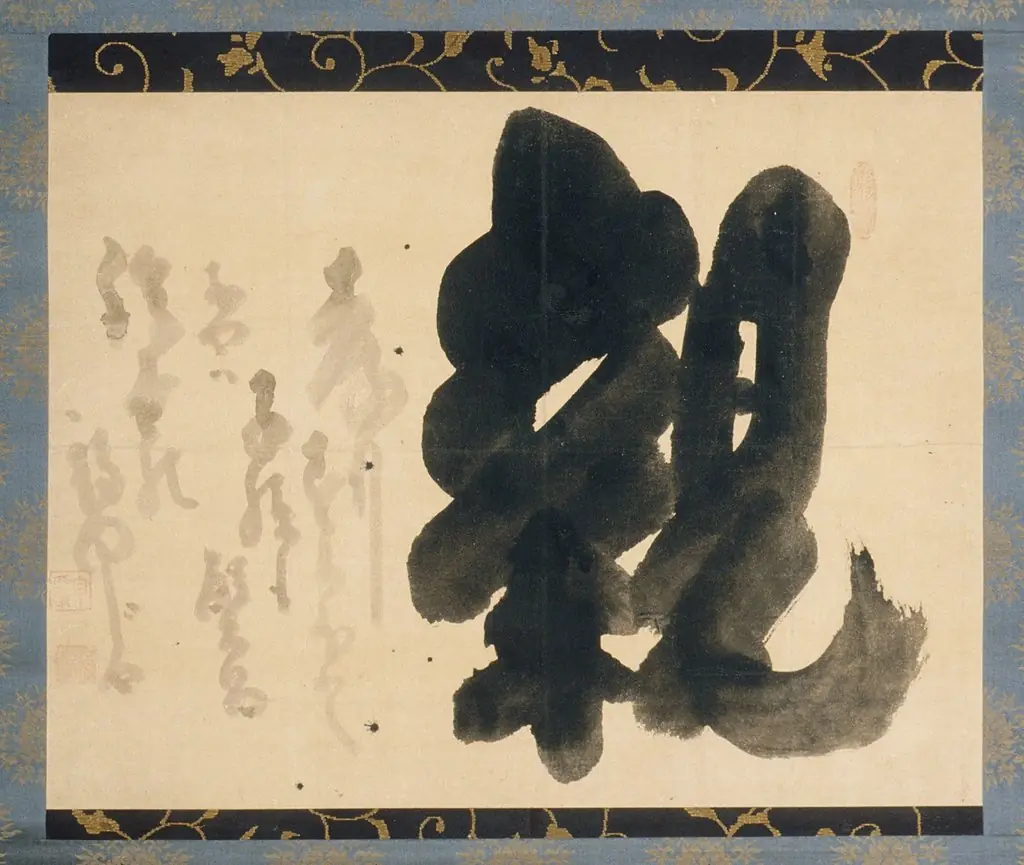 Oyakōkō: Love for One's Parents
 Landscape