Artwork
Album of Calligraphy and Paintings
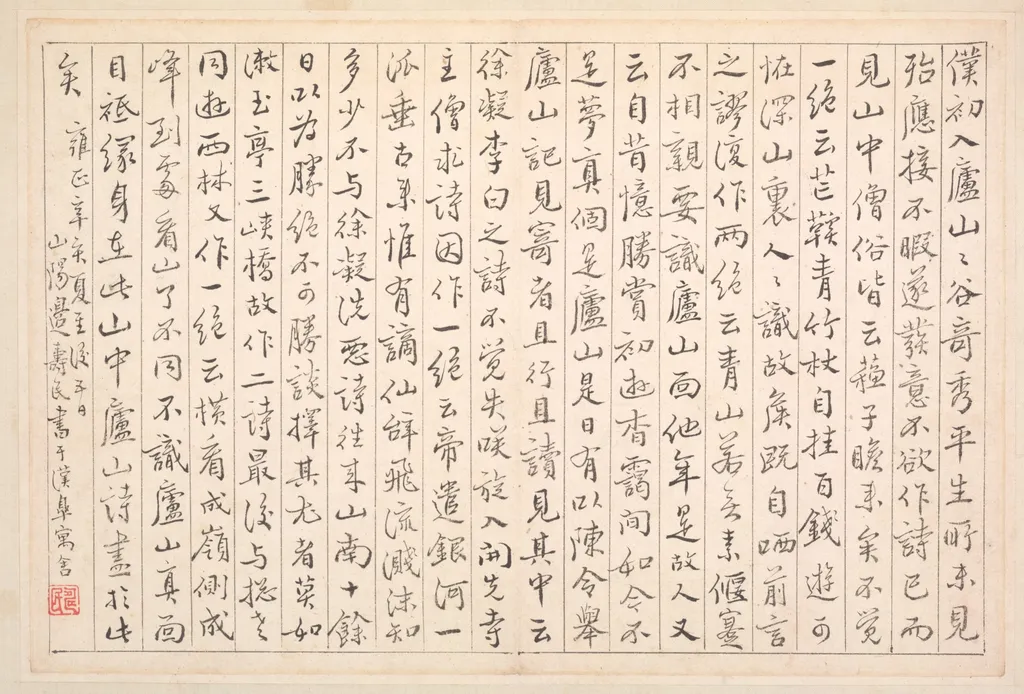
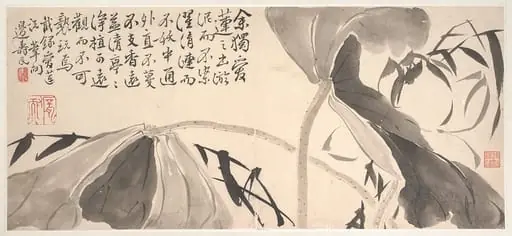
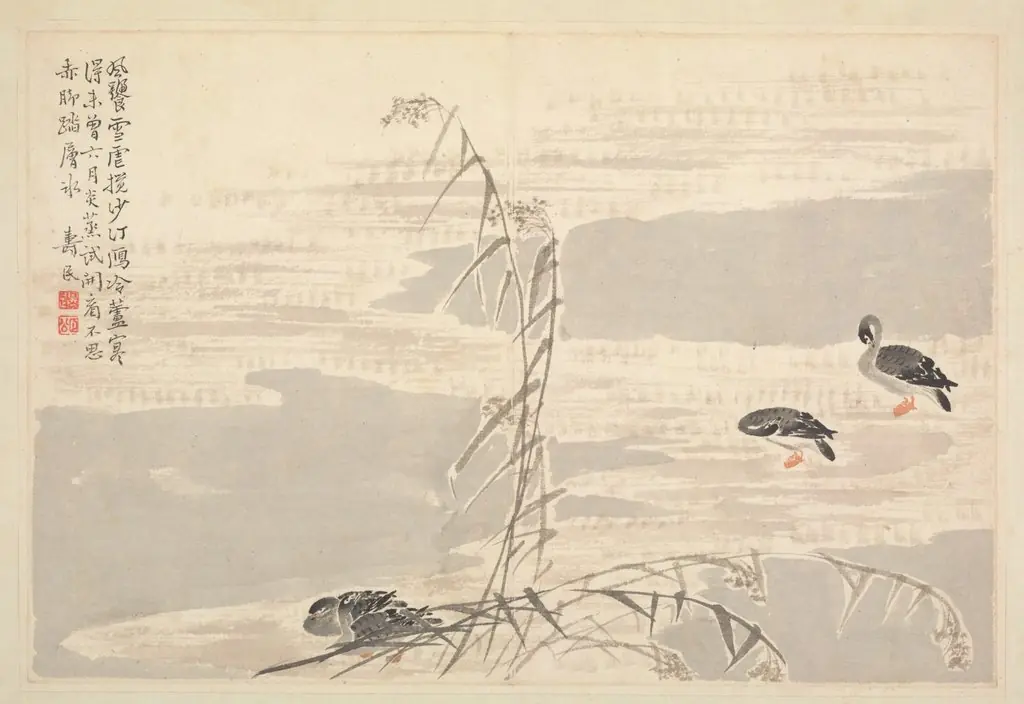
Album of Calligraphy and Paintings is an unspecified painting by the Qing dynasty painting artist Bian Shoumin. It dates from 1726 and is held in the collection of the Cleveland Museum of Art.
About this work
History & Provenance
The album represents a significant example of Bian Shoumin's calligraphy and painting practice from the early eighteenth century.
Created in 1726 in China, the Album of Calligraphy and Paintings is an artwork by the Chinese artist Bian Shoumin (1684–1752). The work was produced during the Qing dynasty, with its inception dated specifically to January 1, 1726. It is currently held in the collection of the Cleveland Museum of Art, where it is cataloged under the accession number 1999.260.e.
The album represents a significant example of Bian Shoumin's calligraphy and painting practice from the early eighteenth century.
The Album of Calligraphy and Paintings by Bian Shoumin is held in the collection of the Cleveland Museum of Art, where it is recorded under the accession number 1999.260.e.
The work has no recorded exhibition history in the provided sources.
Legacy
The album established a precedent for integrating calligraphic spontaneity with pictorial narrative in Qing dynasty painting circles. Its compositional strategies influenced subsequent album painters who adopted Bian Shoumin's fluid brushwork to convey seasonal themes, a technique documented in mid-19th century studio manuals. The work's preservation at the Cleveland Museum of Art has facilitated scholarly analysis of its material execution, cited in conservation studies from 2018.
Overview
The piece titled Album of Calligraphy and Paintings is a handwritten work dating from 1726. Executed by the Chinese artist Bian Shoumin, it now forms part of the collection of the Cleveland Museum of Art. The album combines textual and visual elements typical of literati culture in the early eighteenth century.
Subject & Meaning
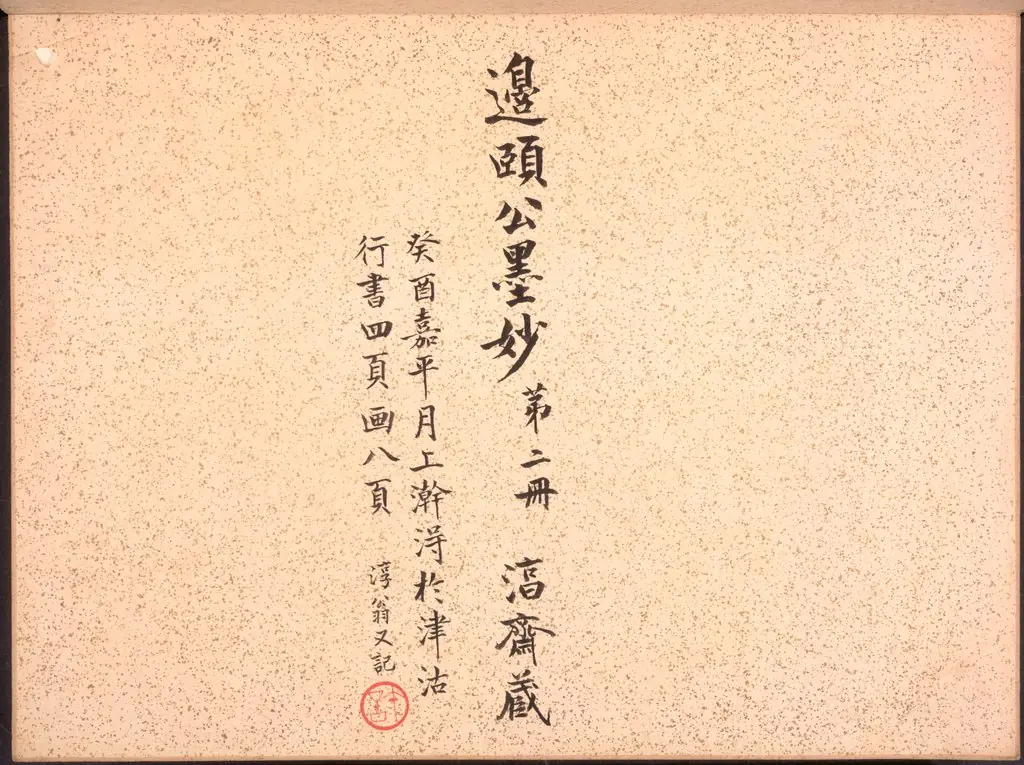
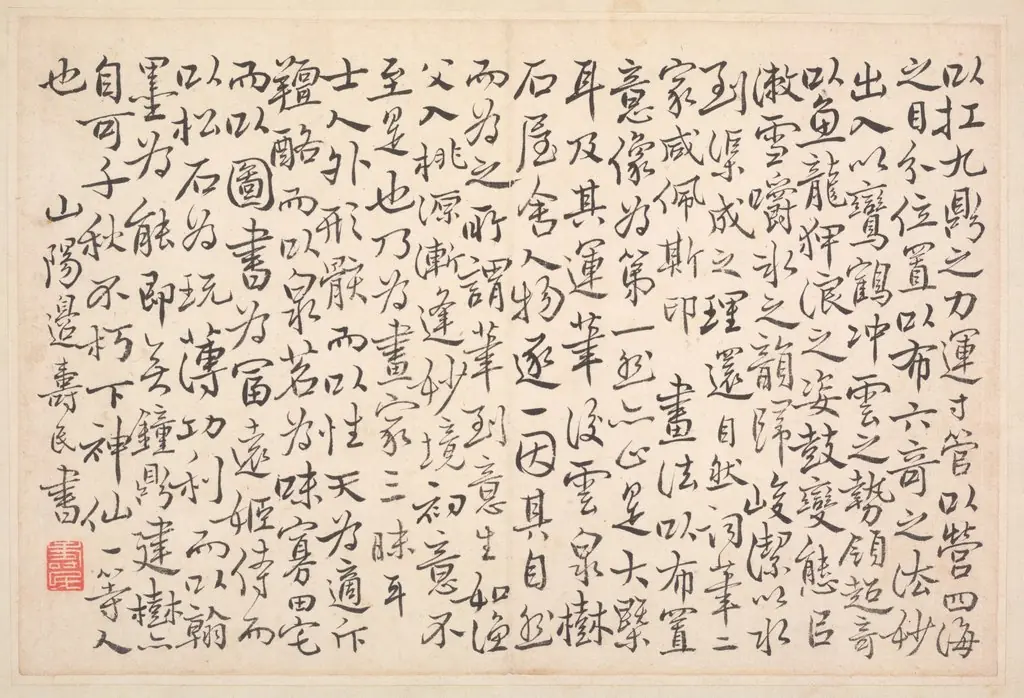
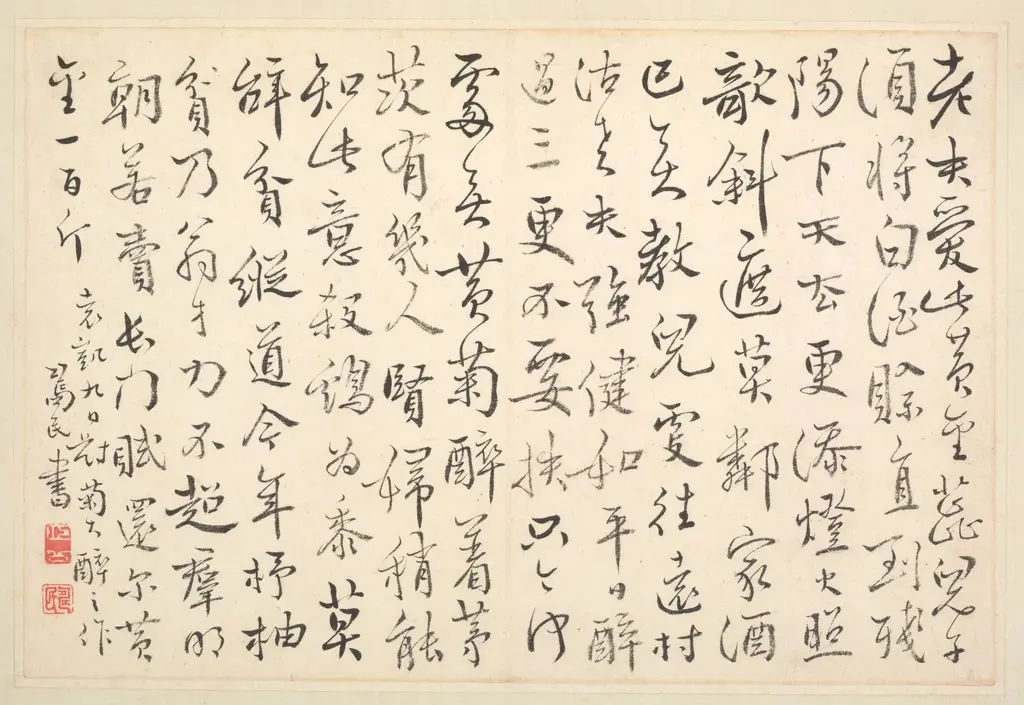
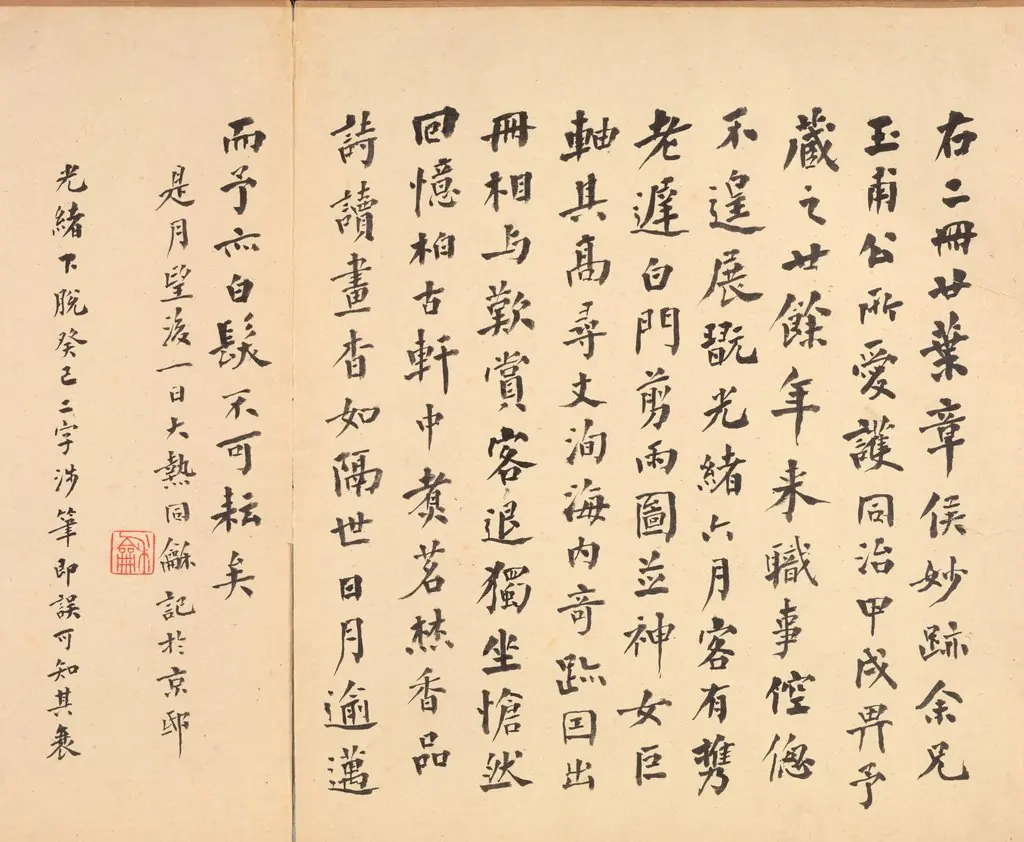
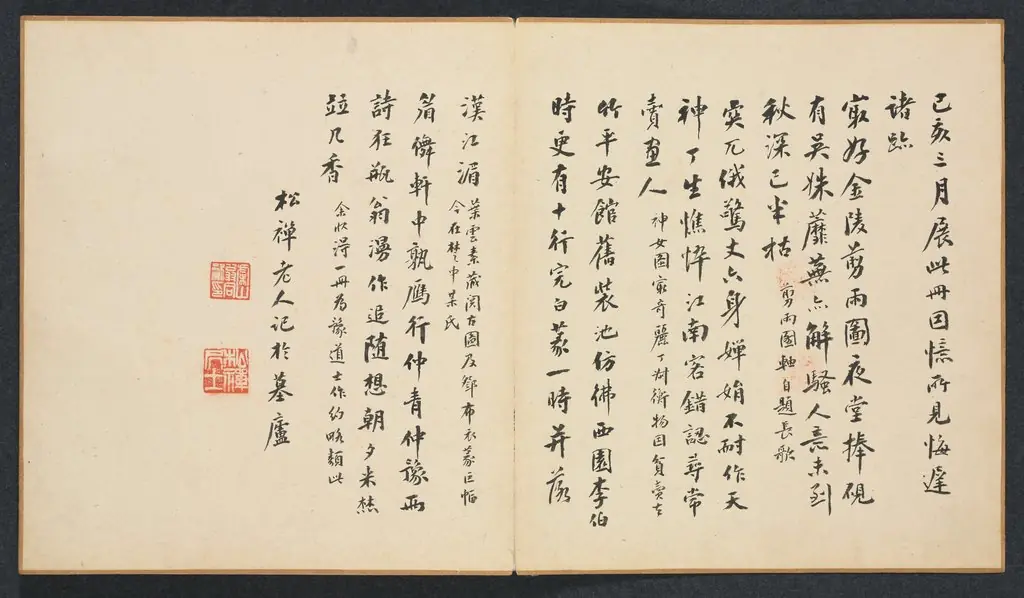
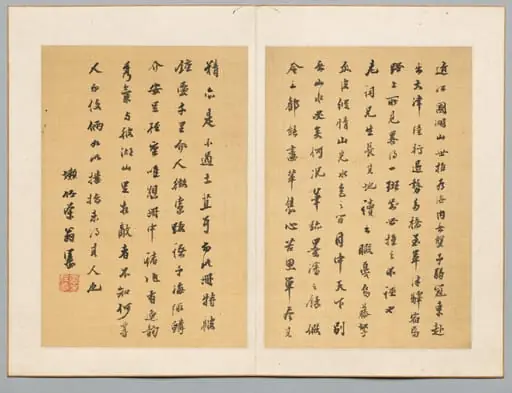
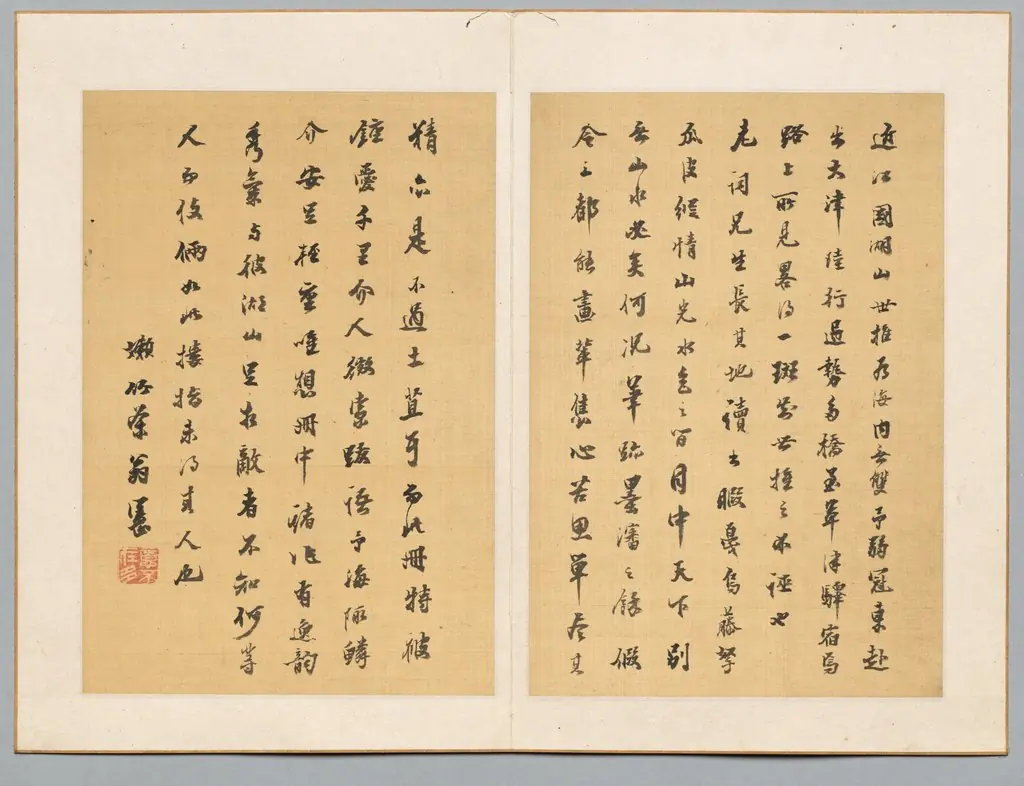
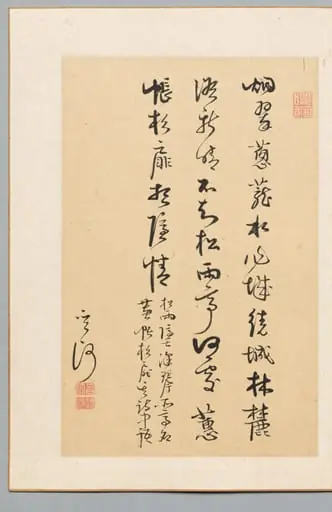
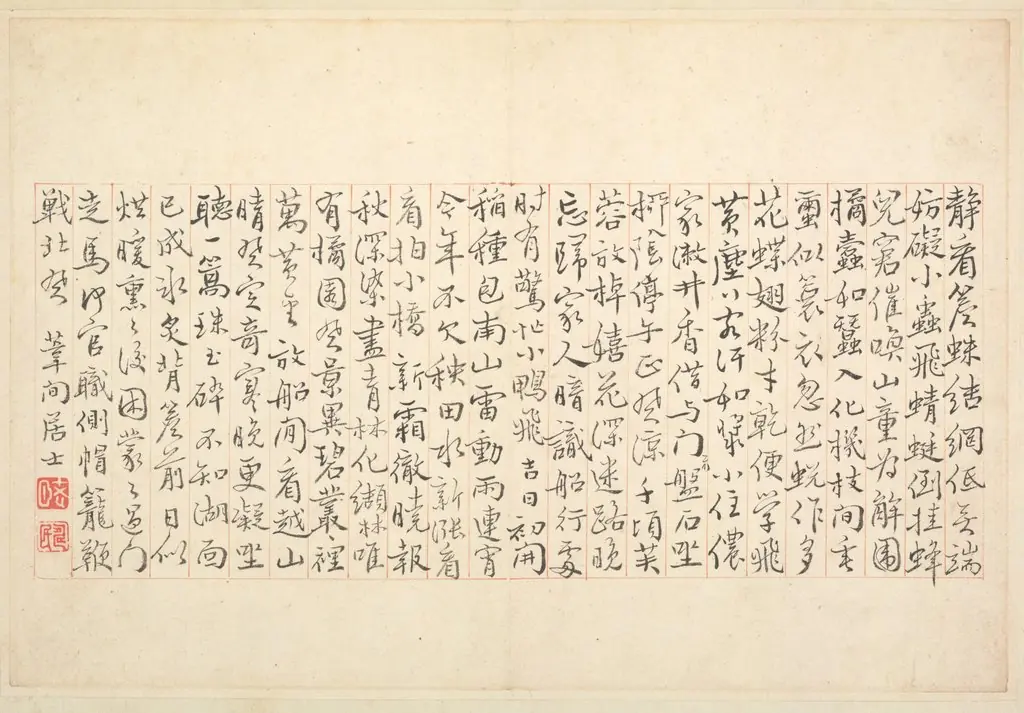
The work consists primarily of Chinese characters rendered in ink, arranged in tightly packed rows. The variation in size and boldness of certain characters suggests emphasis or hierarchy within the text, while the inclusion of red seals at the lower left indicates authentication or personal annotation by the creator.
Technique & Style
Bian Shoumin employed black ink on a light paper surface, a standard medium for calligraphic practice. The dense script demonstrates a controlled brushwork technique, with occasional larger strokes that create visual contrast. The red stamps, applied with cinnabar paste, serve both decorative and documentary functions.
Context
In the early eighteenth century, Chinese scholar-artists often compiled albums that merged poetry, prose, and painting, reflecting personal cultivation and intellectual exchange. Bian Shoumin, known for his calligraphic skill, contributed to this tradition, using the album format to showcase his mastery of script alongside visual motifs.
Own this work as a print
Artist & collection