Artwork
Untitled
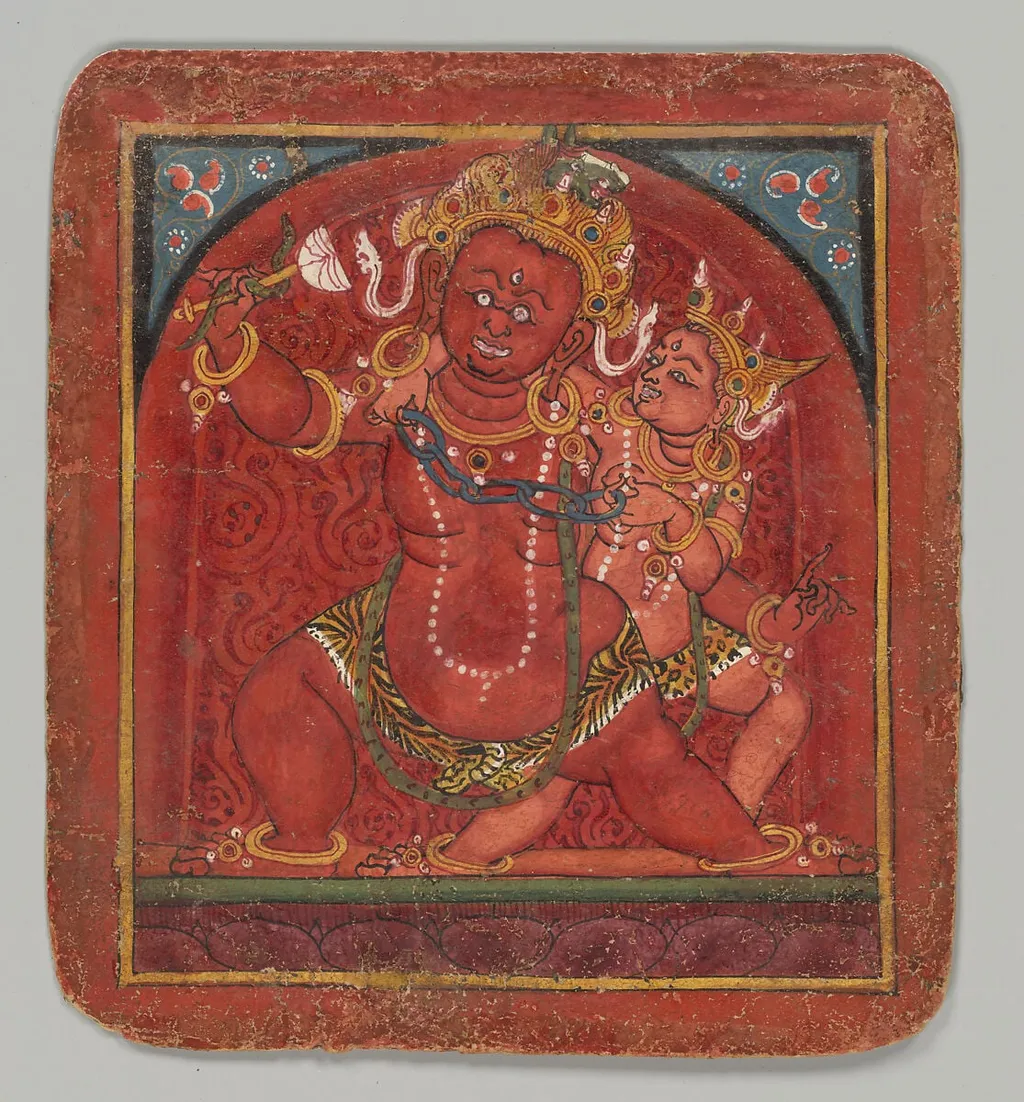
Untitled is a watercolor painting. It dates from 1416 and is held in the collection of the Metropolitan Museum of Art.
About this work
Technique & Style
Created in 1416 by an anonymous artist, this religious work is executed in opaque watercolor on paper. The painting measures 16 cm in height and 14.5 cm in width. As a piece classified within the paintings genre, its formal qualities are defined by the application of pigment to a paper support, characteristic of manuscript illumination or devotional sheets from the early fifteenth century.
History & Provenance
The Untitled work, dated 1416 and executed in opaque watercolor on paper, is held in the collection of the Metropolitan Museum of Art.
The opaque watercolor on paper was created in 1416 by an anonymous painter working within a religious tradition. The work is held in the collection of the Metropolitan Museum of Art, where it remains on view in the institution's holdings. No further details regarding commission, intermediate ownership, or chain of custody prior to the Metropolitan Museum's acquisition are documented in the available sources.
The Untitled work, dated 1416 and executed in opaque watercolor on paper, is held in the collection of the Metropolitan Museum of Art. The painting, classified as a religious work by an anonymous artist, has a recorded height of 16 and width of 14.5. No specific inventory or accession number is documented in the available sources, and no exhibition history has been recorded.
Overview
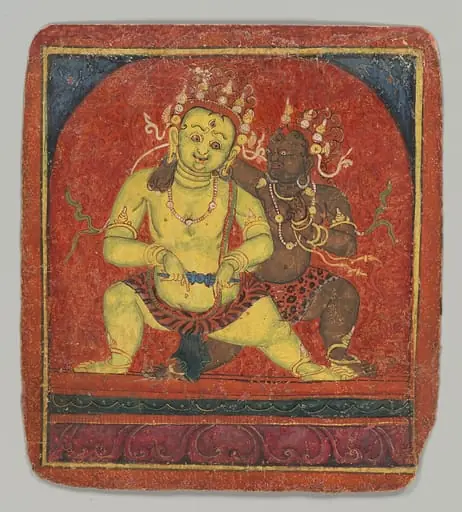
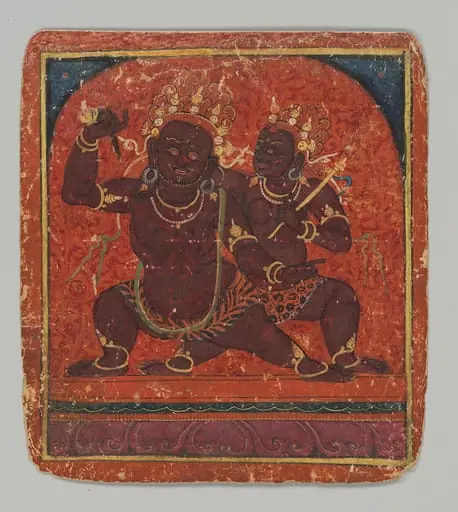
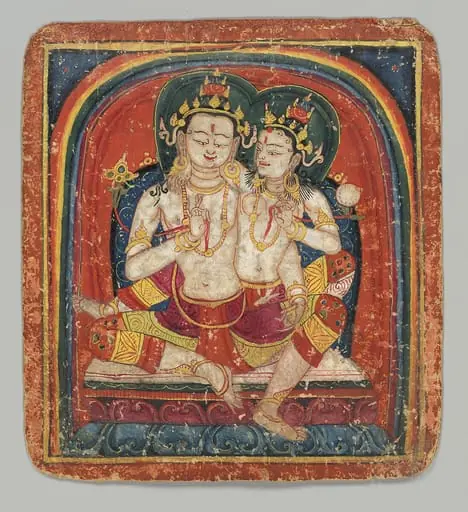
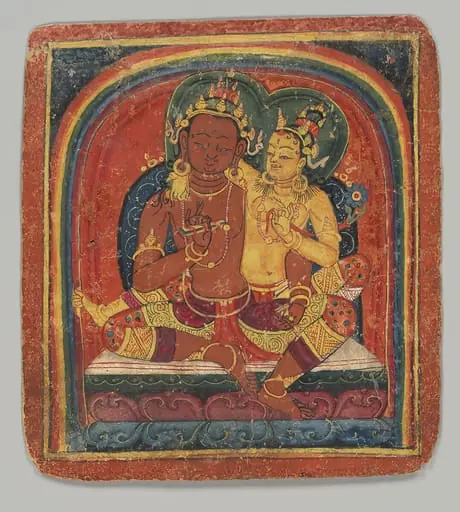
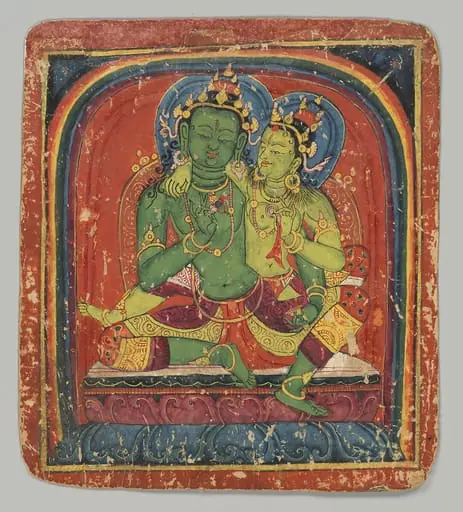
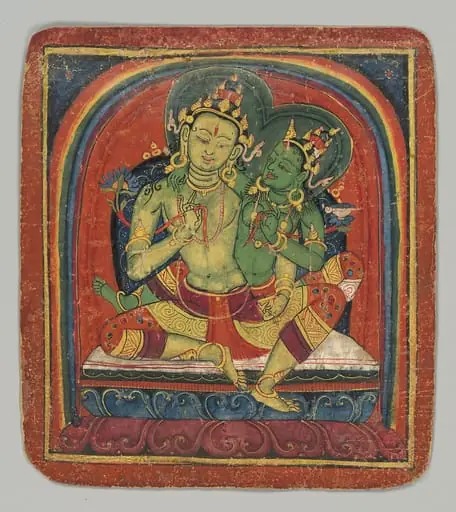
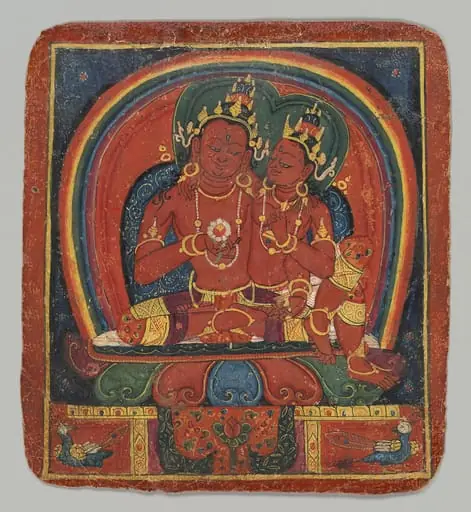
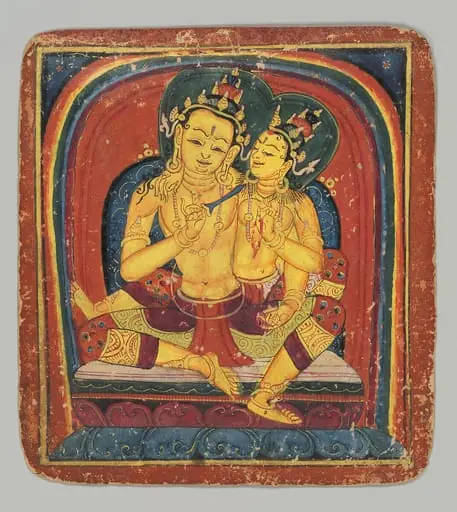
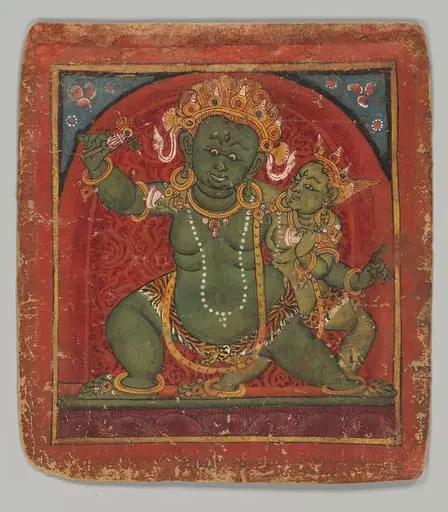
This untitled painting, rendered in opaque watercolor on paper, presents two stylized figures. Both possess red skin, large round eyes, and curly hair, their expressions marked by smiles. Adorned with intricate gold patterns and jeweled, pointed crowns, the figures convey a sense of regality.
One figure holds a chain, while the other grasps a curved object, set against a predominantly red background with swirling blue and gold accents in the upper corners.
Subject & Meaning
The two central figures, distinguished by their red complexions and elaborate attire, suggest a symbolic rather than literal representation. Their tall, pointed crowns, encrusted with jewels, along with the golden patterns adorning their bodies, imply status or divine significance. The objects they hold, a chain and a curved form, further contribute to their enigmatic presence, hinting at specific roles or narratives within their cultural context.
Artist & collection