Artwork
釈迦三尊像|Shaka (Shakyamuni) Triad
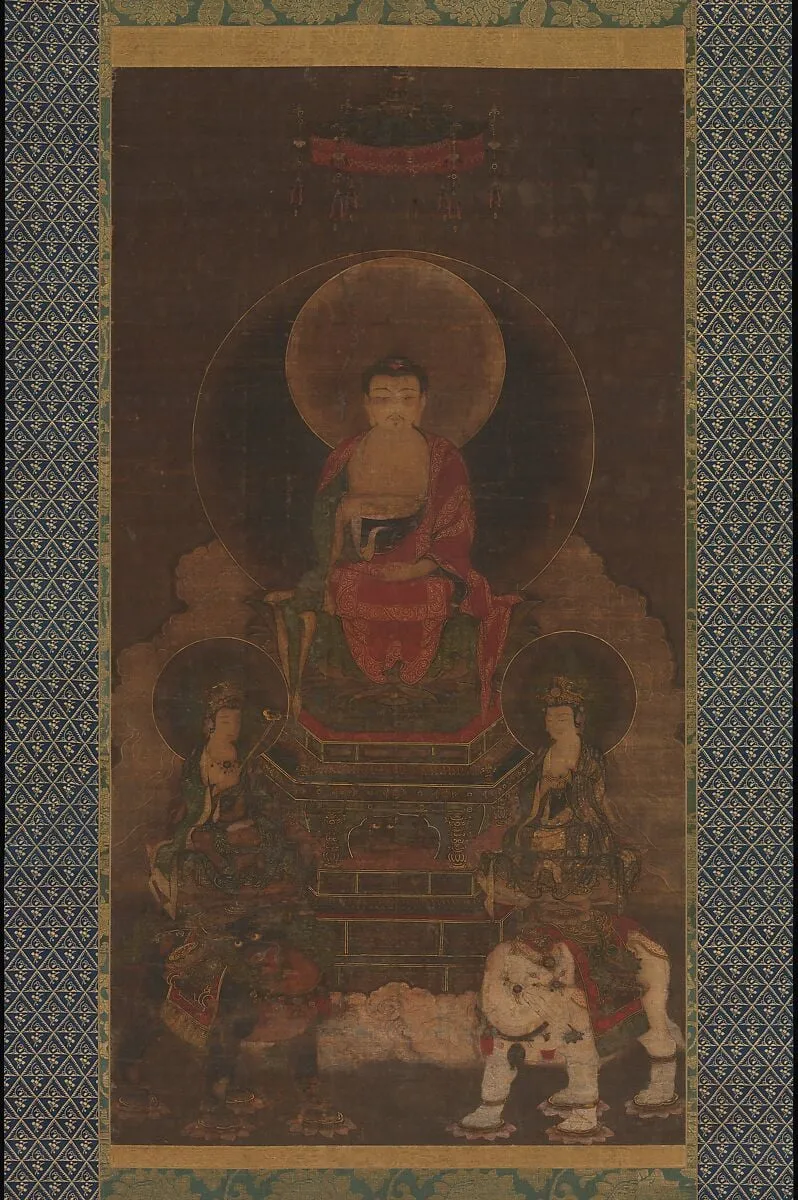
釈迦三尊像|Shaka (Shakyamuni) Triad is an ink painting. It dates from 1249 and is held in the collection of the Metropolitan Museum of Art. This 13th-century Japanese hanging scroll depicts the Shaka Triad, a fundamental Buddhist iconographic group.
About this work
Subject & Meaning
One attendant is identifiable as Mañjuśrī, the bodhisattva of wisdom, who is often accompanied by a lion, an attribute recorded in the imagery.
The work depicts the historical Buddha Shakyamuni (Shaka) in a triad format, flanked by two bodhisattva attendants. One attendant is identifiable as Mañjuśrī, the bodhisattva of wisdom, who is often accompanied by a lion, an attribute recorded in the imagery. The lion symbolizes Mañjuśrī's role in vanquishing ignorance.
As a Buddhist devotional painting dated to 1249, the triad represents the compassionate teaching of Shakyamuni and the hierarchical assembly of enlightened beings, a common iconographic scheme in Kamakura-period Buddhist art. The subject thus conveys core Mahayana concepts of wisdom, compassion, and the historical Buddha as a guide to enlightenment.
Technique & Style
The Shaka Triad is an ink, color, and gold painting on silk, mounted as a hanging scroll. This format and material combination reflect the refined courtly Buddhist painting tradition of the Kamakura period, with the use of precious gold and layered pigments indicating a work of high status. No information on handling or condition is provided in the sources.
History & Provenance
The Shaka Triad was created in 1249, dating to the Kamakura period in Japan. The artist remains unknown. The painting is held in the collection of the Metropolitan Museum of Art. No further details about its commission or ownership history are recorded in the available sources.
Overview
This 13th-century Japanese hanging scroll depicts the Shaka Triad, a fundamental Buddhist iconographic group. Rendered in ink, color, and gold on silk, the anonymous Kamakura-period artist presents the enlightened Buddha Shaka centrally, flanked by two bodhisattvas. This significant work, now in the Metropolitan Museum of Art, exemplifies the artistic and religious currents of its era, showcasing a renewed focus on foundational Mahayana imagery.
Context
This painting emerged during Japan's Kamakura period, a time marked by significant religious developments. It reflects a broader trend of revitalizing established Buddhist sects and reforming mainstream practices. Patrons and artists during this era demonstrated a renewed interest in foundational Mahayana Buddhist imagery, making works like the Shaka Triad central to expressing the period's spiritual aspirations and doctrinal emphasis.
Artist & collection

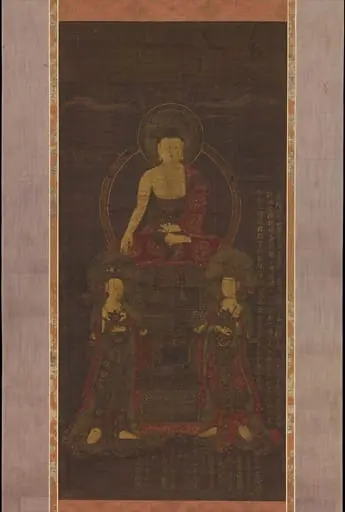
- 석가삼존도 조선|釋迦三尊圖 朝鮮|Shakyamuni triad
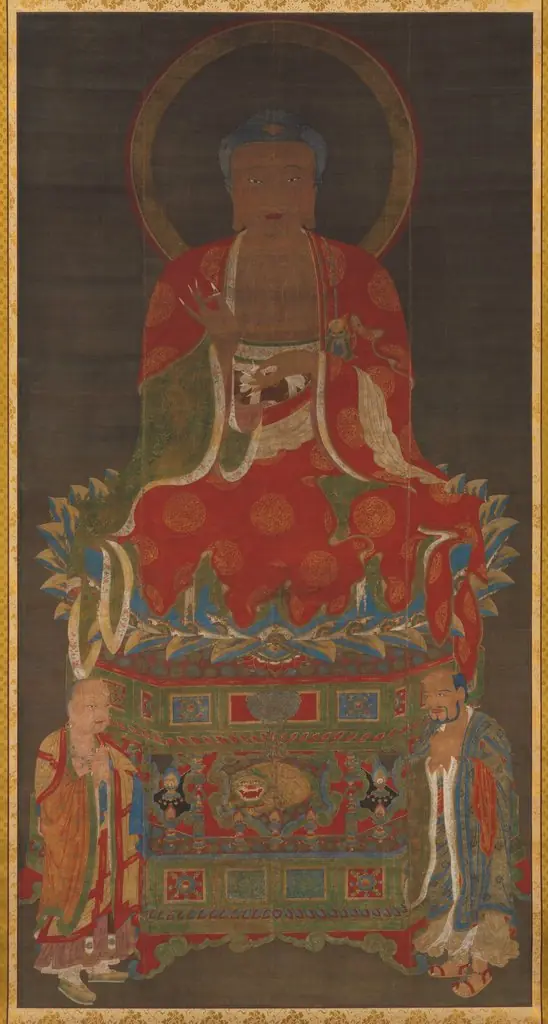 Shakyamuni with two attendants
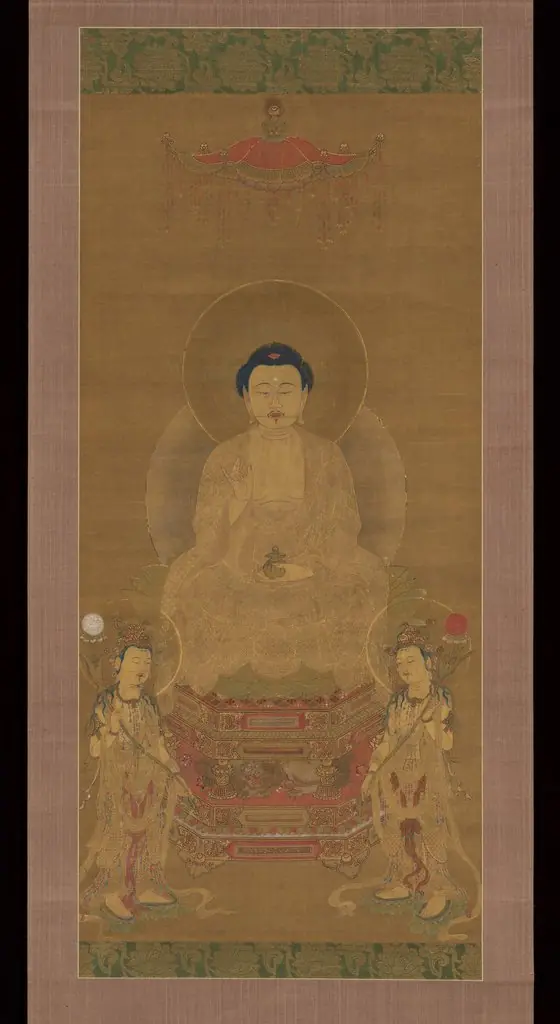 Triad of the Medicine Master Buddha Yakushi (Bhaisajya Buddha)
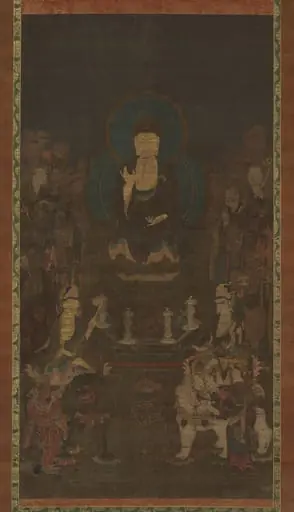 釈迦三尊十大弟子像|Shaka (Shakyamuni), the Historical Buddha, with Two Attendant Bodhisattvas and the Ten Great Disciples
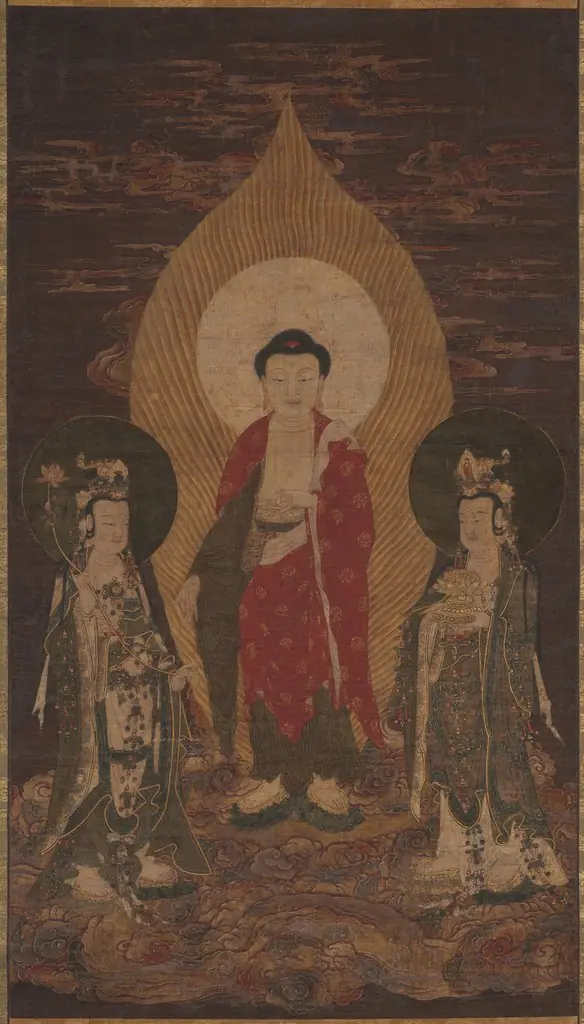 Amitābha Triad
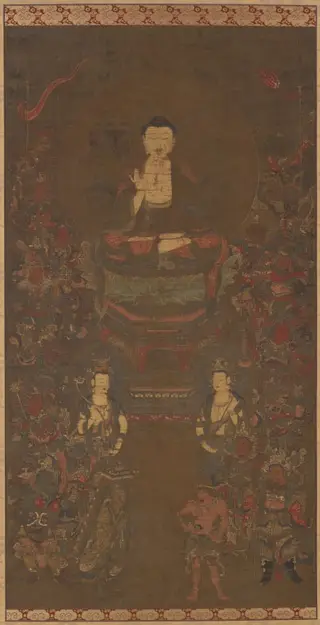 Shakyamuni with the Sixteen Benevolent Deities
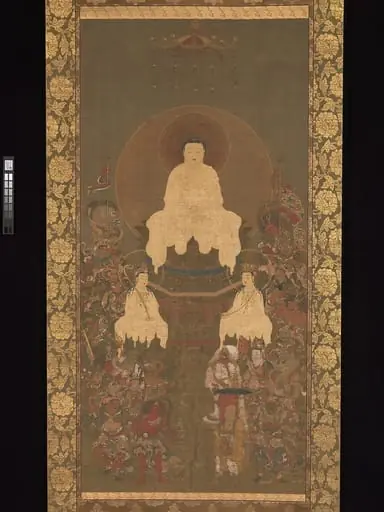 釈迦三尊十六善神像|Shaka (Shakyamuni), the Historical Buddha, with Two Attendant Bodhisattvas and Sixteen Benevolent Deities
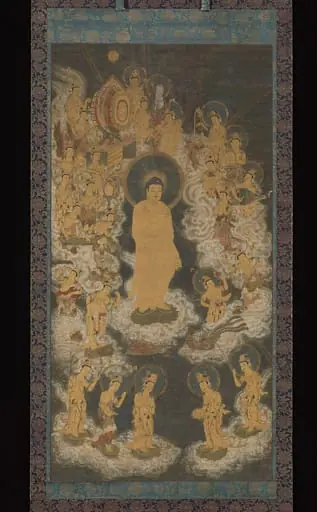 阿弥陀聖衆来迎図 |Welcoming Descent of Amida and Bodhisattvas
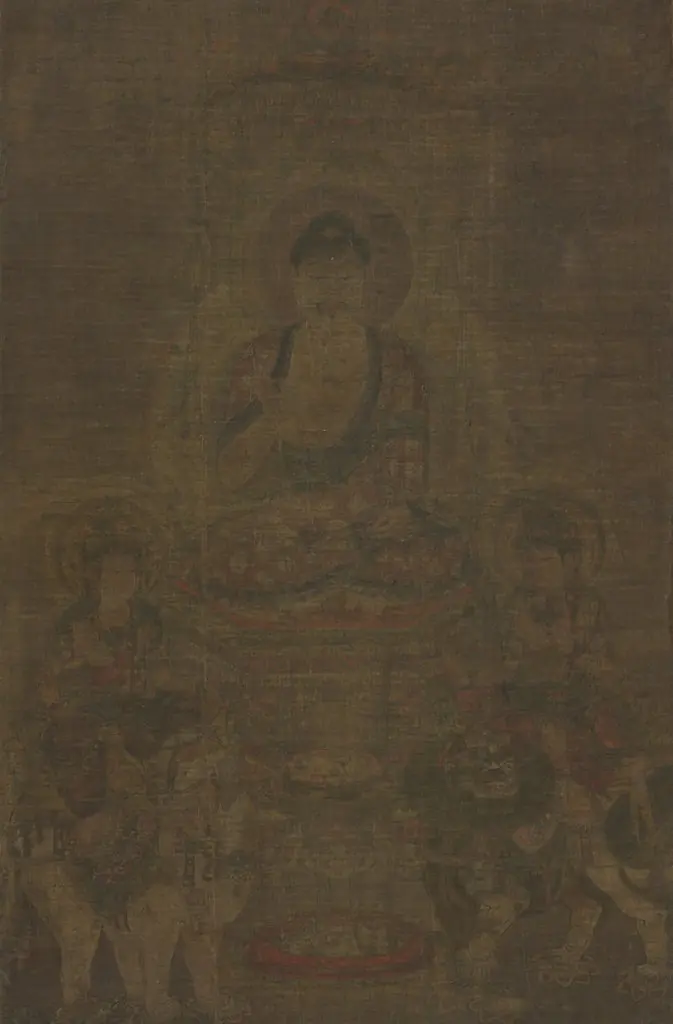 Shakyamuni Triad: Buddha Attended by Manjushri and Samantabhadra
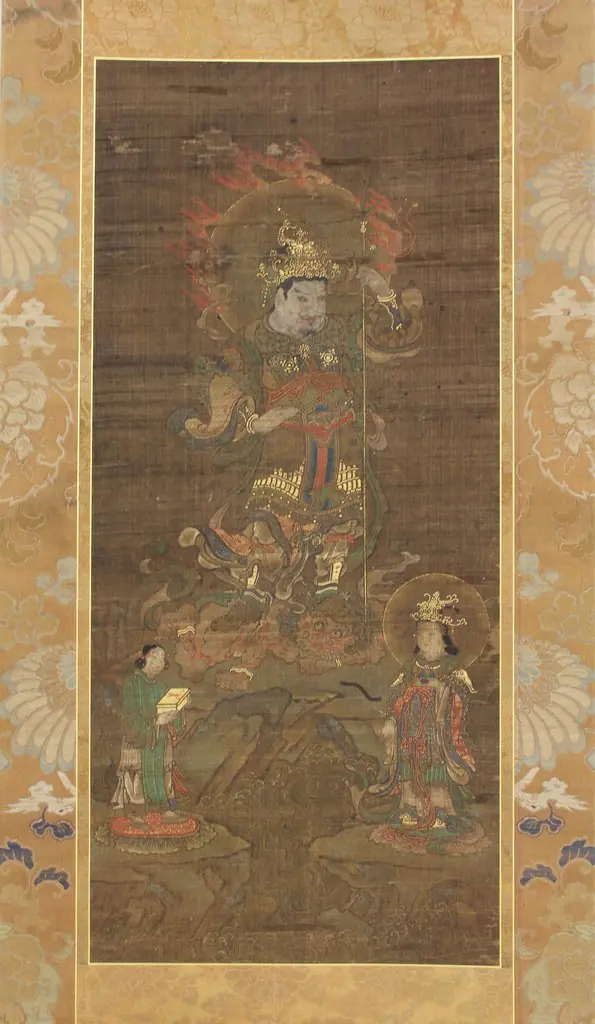 Mount Kurama Mandala: Bishamonten Triad (Kuramayama mandara: Bishamonten sanzonzō)
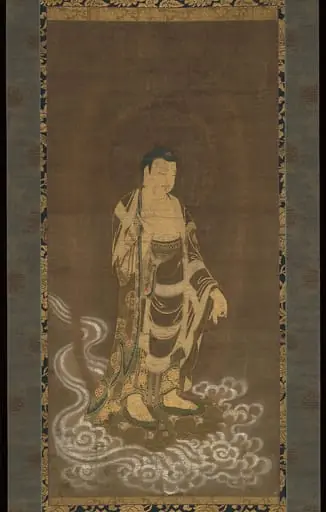 阿弥陀如来像|Welcoming Descent of Amida Buddha
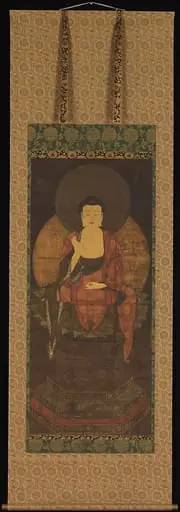 釈迦如来像|Shaka Nyorai
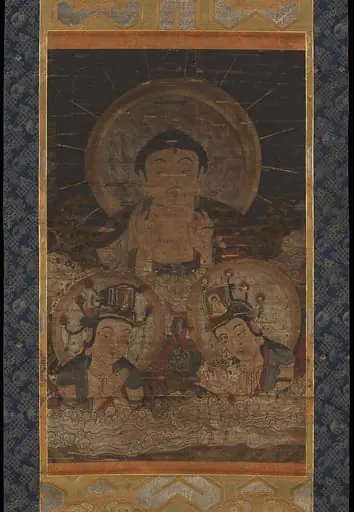 Untitled
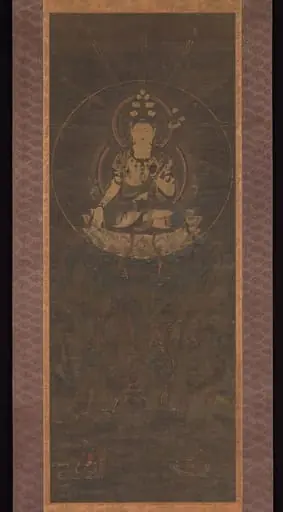 十一面観音影向図|Eleven-Headed Kannon on Mount Fudaraku
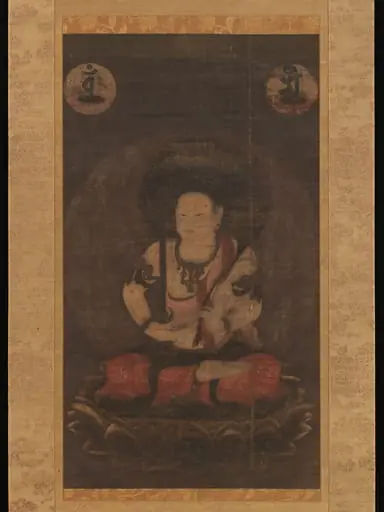 五髻文殊菩薩像|The Bodhisattva Monju (Manjushri) with Five Topknots
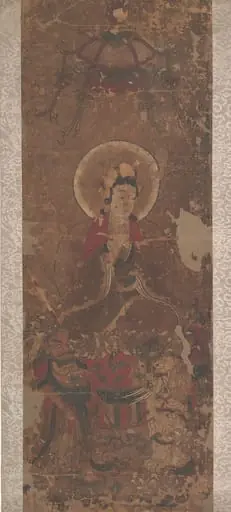 Untitled
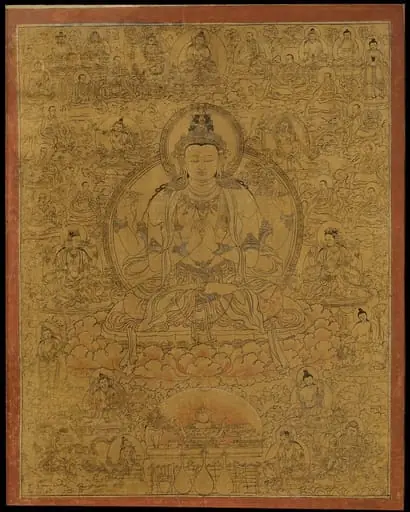 Untitled
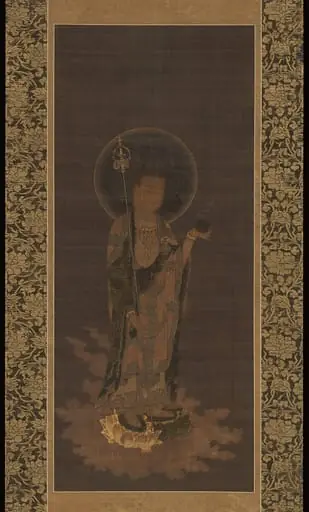 地蔵菩薩来迎図|Welcoming Descent of the Bodhisattva Jizō
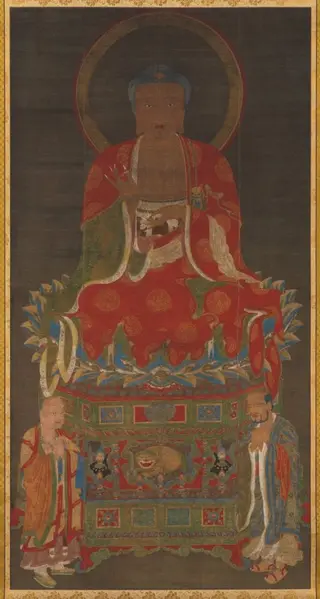 Shakyamuni with two attendants
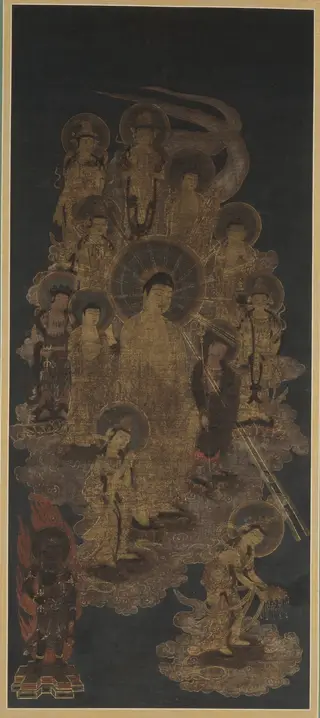 Thirteen Buddhas Welcoming the Dying Believer to the Western Pure Land
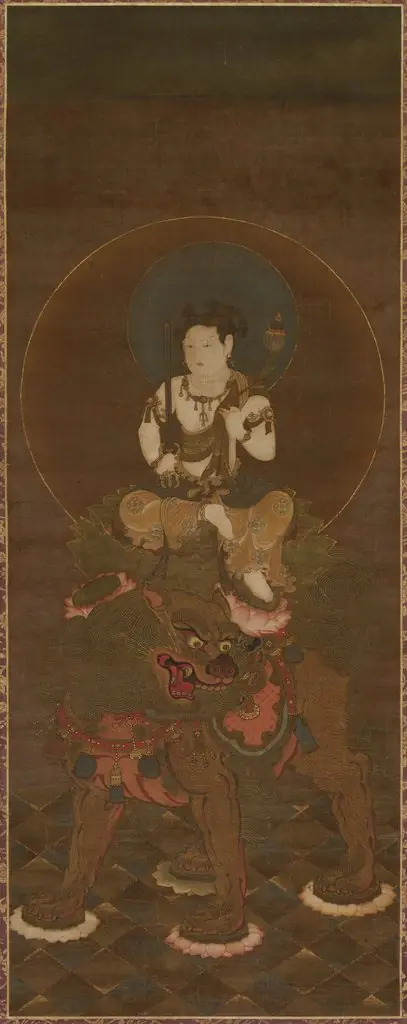 Monju with Five Hair Knots