Artwork
Untitled
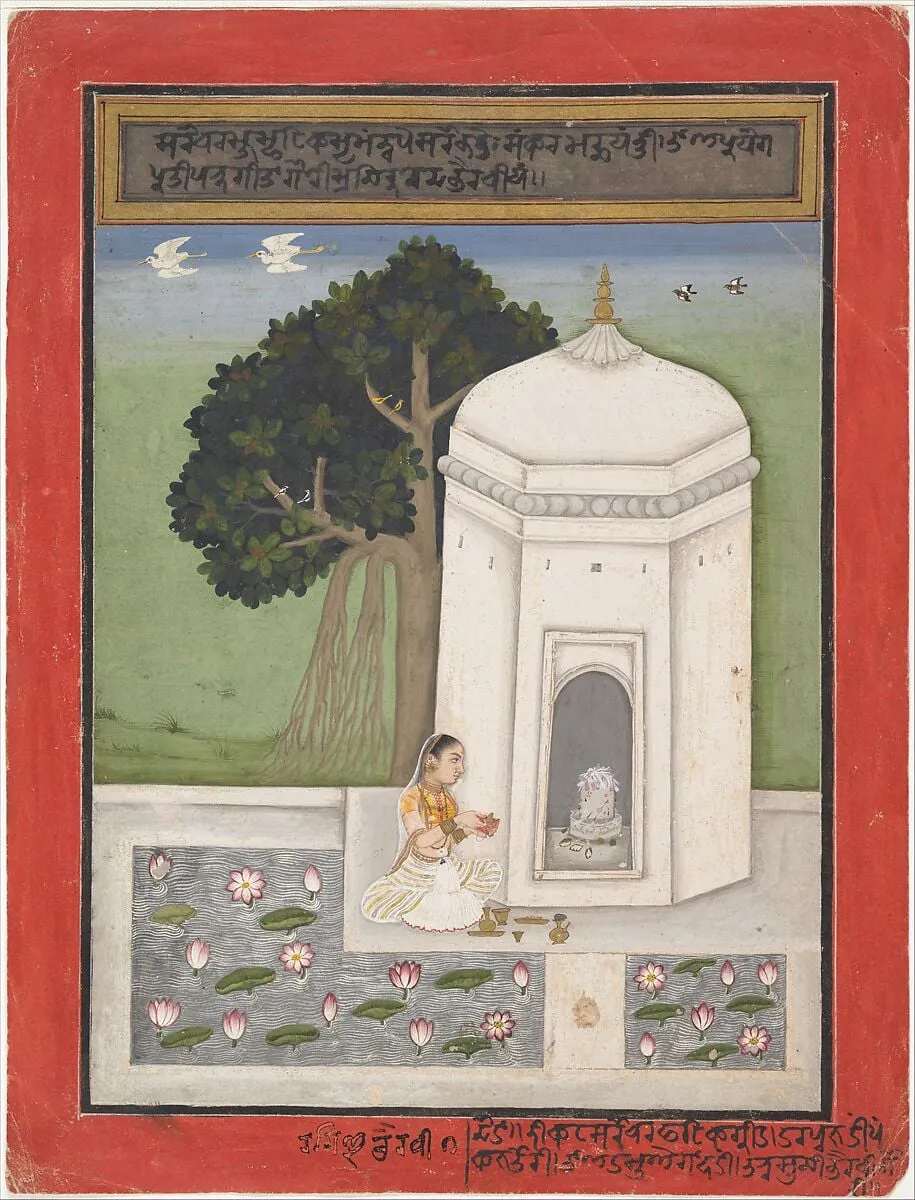
Untitled is a watercolor painting. It dates from 1645 and is held in the collection of the Metropolitan Museum of Art.
About this work
Subject & Meaning
The use of silver and gold further elevates the composition, potentially indicating the subject's high status or the sacred nature of the scene.
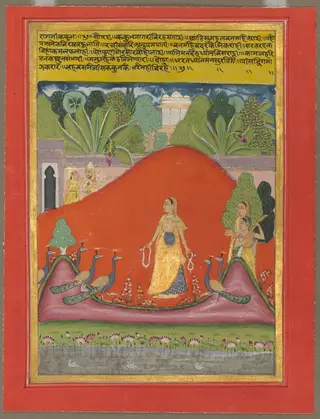
Created in India in 1645, this opaque watercolor portrait features a woman as its central figure, accompanied by a tree and a lotus. The inclusion of the lotus, a flower deeply rooted in South Asian iconography, often symbolizes purity, divine birth, or spiritual enlightenment within the region's artistic traditions. While the specific identity of the woman remains unknown due to the anonymous nature of the work, her depiction alongside these natural elements suggests a thematic connection between the human subject and the spiritual or natural world.
The use of silver and gold further elevates the composition, potentially indicating the subject's high status or the sacred nature of the scene. The work functions as a portrait that transcends mere physical likeness to evoke broader symbolic meanings associated with flora and femininity in seventeenth-century Indian art.
Technique & Style
Created in 1645 in India, this anonymous portrait utilizes opaque watercolor combined with silver, gold, and ink applied to a paper support. The work's formal composition features a female figure situated alongside a tree and a lotus, integrating these natural elements into the depiction. The application of precious metals alongside pigment suggests a refined handling characteristic of the period's regional painting traditions.
As a work on paper, the medium allows for the delicate layering of colors and metallic accents that define its visual texture. The piece is classified within the broader category of paintings, specifically functioning as a portrait that merges human representation with botanical motifs.
History & Provenance
The untitled painting is an opaque watercolor, silver, gold, and ink on paper created by an anonymous artist around 1645 in India. The work entered the collection of the Metropolitan Museum of Art, where it is currently housed. Sources do not record any specific commission or earlier owners, so the known provenance begins with its acquisition by the Met.
The dating is based on the inscription of 1645 and the inception date recorded in the museum’s records.
Overview
This untitled miniature painting, executed with opaque watercolor, silver, gold, and ink on paper, is smaller than a postcard. It presents a woman beside a lotus pond, set against a glowing gold background. Originally created for a royal album in the Himalayan foothills, the artwork showcases the refined artistic practices of its era, employing precious metals to achieve a distinctive shimmering quality.
Context
This painting emerged from the artistic centers of the Himalayan foothills, intended as an integral part of a royal album. Such albums were esteemed possessions in princely states, including regions like Mandi in Himachal Pradesh, serving as curated collections of fine miniature works. These pieces provided intimate visual narratives and artistic expressions, reflecting the cultural and aesthetic preferences of their royal patrons.
Artist & collection

- Untitled
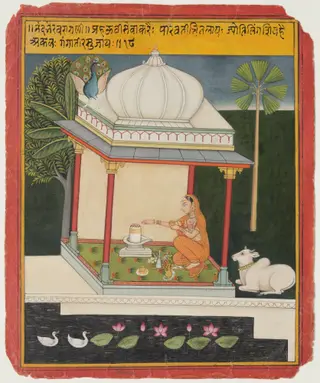 Princess Worshipping Lingami
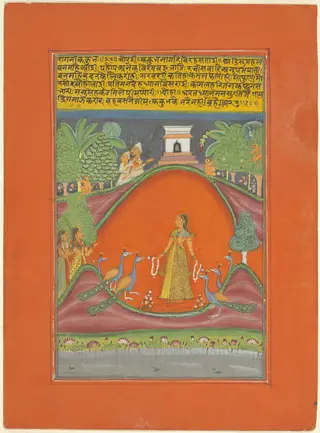 Ragini Kakubha, Page from a Jaipur Ragamala Set
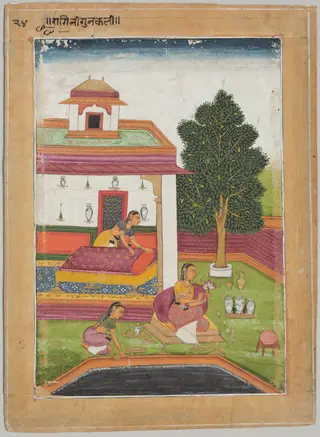 Illustration to the Musical Mode Malasari Ragini
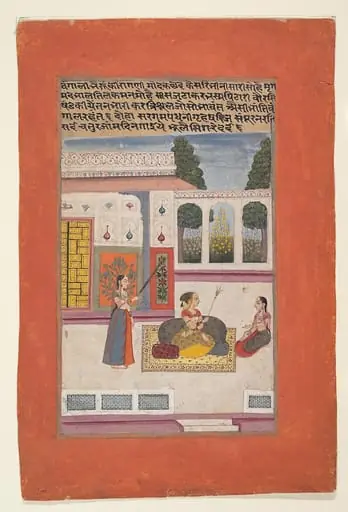 Untitled
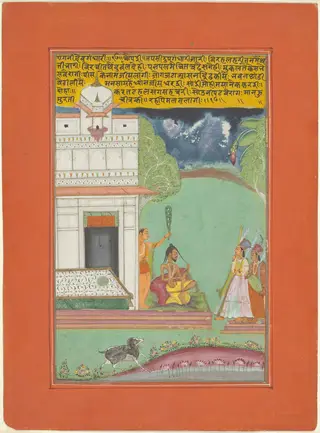 Ragini Devagandhari, Page from a Jaipur Ragamala Set
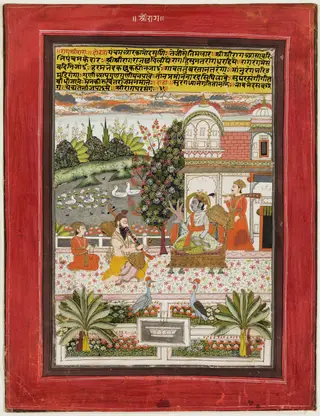 Krishna with Guru in Palace Scene
 Untitled
 The Month of Jyeshtha (May-June), from a manuscript of the Barahmasa ("Twelve Months")
 Rati, the Goddess of Erotic Love, Takes Aim at Krishna, from a Rasikapriya
 Vilaval Ragini
 Kakubha Ragini