Artwork
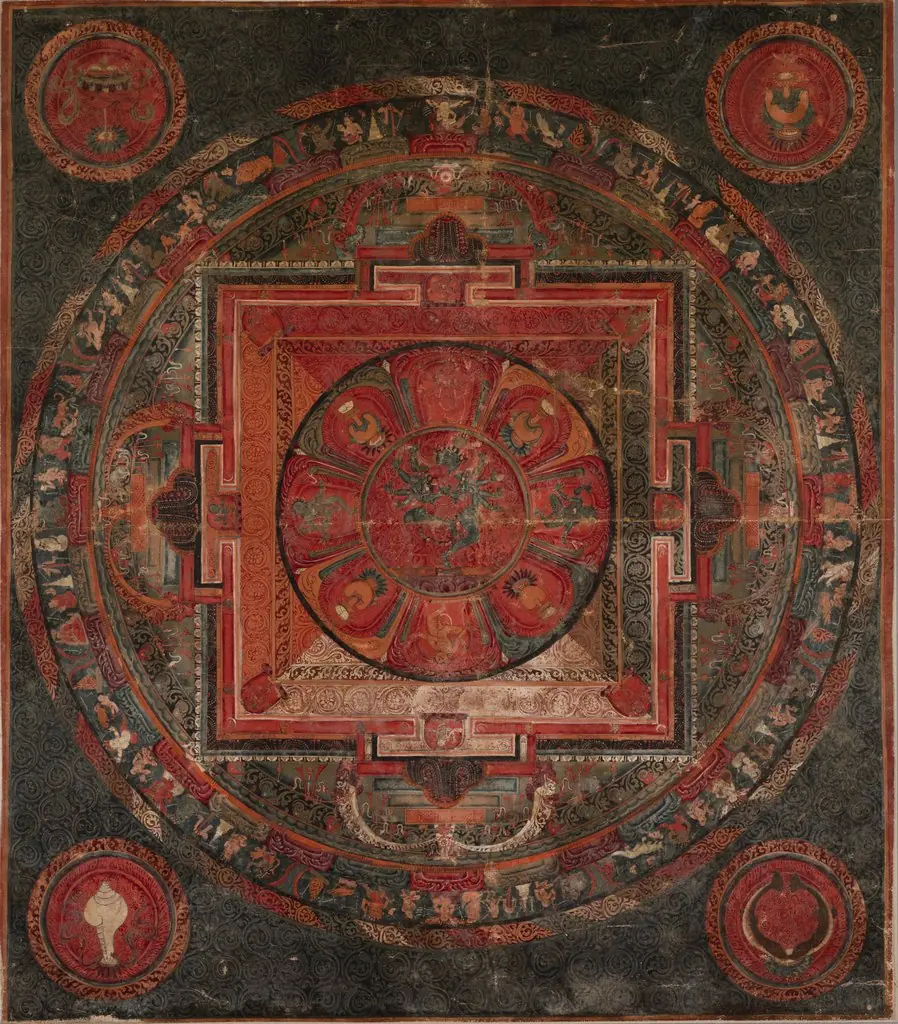
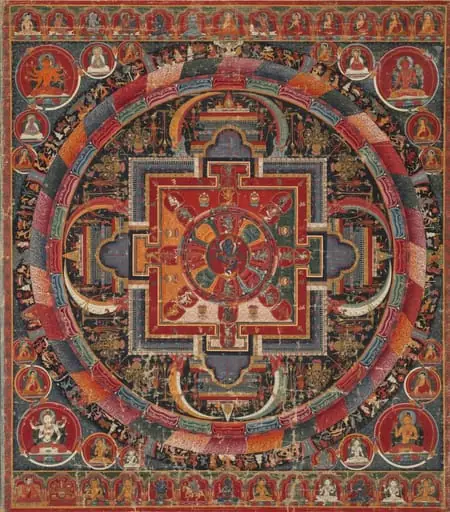
Mandala of Chakrasamvara and Vajravarahi
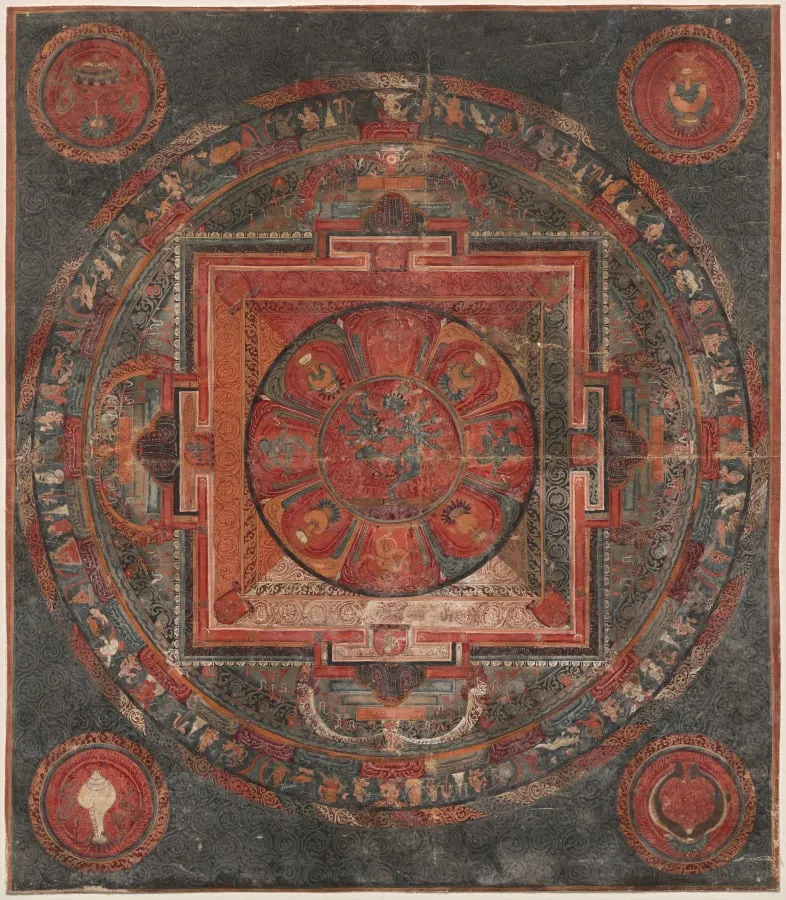
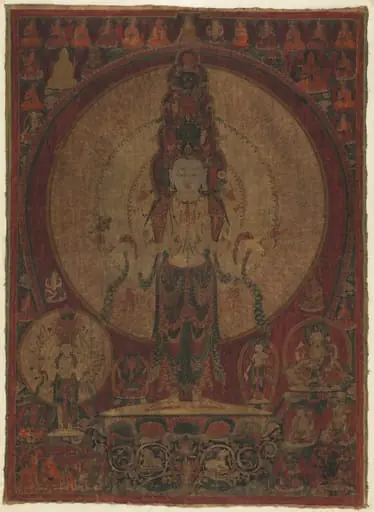
Mandala of Chakrasamvara and Vajravarahi is an unspecified painting by the Renaissance artist Unknown. It dates from 1404 and is held in the collection of the Cleveland Museum of Art.
- Accession no.
- 1960.211
- Credit line
- James Parmelee Fund
About this work
Overview
This painting is a mandala, a diagrammatic representation of a palace-like structure viewed from above, used as a tool for meditation in tantric Buddhism.
Subject & Meaning
The mandala depicts Chakrasamvara, a four-headed, 12-armed deity, in union with his consort Vajravarahi, symbolizing the attainment of enlightenment through the visualization of sacred spaces and overcoming fear of death.
Technique & Style
The painting is characterized by intricate details and vibrant colors, featuring numerous figures and symbols arranged in a complex circular composition.
Context
As an aid to meditation, the mandala's various gates and levels represent stages in the practitioner's mental journey toward enlightenment.
Artist & collection









 Mandala of Chakrasamvara and Vajravarahi
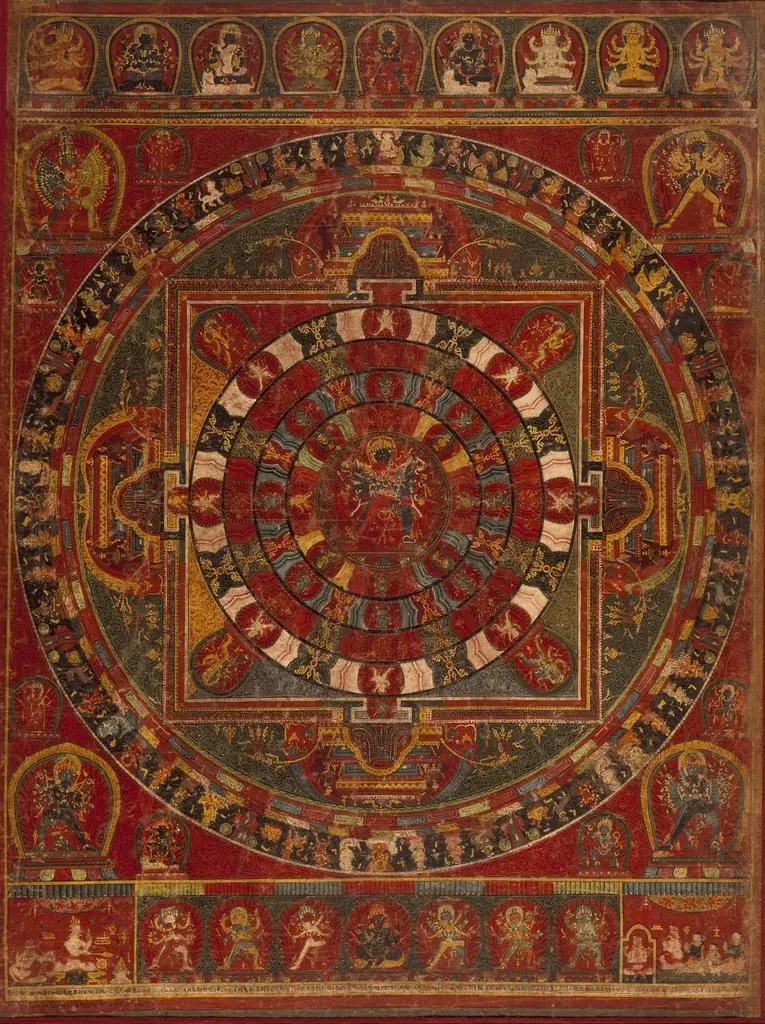 Mandala of the Buddhist Deity Chakrasamvara
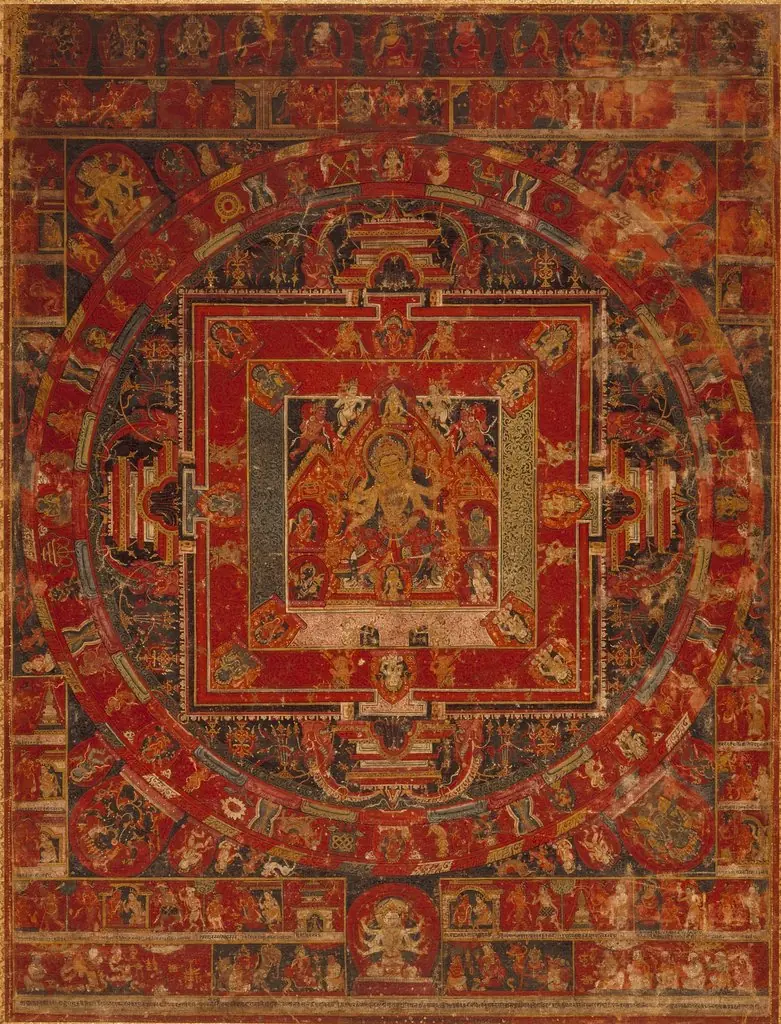 Mandala of Vasudhara
 Twenty-three Deity Nairatma Mandala
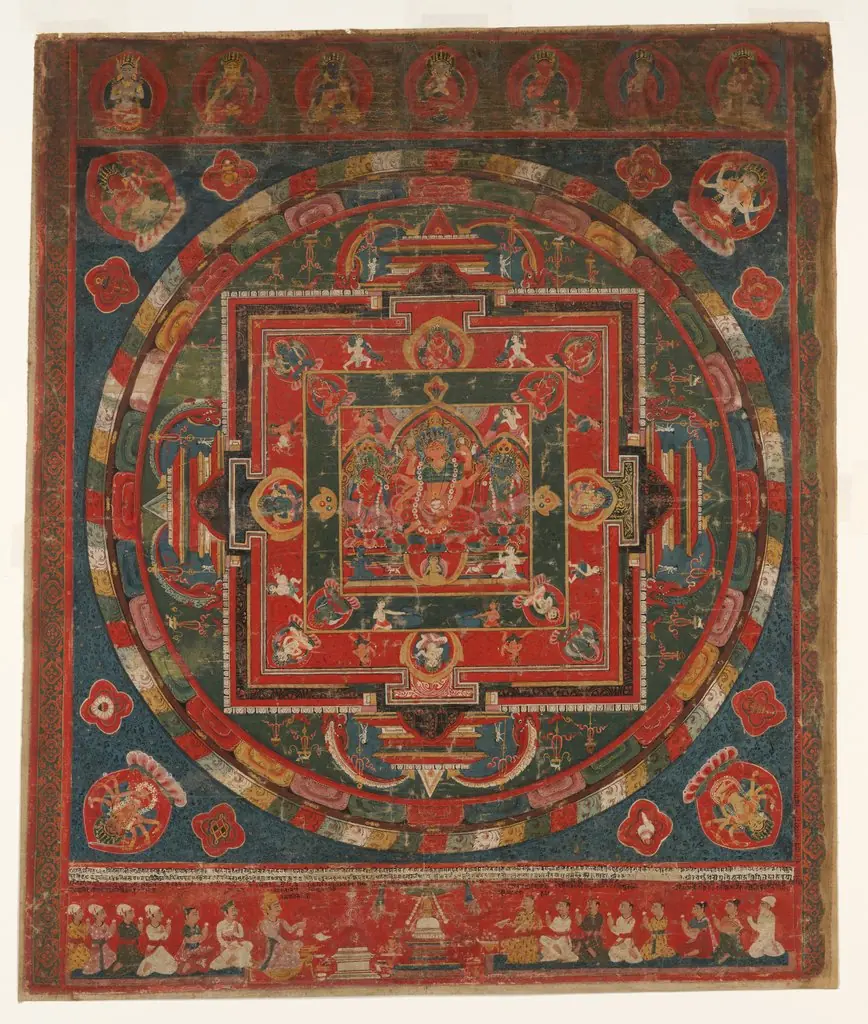 Vasudhara Mandala
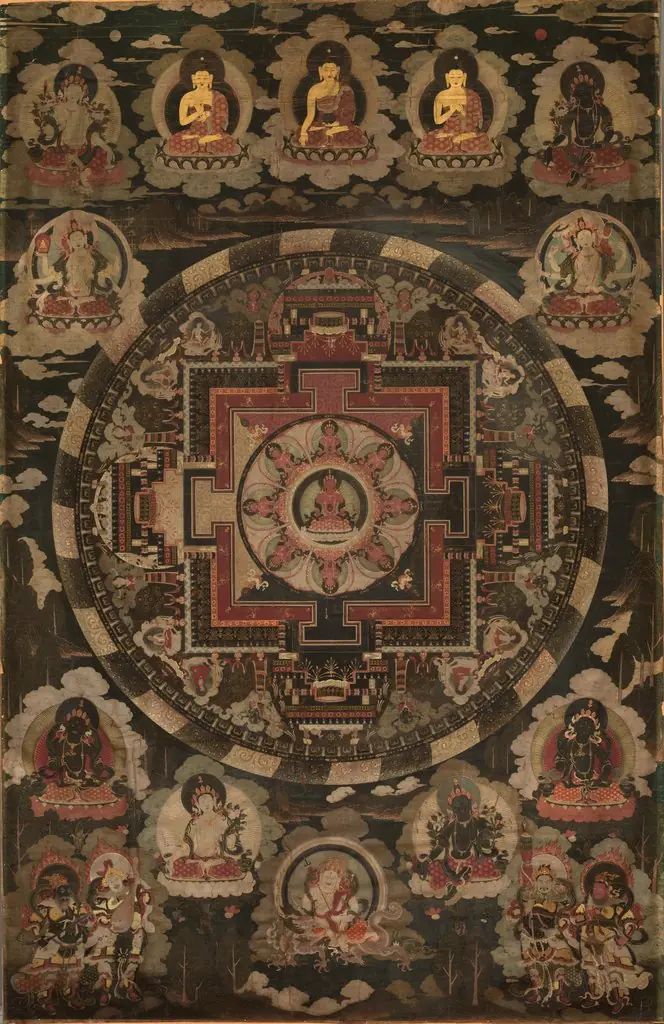 Mandala
 Mandala
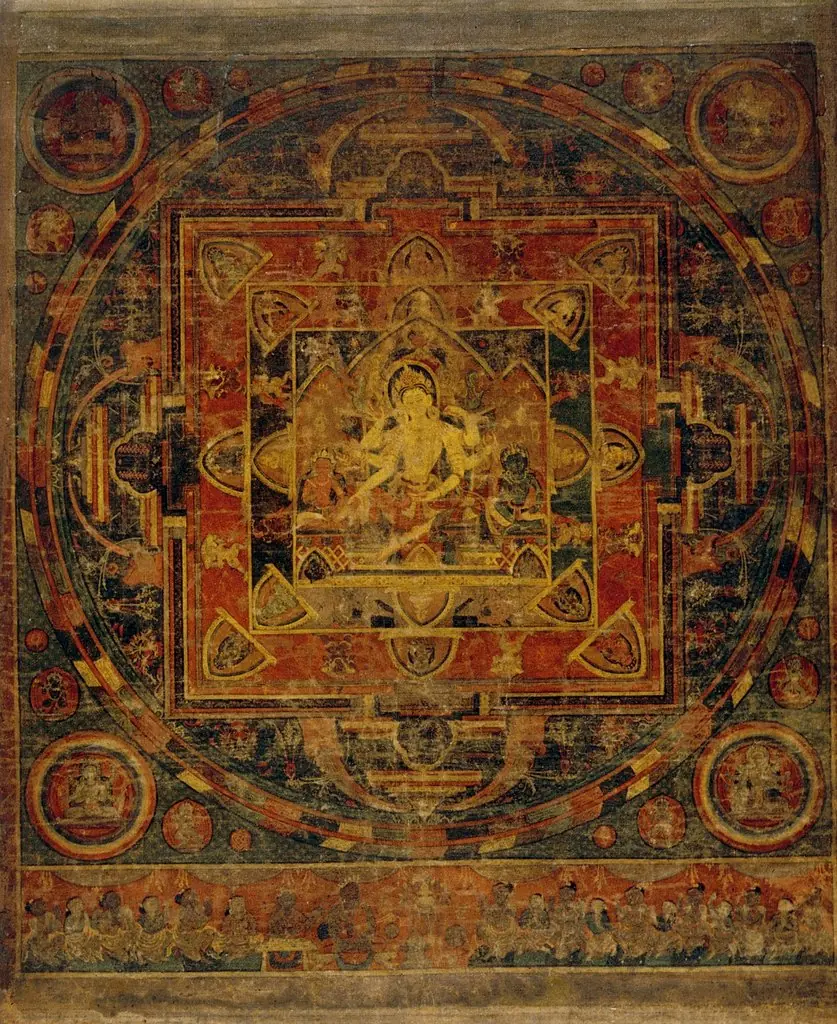 Mandala of Vasudhara
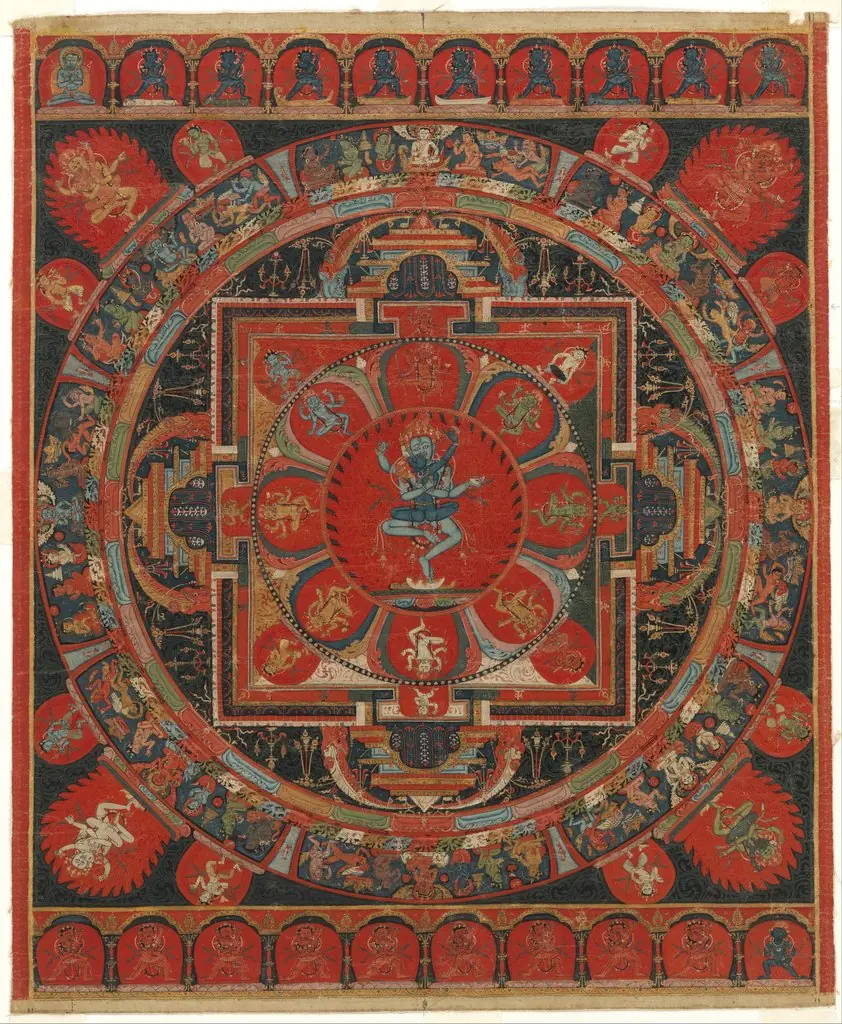 Hevajra Mandala
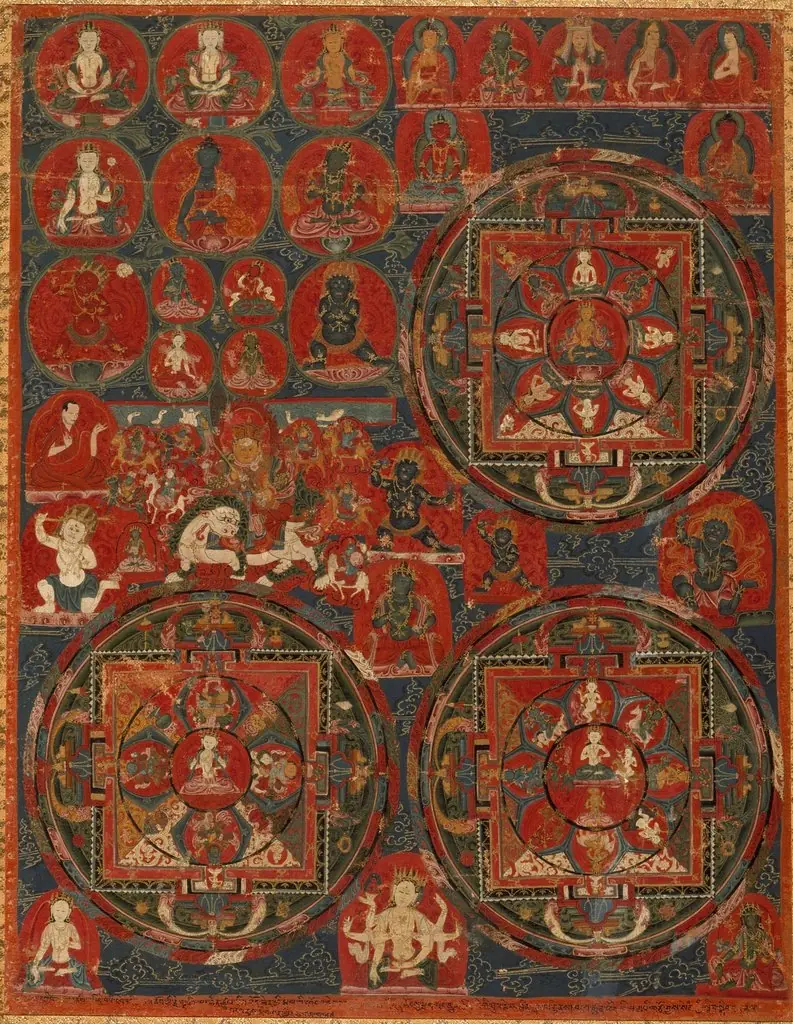 Three Mandalas
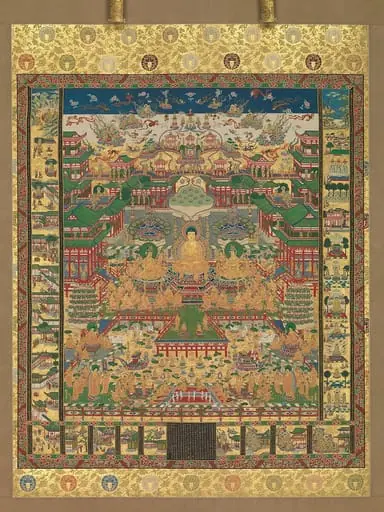 当麻曼荼羅|Taima Mandala
 Eleven-Headed, Thousand-Armed Bodhisattva of Compassion (Avalokiteshvara)