Artwork
明 佚名 釋教三尊曼陀羅圖 軸|Mandala of Vajradhara, Manjushri and Sadakshari -Lokeshvara
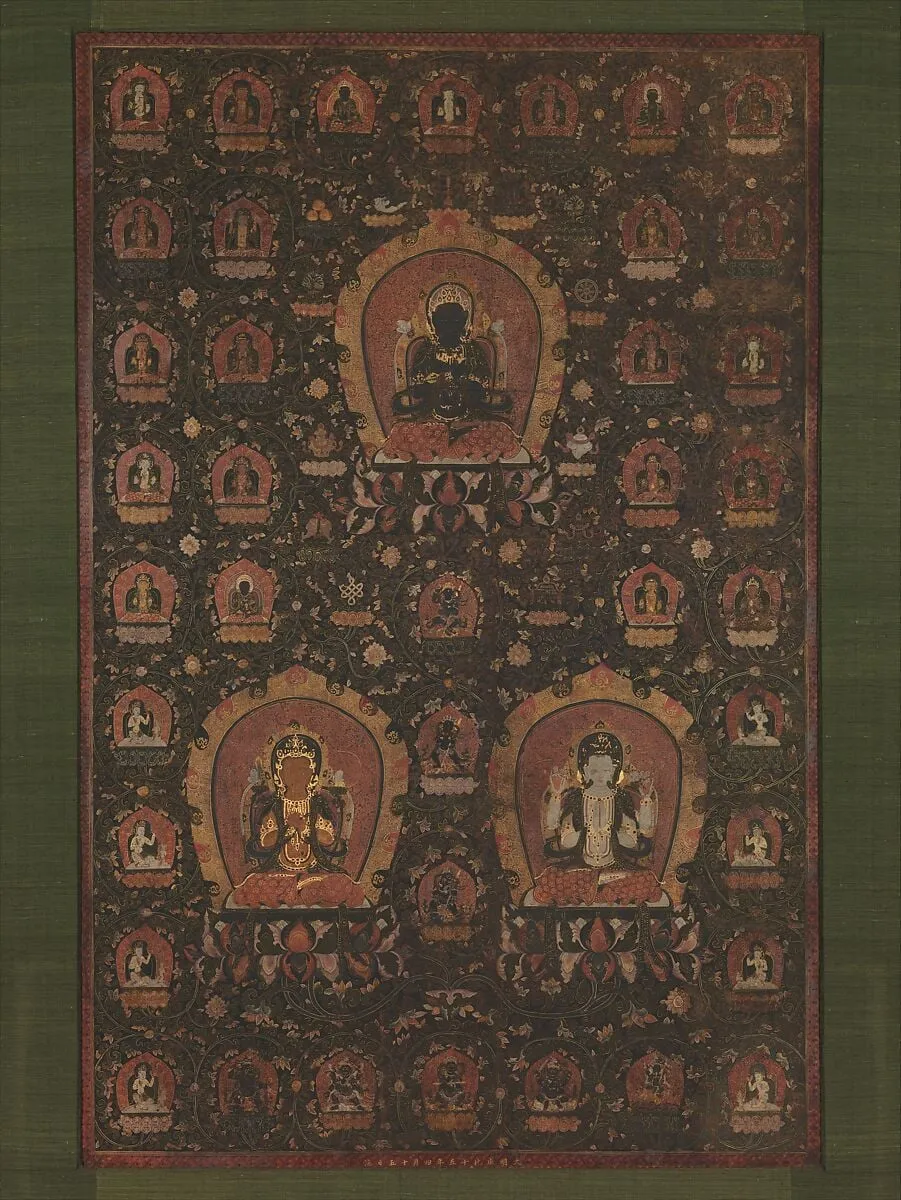
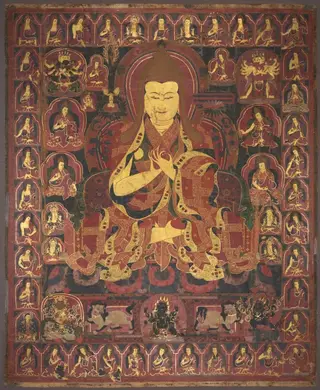
明 佚名 釋教三尊曼陀羅圖 軸|Mandala of Vajradhara, Manjushri and Sadakshari -Lokeshvara is a watercolor painting. It dates from 1479 and is held in the collection of the Metropolitan Museum of Art. This painting, titled Mandala of Vajradhara, Manjushri and Sadakshari-Lokeshvara, is a Buddhist thangka created in 1479.
About this work
A Buddhist mandala built around three main figures, painted in 1479. It blends Chinese and Buddhist elements, a common mix in the period. The intricate designs and the use of gold and ink point to a skilled hand.
Subject & Meaning
Created in 1479, this Chinese religious painting depicts a mandala centered on three figures: Vajradhara, the Bodhisattva Mañjuśrī, and Sadakshari-Lokeshvara.
Created in 1479, this Chinese religious painting depicts a mandala centered on three figures: Vajradhara, the Bodhisattva Mañjuśrī, and Sadakshari-Lokeshvara. Executed as a tangka in ink, opaque watercolor, and gold on cotton, the work serves as a visual representation of these deities within a Buddhist cosmological framework. The inclusion of Mañjuśrī, the Bodhisattva of wisdom, alongside the primordial Buddha Vajradhara and the compassionate form of Avalokiteshvara (Sadakshari-Lokeshvara) establishes a triad of spiritual authority and compassion.
The composition functions as a devotional object, synthesizing these divine manifestations into a single sacred image. The use of gold and the formal arrangement of the figures underscore the spiritual hierarchy and symbolic power inherent in the depicted mandala tradition.
Technique & Style
Created in 1479, this religious artwork is executed as a tangka on a cotton cloth support. The artist employed ink and opaque watercolors as the primary pigments, enhancing the composition with applications of gold. The piece measures approximately 147.3 cm in height and 95.3 cm in width.
Stylistically, the work functions as a mandala depicting three central Buddhist figures: Vajradhara, the bodhisattva Mañjuśrī, and Sadakshari-Lokeshvara. The combination of mineral-based opaque colors and gold on woven cotton is characteristic of Tibetan-style Buddhist painting produced in China during the Ming dynasty, designed for devotional use within a religious context.
History & Provenance
The mandala is dated 1479 and was produced in China as a tangka executed in ink, opaque watercolor, and gold on cotton cloth, measuring approximately 147.3 × 95.3 cm. It is held in the collection of the Metropolitan Museum of Art, New York, among the museum's Asian art holdings. No earlier ownership or commission details are provided, no specific accession number is disclosed, and no exhibition history is recorded in the available sources.
Overview
This painting, titled Mandala of Vajradhara, Manjushri and Sadakshari-Lokeshvara, is a Buddhist thangka created in 1479. It depicts a central Buddhist scene featuring three principal deities, arranged within a sacred geometric diagram. The work exemplifies the devotional art practices prevalent during its period, serving as a visual aid for meditation and spiritual contemplation.
Context
Created in 1479, this thangka reflects a period when artistic traditions in the region often integrated diverse cultural influences. The painting exhibits a notable synthesis of Chinese aesthetic elements with established Buddhist iconographic conventions. This blend of styles was a common characteristic of religious art produced during the late Ming dynasty, illustrating the cross-cultural exchanges that shaped visual expression.
Artist & collection

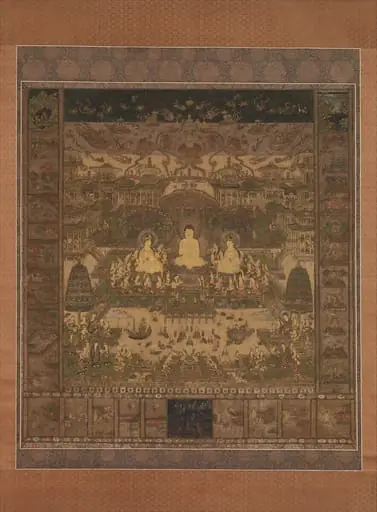
- 當麻曼荼羅図 |Taima Mandala
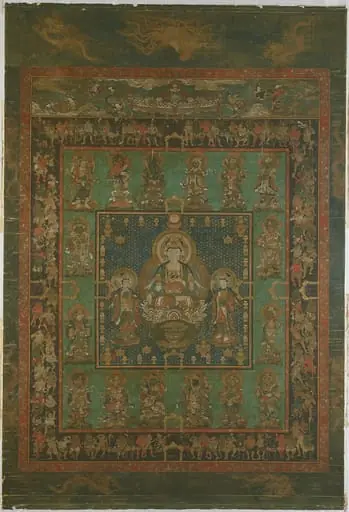 般若菩薩曼荼羅図|Mandala of the Bodhisattva Hannya (Prajnaparamita)
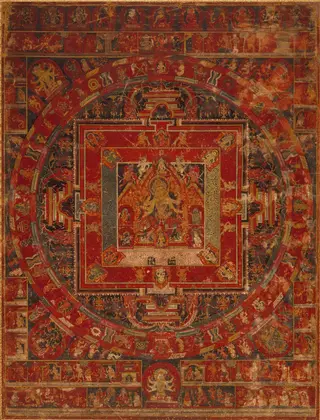 Mandala of Vasudhara
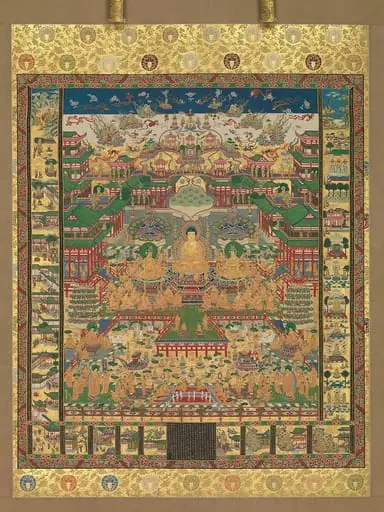 当麻曼荼羅|Taima Mandala
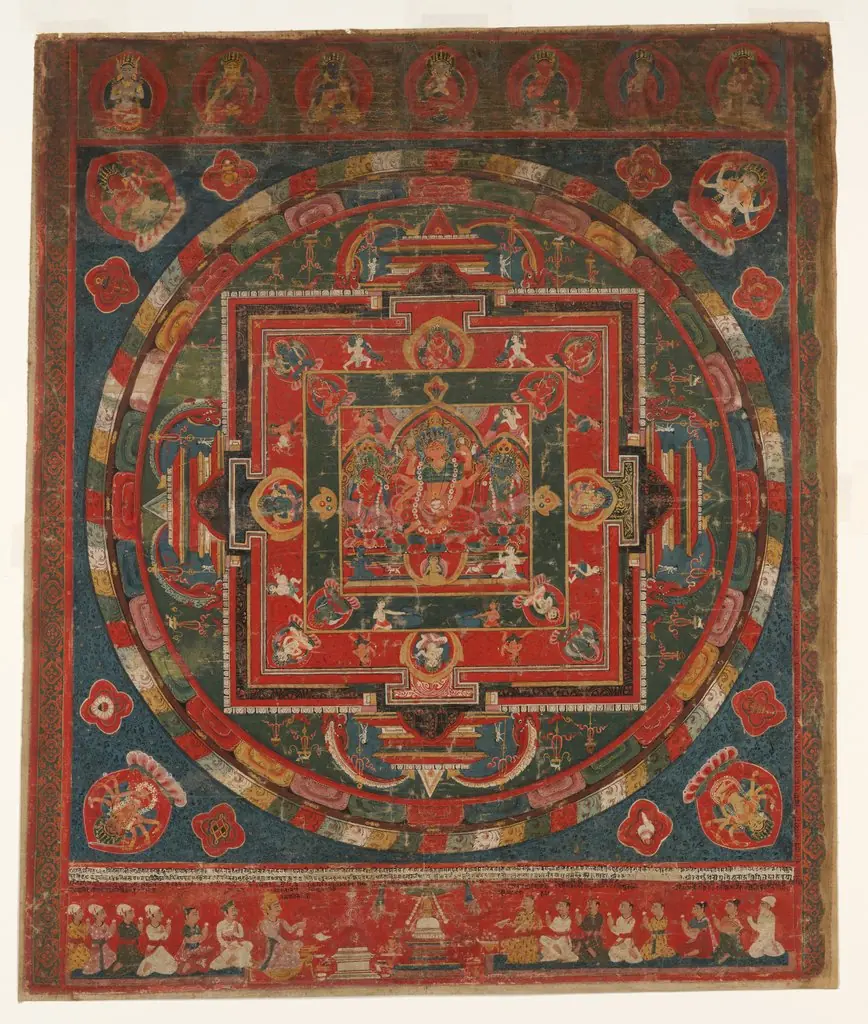 Vasudhara Mandala
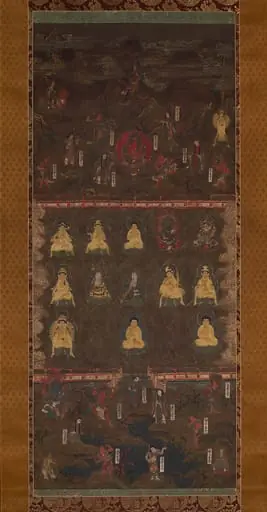 熊野曼茶羅図|Mandala of Kumano Shrine
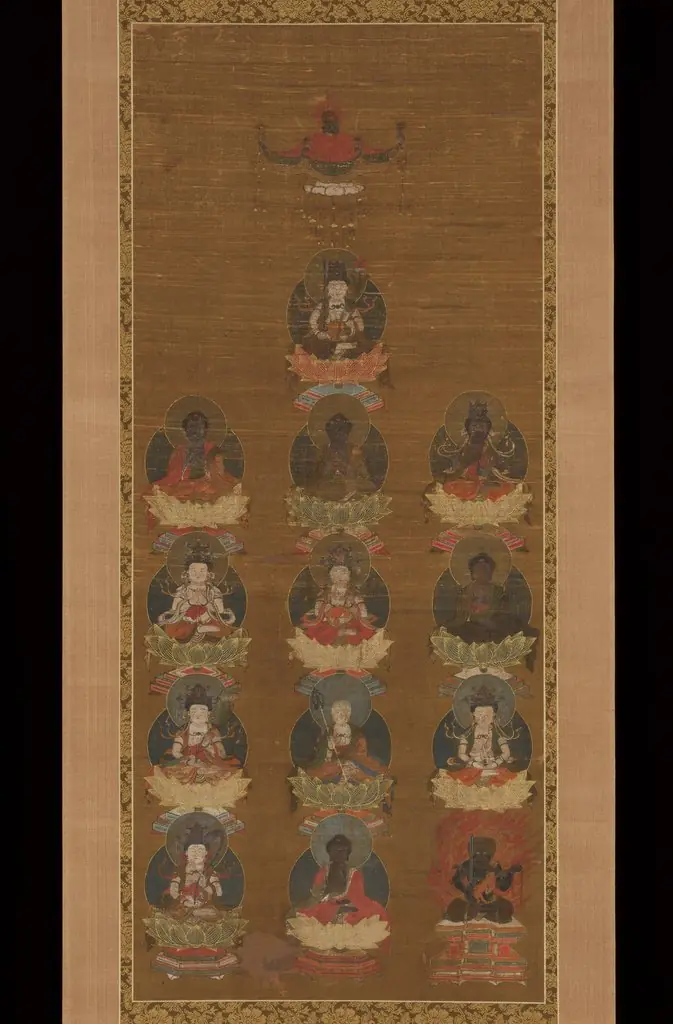 Mandala of the Thirteen Buddhas (Jūsan butsu mandara)
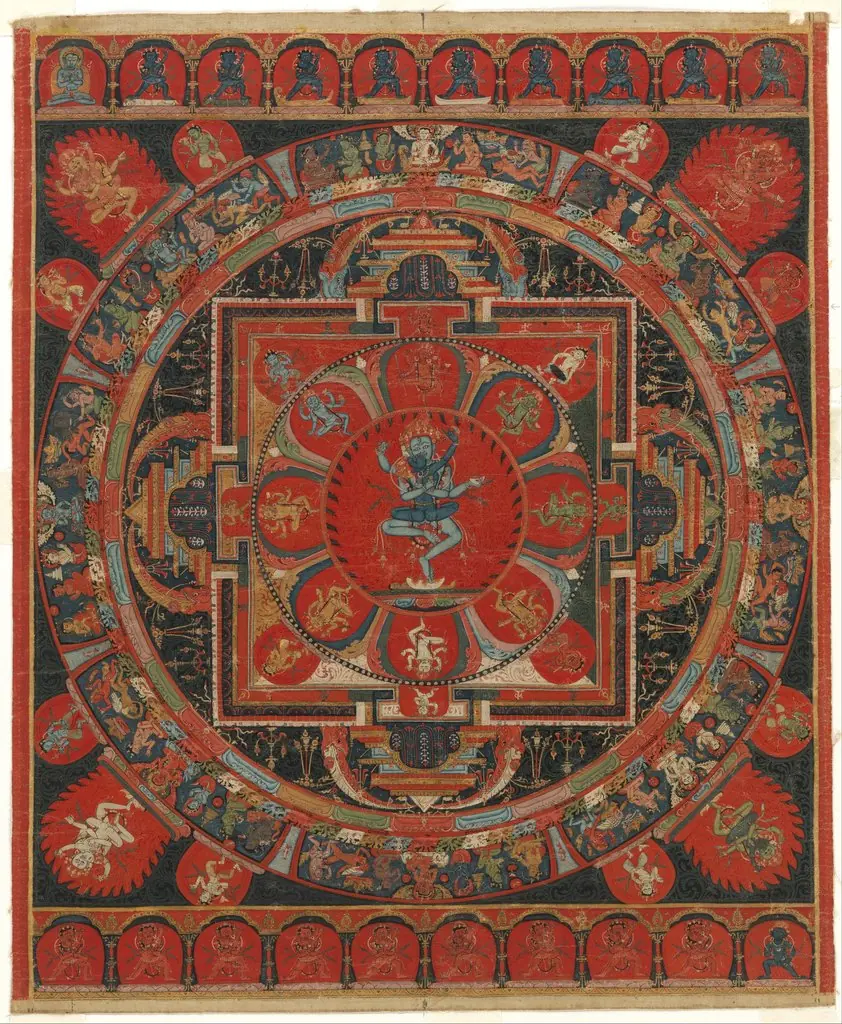 Hevajra Mandala
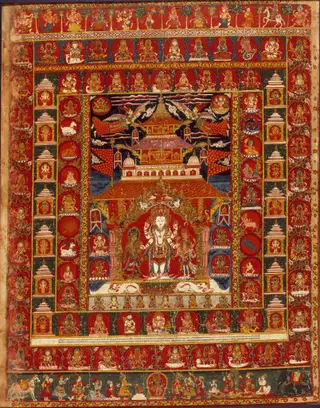 Mandala of Vishnu
 Shakyamuni Triad: Buddha Attended by Manjushri and Samantabhadra
 八字文殊曼荼羅図|Mandala of the Bodhisattva Monju (Manjushri) of the Eight Syllables
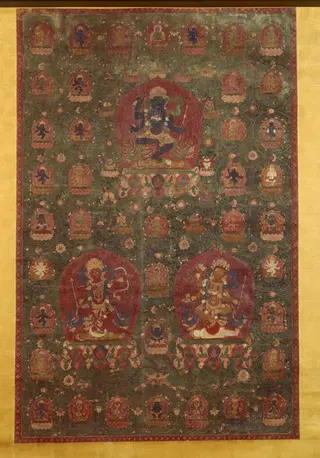 Mandala
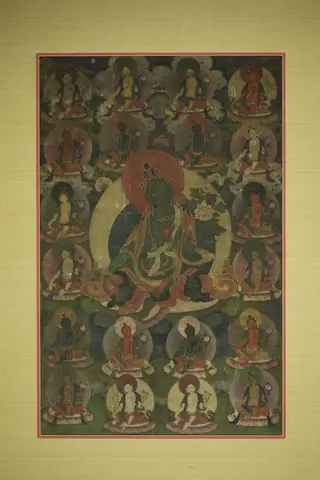 Painted Banner (Thangka) of Green Tara Surrounded by Twenty Manifestations
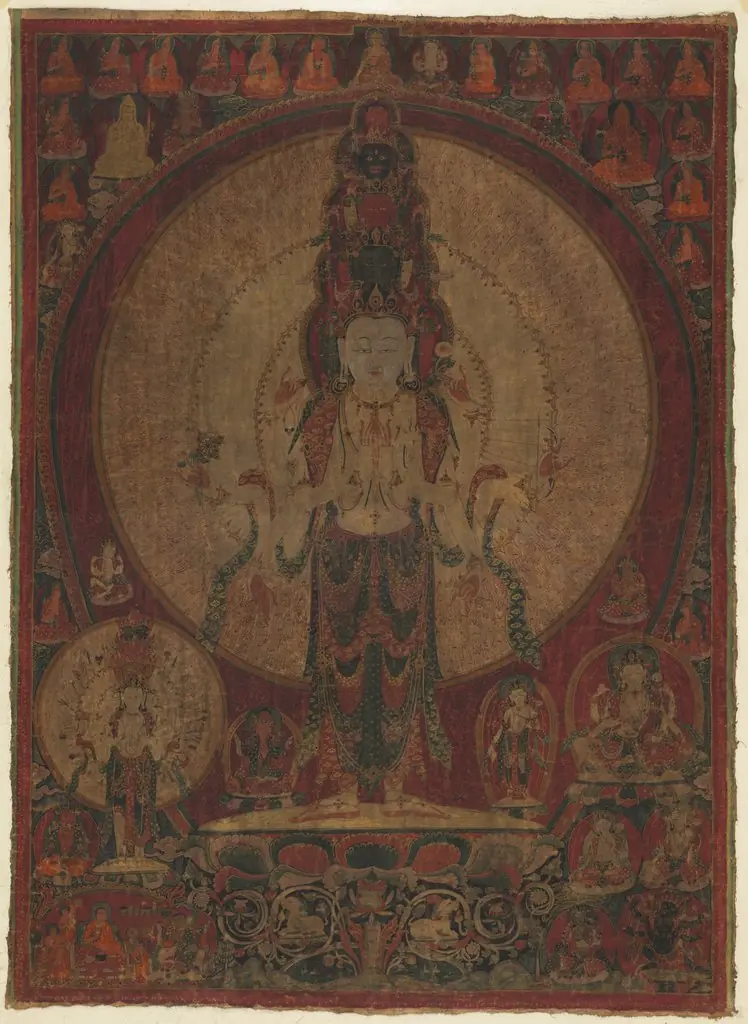 Eleven-Headed, Thousand-Armed Bodhisattva of Compassion (Avalokiteshvara)
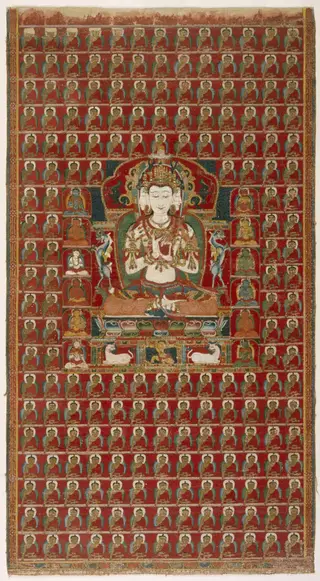 Sarvavid Vairochana, From a Set of the Five Jina Buddhas, based on Complete Purification of All Evil Rebirths (Sarva Durgati Parishodana Tantra)
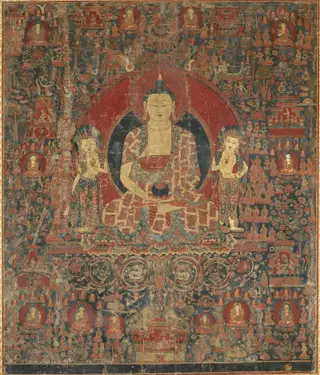 The Jina Buddha of Infinite Light (Amitabha) in His Pure Land Paradise (Sukhavati)
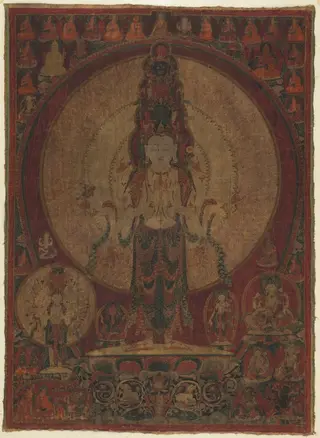 Eleven-Headed, Thousand-Armed Bodhisattva of Compassion (Avalokiteshvara)
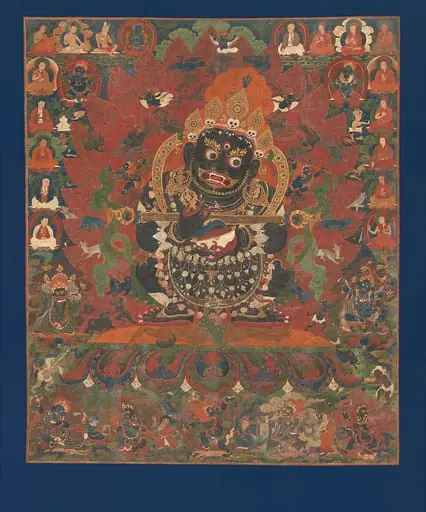 Untitled
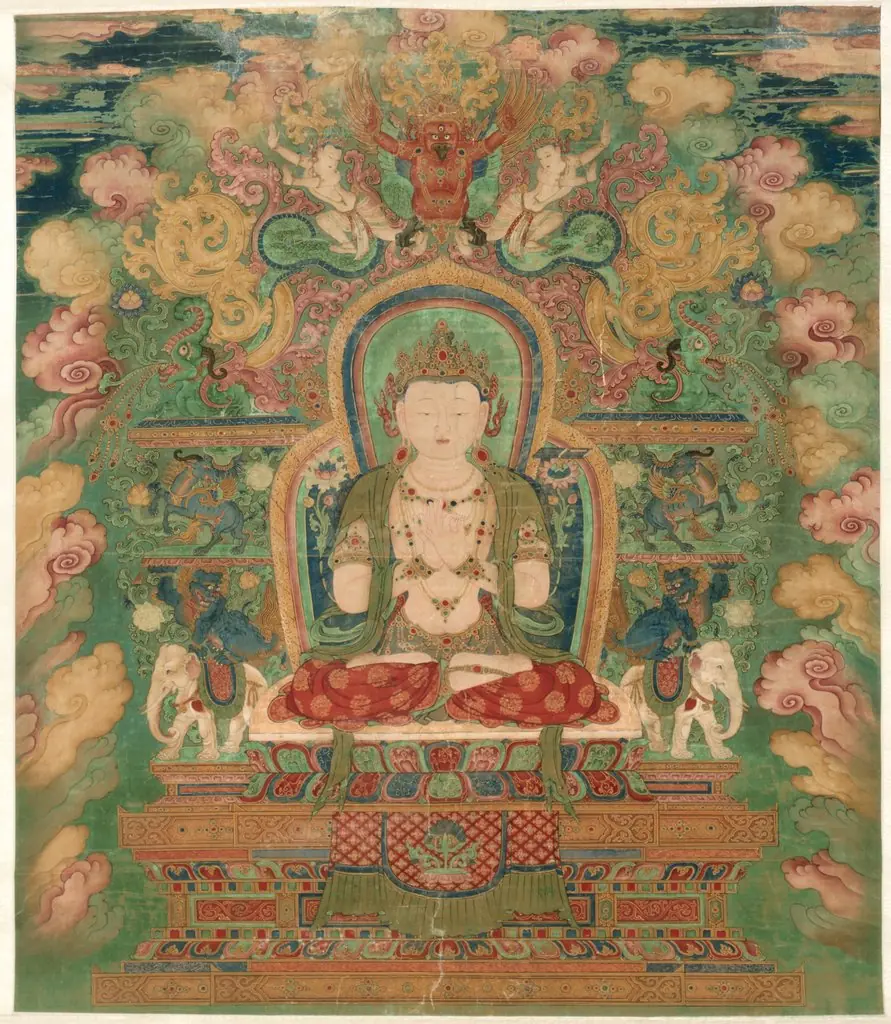 Manjushri
 Tsong Khapa, Founder of the Geluk Order