Artwork
Virgin and Child
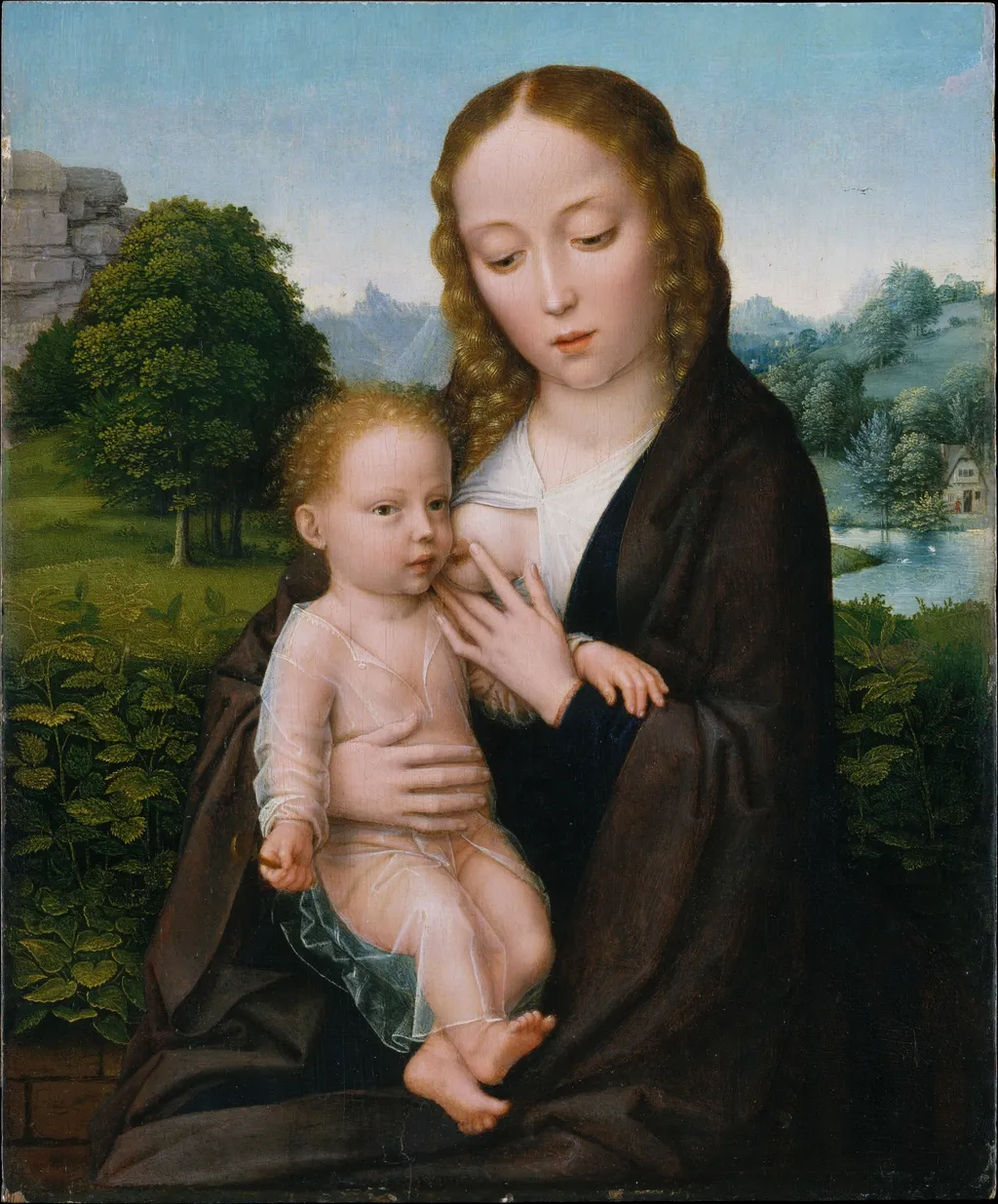
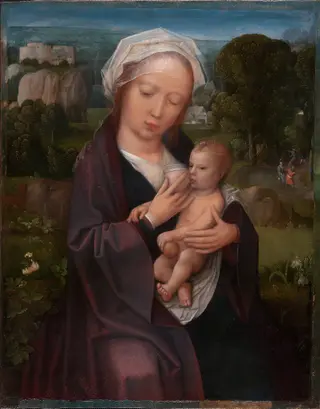
Virgin and Child is an oil painting. It dates from 1520 and is held in the collection of the Metropolitan Museum of Art.
About this work
Subject & Meaning
This imagery emphasizes the humanity of Jesus and the intimate maternal bond between mother and son, serving as a visual testament to the Incarnation.
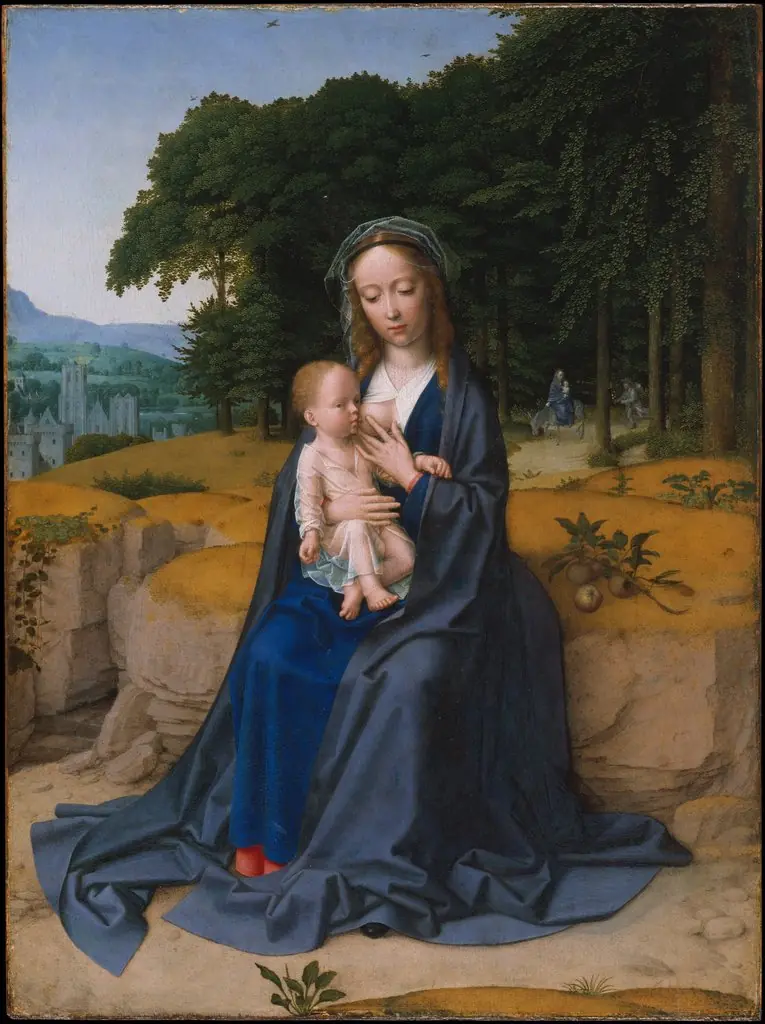
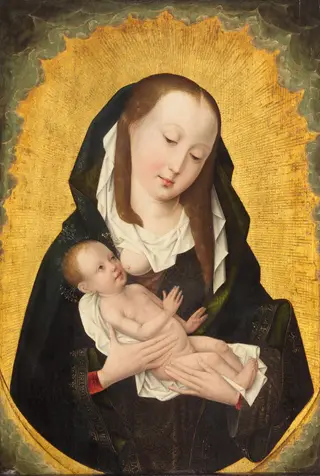
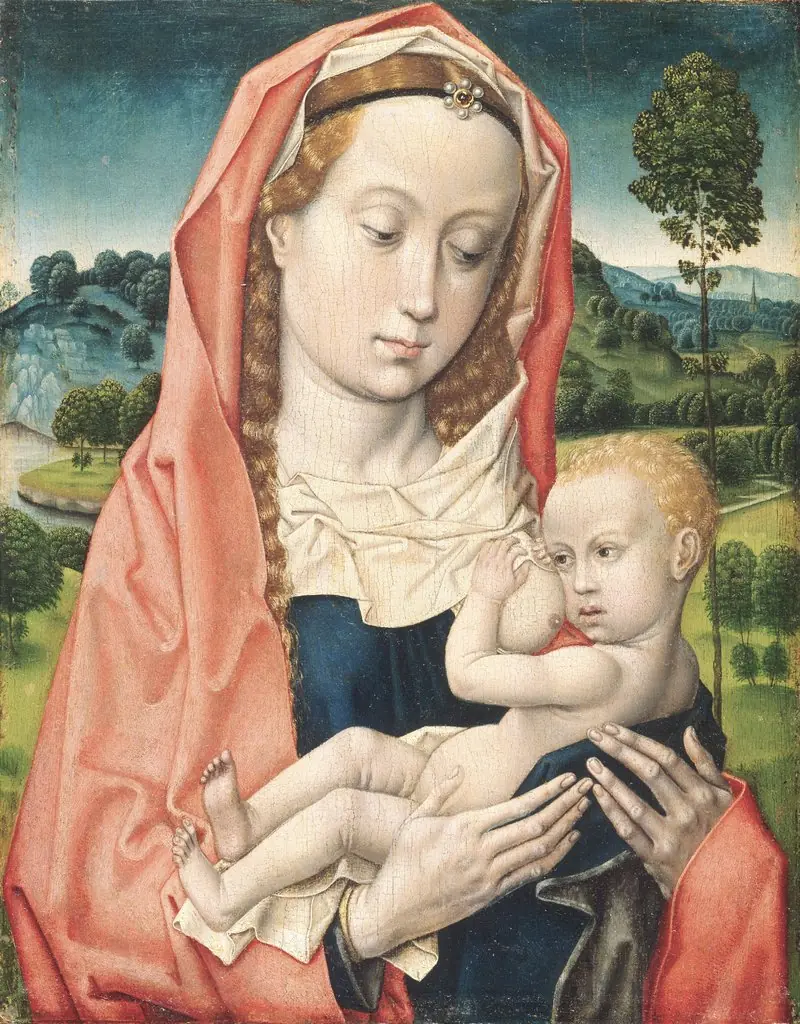
Created circa 1520, this oil painting on panel depicts the Madonna and Child, a central subject in religious art. The composition specifically illustrates the Virgin Mary breastfeeding the Christ Child, an iconographic motif known as the Virgo Lactans. This imagery emphasizes the humanity of Jesus and the intimate maternal bond between mother and son, serving as a visual testament to the Incarnation.
By portraying the divine figures in such a tender, domestic act, the work invites viewers to contemplate the accessibility of the sacred through human experience. The piece, attributed to Simon Bening, functions as a devotional object intended to inspire piety through the visualization of Mary's role as both mother and spiritual intercessor.
Technique & Style
The Virgin and Child is an oil painting on panel attributed to Simon Bening, dated circa 1520. The work employs oil paint on a wood support, typical of Northern Renaissance panel painting. The handling demonstrates the artist's characteristic precision, with meticulous attention to fine details such as the delicate modeling of facial features and the soft folds of drapery.
Stylistically, the composition emphasizes gentle intimacy, as seen in the tender gesture of the Christ Child breastfeeding, a motif associated with Marian iconography. The color palette is subdued yet rich, relying on earth tones and soft contrasts to focus attention on the figures. The panel's modest dimensions, approximately 24.4 cm in height and 21 cm in width, suggest it was likely intended for private devotion.
History & Provenance
The painting titled Virgin and Child, dated to 1520, is executed in oil on panel and is attributed to Simon Bening. It entered the collection of the Metropolitan Museum of Art through the bequest of Michael Friedsam. The artwork depicts the Madonna and Child, specifically the breastfeeding of the Christ Child by the Virgin Mary.
The physical dimensions of the panel measure 24.4 cm in height and 21 cm in width. No further details regarding the original commission or earlier ownership chains prior to Friedsam are provided in the available records.
Context
The Virgin and Child, painted in 1520 in oil on panel, is attributed to the circle of Simon Bening and exemplifies Northern Renaissance devotional art. Its religious genre and intimate portrayal of the Madonna and Child reflect the devotional practices of the early 16th century, while its inclusion in Michael Friedsam's collection and subsequent display at the Metropolitan Museum of Art underscore its significance within museum histories of Northern European painting. Scholarship highlights the work's technical refinement and its role in illustrating the stylistic transition from late Gothic to early Renaissance aesthetics, positioning it as a key example for understanding Bening's influence on subsequent artists.
Overview
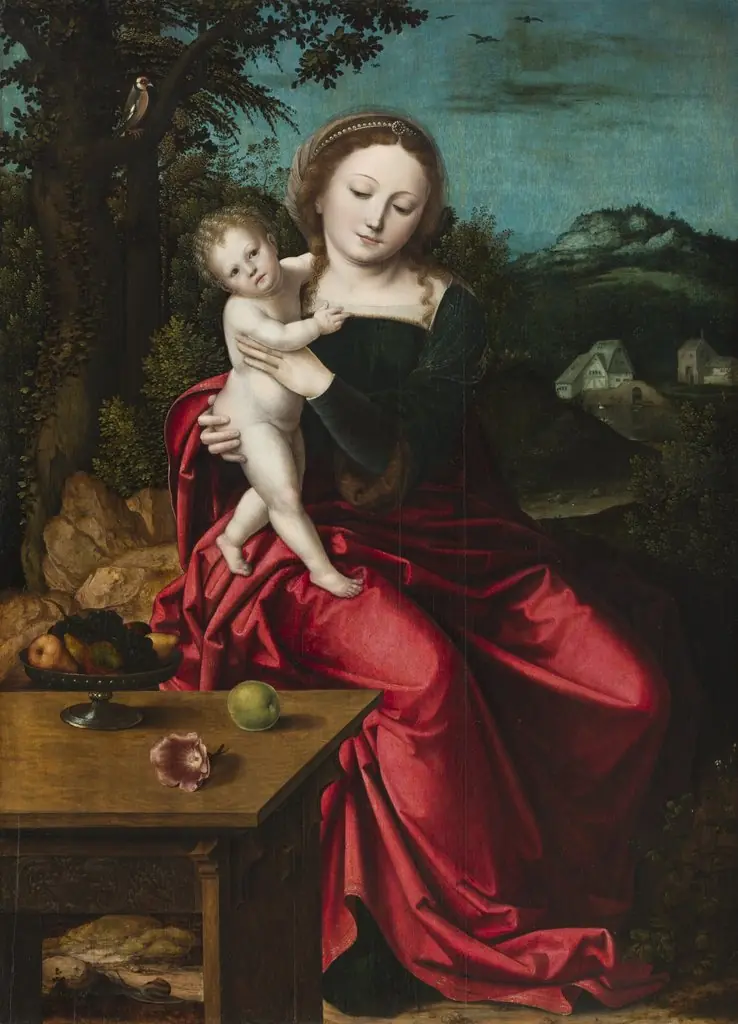
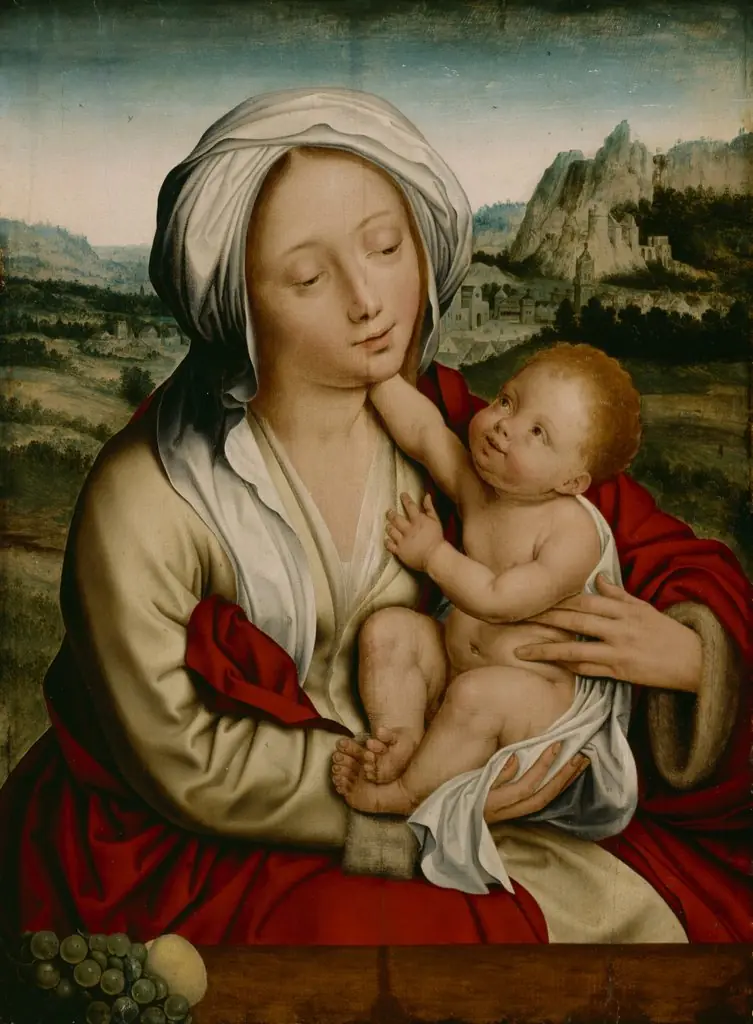
This oil painting, titled Virgin and Child, presents a serene maternal scene. A woman cradles a barefoot infant on her lap, set against a tranquil natural backdrop. The composition emphasizes the tender connection between the figures, rendered with a sense of quiet contemplation.
The use of oil paint allows for subtle gradations and detailed textures throughout the work, contributing to its peaceful atmosphere.
Artist & collection