Artwork
白衣観音図|White-Robed Kannon
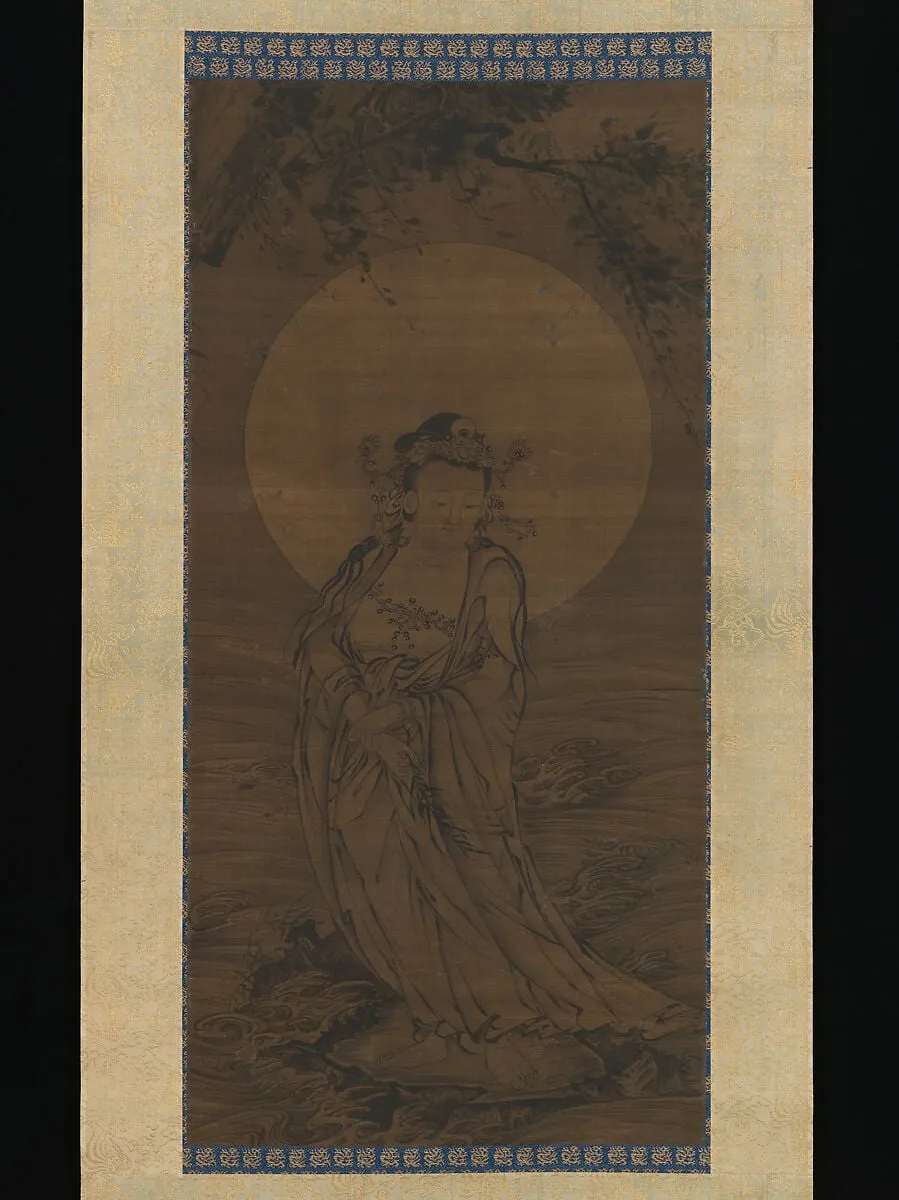
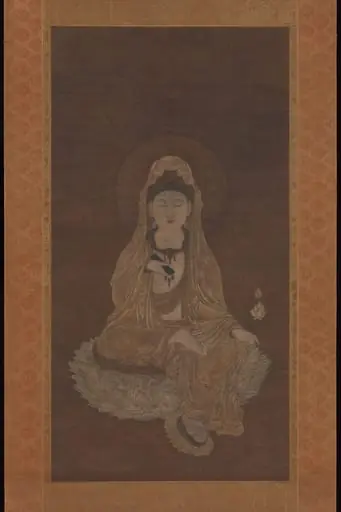
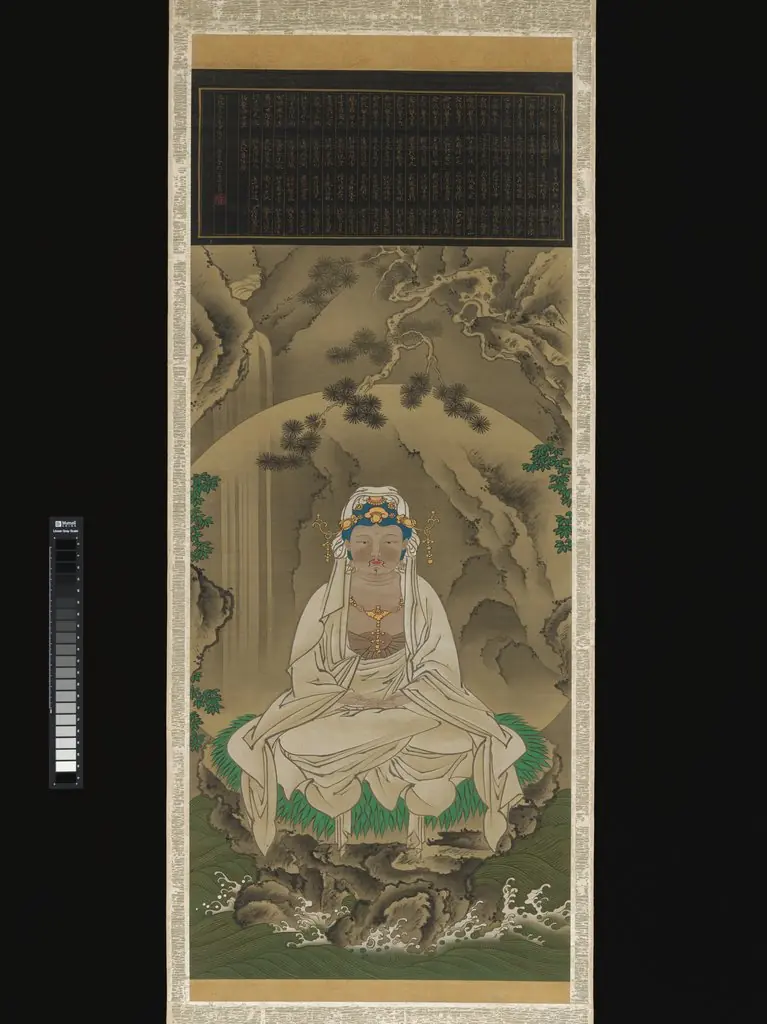
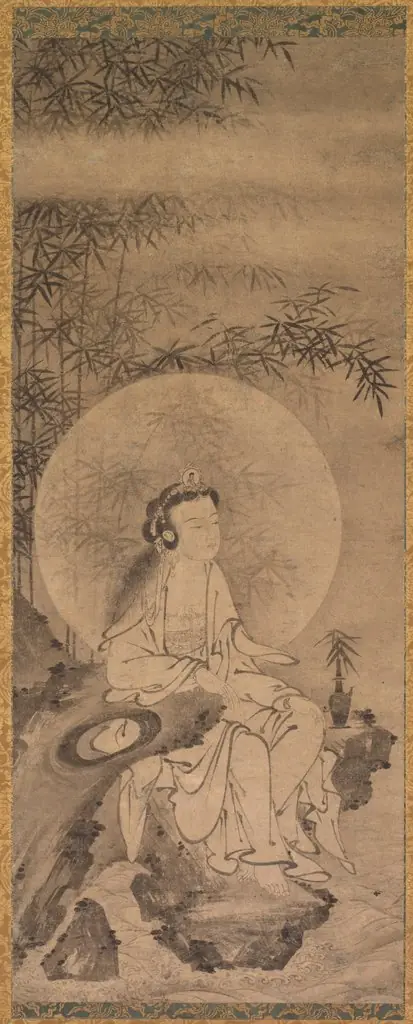
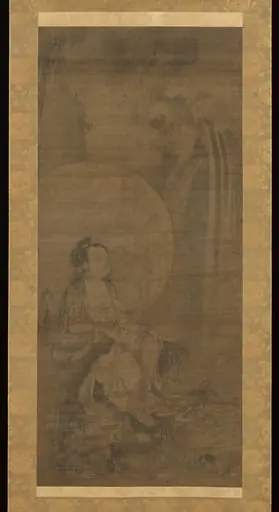
白衣観音図|White-Robed Kannon is an ink painting. It dates from 1415 and is held in the collection of the Metropolitan Museum of Art. This ink on silk hanging scroll depicts the White-Robed Kannon, a significant Buddhist deity.
About this work
Subject & Meaning
The title highlights the defining characteristic of the deity's attire, signaling the specific manifestation of compassion represented.
Created in 1415 by an anonymous Japanese artist, this hanging scroll depicts a Bodhisattva within the Buddhist tradition, specifically identified as White-Robed Kannon. The work functions as a religious object, using ink on silk to render the sacred figure. While the specific iconographic details of the robe or posture are not elaborated in the available records, the subject is explicitly categorized under Buddhism and the depiction of a Bodhisattva.
The title highlights the defining characteristic of the deity's attire, signaling the specific manifestation of compassion represented. Housed in the Metropolitan Museum of Art, it stands as a formal representation of early 15th-century Japanese religious painting, intended to evoke spiritual reverence through the visualization of this enlightened being.
Technique & Style
The work is executed as a hanging scroll using ink on silk, a format typical of early Muromachi Buddhist art. The ink medium produces a restrained monochrome palette with delicate brushstrokes that define the figure's flowing white robes and serene expression. The silk support provides a smooth, slightly translucent surface that enhances the subtle gradations of tone.
As a religious painting of a Bodhisattva, the composition emphasizes vertical elongation, balanced negative space, and a calm, meditative stance, reflecting the stylistic conventions of Japanese Buddhist iconography. The piece is attributed to an anonymous painter and dates to 1415, originating in Japan.
History & Provenance
The White-Robed Kannon hanging scroll was created in Japan in 1415 by an anonymous artist. Executed in ink on silk, the work depicts a Buddhist Bodhisattva and is classified within the religious painting genre. The piece entered the collection of the Metropolitan Museum of Art in New York in 1984, where it is cataloged under accession number 1984.124.
The specific commissioning patron and the immediate circumstances of its creation are not detailed in the available records, and its attribution remains to an unknown painter. No specific exhibition history or prior provenance details regarding its transfer to the museum are provided in the available records.
Overview
This ink on silk hanging scroll depicts the White-Robed Kannon, a significant Buddhist deity. It represents one of the earliest extant portrayals of this specific form of Kannon in Japan. The artwork conveys a profound sense of tranquility, characterized by its serene composition and the soft application of ink. Its quiet presence suggests a work intended for personal contemplation rather than public display.
Artist & collection