Artwork
White-Robed Kannon (Byakue Kannon)
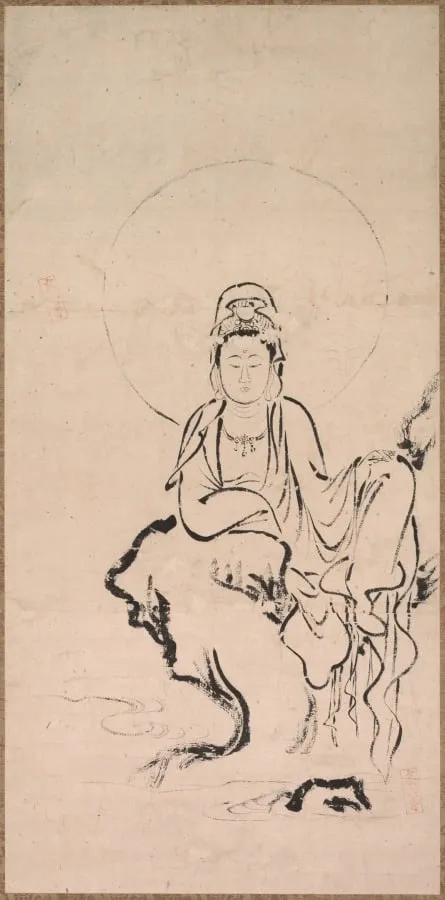
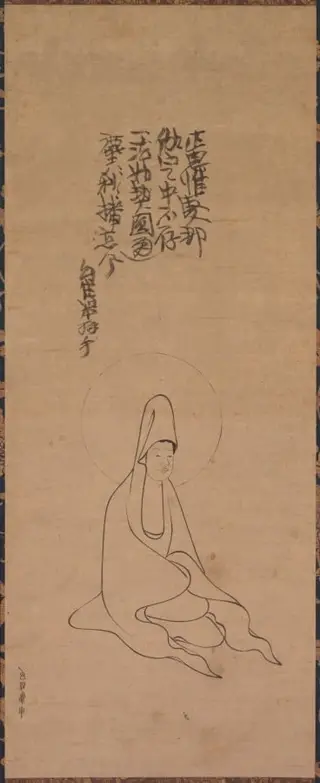
White-Robed Kannon (Byakue Kannon) is an unspecified painting by the Joseon dynasty painting artist Unknown. It dates from 1200 and is held in the collection of the Cleveland Museum of Art. This ink-on-paper depiction of Kannon, the Buddhist bodhisattva of compassion, originates from Kōzan-ji, a Zen temple in northwest Kyoto.
- Accession no.
- 1951.540
- Credit line
- John L. Severance Fund
About this work
This sketch comes from a Kyoto temple where Zen monks valued quiet, direct expression over fancy details.
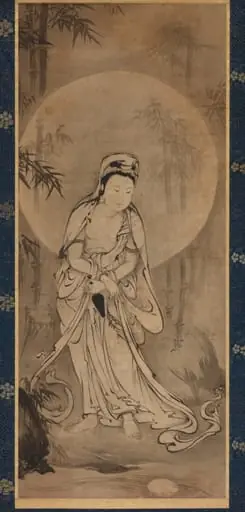
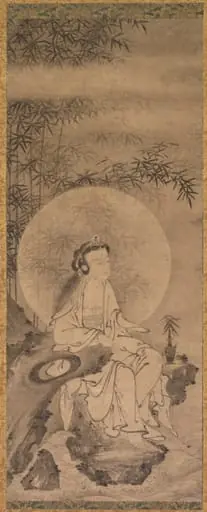
You see a tall, slender figure in a flowing white robe, hands gently folded. The lines are simple, just ink on paper, with no color or background.
This sketch comes from a Kyoto temple where Zen monks valued quiet, direct expression over fancy details. The soft ink washes and loose brushwork show how Zen ideas shaped art in 13th-century Japan.
To see more works like this, look up japan, kamakura period (1185–1333).
Overview
This ink-on-paper depiction of Kannon, the Buddhist bodhisattva of compassion, originates from Kōzan-ji, a Zen temple in northwest Kyoto. Executed in the Kamakura period, the work embodies the aesthetic principles of Zen Buddhism through its minimalism and restraint. No color, no background, no ornamentation, only the essential form rendered in subtle ink tones. The simplicity reflects a spiritual focus on direct experience over elaborate ritual or decoration.
Subject & Meaning
The figure represents Kannon, revered for embodying mercy and the willingness to alleviate suffering. Shown standing in quiet stillness, hands gently folded, the posture conveys calm benevolence. The white robe symbolizes purity and spiritual clarity, while the absence of attributes or elaborate iconography aligns with Zen’s emphasis on inner awareness rather than external symbolism. The image invites contemplation rather than devotion through spectacle.
Technique & Style
Rendered with loose, economical brushwork and soft ink washes, the painting avoids detail in favor of suggestive form. The lines flow with spontaneity, capturing the movement of fabric and the grace of the figure without precision. This technique, rooted in Chinese ink traditions but adapted to Japanese Zen sensibilities, prioritizes immediacy and emotional resonance over technical finish, reflecting a shift toward expressive simplicity in 13th-century religious art.
History & Provenance
Created at Kōzan-ji, a temple closely associated with Zen monastic practice, the work likely served as an object of meditation for monks. Its survival suggests it was preserved not as a decorative piece but as a spiritual aid. The temple’s historical ties to the Rinzai school of Zen place it within a network of institutions that promoted austere, meditative art forms during the Kamakura period, when Zen influence expanded across Japanese religious culture.
Context
In 13th-century Japan, Zen Buddhism gained prominence among the warrior class and monastic communities, bringing with it a preference for understated aesthetics. This painting emerged alongside other ink-wash works that rejected the ornate styles of earlier Heian court art. The shift reflected broader cultural values, valuing discipline, silence, and direct insight, making such images integral to Zen practice rather than mere religious iconography.
Legacy
The work exemplifies how Zen principles reshaped Japanese visual culture, influencing later traditions of ink painting and tea ceremony aesthetics. Its emphasis on imperfection, economy, and presence became foundational to Japanese artistic identity. Though unassuming, such sketches helped define a lasting visual language, one that valued the quiet power of suggestion over grandeur, leaving a mark on centuries of East Asian art.
Artist & collection