Artwork
明 佚名 全室宗泐題贊 白衣觀音圖 軸|White-Robed Guanyin
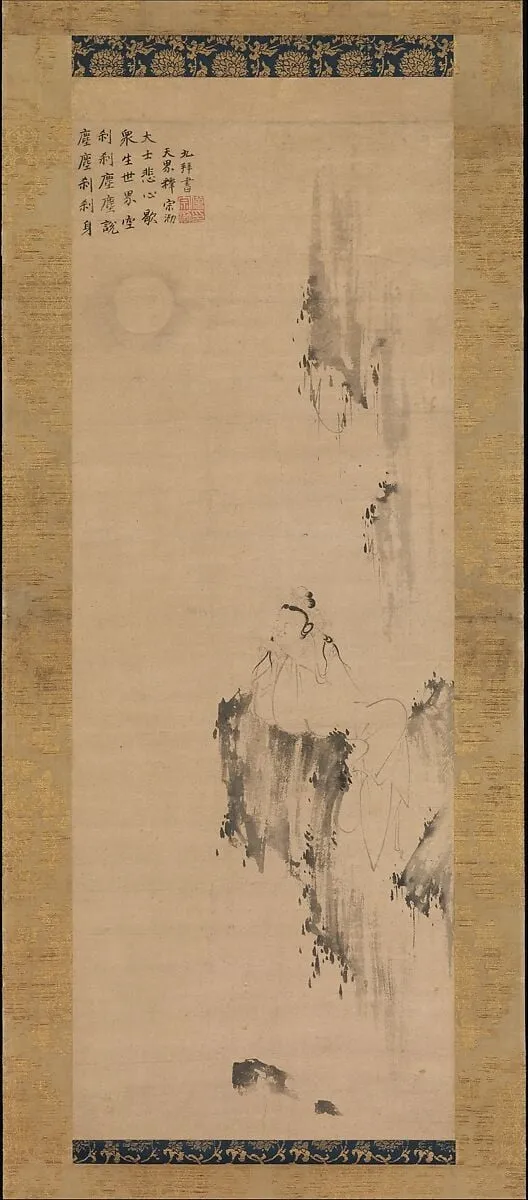
明 佚名 全室宗泐題贊 白衣觀音圖 軸|White-Robed Guanyin is an ink painting. It dates from 1383 and is held in the collection of the Metropolitan Museum of Art. This ink-on-paper hanging scroll, titled White-Robed Guanyin, depicts the revered bodhisattva in a moment of serene contemplation.
About this work
Subject & Meaning
This hanging scroll depicts the Bodhisattva Guanyin (known in this manifestation as White-Robed Guanyin, 白衣觀音), one of the most beloved figures in Chinese Buddhism. Rendered in ink on paper and dated 1383, the painting belongs to the religious genre and portrays Guanyin in the distinctive white-robed form, an iconographic type associated with purity, compassion, and the vow to rescue sentient beings from suffering. The work also bears an inscription and eulogy (題贊) by the Chan Buddhist monk Quanshi Zongle (全室宗泐), linking the image to a recognized lineage of monastic patronage and devotional practice.
Together, the painted figure and the monk's accompanying verse frame the scroll as an object of veneration, expressing Guanyin's role as a merciful savior within Buddhist belief.
Technique & Style
The White-Robed Guanyin is executed as a hanging scroll in ink on paper, a traditional East Asian format suited to vertical devotional display.
The White-Robed Guanyin is executed as a hanging scroll in ink on paper, a traditional East Asian format suited to vertical devotional display. The medium is monochrome ink, allowing tonal variation to model the bodhisattva's flowing white robes and serene features. The paper support is consistent with Chinese painting practice of the late fourteenth century.
The work is held in the collection of the Metropolitan Museum of Art, where its preservation as a scroll format implies careful mounting and handling consistent with East Asian painting conservation.
History & Provenance
The work titled White‑Robed Guanyin was produced in 1383 in China, as recorded in the catalog entry and confirmed by the Metropolitan Museum of Art’s Wikidata entry. The artist is identified only as unidentified, and the piece is executed in ink on paper as a hanging scroll, classified as a religious painting depicting a Bodhisattva. Its medium, date, and subject are documented in the internal museum record, while the Met’s collection database lists it as part of its holdings, indicating its current ownership. No further commission details or previous owners are provided in the available sources.
The White‑Robed Guanyin (明 佚名 全室宗泐題贊 白衣觀音圖) is held by the Metropolitan Museum of Art in New York. According to the museum’s catalogue, the hanging scroll dates to 1383, is executed in ink on paper, and belongs to the Chinese religious painting genre. The work is listed under the museum’s collection but no accession or inventory number is provided in the cited sources.
Exhibition records are not detailed in the available documentation; nevertheless, the painting has been part of the museum’s permanent Asian art display since its inclusion in the collection.
Overview
This ink-on-paper hanging scroll, titled White-Robed Guanyin, depicts the revered bodhisattva in a moment of serene contemplation. Created by an anonymous artist during the 1300s, the artwork presents a tall figure seated on a rock, characterized by soft lines and a minimalist composition. The piece was intended to foster quiet introspection, reflecting the spiritual purpose of such paintings in Chinese Buddhist practice.
Context
This painting dates to the 1300s, a period corresponding to the early Ming dynasty in China. During this era, ink paintings of Buddhist subjects were primarily created for personal devotion and quiet contemplation rather than for large-scale public display. The intimate scale and meditative quality of the White-Robed Guanyin align with this practice, encouraging individual spiritual engagement and reflective thought within private settings.
Artist & collection

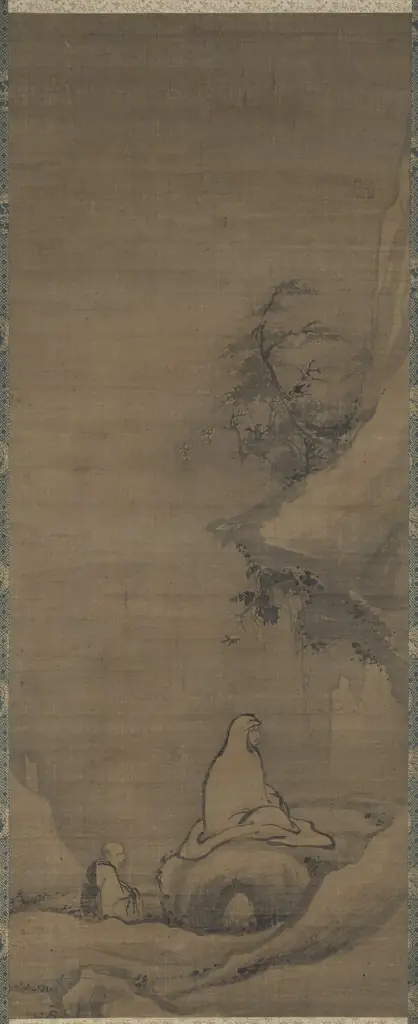 Bodhidharma Meditating Facing a Cliff
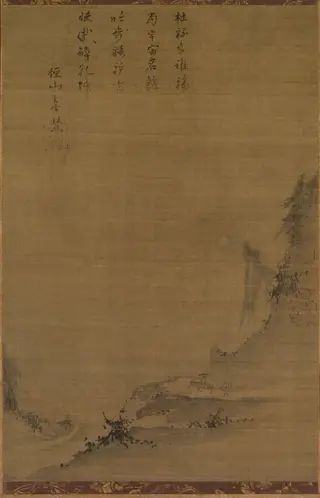 Mountain Landscape in Moonlight
 Bamboo in Rain
 牧松周省筆 破墨山水図|Splashed-Ink Landscape
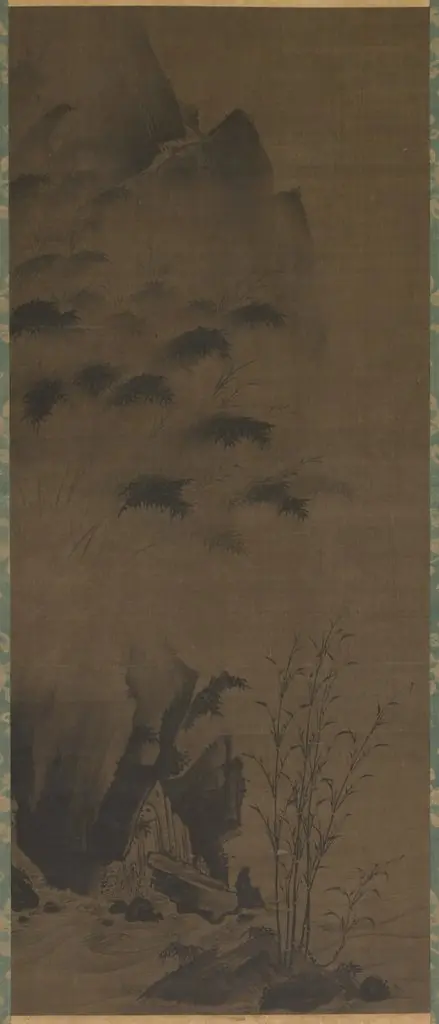 Bamboo in Rain; Bamboo in Wind
 Bamboo in Rain
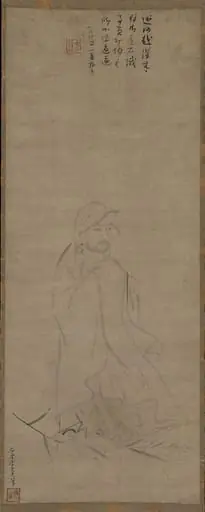 元 李堯夫,一山一寧題贊 達摩渡江圖 軸|Bodhidharma crossing the Yangzi River on a reed
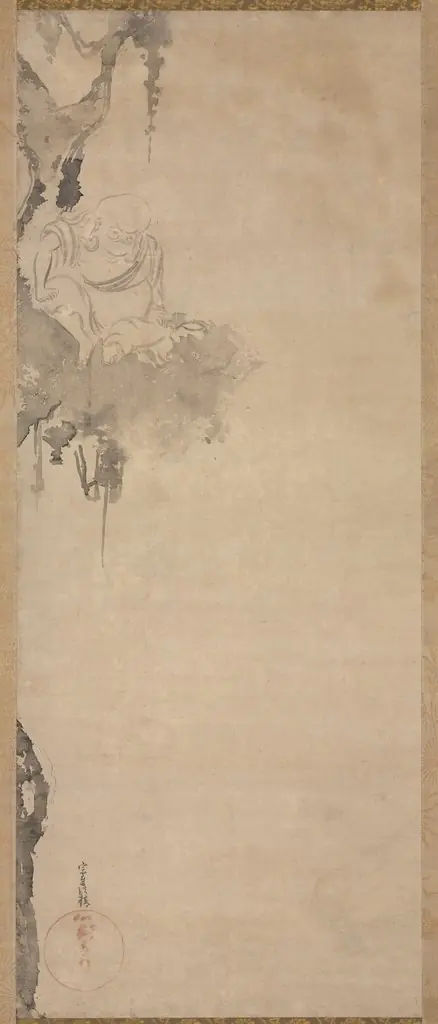 The Bird's Nest Patriarch
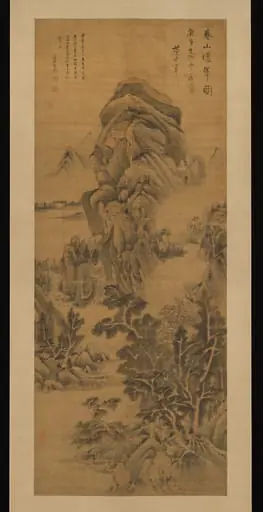 明 董其昌 春山暖翠圖 軸|Spring Mountains over Warm Greenery
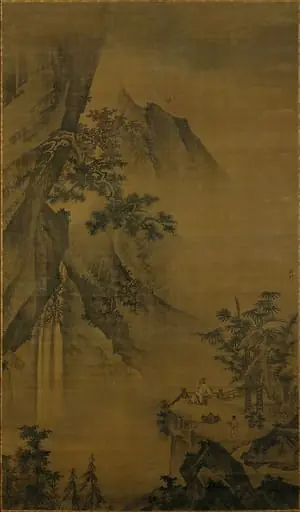 明 鍾禮 觀瀑圖 軸|Li Bai gazing at the waterfall on Mount Lu
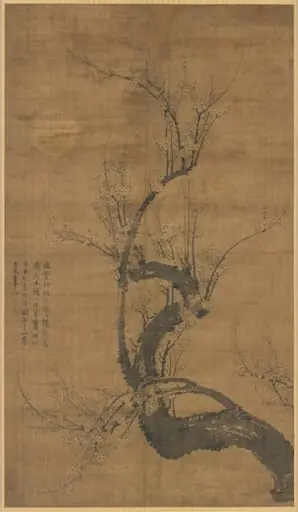 A Prunus in the Moonlight
- 白衣観音図|White-robed Kannon