Artwork
Wilhelmina van Naaldwijk
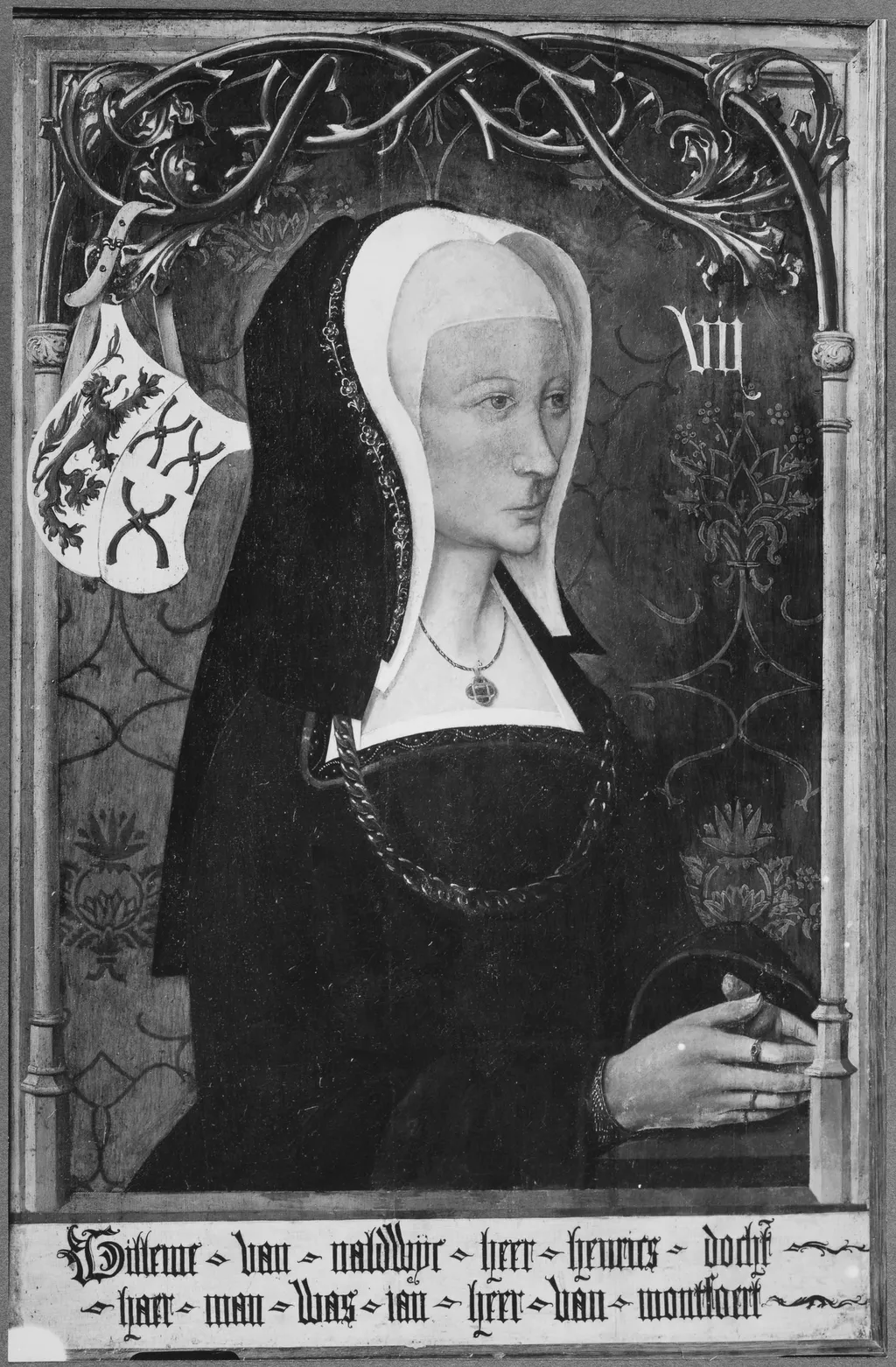
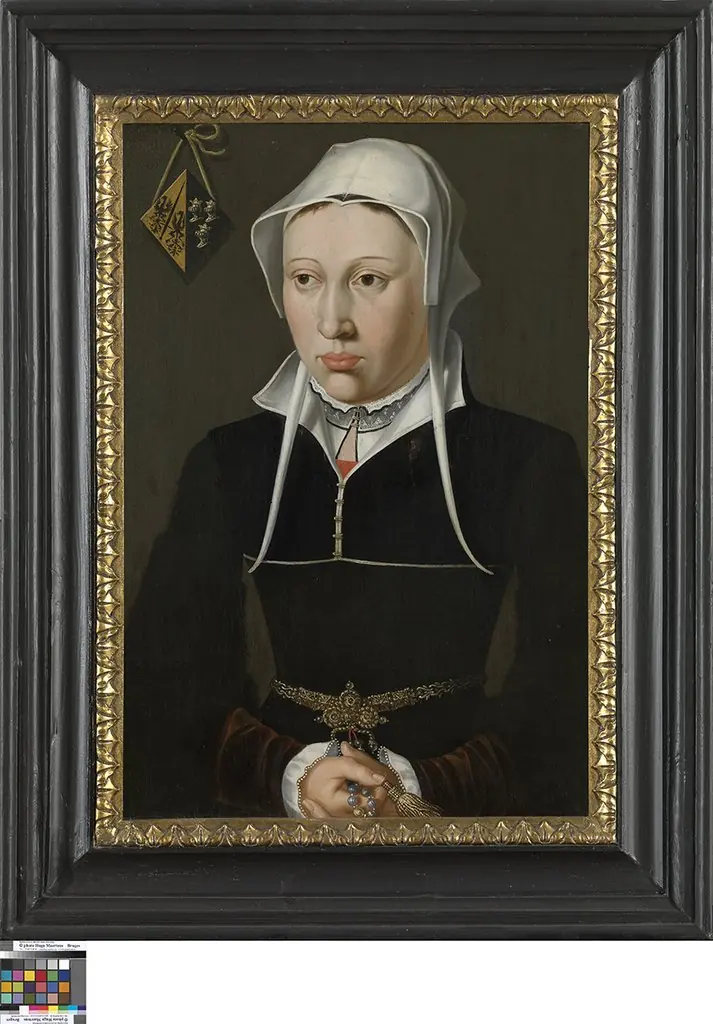
Wilhelmina van Naaldwijk is an oil painting. It dates from 1500 and is held in the collection of the Rijksmuseum. The work is an oil painting depicting a seated woman dressed in a dark, high‑necked gown trimmed with a white collar.
About this work
Subject & Meaning
Its formal qualities, such as the restrained palette and precise detailing, underscore the artistic conventions of the anonymous workshop that produced it.
The portrait shows Wilhelmina van Naaldwijk, a young woman from a prominent Dutch family, rendered in oil on panel. Her likeness is associated with the circle of the Master of Alkmaar and was once owned by Charles de Ligne and Frederick Henry of Orange-Nassau before entering the Rijksmuseum collection. The composition emphasizes her status within the social hierarchy of the period, reflecting the importance of lineage and regional identity in early 16th‑century portraiture.
Symbolically, the work conveys notions of virtue and familial honor, aligning with contemporary expectations of elite women. Its formal qualities, such as the restrained palette and precise detailing, underscore the artistic conventions of the anonymous workshop that produced it.
Technique & Style
The work is an oil painting on wooden panel, measuring 82 cm in height and 56.5 cm in width. Executed around 1500, it portrays Wilhelmina van Naaldwijk in a conventional portrait format characteristic of early Dutch portraiture. The handling of oil paint demonstrates the smooth modeling typical of the period, while the composition and stylistic treatment align with the anonymous circle of the Master of Alkmaar.
Its surface condition remains stable, with no noted alterations or damages recorded. The painting's formal qualities reflect a restrained palette and precise attention to facial detail, reinforcing its status as a representative example of early 16th‑century portraiture.
History & Provenance
The portrait was executed in 1500 by an anonymous follower of the Master of Alkmaar. Originally part of the collection of Charles de Ligne, it later entered the possession of Frederick Henry of Orange-Nassau before being incorporated into the Rijksmuseum's Westland holdings as part of the Dienst Verspreide Rijkscollecties. The work measures 82 cm by 56.5 cm and is painted in oil on panel, depicting Wilhelmina van Naaldwijk.
The painting is held by the Rijksmuseum and associated with the Dienst Verspreide Rijkscollectiedienst in Naaldwijk, Westland. Its documented provenance traces ownership through Charles de Ligne and Frederick Henry of Orange-Nassau before passing to Naaldwijk. No specific inventory or accession number is recorded in the available sources, and no exhibition history is documented.
Context
The portrait of Wilhelmina van Naaldwijk attributed to the circle of the Master of Alkmaar entered a private collection that included Charles de Ligne and Frederick Henry of Orange-Nassau before being acquired by the Rijksmuseum in Westland. Its provenance reflects the circulation of Netherlandish portraiture among aristocratic households in the early sixteenth century. The work is catalogued as a panel painting in oil, measuring 82 cm by 56.5 cm, and is discussed in scholarship as an example of anonymous workshop practice within the Northern Renaissance portrait genre.
Art historians place the piece within the broader context of early Dutch portraiture, noting its stylistic affinities with contemporary courtly imagery while emphasizing the anonymity of its production. The painting’s inclusion in the Rijksmuseum’s dispersed collection underscores its significance as a representative work of the period’s artistic exchange.
Legacy
The portrait of Wilhelmina van Naaldwijk, attributed to the anonymous circle of the Master of Alkmaar, has been housed in the Rijksmuseum in Westland since entering the collection of Charles de Ligne and later Frederick Henry of Orange-Nassau. Its longstanding display at the Rijksmuseum has cemented its reputation as a representative example of early Dutch portraiture from the early 16th century. The work’s technical execution in oil on panel, measuring 82 by 56.5 centimeters, exemplifies the stylistic conventions of the anonymous circle, influencing subsequent interpretations of similar subjects in Dutch art history.
Overview
The work is an oil painting depicting a seated woman dressed in a dark, high‑necked gown trimmed with a white collar. She wears a black headdress that conceals her hair, a necklace with a pendant, and rests her hand on a ledge. To her left a shield bears a white cross on a black field, and the composition is framed by ornamental foliage.
Artist & collection

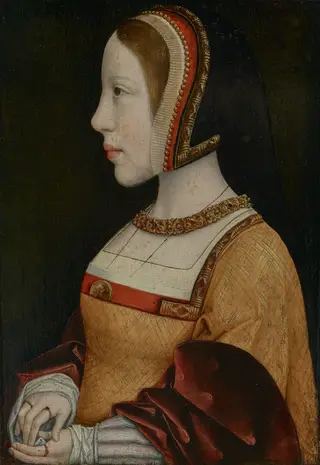
- Portrait of Isabella of Austria (1501–1526)
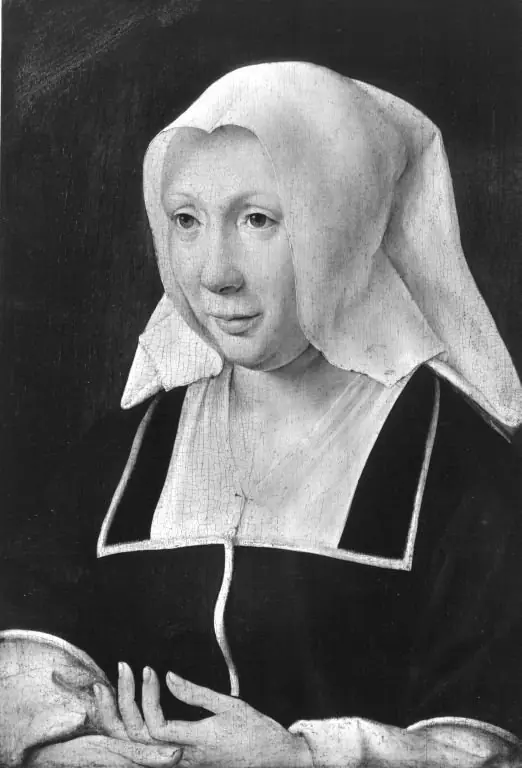 Portraits of a Couple: Female portrait
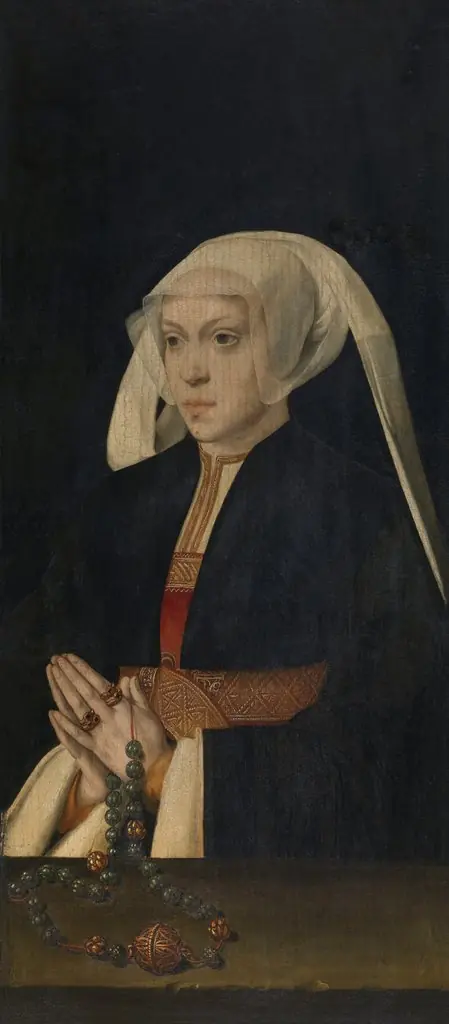 Portrait of a Woman
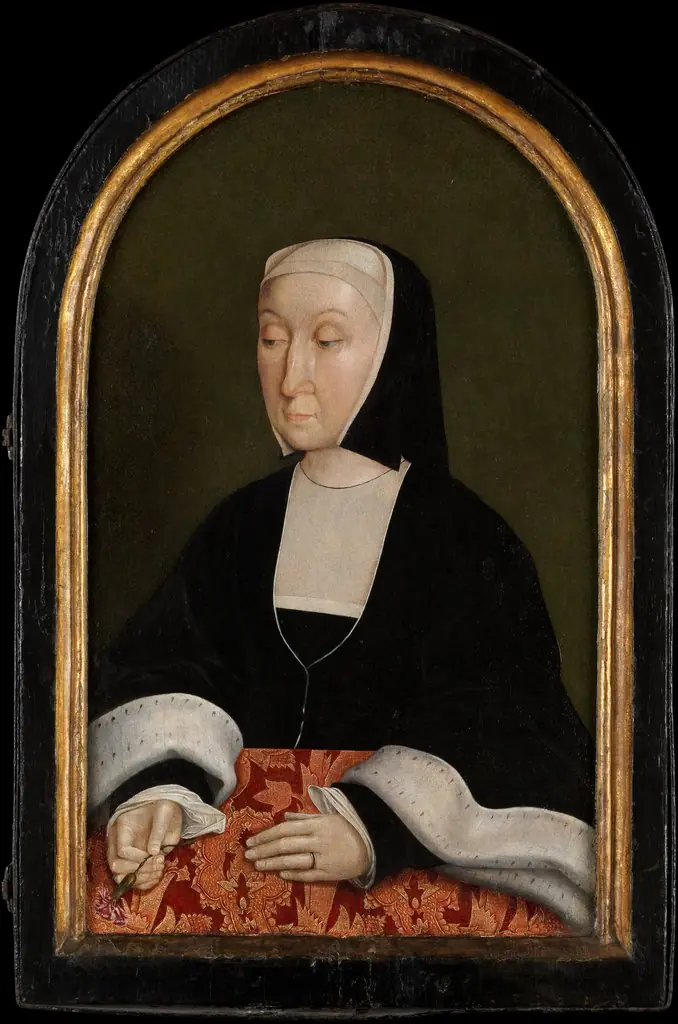 Portrait of Magdalena van Werdenburg (1464–1538), Countess of Egmond and wife of Jan (1438–1516), First Count of Egmond;
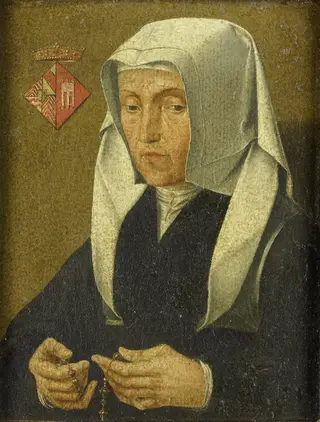 Portrait of Magdalena van Werdenborgh (1464-1538)
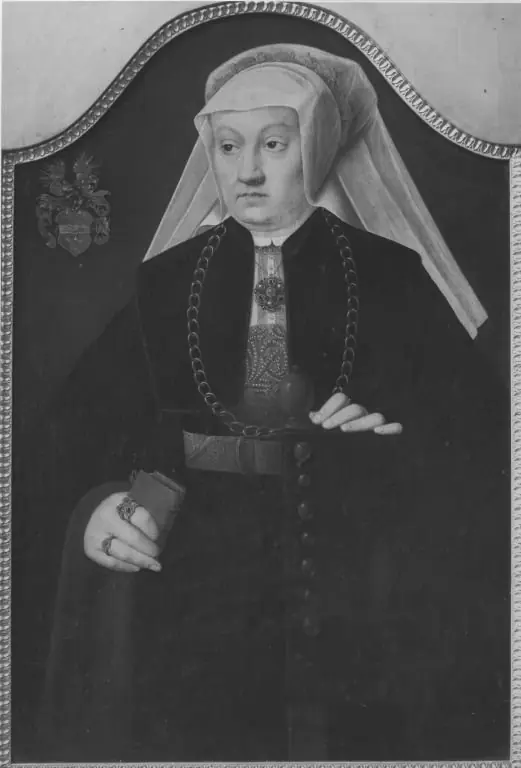 Portrait of a mother (the daughter is overpainted)
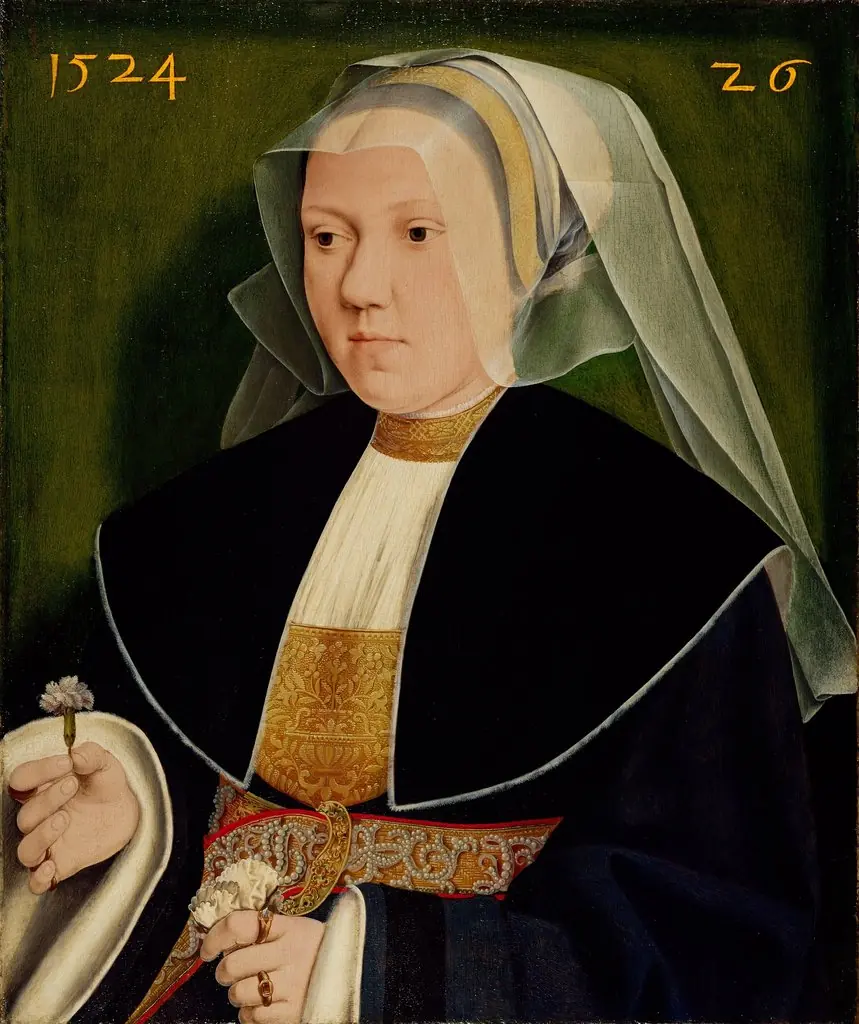 Portrait of Margaretha von Mochau, wife of Gerhard von Westerburg
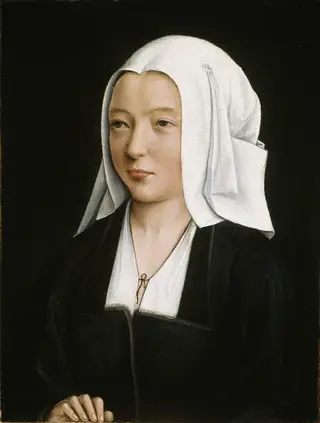 Portrait of a Young Woman
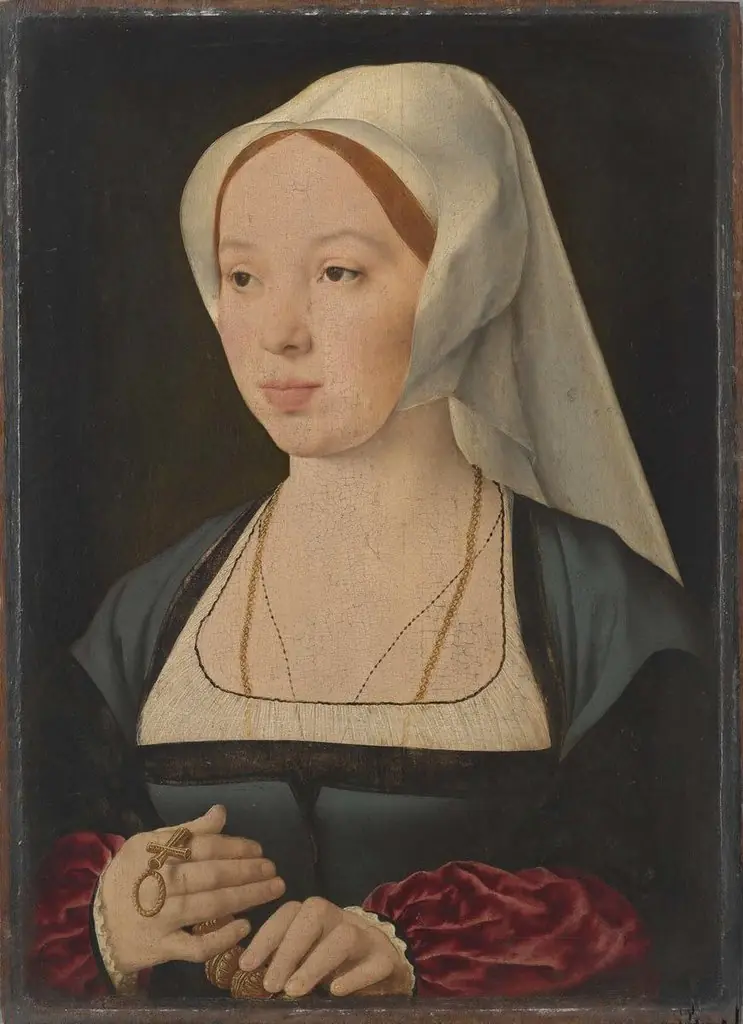 Portrait of a Lady
 Holy Mary
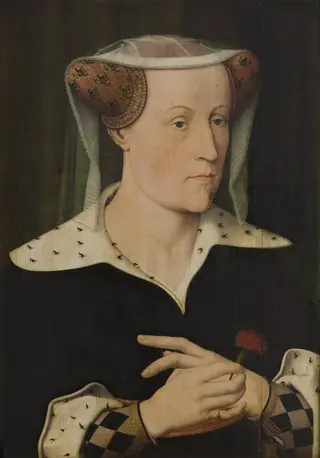 Jacoba of Bavaria, Countess of Holland and Zeeland
 Portrait of the wife of Jan de Fevere