Artwork
Wing of a Triptych with the Portrait of Elisabeth Canneel
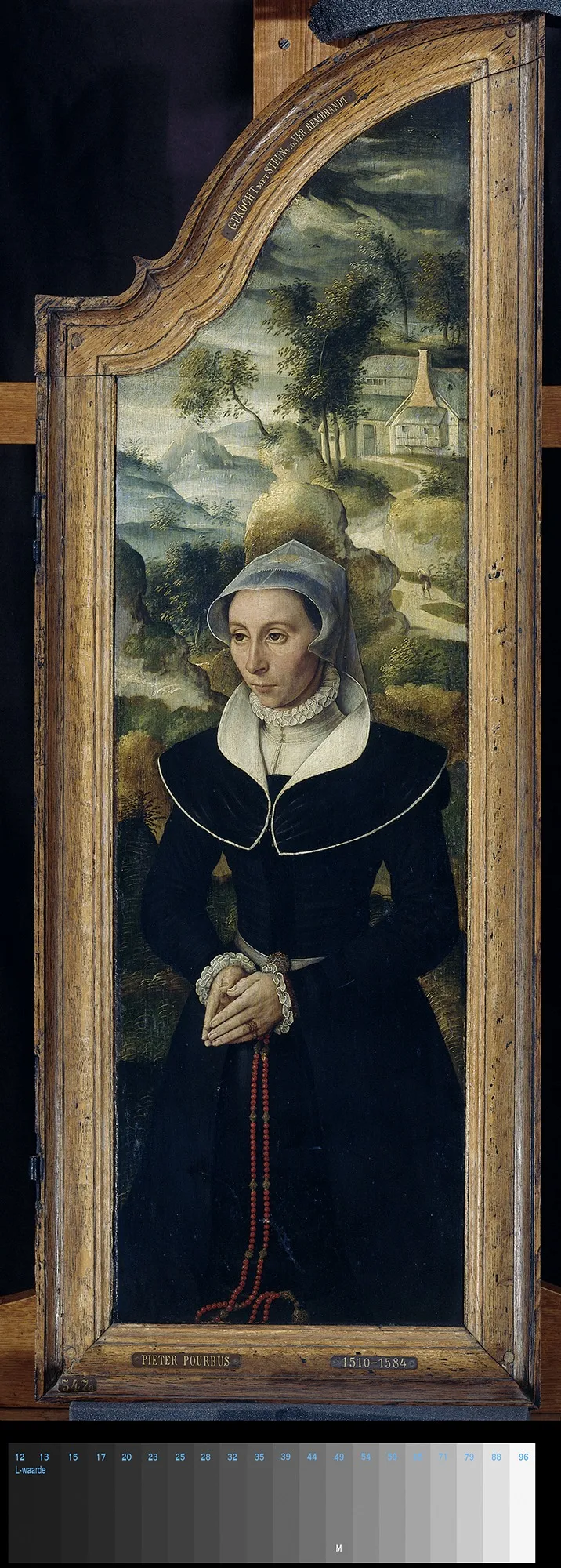
Wing of a Triptych with the Portrait of Elisabeth Canneel is an oil painting. It dates from 1592 and is held in the collection of the Rijksmuseum.
About this work
Subject & Meaning
She holds a prayer book and a rosary, symbols of piety and domestic virtue, while the surrounding interior suggests a private devotional setting.
The work portrays a kneeling woman identified as Elisabeth Canneel, a merchant’s wife, rendered in half‑length against a dark interior. She holds a prayer book and a rosary, symbols of piety and domestic virtue, while the surrounding interior suggests a private devotional setting. The composition combines portraiture with allegorical reference to marital devotion, reflecting the sitter’s status and the cultural emphasis on religious observance in late‑16th‑century Bruges.
The painting’s symbolism underscores contemporary ideals of modesty and spiritual aspiration, linking personal identity to broader devotional practices of the period.
Technique & Style
The work is executed in oil paint on a wooden panel support, a standard technique for late sixteenth-century Netherlandish portraiture. According to the catalogue record, the panel measures 83 cm in height by 25.5 cm in width, producing a tall, narrow format consistent with its function as the wing of a triptych. The painting was produced in Bruges in 1584.
Its slim vertical proportion and modest scale reflect the practical requirements of a hinged altarpiece component rather than a stand-alone devotional panel.
Stylistically, the work belongs to the portrait tradition of the Southern Netherlands in the late sixteenth century, depicting a kneeling woman. The narrow format concentrates attention on the single half-length figure, a compositional approach typical of donor portraits integrated into devotional wings.
History & Provenance
The work was painted in Bruges in 1584 by an anonymous artist for Elisabeth Canneel, a prominent merchant family member in Antwerp. It formed part of a triptych, with this wing panel depicting her portrait. The work entered the collection of the Rijksmuseum in Amsterdam, where it remains on display in the museum's gallery dedicated to Flemish Renaissance art.
The painting is executed in oil on panel and measures 83 cm in height by 25.5 cm in width.
Context
The work was created in Bruges in 1584 by an anonymous painter, reflecting the city's prominence in Northern Renaissance art production. It is an oil painting on panel depicting a kneeling woman identified as Elisabeth Canneel, exemplifying contemporary portraiture conventions. The piece is housed in the Rijksmuseum collection, where it is studied within the broader context of 16th-century Netherlandish portraiture and triptych altarpieces.
Overview
The work is an oil painting that forms one wing of a larger triptych, portraying a woman in modest dark clothing with a white collar and head covering. She stands before a modest landscape that includes a small house, trees, and a winding path, her hands clasped together and a rosary visible around her neck.
Artist & collection

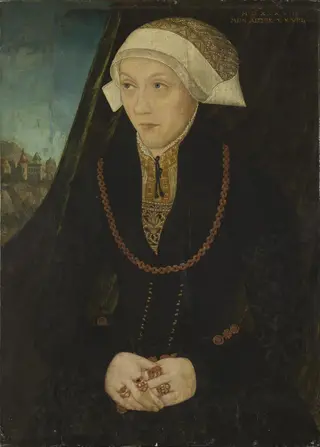
- Portrait of a woman
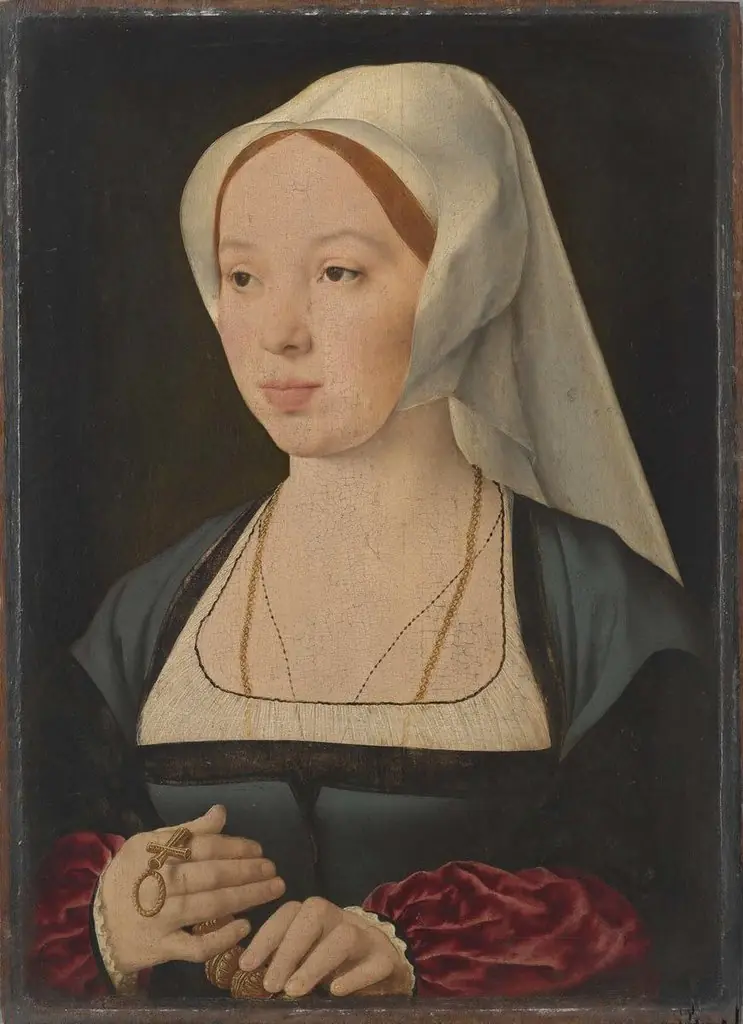 Portrait of a Lady
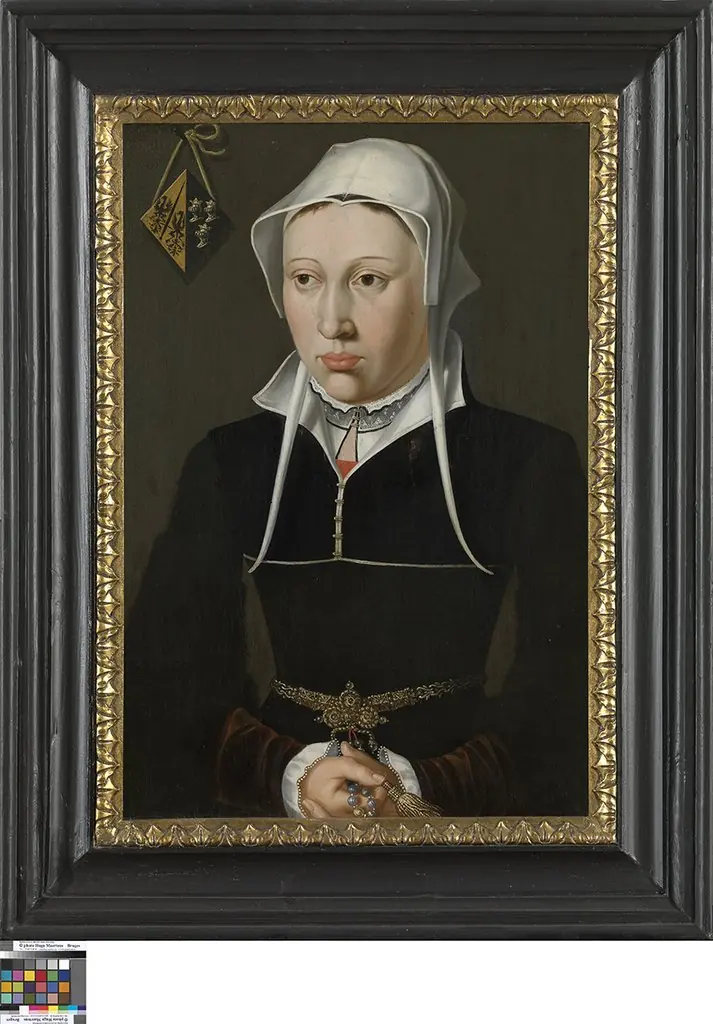 Portrait of the wife of Jan de Fevere
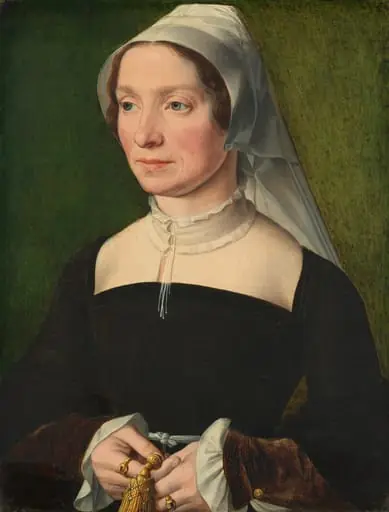 Wife of a Member of the de Hondecoeter Family
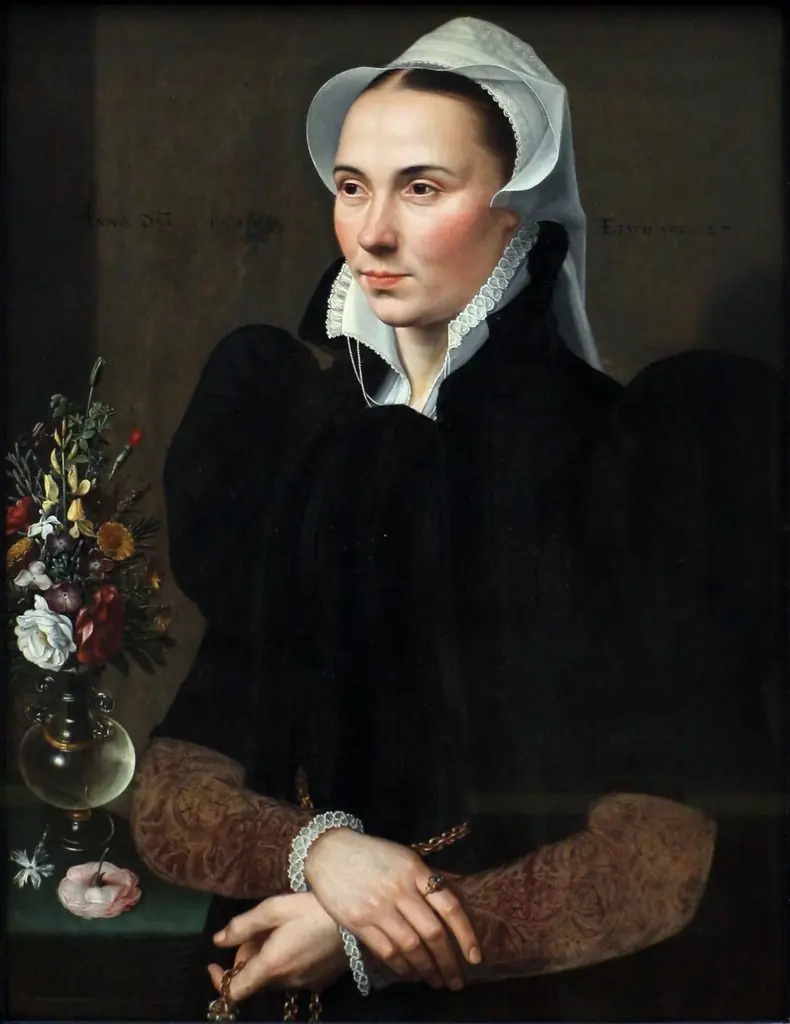 Portrait of a 27-year-old woman with a bunch of flowers
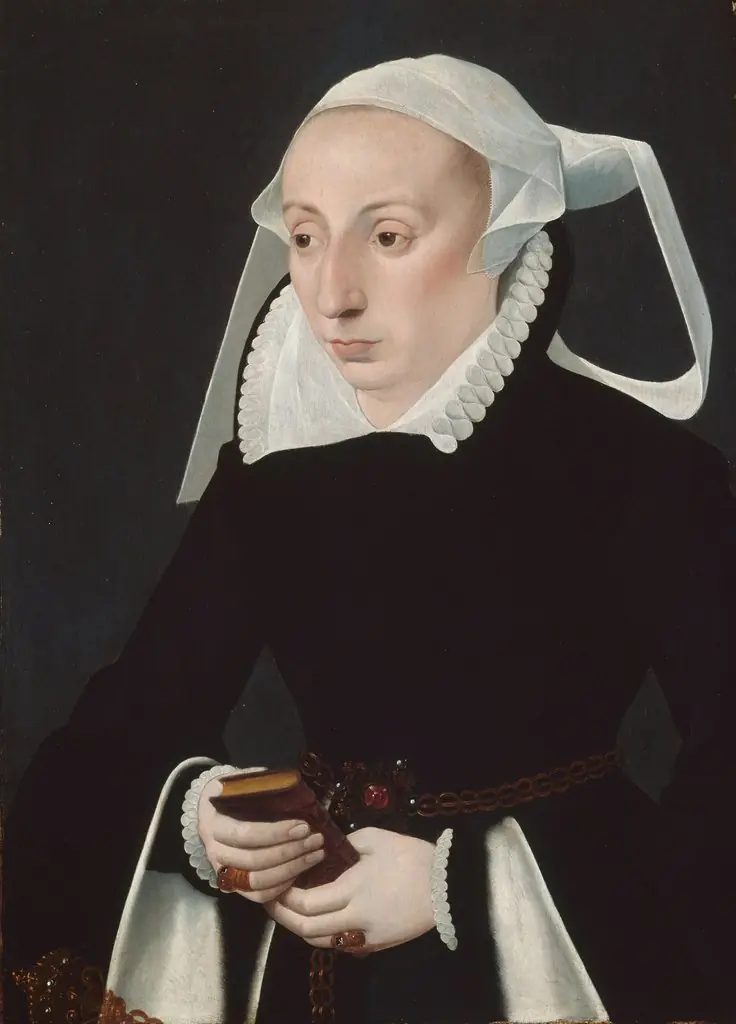 Portrait of a Woman with a Prayer Book
 Portrait of Claude Catherine de Clermont-Tonnerre, Duchess of Retz (1543–1603)
 Weibliches Bildnis
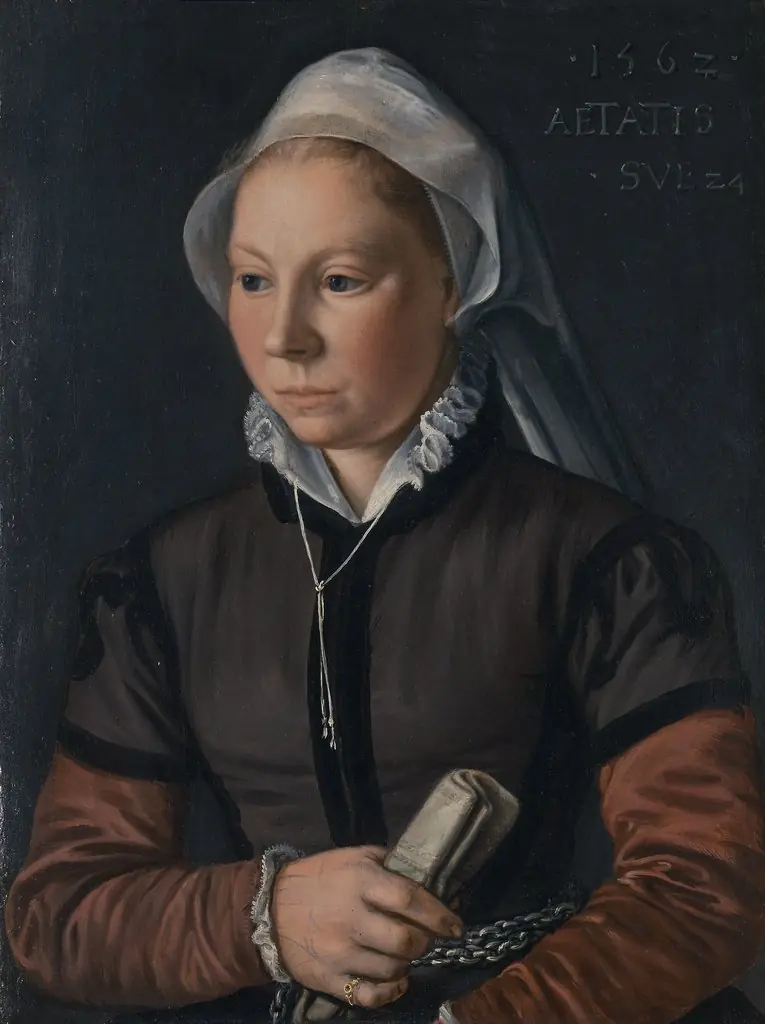 Portrait of a Young Woman
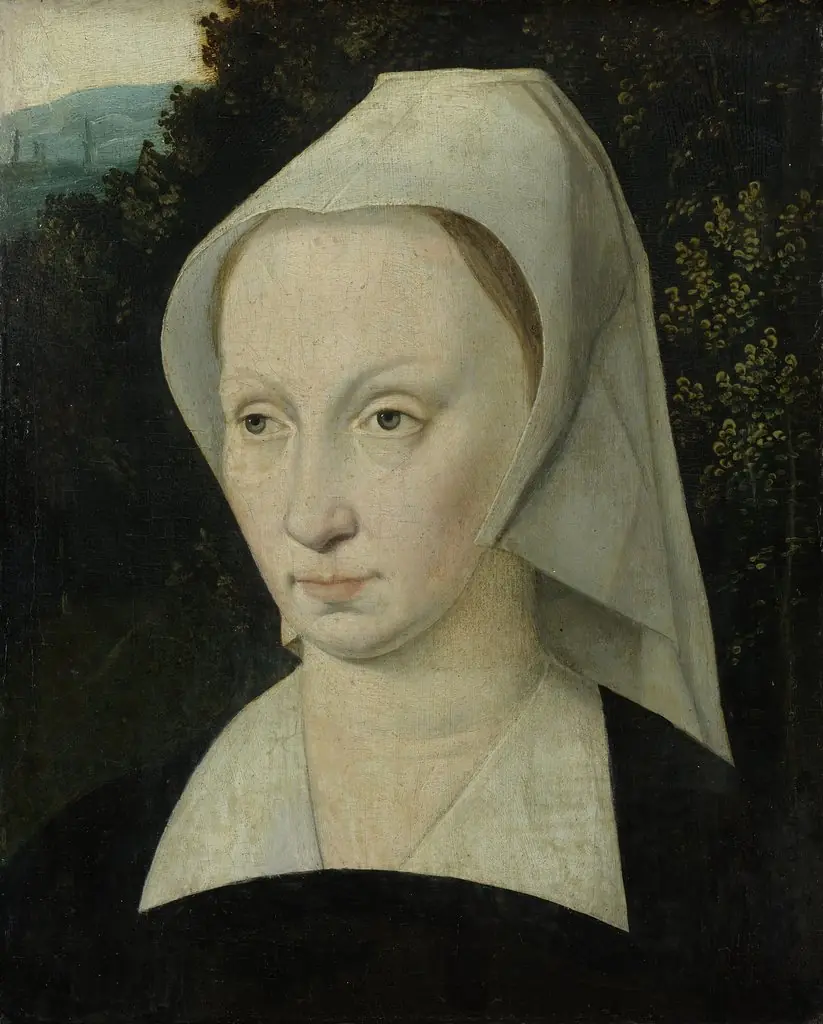 Portrait of a woman
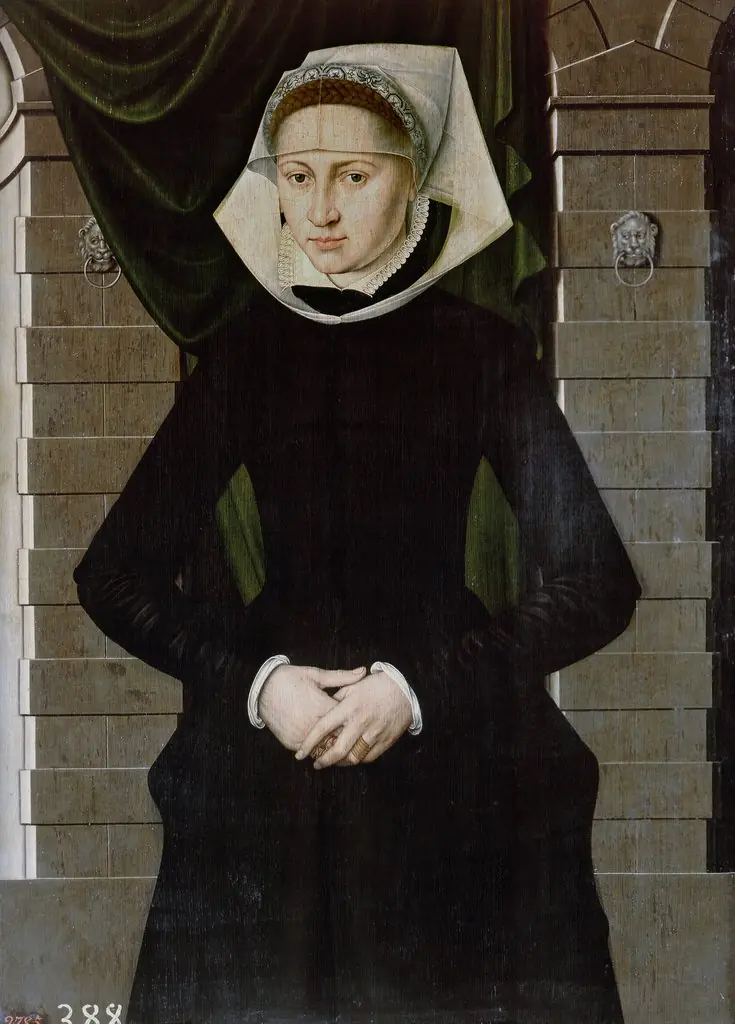 Dama holandesa
 Portrait of a Young Woman