Artwork
The Lover Leaves Wistfully in the Morning after a Passionate Tryst: Lalit Ragini, from a Ragamala
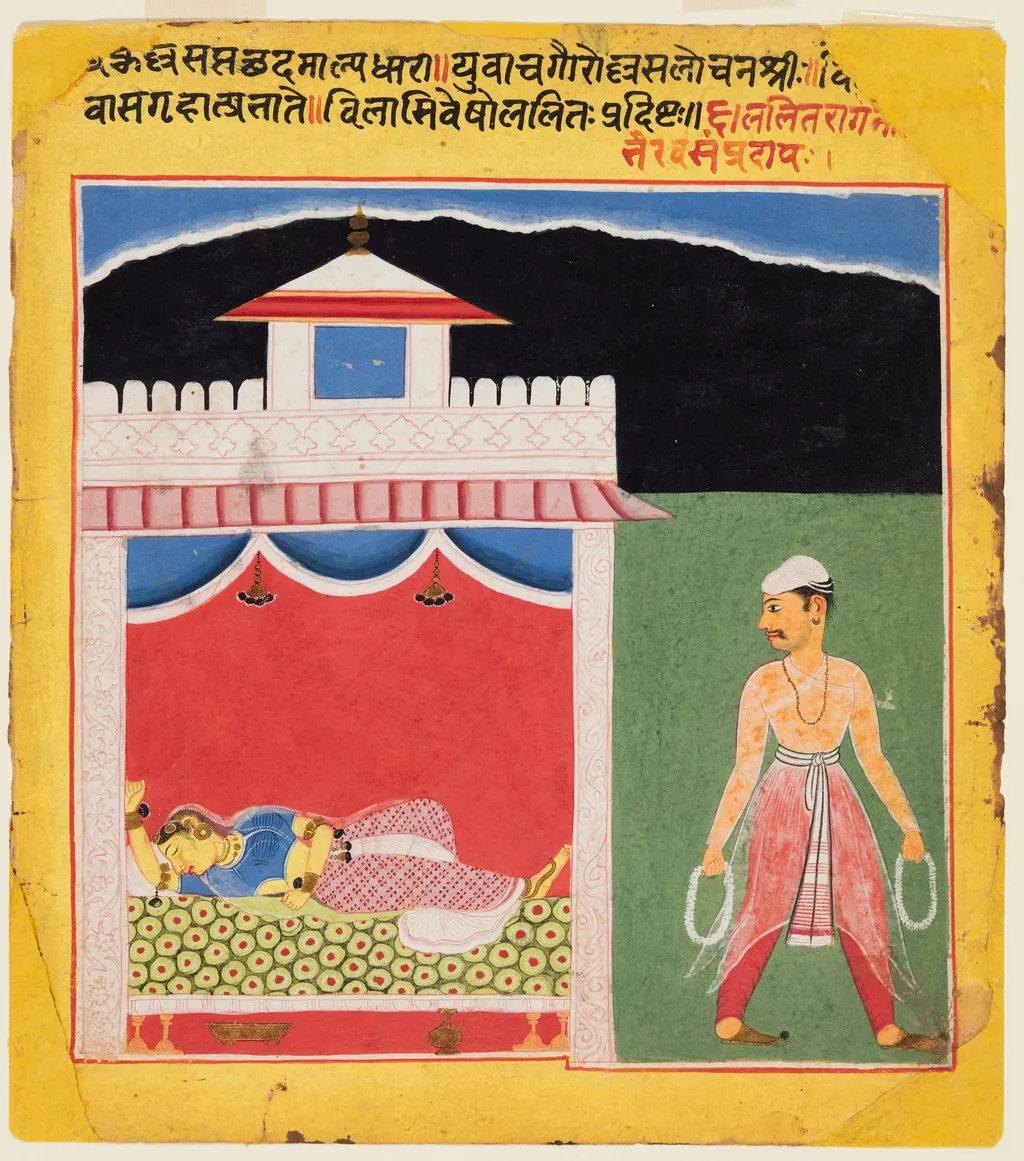
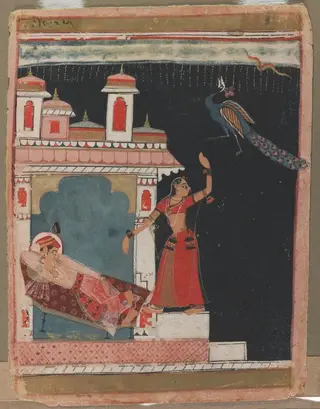
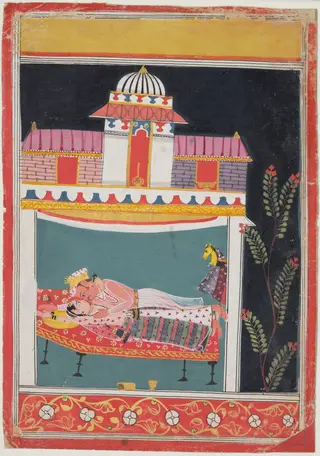
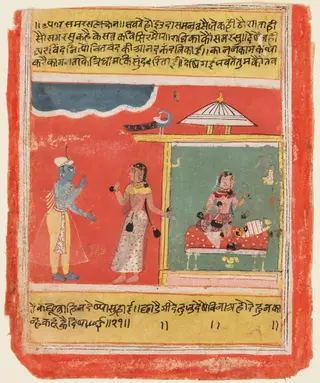
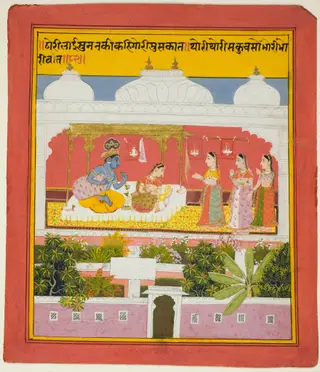
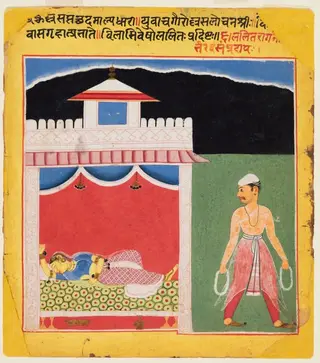
The Lover Leaves Wistfully in the Morning after a Passionate Tryst: Lalit Ragini, from a Ragamala is an unspecified painting. It dates from 1600 and is held in the collection of the Cleveland Museum of Art. The work portrays a solitary male figure standing before a building, turning his gaze toward a reclining woman inside.
About this work
History & Provenance
The painting is dated to circa 1600, with an inception date of 1600-01-01 recorded in the Cleveland Museum of Art’s records.
The painting is dated to circa 1600, with an inception date of 1600-01-01 recorded in the Cleveland Museum of Art’s records. It was produced in the Malwa region, though the artist remains unknown and no commission is documented in the sources. Prior to its acquisition by the Cleveland Museum of Art, the work’s ownership chain is not recorded in the available material; it entered the museum’s collection with the accession number 2018.123.
The painting is held in the collection of the Cleveland Museum of Art, located in Cleveland. It was acquired by the institution under the accession number 2018.123. The work, created around the year 1600 in the Malwa region, is classified as a painting within the museum's holdings.
Overview
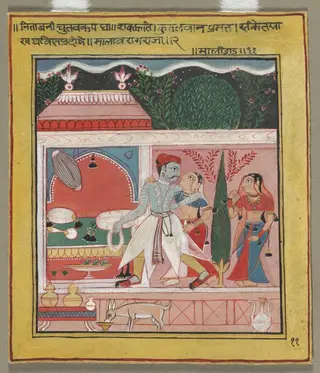
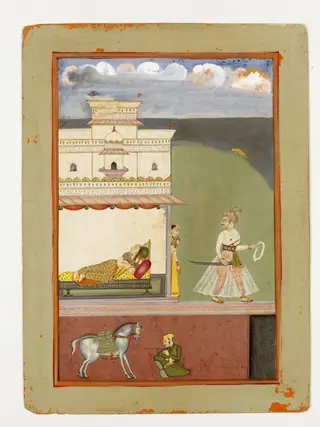
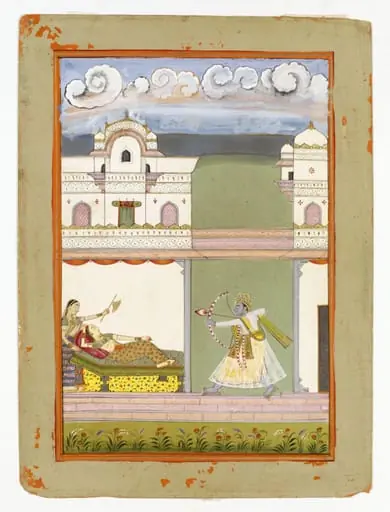
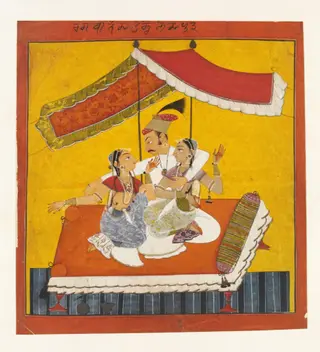
The work portrays a solitary male figure standing before a building, turning his gaze toward a reclining woman inside. She lies on a bed, clothed in a blue upper garment and a patterned skirt, while the man is dressed in a white turban, pink dhoti and a white waistcloth, holding a circular object in each hand. The architectural backdrop features a red wall with a white trim, two small bells on the roof, and a distant, dark‑mountain horizon beneath a blue sky.
Subject & Meaning
The scene suggests a moment of parting after an intimate encounter, with the title indicating the lover’s wistful departure in the morning. The juxtaposition of the interior, where the woman rests, and the exterior, where the man stands, emphasizes the emotional tension between longing and separation.
Technique & Style
Rendered in a flat, decorative manner, the painting employs bold color blocks, red, blue, pink and white, against a simplified landscape. The figures are outlined with clear contours, and the architectural elements are stylized rather than rendered realistically, reflecting a narrative illustration typical of ragamala traditions.
Context
Ragamala paintings link visual art with Indian classical music, each image embodying a specific raga’s mood. This work, titled "The Lover Leaves Wistfully in the Morning after a Passionate Tryst: Lalit Ragini, from a Ragamala," aligns with the Lalit raga, traditionally associated with the early morning and a sense of yearning.
Artist & collection