Artwork
Untitled
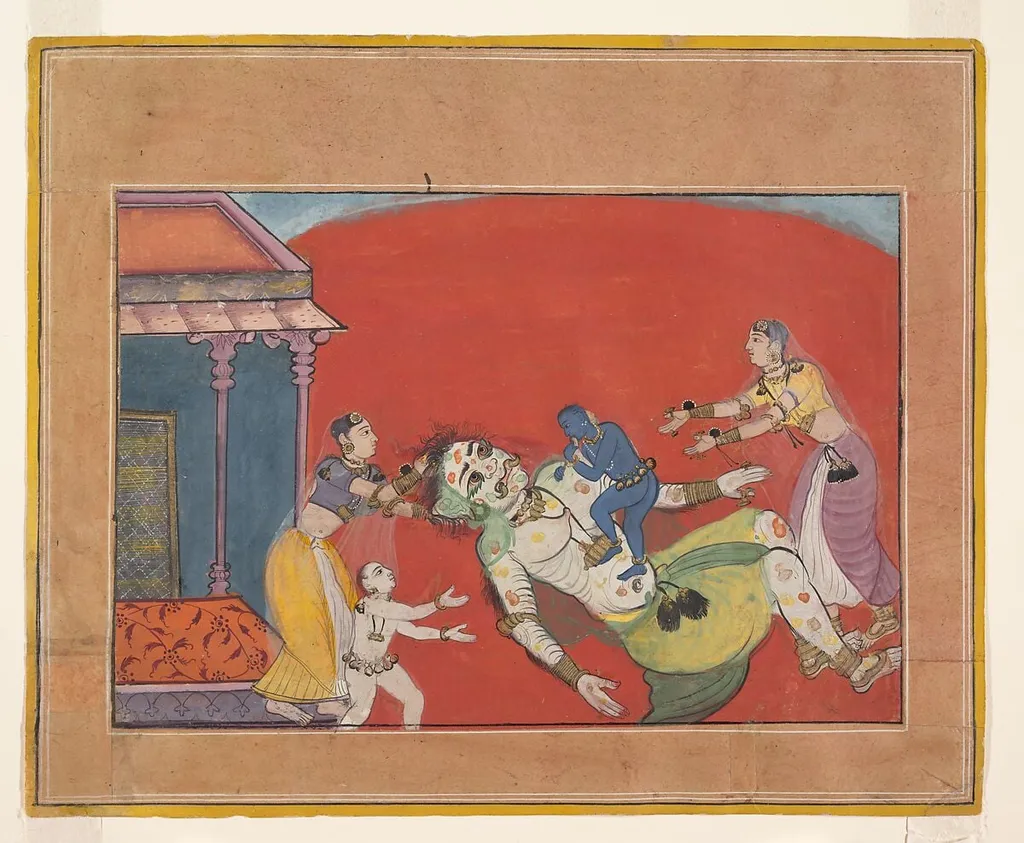
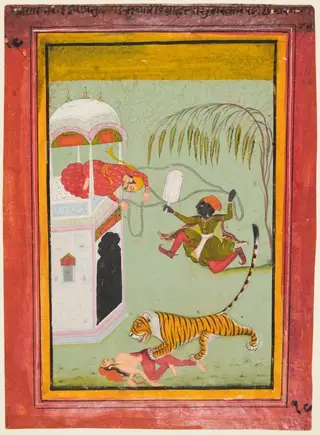
Untitled is a watercolor painting. It dates from 1610 and is held in the collection of the Metropolitan Museum of Art.
About this work
A small, bright painting of blue-skinned Krishna standing on a demon's head as women look on. A Hindu devotional image from about 1610, made with opaque watercolor on paper. The colors are layered like thin sheets of colored glass, a method called glazing. The artist is unknown, but the style is typical of early Indian miniatures.
Technique & Style
The support material, paper, indicates a format distinct from canvas or panel painting, aligning with South Asian artistic practices of the early 17th century.
Created in 1610 by an anonymous artist, this work is executed in opaque watercolor and ink on a paper support. Classified as a painting within the religious genre, the piece depicts a narrative scene featuring the figures of Krishna, Putana, a woman, and a boy. The medium of opaque watercolor suggests a technique capable of producing solid, vibrant color fields typical of the period's manuscript or devotional traditions, while the use of ink likely delineates forms and details.
The support material, paper, indicates a format distinct from canvas or panel painting, aligning with South Asian artistic practices of the early 17th century. The work is currently held in the collection of the Metropolitan Museum of Art.
History & Provenance
The painting identified as Untitled is dated to 1610 and executed in opaque watercolor and ink on paper, classified as a religious work depicting Krishna, Putana, a boy, and a woman. It is attributed to an anonymous painter and entered the Metropolitan Museum of Art's collection, where it remains. The work's creation history is linked to early 17th-century Indian artistic practice, though the exact commissioning details are undocumented. Its provenance is confined to the museum's ownership since acquisition, with no further transfer recorded.
Legacy
The work, though unsigned, came to be recognized as a seminal example of early 17th‑century devotional painting, influencing later interpretations of Hindu mythic narratives in Western collections; its inclusion in the Metropolitan Museum of Art cemented its scholarly attention; the attribution to an anonymous master sparked studies on anonymous Indian artists; its visual program of Krishna’s triumph over Putana contributed to iconographic models used in later Indian miniature traditions; the painting's provenance and display have shaped its reputation as a rare surviving example of early Rajput style, informing exhibitions and academic discourse on cross‑cultural exchange.
Overview
This untitled painting, created around 1610, is an example of an early Indian miniature. Executed in opaque watercolor and ink on paper, it serves as a Hindu devotional image. The small, bright composition depicts the blue-skinned deity Krishna engaged in a significant act, observed by female figures. Its creation reflects the rich tradition of religious art from the Indian subcontinent during this period.
Subject & Meaning
The central figure in this work is Krishna, identifiable by his blue skin, shown triumphing over a demonic entity. He stands atop the demon's head, an act witnessed by several women positioned around the scene. This imagery likely illustrates a specific episode from Hindu mythology, emphasizing Krishna's divine power and protective nature. Such depictions were intended to inspire reverence and facilitate spiritual connection for devotees.
Context
As a Hindu devotional image, this painting belongs to a long-standing tradition of religious art in India. Such works were integral to spiritual practice, providing visual representations of deities and mythological narratives for private contemplation or temple settings. Its style and subject matter offer insight into the artistic and religious landscape of early 17th-century India, inviting further exploration into the broader context of Hinduism.
Artist & collection

 Untitled
 Untitled
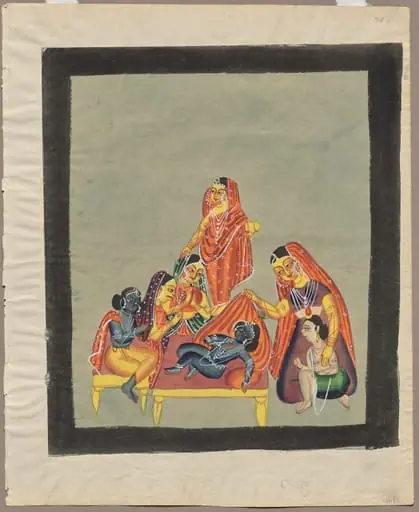 Worship of the Infant Krishna, from a Kalighat album
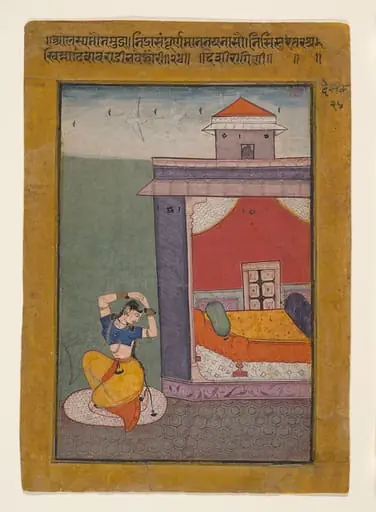 Untitled
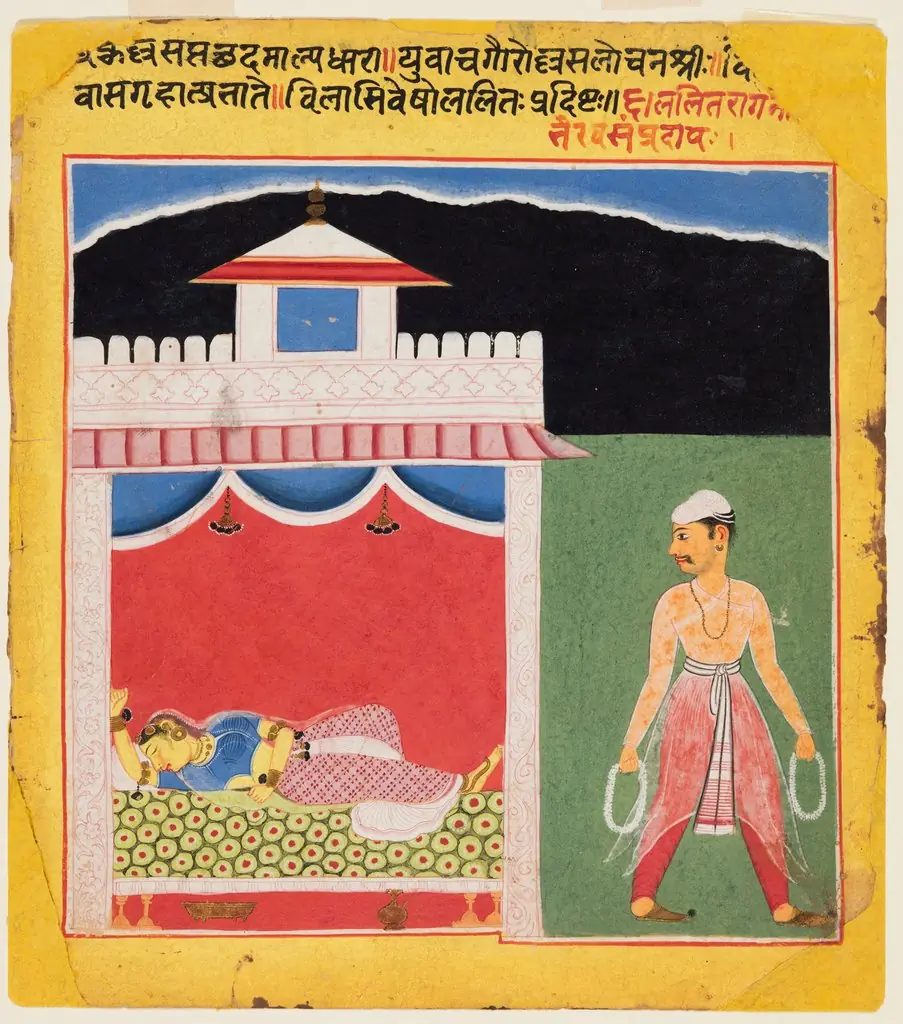 The Lover Leaves Wistfully in the Morning after a Passionate Tryst: Lalit Ragini, from a Ragamala
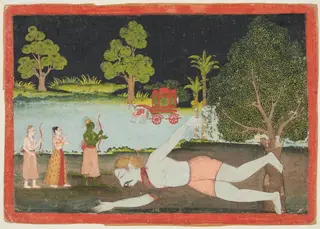 Rama and Lakshmana slay the demon giant Viradha, from Chapters 2 through 4 of the Aranya Kanda (Book of the Forest) of a Ramayana (Rama’s Journey)
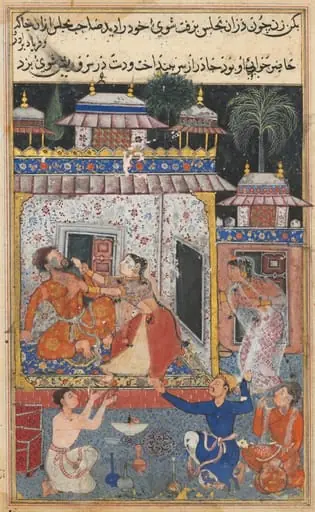
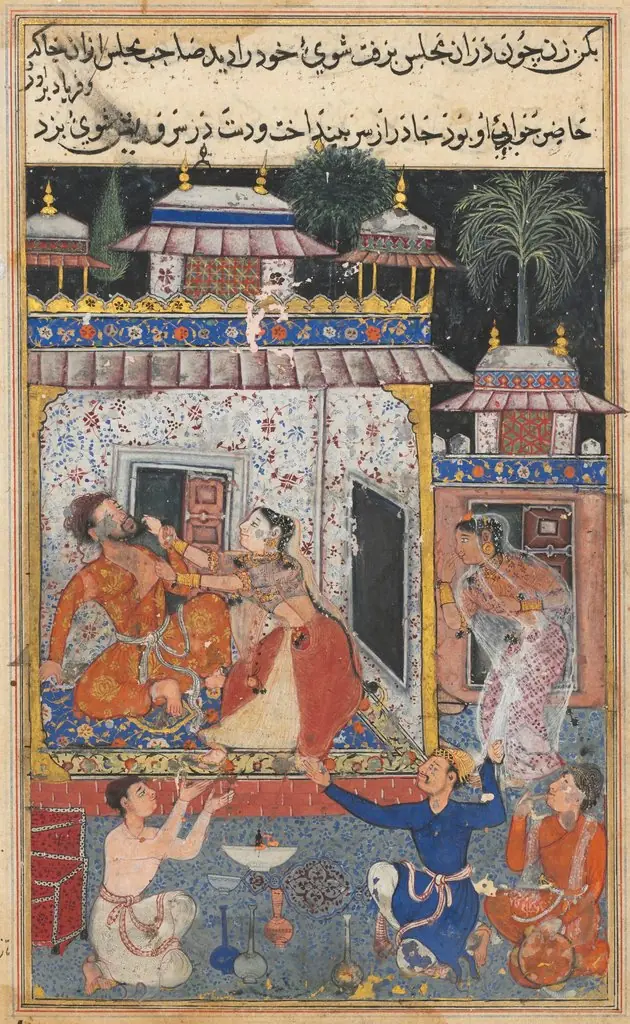 The deceitful wife assaults her erring husband, from a Tuti-nama (Tales of a Parrot): Eighth Night
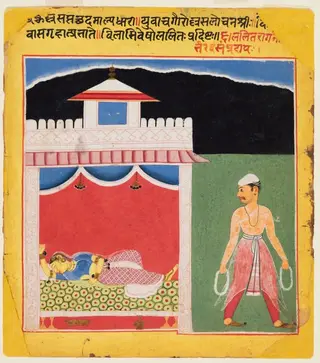 The Lover Leaves Wistfully in the Morning after a Passionate Tryst: Lalit Ragini, from a Ragamala
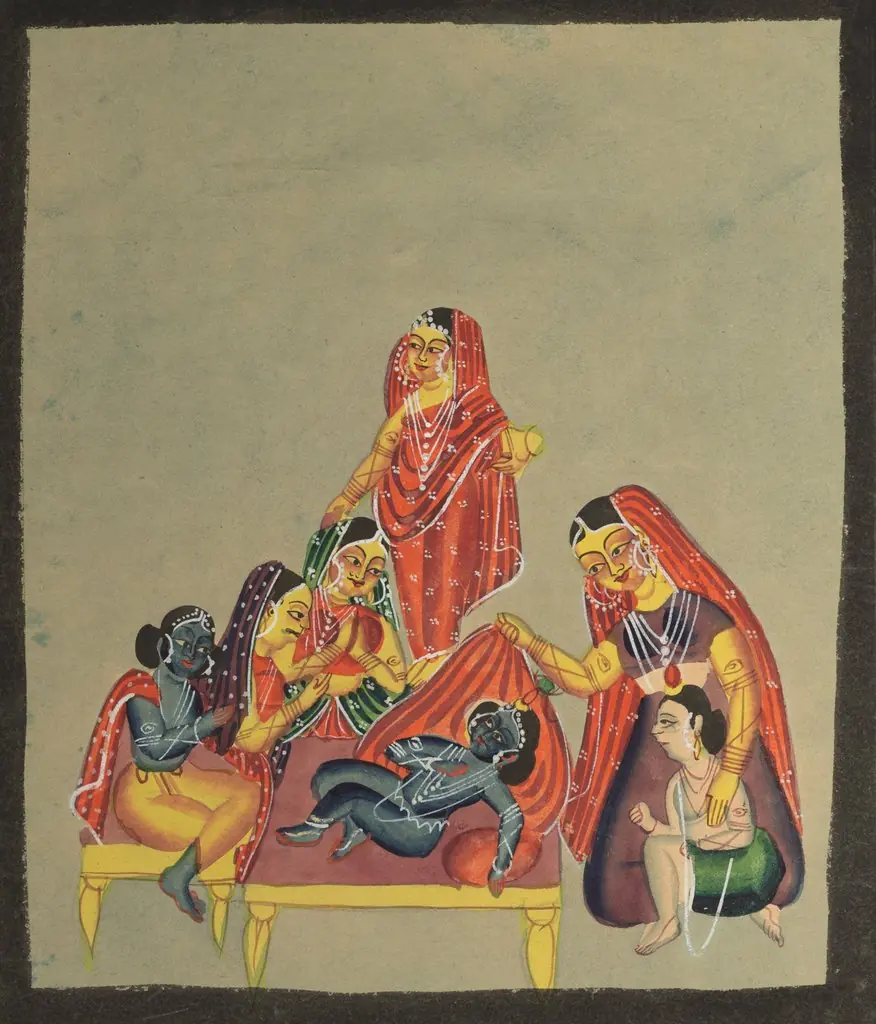 Worship of the Infant Krishna, from a Kalighat album
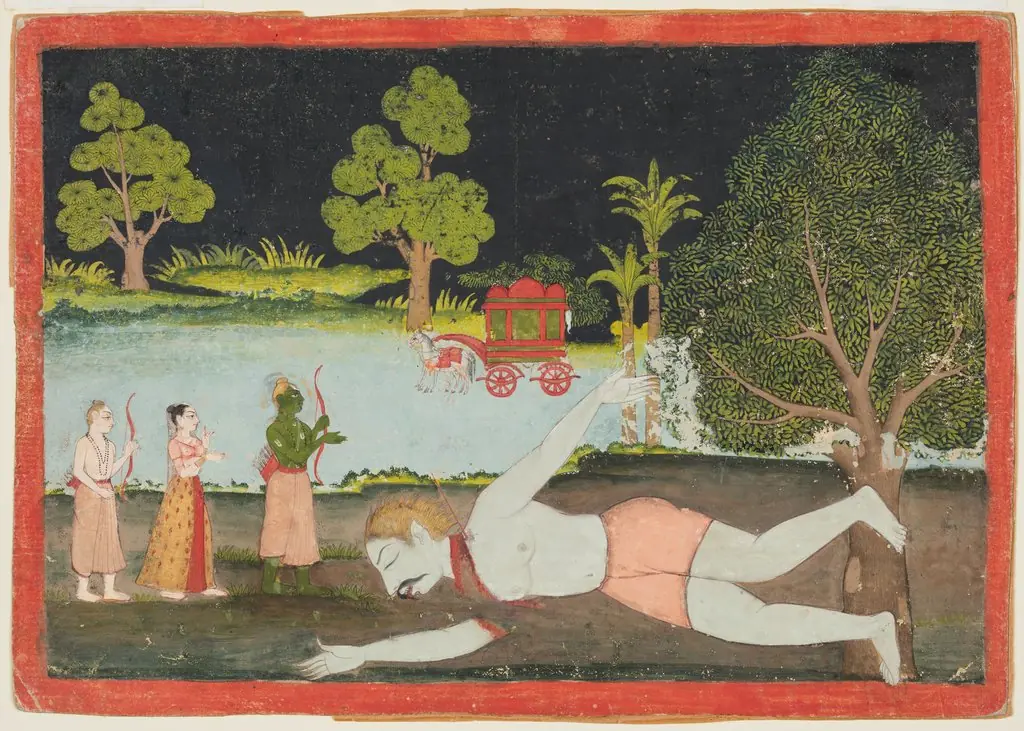 Rama and Lakshmana slay the demon giant Viradha, from Chapters 2 through 4 of the Aranya Kanda (Book of the Forest) of a Ramayana (Rama’s Journey)
 A page from a Punishment series: Punishment for murder
- The deceitful wife assaults her erring husband, from a Tuti-nama (Tales of a Parrot): Eighth Night