Artwork
Young woman from Monnikendam
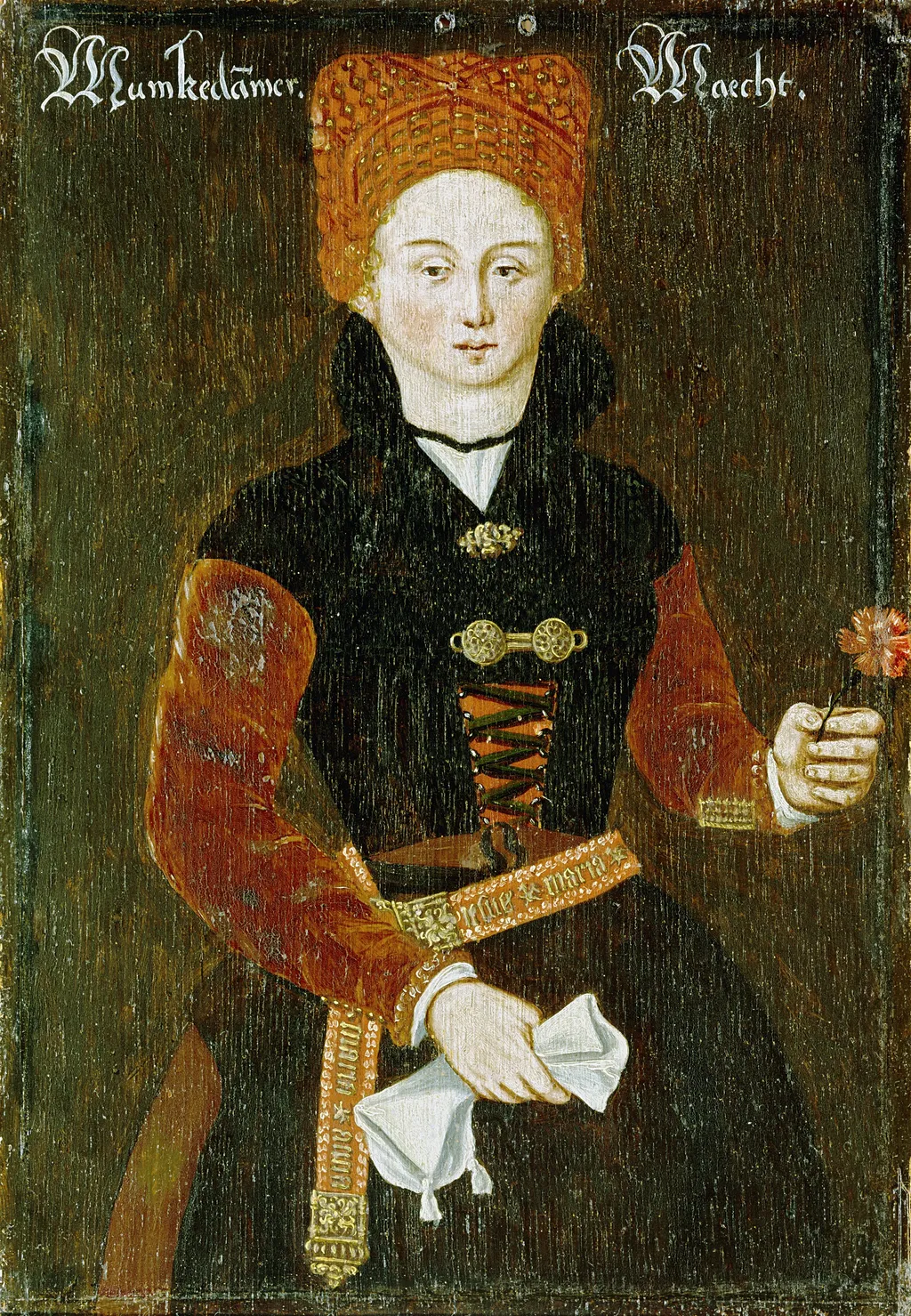
Young woman from Monnikendam is an oil painting. It dates from 1550 and is held in the collection of the Rijksmuseum. The work is an oil painting that portrays a young woman dressed in a dark, sumptuous costume accented by vivid orange sleeves and cuffs.
About this work
Subject & Meaning
The work is a portrait of a young woman wearing the traditional clothing of the Netherlands, identified as a woman from Monnikendam and representing the local folk costume of that region in the mid-sixteenth century. As a portrait created around 1550, it serves as a visual record of regional dress and identity rather than conveying religious or allegorical symbolism, focusing on the realistic presentation of the sitter's attire and the cultural markers of her community.
Technique & Style
The work is a mid-sixteenth-century oil portrait on wood panel, painted in the Netherlands during the 1550s. It depicts a young woman in traditional dress, following contemporary portrait conventions, with fine brushwork and a restrained palette typical of anonymous Dutch portraiture. The painting measures 42 by 29 cm.
History & Provenance
Young woman from Monnikendam was created around 1550 as an oil painting on panel, portraying a young woman in traditional Dutch dress. It belongs to the collection of the Rijksmuseum in Amsterdam, where it is catalogued under inventory number SK-A-535. No specific exhibition history is documented in the available sources.
Context
Young woman from Monnikendam (1550) is a portrait in oil on panel that reflects sixteenth-century Dutch portraiture conventions through its depiction of a sitter in traditional regional attire. Held in the Rijksmuseum, it figures in scholarly discussion of anonymous portraiture and regional identity, and its material and compositional details inform studies of Renaissance-era Netherlandish painting practice.
Legacy
Its inclusion in major museum inventories has reinforced its status as a representative example of the period’s portrait genre.
The portrait known as Young woman from Monnikendam has been recognized for its role in shaping early Dutch portraiture, noted for its naturalistic rendering of a sitter in traditional dress. The work's composition and treatment of clothing have been cited in later 16th‑century portraiture as a reference point for representing civic identity, and it continues to be reproduced in scholarly studies of Netherlandish visual culture. Its inclusion in major museum inventories has reinforced its status as a representative example of the period’s portrait genre.
Overview
The work is an oil painting that portrays a young woman dressed in a dark, sumptuous costume accented by vivid orange sleeves and cuffs. She wears a tall, pointed hat and a stiff white collar, and a gold chain with a key‑shaped pendant rests around her neck. In her hands she holds a white cloth and a small, unidentified object, set against a plain, dark background that isolates the figure.
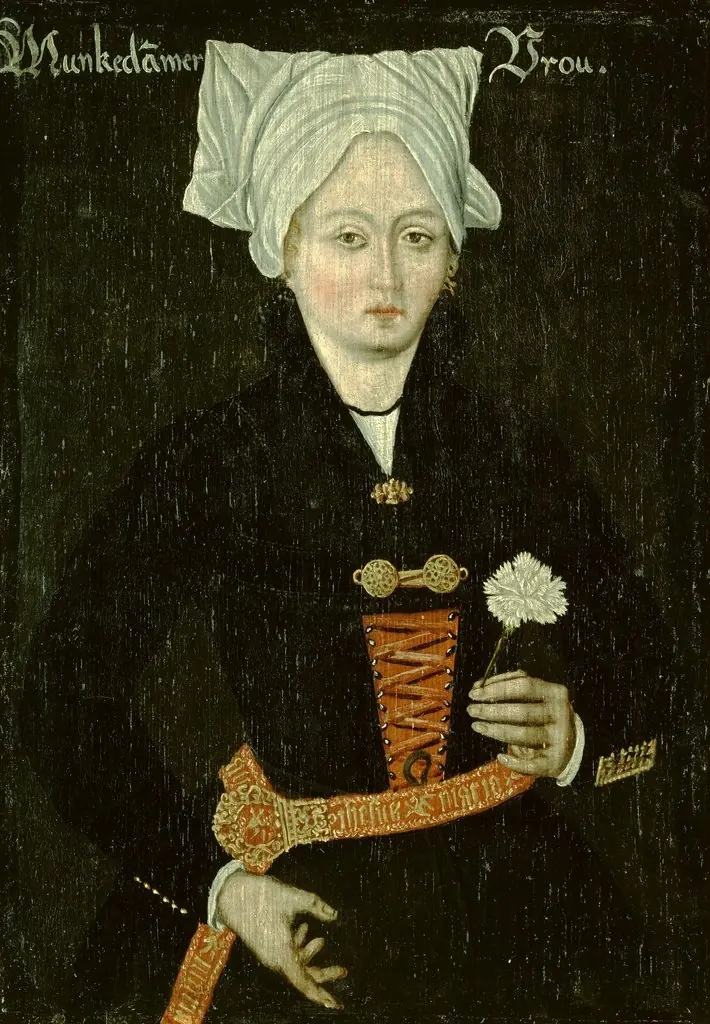
Artist & collection

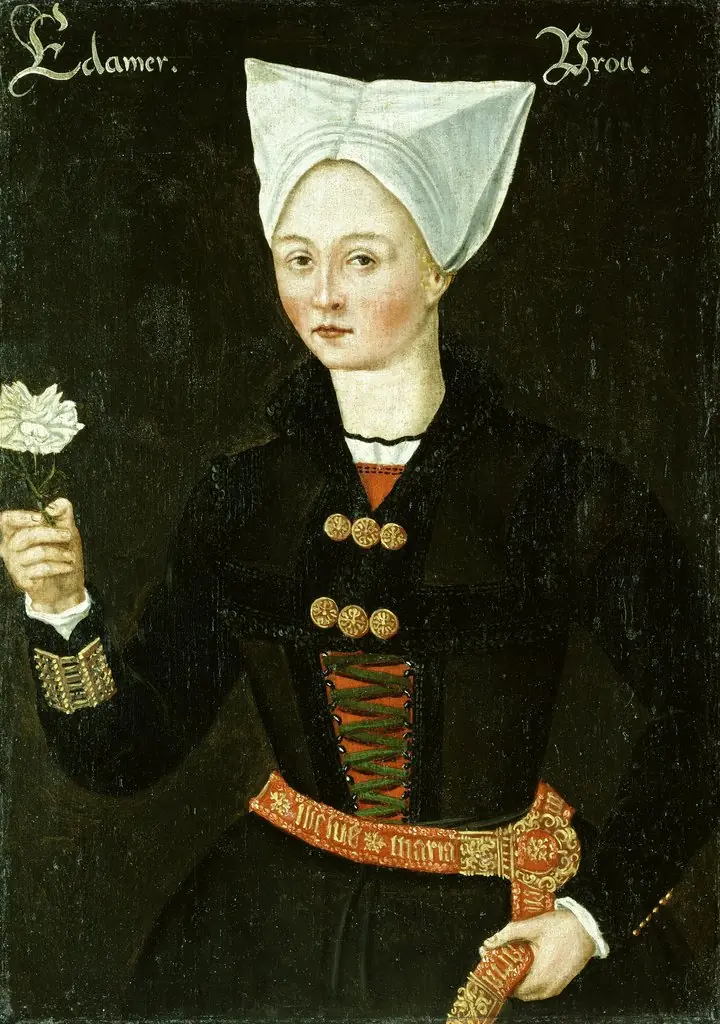 Woman from Edam
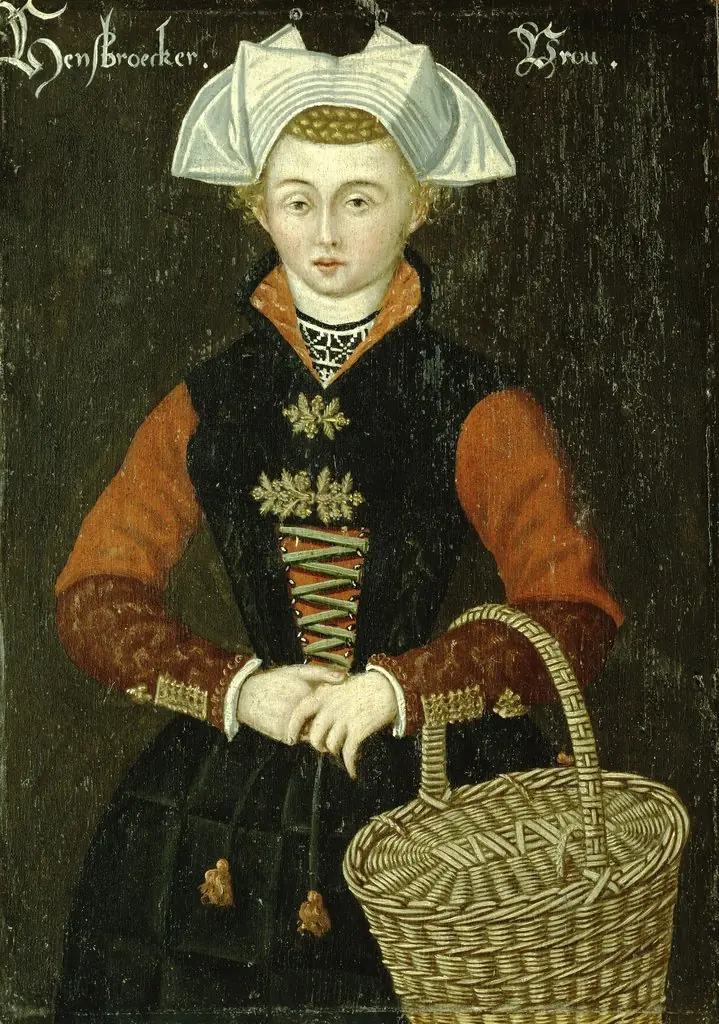 Woman from Hensbroek
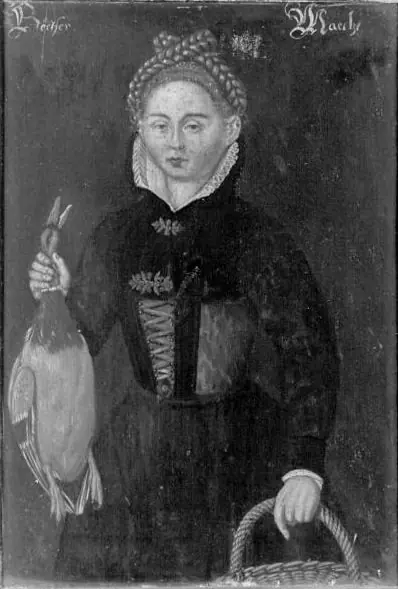 Woman from Beets
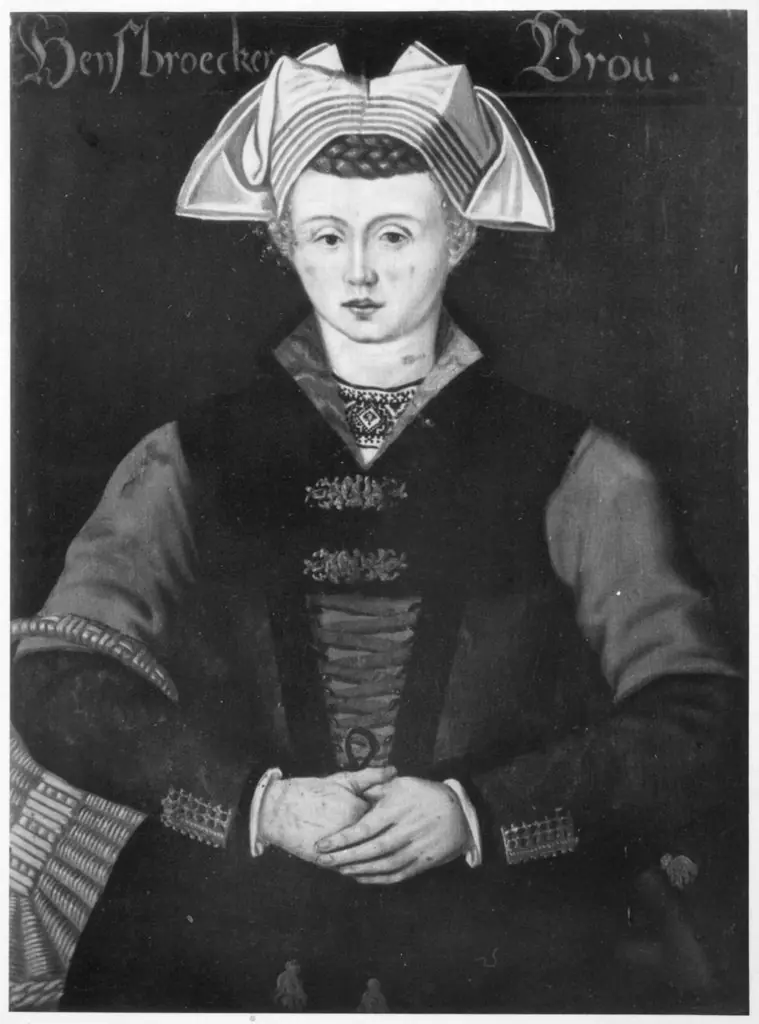 Woman from Hensbroek in country dress
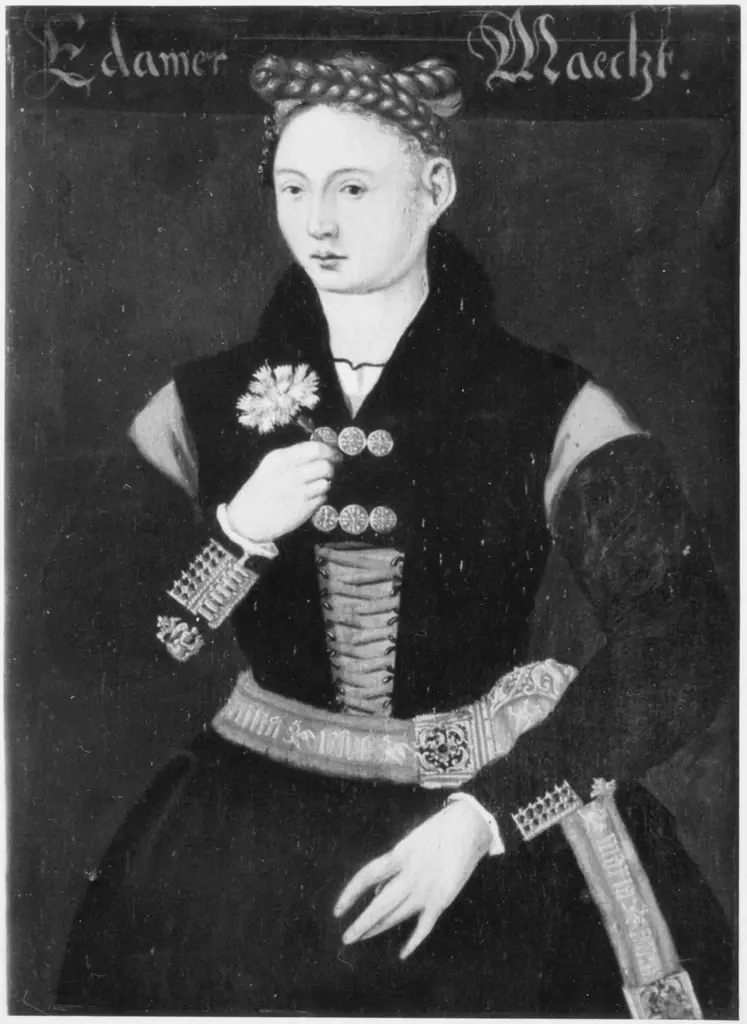 Girl from Edam in country dress
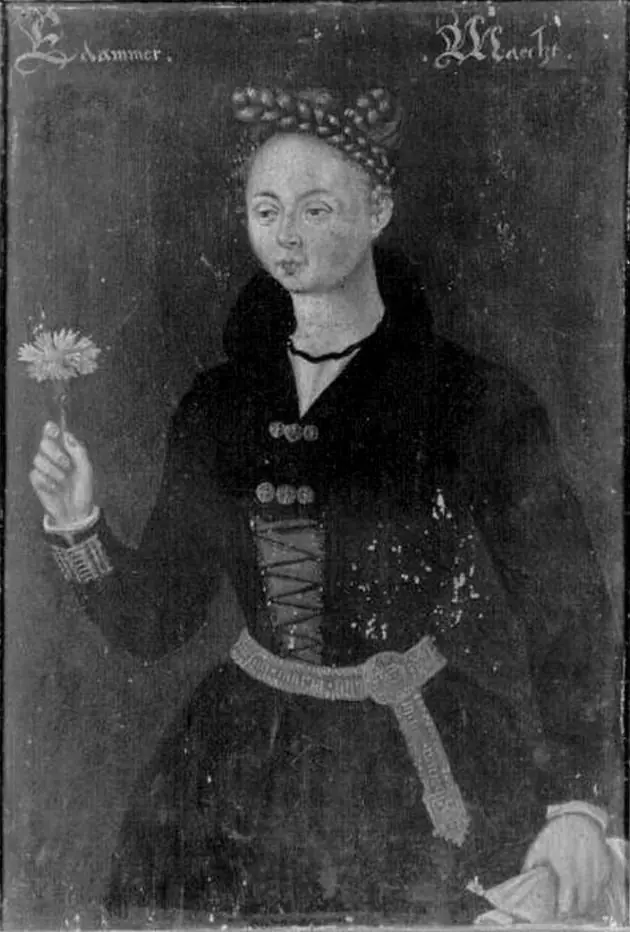 Meisje uit Edam
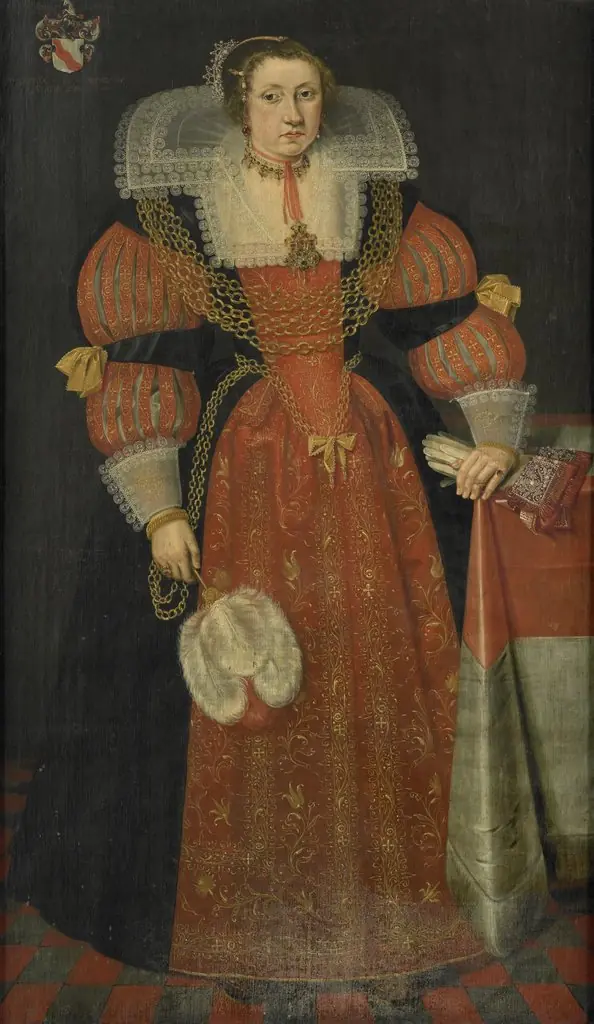 Portrait of Sophia de Vervou (c. 1613-71)
 Untitled
 Erzherzogin Barbara (1539-1572), Herzogin von Ferrara in ganzer Figur
 Portrait of Antoinette of Lorraine (1568-1610), Duchess of Jülich-Cleves-Berg