Artwork
Clear Weather after Snow at Matsuchiyama, from the series Famous Places in the Eastern Capital
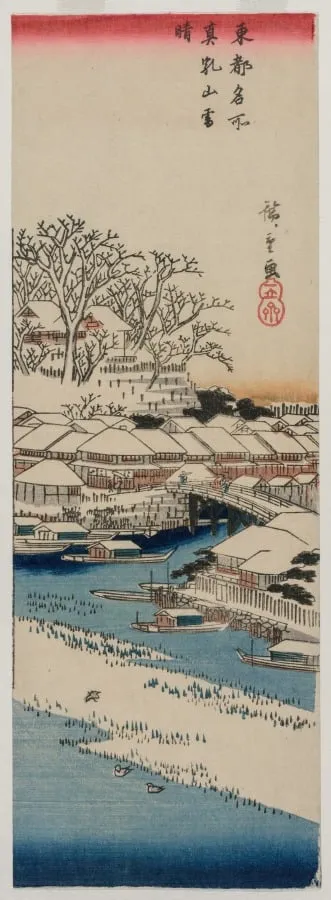
Clear Weather after Snow at Matsuchiyama, from the series Famous Places in the Eastern Capital is a print by the Romanticist artist Utagawa Hiroshige. It dates from 1840 and is held in the collection of the Cleveland Museum of Art.
- Accession no.
- 1921.1276
- Credit line
- Gift from J. H. Wade
About this work
Overview
This print captures a winter scene after snowfall, emphasizing stillness and subtle atmospheric effects rather than human activity.
Created around 1840 by Utagawa Hiroshige, this woodblock print is part of the series 'Famous Places in the Eastern Capital,' which documents scenic locations around Edo. Unlike many ukiyo-e works centered on theater or pleasure quarters, Hiroshige turned his attention to quiet, natural landscapes. This print captures a winter scene after snowfall, emphasizing stillness and subtle atmospheric effects rather than human activity.
Subject & Meaning
The scene depicts Matsuchiyama, a known locality near Edo, rendered in the aftermath of snow. A river winds through a quiet town, flanked by modest buildings and bare trees. Tiny figures walk along the bank, suggesting daily life continues despite the cold.
The inclusion of boats and bridges implies local commerce and connectivity. The title and inscriptions mark the site as culturally recognized, inviting viewers to recognize and reflect on familiar places transformed by nature.
Technique & Style
Hiroshige employed fine woodblock carving and hand-printed color to achieve soft transitions between tones, particularly in the sky and snow-covered ground. The palette is restrained, pale blues, grays, and whites, enhancing the chill of the season. Dark outlines define structures and trees, while the river remains a deep, unbroken blue, contrasting with the white landscape. Delicate details, like individual branches and distant rooftops, lend depth without clutter.
History & Provenance
The print was produced during Hiroshige’s most prolific period, when he was refining his landscape series for a growing middle-class audience in Edo. Published by the firm of Hoeido, it circulated widely as part of a popular travel-themed collection. Original impressions are held in major museum collections, including the Museum of Fine Arts, Boston, and the British Museum, attesting to its early and enduring distribution.
Context
In the 1840s, Edo’s urban population increasingly sought connection with nature through art and travel. Hiroshige’s series responded to this trend, offering idealized yet recognizable views of surrounding countryside. Unlike earlier ukiyo-e focused on courtesans or actors, these prints celebrated the quiet beauty of seasonal change, aligning with broader cultural interests in poetry, pilgrimage, and the transient qualities of the natural world.
Legacy
Hiroshige’s approach to landscape influenced later Japanese artists and, through exports, European Impressionists such as Van Gogh. His ability to convey mood through minimal detail and atmospheric color became a hallmark of Japanese printmaking. 'Clear Weather after Snow at Matsuchiyama' exemplifies this legacy, representing a shift in visual culture toward contemplative, nature-centered imagery that resonated beyond its time.
Artist & collection
Artist
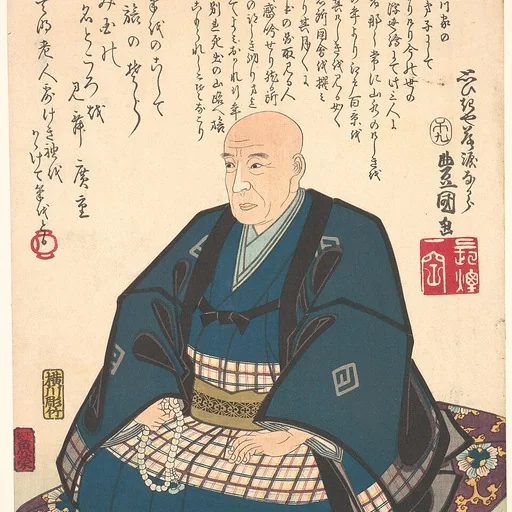
Utagawa Hiroshige (歌川 広重) or Andō Hiroshige (安藤 広重), born Andō Tokutarō (安藤 徳太郎; 1797 – 12 October 1858), was a Japanese ukiyo-e artist, considered the last great master of that tradition.

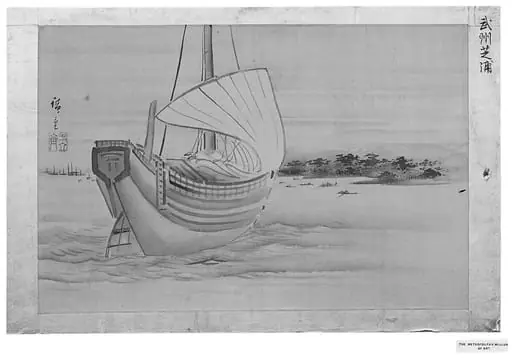
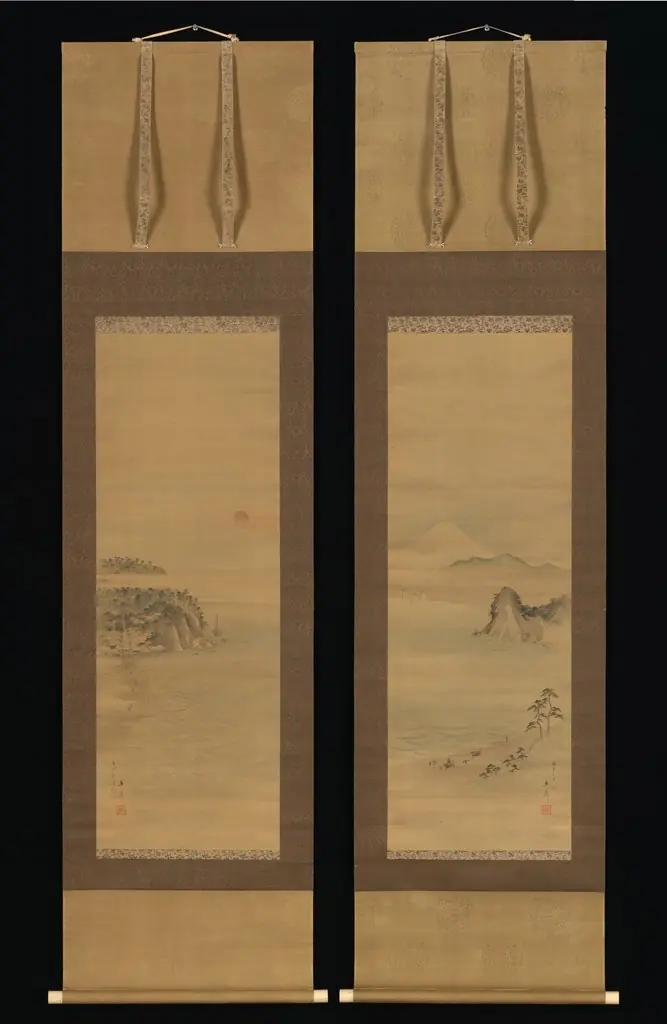
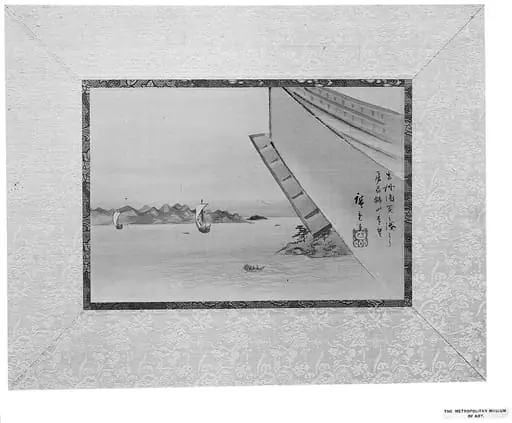
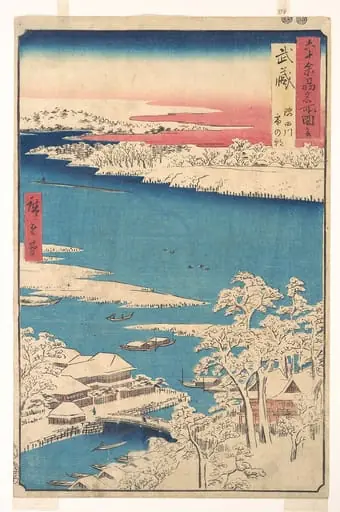
- 六十余州名所図会 武蔵 隅田川 雪の朝|Morning after a Snowfall, the Sumida River, Musashi Province, from the series Views of Famous Places in the Sixty-Odd Provinces
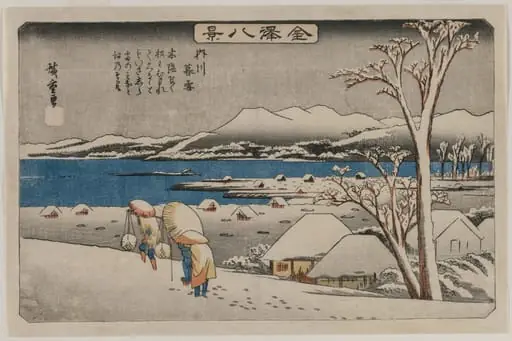 Evening Snow at Uchikawa, from the series Eight Views of Kanazawa
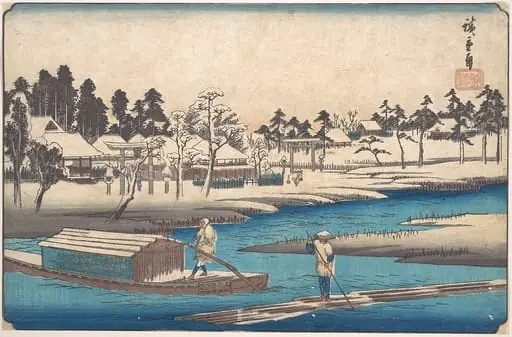 東都名所 真崎雪晴ノ図|Clearing Weather after Snow at Massaki
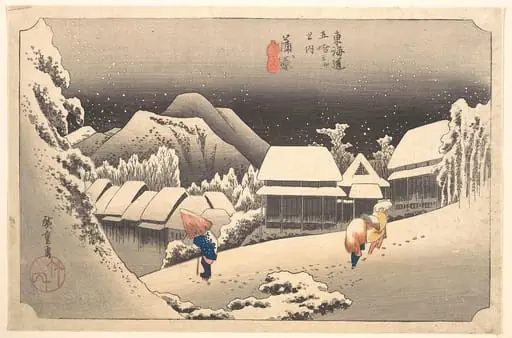 東海道五十三次之内 蒲原 夜の雪|Evening Snow
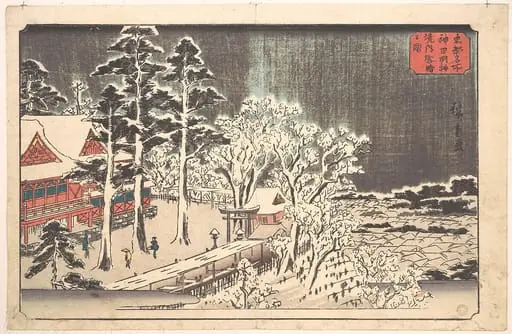 東都名所 神田明神境内雪晴之図|“Clear Weather after Snow in the Precincts of the Kanda Myōjin Shrine” (Kanda Myōjin keidai yukibare no zu), from the series Famous Places in the Eastern Capital (Tōto meisho)
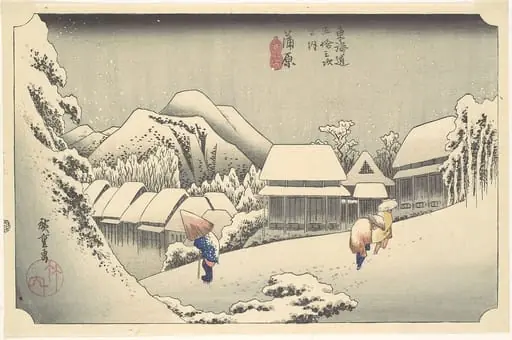 東海道五十三次之内 蒲原 夜の雪|Evening Snow at Kanbara, from the series "Fifty-three Stations of the Tōkaidō"
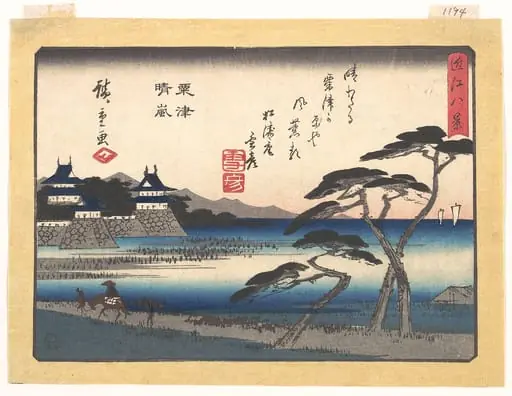 歌川広重画 「近江八景 粟津晴嵐」|Clearing Weather at Awazu (Awazu seiran), from the series Eight Views of Ōmi (Ōmi hakkei)