Artwork
The Moon-Viewing Promontory, from One Hundred Views of Famous Places in Edo
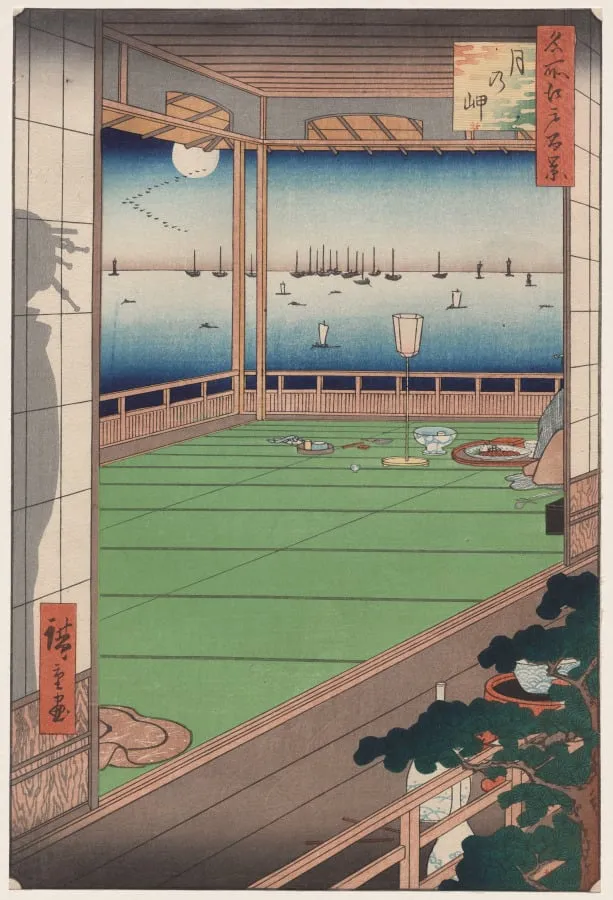
The Moon-Viewing Promontory, from One Hundred Views of Famous Places in Edo is a print by the Impressionist artist Utagawa Hiroshige. It dates from 1857 and is held in the collection of the Cleveland Museum of Art.
- Accession no.
- 1985.320
- Credit line
- The Kelvin Smith Collection, given by Mrs. Kelvin Smith
About this work
Inside, a woman in a patterned robe sits near a tray of blue-and-white dishes, while another person’s shadow glows through a paper screen.
You’re standing on a wooden porch under pine branches, looking through an open doorway at a moonlit bay. Inside, a woman in a patterned robe sits near a tray of blue-and-white dishes, while another person’s shadow glows through a paper screen.
Hiroshige shows the quiet moment after the party, music’s over, guests are gone, but someone lingers, still watching the moon. The print uses flat colors and sharp lines, no shading, to keep the scene simple and still.
If you like this, look up more works about japan, edo period (1615–1868).
Overview
Utagawa Hiroshige’s woodblock print, part of the series One Hundred Views of Famous Places in Edo, depicts a moon‑viewing scene on a pine‑lined promontory. The composition frames a doorway that opens onto a moonlit view of Edo Bay, while figures inside a modest interior linger after the gathering.
Subject & Meaning
Through a translucent paper screen a woman in a patterned kimono is seated near a tray of blue‑and‑white porcelain, suggesting a quiet contemplation of the autumn moon. A second, partially hidden figure is suggested only by a silhouette and the fall of a garment, emphasizing the lingering presence of participants after the festivities have ended.
Technique & Style
The print employs the ukiyo‑e approach of flat color planes and crisp outlines, avoiding chiaroscuro to convey a serene, static atmosphere. The use of bold lines and limited shading highlights the architectural elements and the subtle glow of moonlight reflected on the water beyond.
Context
Created during the Edo period (1615–1868), the work reflects the popular practice of moon‑viewing (tsukimi) and the cultural importance of seasonal poetry gatherings. It was produced as part of Hiroshige’s series documenting notable Edo locales, and copies remain in major museum collections worldwide.
Artist & collection
Artist
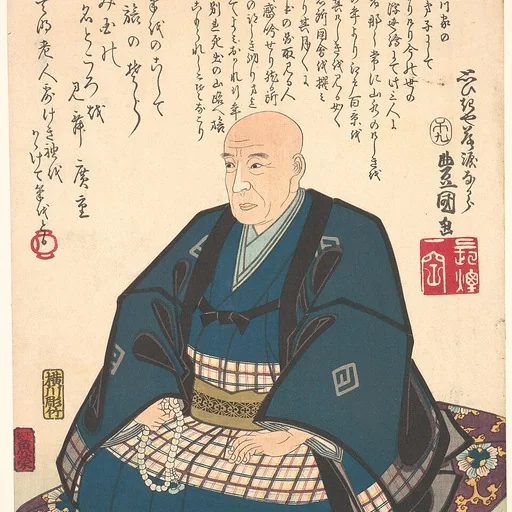
Utagawa Hiroshige (歌川 広重) or Andō Hiroshige (安藤 広重), born Andō Tokutarō (安藤 徳太郎; 1797 – 12 October 1858), was a Japanese ukiyo-e artist, considered the last great master of that tradition.

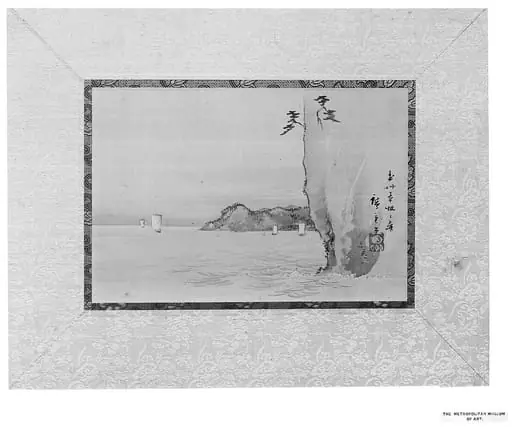
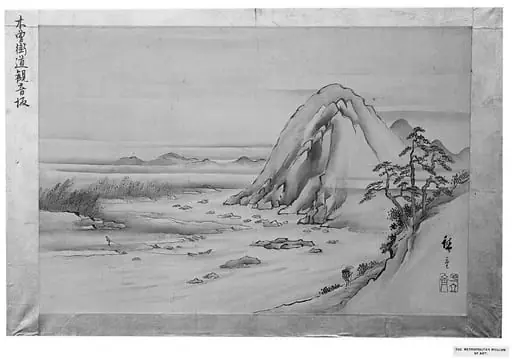
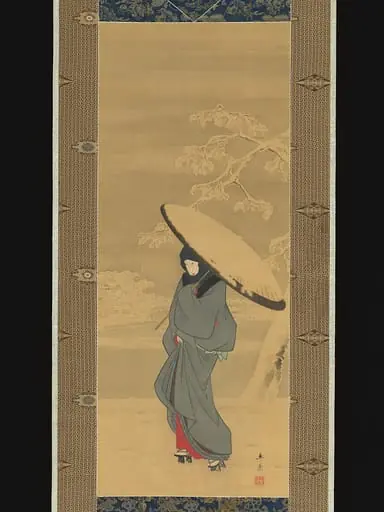
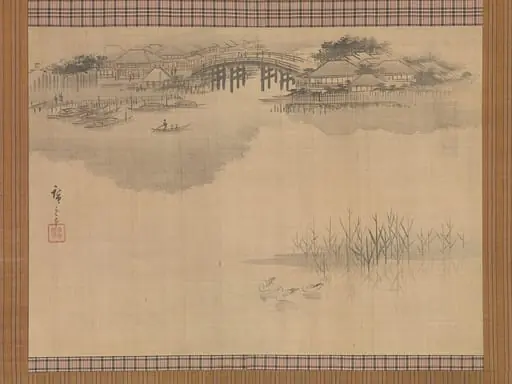
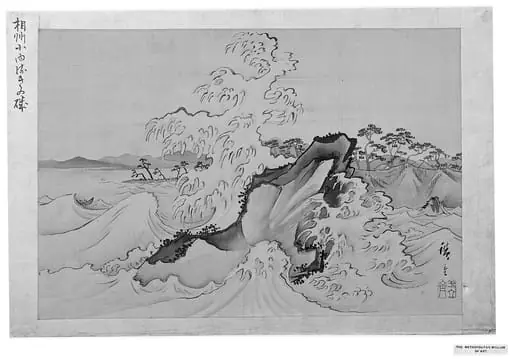
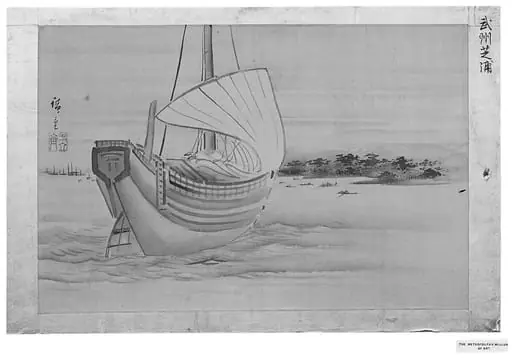
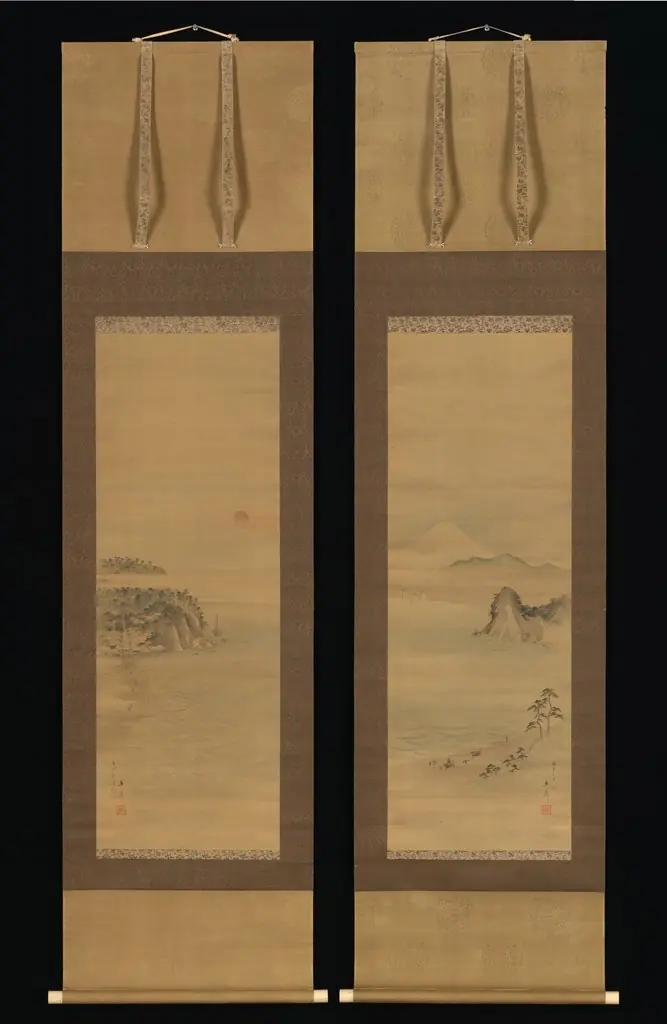
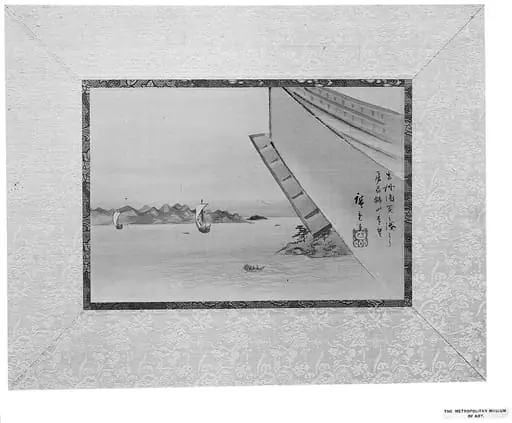
- 名所江戸百景 月の岬|Moon Viewing Point
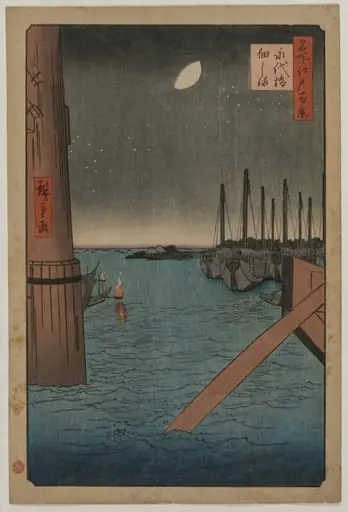 Tsukudajima from Eitai Bridge, from the series One Hundred Views of Famous Places in Edo
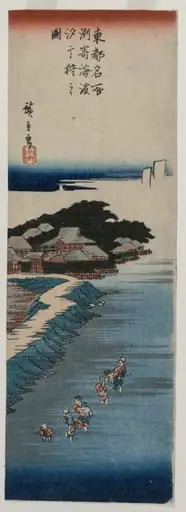 Gathering Shells at Low Tide at Susaki; from the series 100 Views of Famous Places in Edo
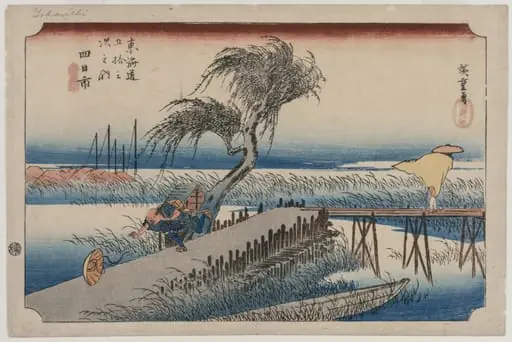 Yokkaichi: View of the Mie River, from the series The Fifty-Three Stations of the Tōkaidō
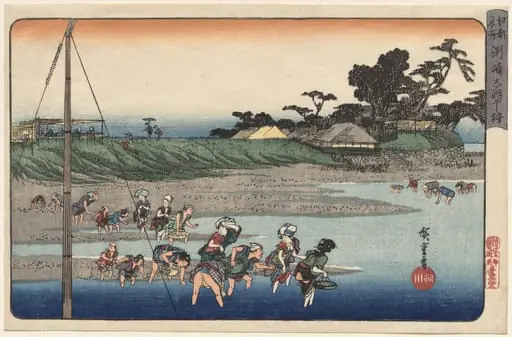 Gathering Shellfish at Low Tide at Susaki, from Famous Places in Edo
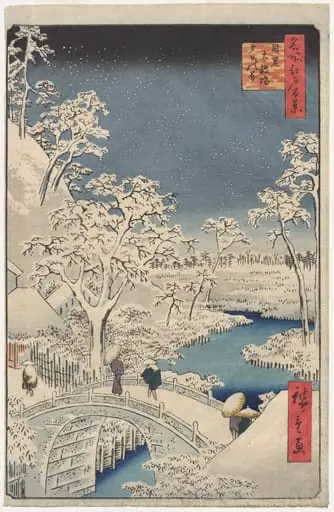 Meguro Drum Bridge and Sunset Hill, from One Hundred Views of Famous Places in Edo
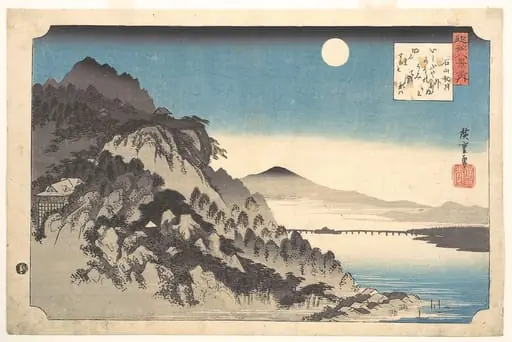 歌川広重画 近江八景之内 石山秋月|Autumn Full Moon at Ishiyama Temple (Ishiyama shūgetsu), from the series Eight Views of Ōmi Province (Ōmi hakkei)