Artwork
名所江戸百景 王子装束ゑの木大晦日の狐火|New Year's Eve Foxfires at the Changing Tree, Ōji
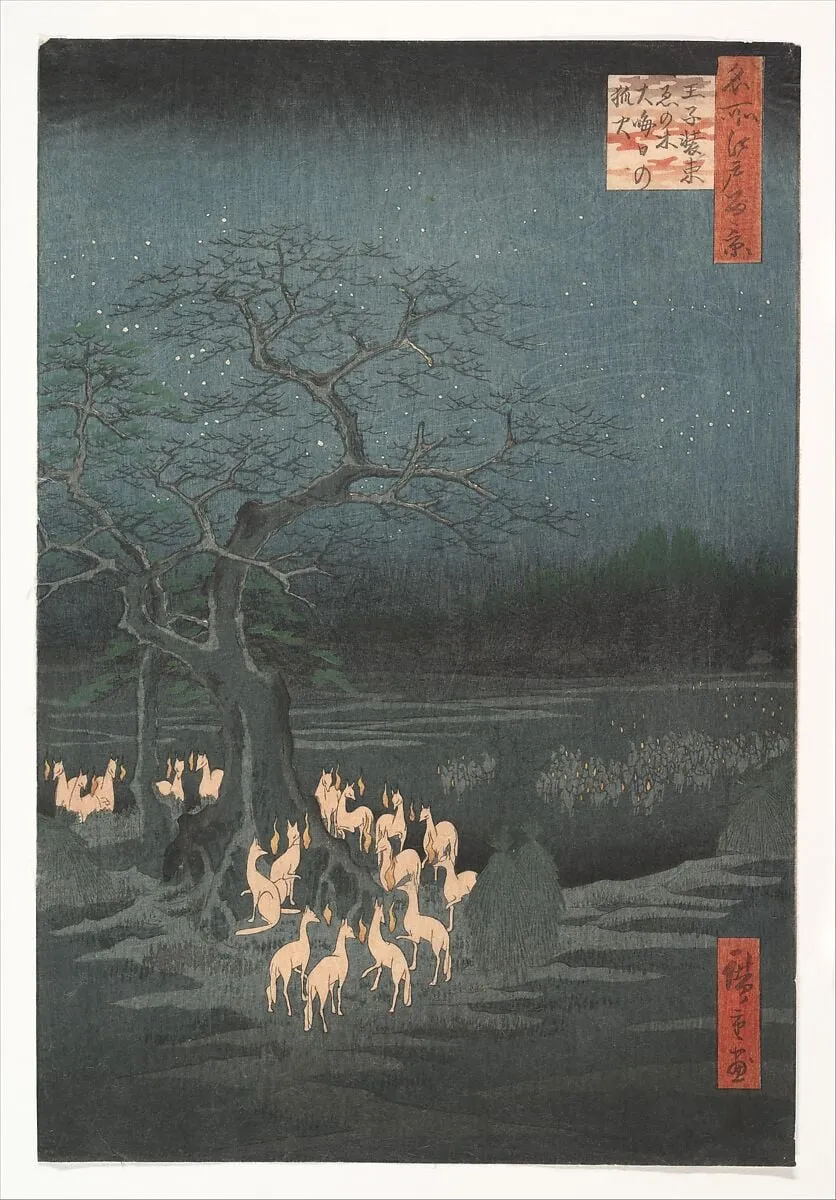
名所江戸百景 王子装束ゑの木大晦日の狐火|New Year's Eve Foxfires at the Changing Tree, Ōji is an ink print by the Romanticist artist Utagawa Hiroshige. It dates from 1857 and is held in the collection of the Metropolitan Museum of Art.
- Accession no.
- JP1470
- Credit line
- Rogers Fund, 1925
About this work
Overview
It captures a quiet, nocturnal moment in Ōji, a rural area on the outskirts of Edo, during the final night of the year.
Created around 1857 by Utagawa Hiroshige, this woodblock print is part of the series One Hundred Famous Views of Edo. It captures a quiet, nocturnal moment in Ōji, a rural area on the outskirts of Edo, during the final night of the year. The scene blends natural elements with folk belief, presenting a landscape infused with spiritual atmosphere rather than human activity, reflecting a broader trend in ukiyo-e toward contemplative nature studies.
Subject & Meaning
The print centers on a bare tree, traditionally linked to Shinto rituals, surrounded by foxfires, mysterious glowing orbs believed to appear on New Year’s Eve as the spirits of foxes. These lights, often associated with transformation and the boundary between worlds, illuminate a small group of deer, creatures also tied to sacred spaces in Japanese tradition. The imagery evokes a liminal moment: the transition from one year to the next, where the natural and supernatural converge.
Technique & Style
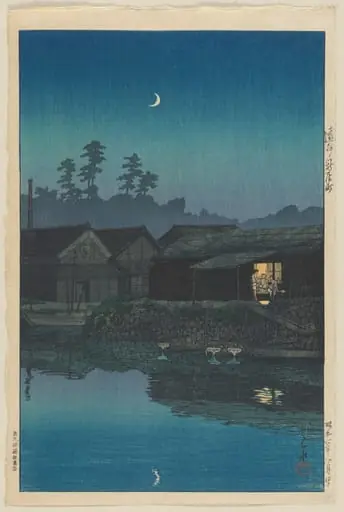
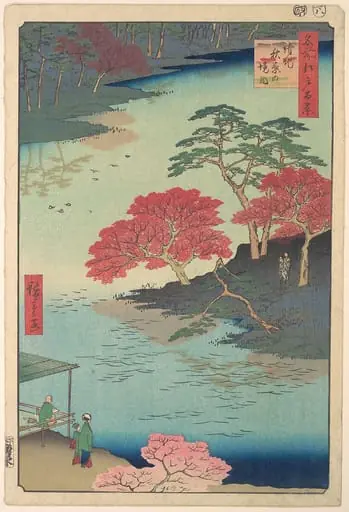
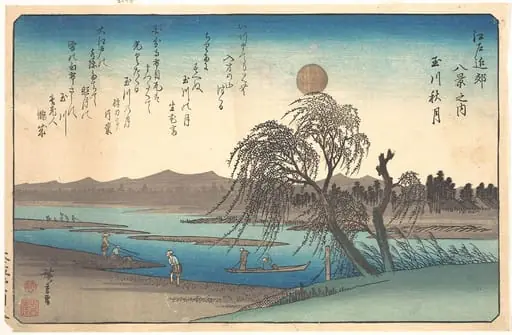
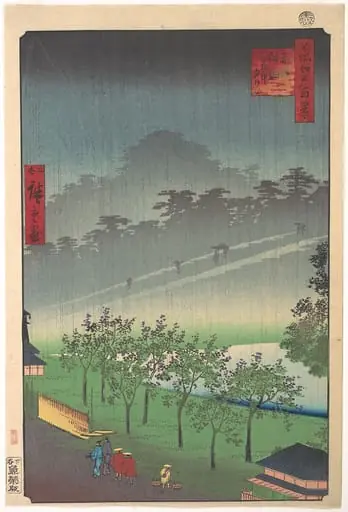
Hiroshige employed traditional woodblock printing methods, using ink and color on paper to achieve subtle gradations of tone. The night sky is rendered in deep blues and grays, with minimal detail, allowing the warm orange hues of the foxfires to stand out sharply. The tree’s stark branches and the deer’s simplified forms emphasize silence and stillness. The composition avoids human figures, directing focus to the ethereal lights and the quiet landscape.
History & Provenance
This print was produced during the final years of Hiroshige’s career, as the One Hundred Famous Views of Edo series gained popularity. It was likely printed in limited quantities for the Edo market, where such seasonal imagery appealed to urban dwellers seeking connection to rural traditions. The work entered public collections in the late 19th or early 20th century, preserved as an example of late Edo-period landscape printmaking.
Context
By the 1850s, ukiyo-e had shifted from depictions of courtesans and actors toward scenes of nature, travel, and seasonal change. Hiroshige’s focus on Ōji, a place known for its shrine and folklore, reflects this trend. The inclusion of foxfires acknowledges local beliefs still alive in the Edo countryside, even as the city modernized. The print thus bridges folk tradition and artistic innovation within a rapidly changing society.
Legacy
This print contributes to Hiroshige’s reputation for evoking mood through restrained composition and atmospheric detail. Its emphasis on the unseen, spiritual lights, seasonal transitions, resonated with later Western artists and collectors drawn to Japanese aesthetics. While not widely reproduced, it remains a quiet but significant example of how ukiyo-e captured the intangible dimensions of everyday life in Edo-period Japan.
Artist & collection
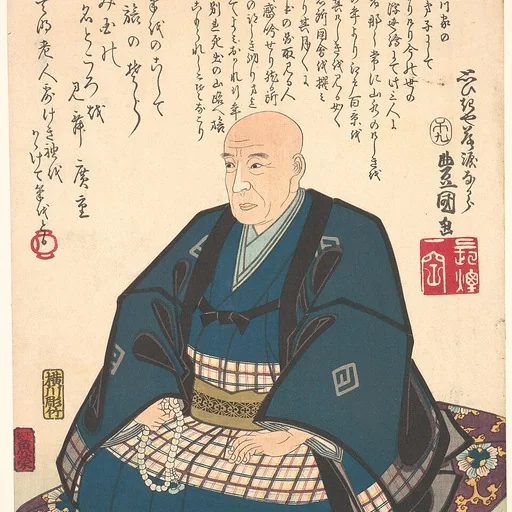
Artist
Utagawa Hiroshige (歌川 広重) or Andō Hiroshige (安藤 広重), born Andō Tokutarō (安藤 徳太郎; 1797 – 12 October 1858), was a Japanese ukiyo-e artist, considered the last great master of that tradition.